

The past isn’t a place to live
I used to see nostalgia as a warm, amber filter on days gone by. I can always look back on the beautiful memories I’ve had with equally beautiful people who have come and gone in my life through the years.
But as I stepped into adulthood, I’ve found nostalgia can transform from rays of sunlight peeking through the trees to a dark cloud that is always just slightly hovering above you, raining down on you at the most inconvenient times.
At 24, I see the recent years behind me as a time filled with jovial, perfect days, when in reality, some (maybe even most) of it was the opposite. I would remember people who hurt me and think of them fondly as if they hadn’t stepped on my heart and pulverized it to the ground. I would think of days and nights when I indulged myself with vices, hurt people without regard to consequence, and deemed those times as the prime of my youth. It scares me how easy it was for a couple of years to wash away the crimson from those days. How come nostalgia makes me think of it as an epoch worth revisiting and reviving when I buried that era of my life for a reason?
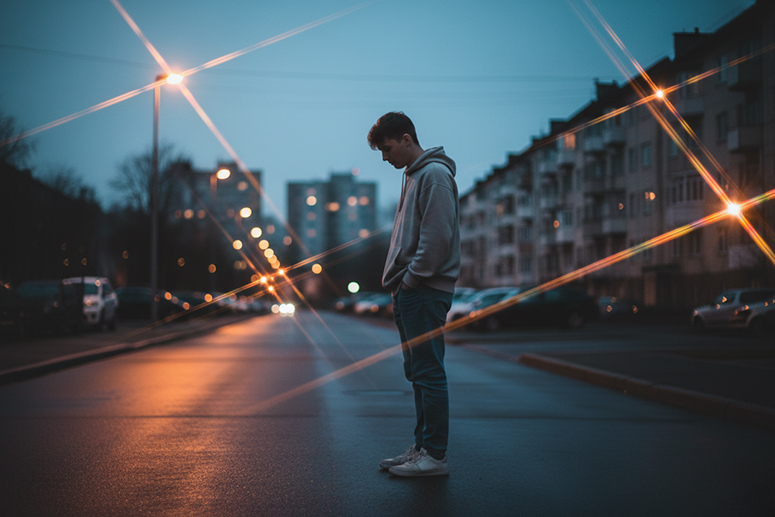
In retrospect, those few, chaotic years I had were when I felt most free. I had graduated from high school, just beginning to taste the freedom adults have yet still unburdened by the sharp, unrelenting pain of reality. I spent nights that felt endless with my friends. I could do anything, be anything, say anything. And the future was a rich tapestry I knew I was going to weave beautifully.
But now that I’ve finally stepped into the real world (as it were), I’ve found it couldn’t be further from what I imagined. I am still living with my parents and unsure of what’s coming next, doubting every decision I make. Did I pursue the right degree? Am I making a mistake with my career? Can I make something of myself?
In this stage in my life where I feel I have no control over anything, looking back on a time that has immensely shaped who I am has made me feel as if I had it.
Despite earning a different kind of freedom and spending money I didn’t have before, I felt stuck; trapped, almost. I had difficulty figuring out the best way to move forward, frozen in fear of making the wrong decisions.
CONTINUE READING BELOW

It was then that I found thinking about those days brought me some sort of comfort. Clinging onto that defunct sense of freedom was like a safety blanket I could reach for in times I felt lost and unsure. It had become easy to become addicted to false narratives.

I kept reliving the good parts, the first times, and the last times. I somehow had forgotten how hard I tried to claw myself out of the hole I had dug for myself then, and how far and high up I had already made it now.
In a 2023 National Geographic article, author Olivia Campbell wrote that, according to psychology professor Krystine Batcho, we fickle humans often cling to nostalgia for several psychological reasons. “One is the need to feel that we are in control. Even if our circumstances are largely out of our control, nostalgia can help us feel like we at least have some control over our own personal development,” Campbell wrote.
In this stage in my life where I feel I have no control over anything, looking back on a time that has immensely shaped who I am has made me feel as if I had it, something that seems harder and harder to grasp as you get older.
And the thing is, nostalgia isn’t a particular side effect of modern times, either. It predates yearning for the less-advanced age or seeking the comfort of the early 2010s.
Writer and historian Anges-Arnold Forster reported in The Guardian that nostalgia goes back as early as the 17th century, when it was considered an official diagnosis for individuals who experienced physical manifestations of “homesickness,” including heart palpitations, fatigue, and irregular sleep patterns.
In essence, it has always been a coping mechanism for many of us who struggle to deal with the present.
A 2010 research article titled “Nostalgia as a Resource for the Self” found that recalling past memories can serve as a tool for us humans to deal with feelings of “meaninglessness” in such a vast, fast-paced world. For those who have had a constant search for meaning in arguably a meaningless existence, our memories and formative years aid in dealing with all of this confusion.
Apropos of this, Ziyan Yang, a professor at the Chinese Academy of Sciences’ Institute of Psychology, divulged to Campbell in the same Nat Geo article that while nostalgia, on the surface, does provide us with joy and warm feelings as we remember fond memories, it also undeniably provides a rose-tinted filter to our past.

“We aren’t just longing for our past; we are remembering a romanticized version of our past,” Campbell continued. We may be recalling feelings that never were, missing acts of kindness and love that were a mere fabrication of our brains.
Psychology professor Batcho added that aside from psychological wound-tapering, nostalgia also serves an evolutionary purpose, noting how most women would “never want to have more than one child” if nostalgia didn’t wash away the inscrutable pain of pregnancy and childbirth.
But as with most things, too much of it never did anybody good. The rose-tinted filter of nostalgia has, at times, made people vulnerable to reaching back into the past, where nothing and no one remains.
“As a temporary escape, nostalgia provides a much-needed respite that can sustain us during difficult times. It can become negative if you get stuck ruminating on the past,” Campbell wrote.
As easy as it is to forget the trials and tribulations we had during rocky times, we must do our best to remember why that version of ourselves we are looking back on no longer exists.
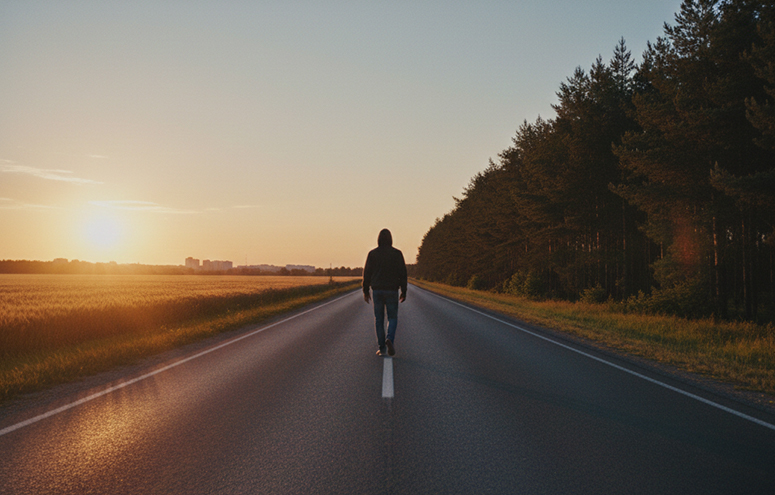
I always thought time was merely an analgesic to the pain we’ve experienced, a temporary relief. But all this time, what I failed to see was that it had been the antidote all along. With enough time, the pain ceases, but to truly move forward, we have to stop excavating the wounds. We can look back to be reminded, but to keep going back is self-betrayal.
There’s nothing inherently wrong with nostalgia. In fact, it also helps me remember why I am fighting to keep the life I have right now: a life I struggled to build. Though still shaky, I know this life is where I am meant to be. And the past? A mere stepping-stone.
So maybe nostalgia doesn’t have to be a dangerous trap. Maybe it can help remind us of the good we have right now, and if it isn’t good yet, maybe it can help us get there.

WATCH: Save for retirement or enjoy life now? (Generations Ep. 21)
September 16, 2026
WATCH: Is OPM still as good as it used to be? (Generations Ep. 20)
September 9, 2026
WATCH: Pixar Summer Fest adventure at Hong Kong Disneyland
August 10, 2026