

The journalist who’s gone everywhere and why he insists on home
Students nowadays jest about being BS Org-slash-BA Internship, a running joke about taking on an enormous workload from school organizations, enough to practically earn them a degree at it. Always half-student and half-whatever-the-production-team-needs-them-to-be. They have a laptop at all times and proudly display laminated IDs on their lanyards, stating in big bold letters that they’re part of The Press, The Production, or both.
I was no different before I entered Sinta (The PUPian’s endearment to the university). Wide-eyed and heart full of indignation, I ventured to organizations, fighting for various advocacies. Writing one copy, one feature, and one editorial after another, hooked on the process of production and being instrumental in delivering something (being a medium of change, as they say) that matters. A part of a bigger picture.
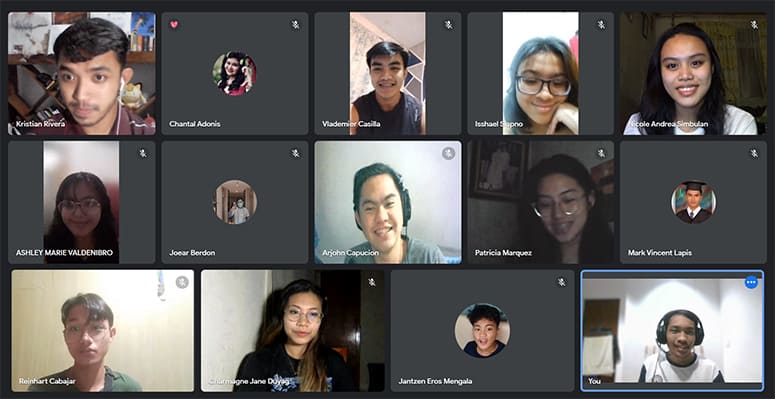
The organizations varied, but one that stuck with me even after half a decade was my stint at The Spectrum, a media organization founded by Kristian Rivera that delivered and produced both editorial and feature stories from 2021 to 2023.
On starting something new
My first impression of the founder was that he had his life together. You know the type: the one with a centralized Google Doc or Notion of their life. With ambitions to become a researcher and a voice that’s loud when it came to both national and international relations, it seemed natural that he took charge. That said, Kristian Rivera, with a stature so grand, was only a freshman—a freshman!—in Saint Columban College in Pagadian City, when he founded Spectrum. He liked spy movies (Argo, especially, for childhood reasons) and was drawn to a certain kind of media that always shone its light on what’s true with absolute resolution.
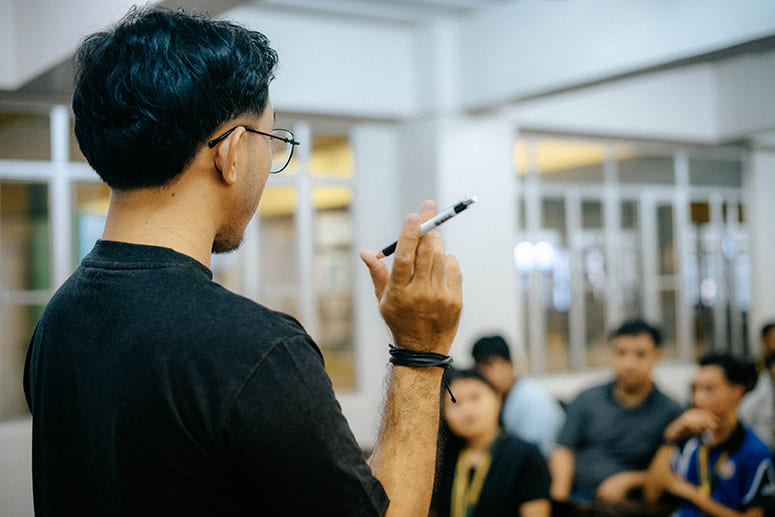
Looking back now, as a senior in college, I cannot imagine the rigor and tenacity of a freshman (still with a -teen in his age) to build and front such a big project. Let alone handle volunteers across the nation and navigate a fast-paced industry, one that others might deem him too young and even too in-the-outside for. He attributed the formation of the organization to the ABS-CBN shutdown in May of 2020, an event that most news journalists today would still regard as a pivotal turning point in Philippine journalism. The Spectrum was launched a month later.
Overcome by the urgent need to keep Philippine journalism alive and kicking, he pushed for more community-oriented stories on the mainstream platforms the masses consume daily.
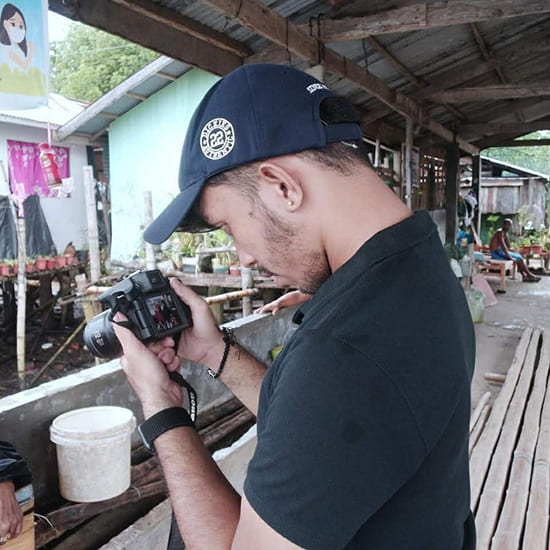

“The impact we’ve made over the years was incredible,” he recalls, marvelling at the organization's double-digit reach from all over the nation. Geographically, the members were also from everywhere across the Philippines’ three islands, from Manila to Cavite to Zamboanga and beyond. “Even though we worked online, the idea na we were able to put something up from the community was amazing.”
I asked what made him brave enough to start The Spectrum amidst the press freedom issues of the time, expecting Kristian to answer with a stern look and one hell of a story that’s only supposed to be told over hard drinks.
Instead, I was caught off guard by my own misconceptions of what a “strong” purpose is; he redirected it to the people in his life. I then asked him what he would say to young journalists looking to do the same, and again, I was redirected to the people in his life: his own endless well of emotional and intellectual resources.
“Start talking to your friends,” he tells me. There’s a hint of gratitude and relief in his voice—an ease when he lets this out, as if starting an organization became the most natural thing in the world in the face of friendship, as simple as going out for a quick lunch at Jollibee post-class. I recognized the feeling of emotional security, and it resonated within my own world. “The kind of support that stems from friendships is profound and highly intentional.”
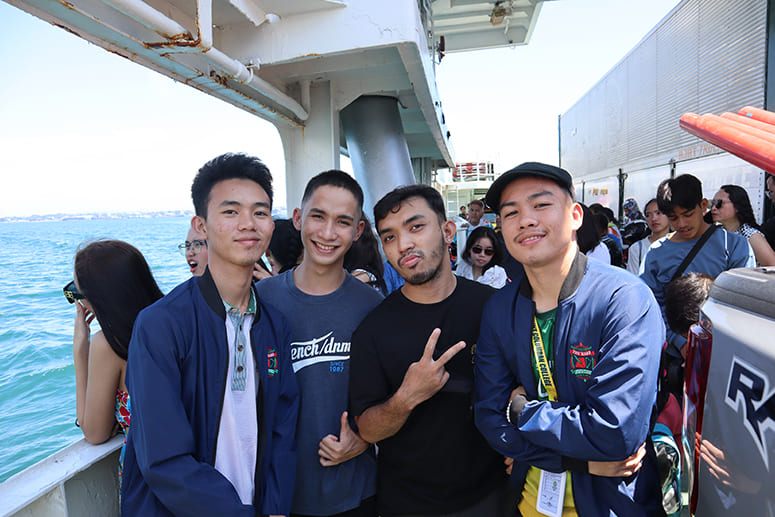
Spurred by the support of friends and family, Kristian told me that it was what enabled him to start. That no matter where the road may lead him, the important thing is that the first step was taken. Even if it is as simple as talking about it with your friends over and over, until you eventually bring it to life.
The act of climbing uphill
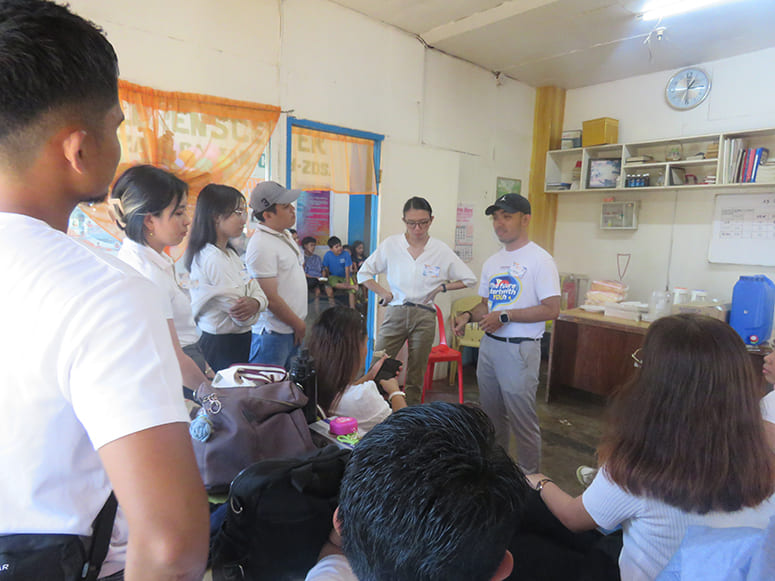
It seems that this inkling to be with people and to be of service was always with Kristian. Alongside The Spectrum, he had also formed Project Talidhay, an organization that sought out community outreach and provided humanitarian relief to the children of Pagadian City, Zamboanga Del Sur. There’s clear frustration in the air when he recounts some of his experiences over the blockage of the budget (and not having enough) and a misfitted—no matter how well-intentioned—collaboration.
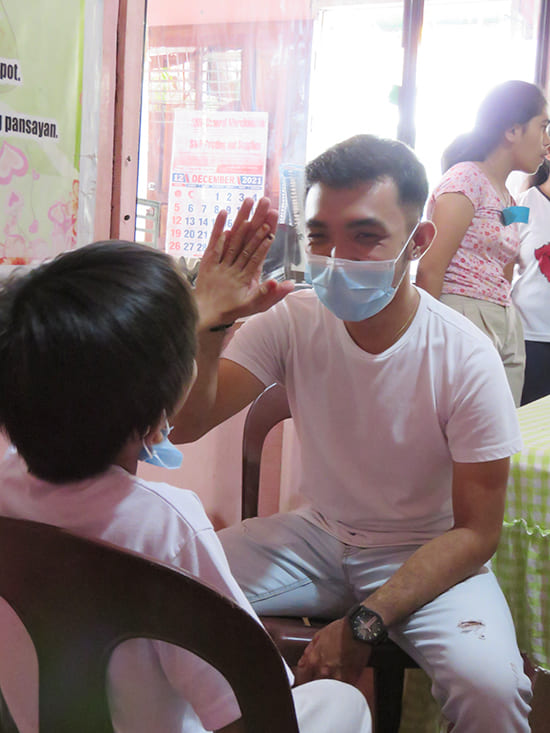
Despite and perhaps even because of this, Kristian grew persistent in delivering and seeing things through.
This narrative seemed to follow his life as he went on to reach greater heights. Post-college, with 20 internships under his belt (the OG “BS Internship" if I do say so myself), he went on to become the prolific researcher that his communities always knew he’d be. One that I got to happily witness via Instagram and Facebook Stories before I reached out to him again. Think of it as your friend who’s always jet-setting to new countries, except Kristian was out volunteering and speaking at top-level conferences or spending the day at the United Nations office. He was experiencing various areas of study, from aviation to news to international conflicts.
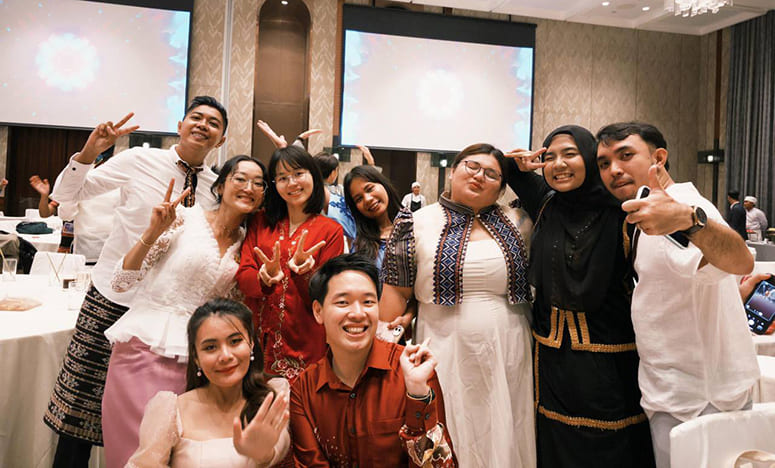
When asked for his “why” and “how,” Kristian quotes Atom Araullo: “We should be more afraid of not trying than failing.”
“If you fail, there’s a certain amount of grief, but the kind of learning that you eventually go through can be powerful,” he says. Insisting that if there are opportunities to contribute, shoot your shot and try anyway. For it is when you feel so distant that you actually aim much higher and try much harder. The burn of wanting sinks deep into your action and execution, until rejection does not really feel like losing anymore. It will feel like a payoff.
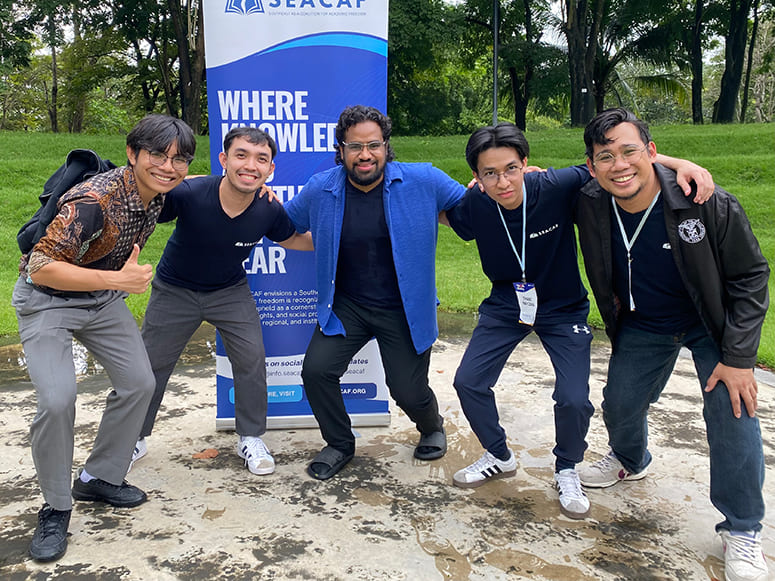
“There is no exact solution. Embrace the feeling and be human. When one door closes, another one opens,” Kristian tells me. “Failure is a social construct; go for it and do not be afraid to fail.”
The YSEALI Academic Fellowship Program
When I ask him what has been the biggest example of this in his life, the response is instantaneous as he thinks back to being part of the YSEALI Academic Fellowship Program (US-PH Exchange) back in late 2024. The fellowship is known to have a rigorous selection process. Every season, those who earned their place are given a 5-week stringent academic residency designed to hone their skills in Civic Engagement, Environmental Issues and Natural Resource Management, and Social Entrepreneurship and Economic Development.
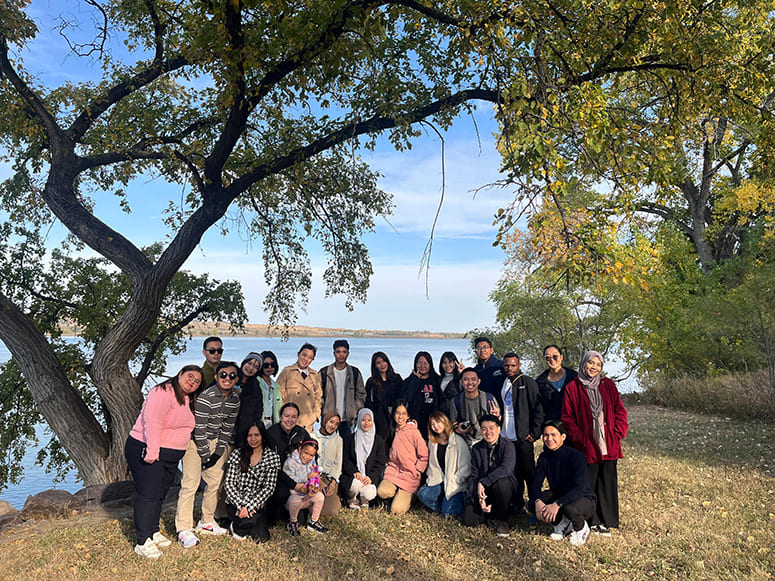
Kristian tried for a spot nine times over the course of six years, applying season after season, spring becoming winter, in the sea of over 1,000 aspirants per season. Until finally, he was chosen to be a fellow under Civic Engagement, where he went on to spend a month at the University of Nebraska in Omaha.
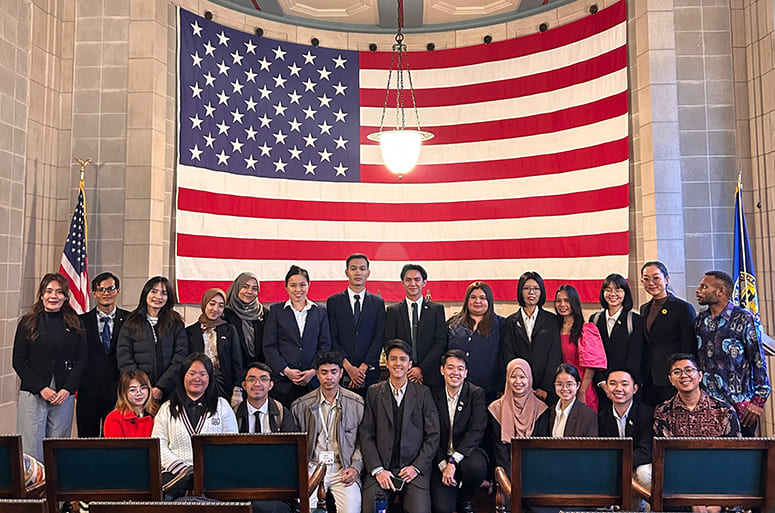
“It was a surreal experience,” he recounts, having immersed himself in the field of community development and feminism on an international scale—a newfound well, giving way to empathy and a deeper understanding of humanity and the threads that weave us together.
“The experience really helped me to navigate where I want to situate myself,” he adds. Now, steady in his progress, Kristian is pivoting from research to taking his Master of Arts in Peace Studies and Conflict Resolution at Silliman University. He is now looking to be an educator in the near future. For him, to work in academia is to step into the bigger picture, allowing him to be the person he needed when he was still seeking his path and rallying for his own capacity. From the freshman who founded two organizations and became a strong community leader at a young age, Kristian continues to be an instrument of hope and the expansion of others’ capabilities in changing times.
It takes a village
With all of his impressive milestones and collection of certificates, it was hard not to wonder if he ever got burnt out from the constant cynicism his line of research and work faced. In a space that demands such relentless grit, energy, and a strong, unwavering heart for the people, how do people remain sustainable? What’s to say someone will still come back after being burned?
This is when he redirects me again to people. It all comes down to his own village, no matter how far he goes. His village of loved ones and the communities that, in turn, inspire him to go and continue seeking more. People truly are the answer, it seems. And when it’s not, it’s looking inward and taking care of himself in return. His answers pick up a pace when he lists his hobbies: boxing, running, and taekwondo. When he’s not in a conference or writing a paper, he’s being a son, a friend, a partner, and a doting parent to his cats and dogs.
This is what’s important to him: people. He lists down the names of everyone he's ever met in a journal. He appreciates not only what but also who makes up his own world.
“Sometimes I don’t appreciate (enough) the people around me because I can be so distant,” he says, referring to the times he was in the zone and occupied with his many endeavors. “I was able to do these things because of my family and friends, and the people I’ve met along the way.”
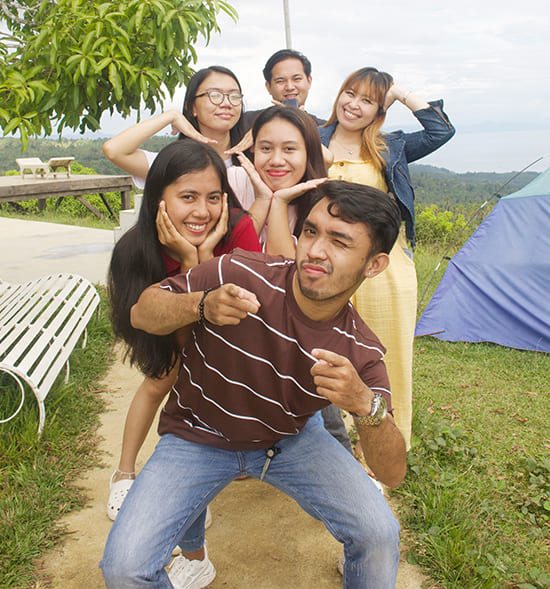
He tells me this is what’s important to him: people; that he lists down the names of everyone he's ever met in a journal. That he appreciates not only what but also who makes up his own world. Burnout is normal, he says, and we shouldn’t be afraid of feeling drained because the work of a journalist is taxing and we owe it to ourselves to replenish our own wells and to look back at how far we’ve come.
In a way, I tell him that writing this article is a means for me to look back as well—a homecoming to the seeds of journalism I’ve planted within me since my very first Division Schools Press Conference, which has now grown into a full-fledged love for writing stories.
Five years ago, Kristian Rivera seemed to me like the type of student who would joke about being a BS Org and BS Internship student, part of The Press, and always part of something bigger, something that matters. In my short time with The Spectrum, I remember clearly that he was also one of the first people who believed that I could achieve such heights. In turn, it spurred a sense of dedication to the community in me. I told him this as we wrapped up our talk, three years after the organization officially announced its indefinite hiatus, that yes, it always takes a village, and people and their innate humanity are and should always be at the center of it all.
Because at the core of it, in giving and taking, in volunteering and replenishing our own wells, in sacrifice and indulgence, the only true resource that we’ll ever have is each other.

WATCH: Can you still trust someone who betrayed you? (Generations Ep. 22)
September 23, 2026