

'T1 Kid': My daughter's fight with pediatric diabetic ketoacidosis
We named our daughter Likha to celebrate God’s power to create.
She’s a bubbly, funny, sweet-toothed, highly intelligent 11-year-old kid who fancies herself becoming a visual artist one day. She joins exhibits and even had one of her artworks appear on the cover of an art magazine. Taking from her art, she sees the world in vibrant hues, some in enigmatic shapes and curves, always within the brighter side of life. Until early February, when her life took a nosedive.
It began with what seemed like a simple tummy ache. Being 11, my wife Che and I thought it was the beginning of menstrual cramps. The idea of her coming of age brought a celebratory air to our modest home south of Metro Manila.
Her life looked promising until the evening of Feb. 17, when things escalated rather quickly. In the span of 48 hours, we noticed how her weight dropped dramatically. Her breathing resembled that of a huge animal choking on a bone. When the vomiting spells started, we decided to rush her to the Las Piñas General Hospital.
At the emergency room, where about a hundred other patients vied for the doctors’ attention, Likha’s life seemed ebb away as she lay on a corner bed. The nurse said, as she took Likha’s wrist, “I couldn’t feel any pulse.” Her weight had plummeted to a mere 24 pounds.
Another doctor approached me and said, under her breath, “Sir, if she survives, this will only end two ways: either she lives for the rest of her life with a breathing tube sticking out of her chest, or with the effects of a swollen brain. Either way, it will not be good.”
CONTINUE READING BELOW

I turned and saw my wife gently lay her right hand on our daughter’s head. She told me later that amid the pandemonium in the ER, she was able to lift a short prayer, in tears: “Lord, you gave her to me. I want her back.”
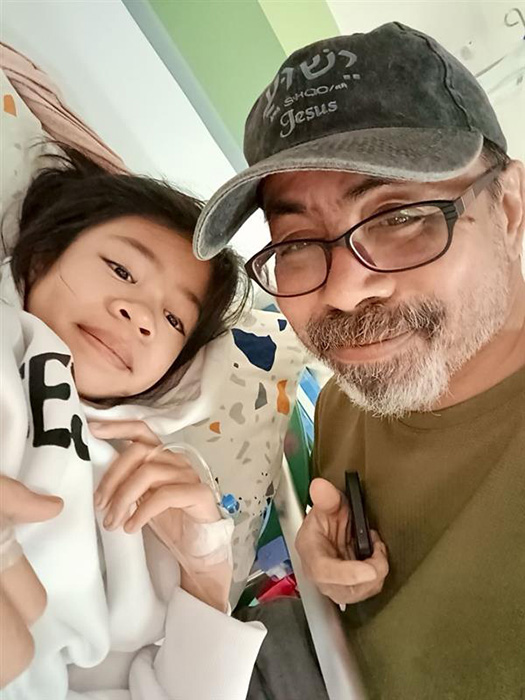
I strolled out of the emergency room so that I could think clearly and say a silent prayer for my daughter's recovery.
Around 3 a.m., they wheeled her into the intensive care without a single assurance that she would pull through. They strapped her onto the bed, weak as she already was, and began administering insulin. We were informed that her blood had clotted so much that it had turned into acid. “Dead man’s blood,” they called it.
The culprit: Pediatric Diabetic Ketoacidosis, an autoimmune disease that often strikes children as early as two years old or those undergoing puberty. Normal blood sugar levels are pegged at 80 to 150; hers reached 579.
It was a hopeful moment when we saw how efficient and competent the doctors and nurses at the ER were, their faces telling us that they do not back down without a fight. And true enough, they were on my daughter’s case like honeybees on honeycomb. They did not betray that hope.
The power of community
As evangelical Christians, my wife and I also believe in the God who answers prayers. Since we could not in any shape or form lift prayers to God at that point, I opened my Facebook account and requested prayers be said for Likha’s healing. An hour later, I opened my Facebook account and saw 3,000 replies and comments—largely from strangers—who pledged to pray for my daughter for the next several days. By the time morning arrived, the pledges had reached more or less than 7,000, with hundreds more responding in shared posts.
Some also took the time to give whatever modest support and resources they had for Likha’s insulin needs, regardless of my refusal to accept any money based on my initial post. I asked for prayers, but God had answered them exceedingly more than we could imagine.
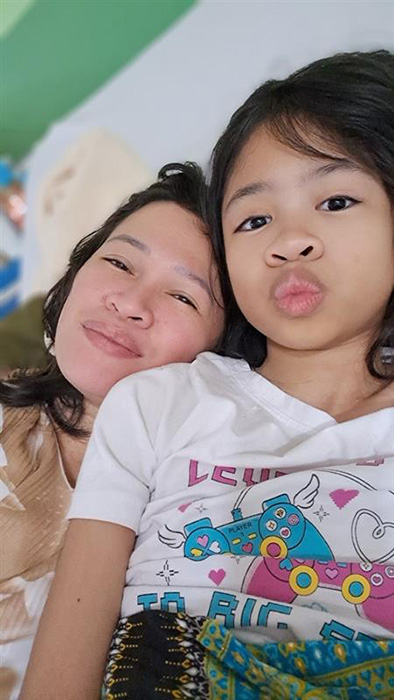
After a mere three days, which was quite unusual for such cases, doctors released my daughter from the pediatric ICU. While it was a day of celebration and thanksgiving, suddenly evil struck. Barely able to breathe from the first ordeal, scammers hacked my Facebook, Messenger, and GCash accounts and stole the little money we had coming from donations for Likha’s medical bills and insulin shots. They likewise booted me out of Facebook and Messenger, so I could not warn my friends.
Broken and confused, I took my case to the Almighty. “Why this, why now?” I grumbled. Be that as it may, I could not understand the peace that had settled in my heart throughout this nightmare. “I need that money back, Lord,” I wept that night.
The doctors finally decided that it was safe for Likha to go home. It was a triumph of grace if ever there was one. From near death, God raised our daughter back to life. But there was more to this than that. Suffice it that a couple of people were moved to donate way more than what we have lost. In fact, one friend said she would shoulder Likha’s insulin shots for a full year. On the same day, we were able to retrieve all my social media accounts. Not only that, but the insulin had improved her eyesight.
In one day, the nightmare that had started all this in the first place was deleted. It was as though none of it had ever happened.
Likha is now officially a “T1 kid” (Type 1 diabetic child). From what my wife and I had initially gathered, the disease is widespread, striking children as early as two years old. According to the National Health Institute, “Diabetic ketoacidosis is a serious complication of relative insulin deficiency affecting primarily type-1 diabetes mellitus. DKA can occur in type-2 DM when insulin levels fall far behind the body’s needs. DKA is so named due to high levels of water-soluble ketone bodies, leading to an acidotic physiologic state. Ketone bodies, while always present in the blood, increase to pathologic levels when the body cannot utilize glucose.”
Symptoms, as we were told, include blurring of eyesight, pain in the lower torso, dramatic weight loss, blood clots, upper respiratory failure, and even swelling of the brain. It’s a disease that can be fatal in a matter of hours. And children, being its usual target, are the most vulnerable. This particular disease can be fatal, but it is manageable.
Life for Likha and for our household will never be the same, that’s for sure. But from the testimonies of parents with T1 kids, it’s just a matter of time until we get used to the changes. Many T1 kids lived “normal” lives, even went on to become athletes, artists, entrepreneurs, and doctors themselves.
For my family, we have God alone to thank for the doctors and nurses who never backed down, the friends and strangers who shared resources with us, my wife Che, who, come hell or high water, never left my daughter’s side, and the thousands who lifted prayers when we needed them most.
And to the Lord and Savior Jesus, who stood faithful from beginning to end.

WATCH: Is OPM still as good as it used to be? (Generations Ep. 20)
September 9, 2026