

Grief is both burden and benefit
On the night after we buried our mother three years ago, my four brothers and I gathered at our humble home for dinner. The taste of the food on the table was different. A pinch of salt should have been added to the menudo to make it a tad tastier, or that there should only be one piece of bay leaf in the dish—Nanay’s cardinal kitchen rule for cooking that particular viand. She pampered us in the kitchen with mouthwatering fare. But that night, a commiserating neighbor cooked dinner for us. We were grateful. From then on, we knew the batchoy Tagalog, sinigang sa bayabas na bangus, ginisang patola with misua, paksiw na pata with tahure, hamonado, and morcon on our kitchen table would taste differently.
That night, the lights at home were all switched on. Even the single halogen light, used during the few days my mother’s wake was held at home, illumined the robust narra tree in our small garden. The light was so bright, yet inside us was a blotch of darkness. No wonder a mother is said to be the light of the house: When she's gone, the home becomes dark.
The following day, I woke up with a hangnail and cried—not because it was torturous, but because the experience proved with certainty that I no longer had a mother I could ask where the nail cutter was. Nanay was the one who kept it, in an opaque jar with a yellow lid, together with needles, sewing threads, and safety pins. No one dared misplace the nail cutter at home. She was particular about returning things to their respective places.
To this day, three years after her passing, coming home is like carrying a boulder on my chest. The usual clutter is here and there, yet the house feels bare. It gets unbearable at times. No mother is waiting for me at home at the end of a long day. All of a sudden, I'm free to go home anytime. What a lonely experience.
When we were growing up, we were not allowed to bring house keys with us when we went out with the intention of coming home in the wee hours. Nanay would sleep on the sofa near the front door. She would rather be inconvenienced by any of her five sons knocking on the door than not knowing they had arrived home safe and sound. She would ask two questions: “Bakit ginabi ka na?” followed by “Ipag-iinit ba kita ng pagkain?”
Until now, we have not been accustomed to bringing house keys when we go out, simply because we were brought up in the loving kindness of my mother who would wait up for us at home.
When grief becomes personal and communal

From then on, I have journeyed through life with grief. And grief can be very personal. It's a silent, unseen battle scar to carry. It’s both a friend and a fiend—sometimes in equal measures. Grief defines that happiness and sorrow are a paradoxically strange but inseparable couple.
No one, however, has the monopoly on grief. It's a journey experienced by anybody who has lost a loved one. The journey is heightened by memories both meaningful and banal. To grieve is to find the self in a complex plunge or non-linear dealing with pain. Sometimes, the journey is short; sometimes, it’s long; sometimes, it doesn't end.
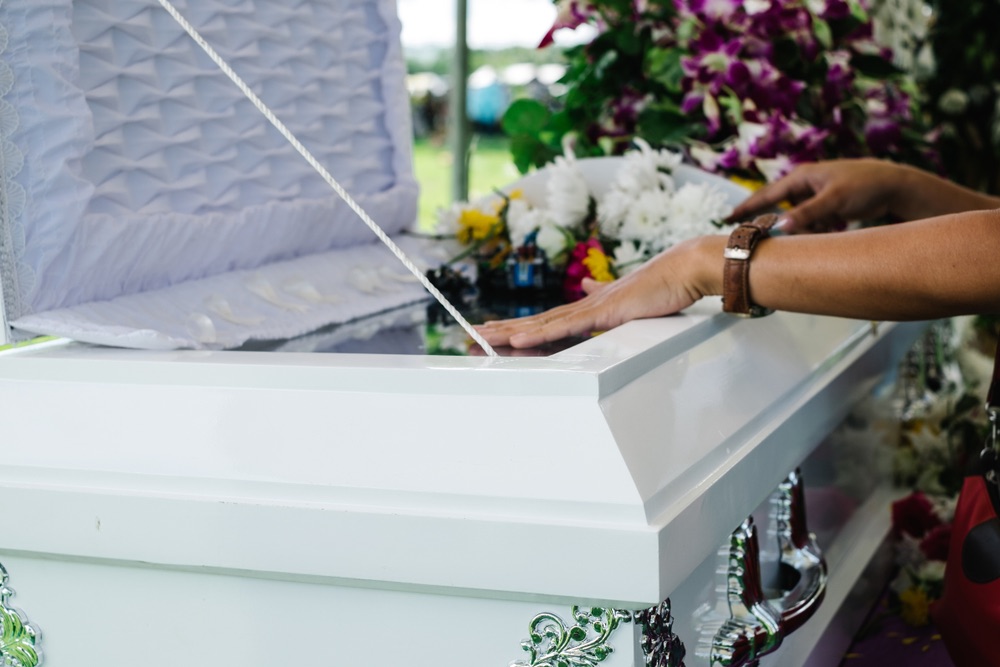
Grief is both a burden and a benefit. The sole arbiter in the tug-of-war of emotions are the memories left behind. In my experience, grief, like love, is my only connection to my dearly departed.
But grief can also come in the form of communal mourning.
Filipinos lately have shared a common emotional response because of the significant losses the country has experienced of late. In sociology, it is called communal mourning. Communal bereavement is the widespread experience of grief and distress felt among people who did not know or never met the deceased. Because it’s felt by the community, the entire society seems to process bereavement together. Even communal grief becomes personal.
Not to sound pessimistic, the month of June carried a weight both heavy and unbearable. Death and catastrophe, both natural and manmade, took center stage from the beginning to the end of the month.
According to a Philippine STAR report, at least 78 people died and more than 1,300 were injured in the devastating magnitude 7.8 earthquake that hit Mindanao on June 8.
On the same day, the country was shaken anew with the death of Ateneo student-athletes Rene Clert Baterbonia and Divine Adili in a drowning incident during a team-building exercise at Dipaculao, Aurora. The lamentations of the mother of Baterbonia during her son’s interment was piercing, heartbreaking. Only a calloused heart would remain numb to her grievance. It was a loud cry that outlined a great loss, a promise that turned into a tragedy.
Then, on the morning of June 22, a tragic shooting incident at San Jose National High School in Tacloban City left three students dead.
Grief is an uncomfortable reality when we talk about dreams that turn into heartbreaks and misfortunes. Rene and Divine had dreams. The three children who died in the shooting incident had hopes of bettering their lives, exactly why they were in school. Those who perished in the earthquake had aspirations, too. In a snap, in a successive sway of the Earth, in a rip of tide, in the first volley of fire—lives were lost. Precious lives.
Enough. That seems to be the battle cry of a country in apparent collective grief. Enough.
I join in the communal mourning. Through prayers for the departed and the bereaved, I join them.
To grieve is to find the self in a complex plunge or non-linear dealing with pain. Sometimes, the journey is short; sometimes, it’s long; sometimes, it doesn’t end.
What follows after grief?
“Some people would deny the pain. Others would bargain. Others would have hatred—and all these will end in depression and lingering pain,” said Fr. Dave Concepcion, chaplain of Sto. Nino de Paz chapel in Greenbelt, Makati.
There is a kind of pain that puts the blame on God. That is also a form of grief.
“Where is God in all this? Jesus was not spared from suffering and death. God would say, ‘I am with you. Do not be afraid,” said Fr. Dave.
But because the nature of grief is non-linear, the pain appears both as a lamb and a wolf. Sometimes, it comes with subtle meanderings; other times, like a knife piercing.
“But time heals all wounds—because time is God,” the late Sr. Isabel Villafranca, an assumption nun, told me before when she held my hand to process the death of my father.

My late father spoke in the same tone, in the vernacular: “It does not rain all the time.” But then again, both sun and rain are part of grief. And they make the flowers grow. Or in my father’s experience, because he was a farmer, they made his crops bear a yield.
It took me many years and many tears to move on from my father’s death, yet when I finally accepted that he was gone, only then did grief become my friend.
“Accept the pain and pray for emotional healing,” added Fr. Dave. “The right attitude towards grief is acceptance that leads to freedom and new beginnings.”
Don’t fix their pain
Every grieving soul needs a friend, an ally, a confidante. That much I learned on my own with the death of my parents, 13 years apart.
“Supporting a grieving friend means showing up consistently without trying to ‘fix’ his or her pain,” said Dr. Nina Halili Jao, a child-adult psychiatrist at The Medical City.
Compassion is essential to a bleeding heart. My mother taught me empathy early on. She told me that the most important day to be with a friend who just lost a loved one is on the first day after the burial of the deceased. Because, in my mother’s belief and experience, of all the days for the bereaved, the first day after the burial was the hardest to hurdle.
“Offer specific, actionable help like dropping off meals or running errands,” added Dr. Jao. “And simply be a compassionate listener who allows them to cry, sit in silence, or share memories of their loved one without judgment.”
“To help a grieving friend, one must be a good listener and companion,” she continued.
Those who have experienced grief know that a simple “Hi, just checking on you,” already means the whole world.
Grief needs a helping hand. Grief needs a friend.

WATCH: Is OPM still as good as it used to be? (Generations Ep. 20)
September 9, 2026