

SONA 2026: What political analysts say Marcos got right, and what his speech lacked
President Ferdinand "Bongbong" Marcos Jr. made strong pronouncements on anti-corruption and accountability in his 2026 State of the Nation Address, political analysts said, though they noted that he also lacked specifics on several key issues.
In his one-hour and 26-minute speech, the country's Chief Executive started strong with his statement on the ongoing probe into corruption and accountability. He noted the arrests and investigations into contractors, government officials, and lawmakers implicated in the flood control scandal, including his cousin, former Speaker Martin Romualdez.
"Hindi ako pangulo ng aking pamilya. Hindi ako ang pangulo ng aking kaibigan. Ako ay Pangulo ng Pilipinas at ang tungkulin ko ay sa inyo, ang aking mga kapwa Pilipino," he stressed.
Strong points
Political analyst Prof. Froilan Calilung described this year's SONA as "cautious, deliberate, defensive rather than visionary."
"Other SONAs before, their focus was on unveiling new programs. But this SONA, I think it's really more on addressing the administration's performance during the latter half of the term. The President is aware of the growing dissatisfaction, especially over inflation, corruption allegations, and infrastructure controversies," he told PhilSTAR L!fe.
CONTINUE READING BELOW

Calilung added that the speech "portrayed the country as being in crisis" to center attention on anti-corruption and persistent economic challenges.
"It became clear that anti-corruption really became the centerpiece. I think by portraying the country as being in crisis, President Marcos brought up persistent challenges like inflation, food prices, and disaster resilience. Politically, the approach seeks to project steadiness and continuity. But the problem is that there are structural deficiencies that we are experiencing and feeling," he said.
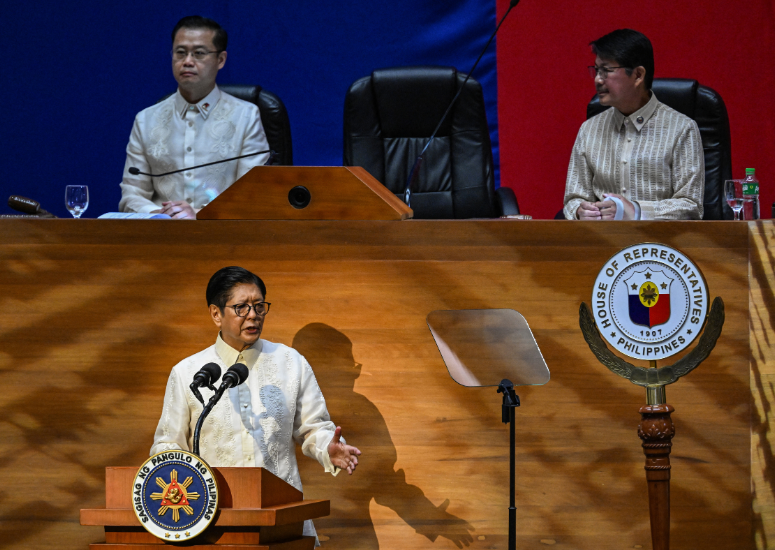
For political scientist Cleve Arguelles, Marcos used the SONA to reassert his leadership and refused to let his presidency be defined by the controversies that marked the past year.
"I had my expectations, but I think the most important of my assessment is that it was an address of a president, more or less, who refuses to be defined by the biggest year of his presidency because we had this expectation that he might struggle a bit with the SONA because of his low popularity ratings and the flood control scandal, but he refuses to be defined by that," he told L!fe.
"He knew very well that the presidency's greatest asset is that he has the power to persuade, and because of that, he took this opportunity, the SONA, to refuse to surrender the narrative of his administration, of his legacy to his critics," he added.
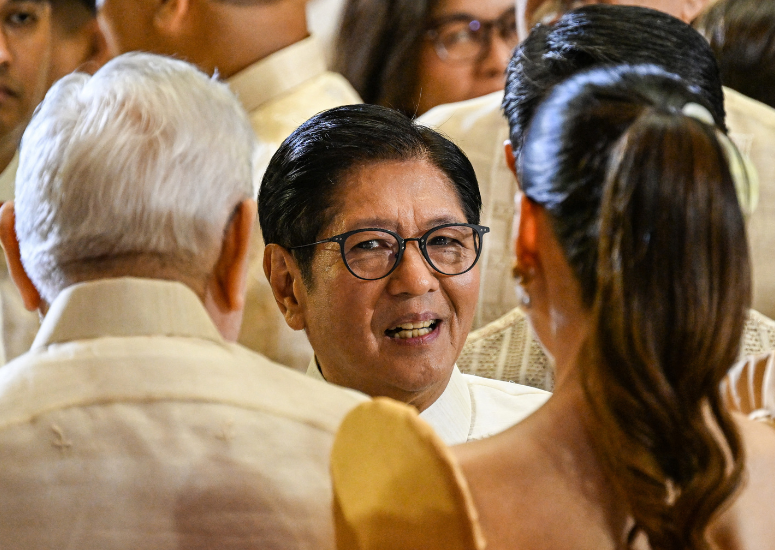
Arguelles said Marcos' decision to directly address the flood control controversy and reaffirm his anti-corruption agenda was one of the strongest parts of his speech.
"Sa corruption, he faced the corruption issue head-on, the flood control scandal. He did not minimize it. I think some would have expected that he would minimize it. But rather than that, he confronted the controversy directly," Arguelles said.
He added that Marcos also "insisted that fighting corruption will still be part of his supposed legacy," showing that the President "still has anti-corruption ambitions."
For Calilung, Marcos' focus on governance and modernization stood out as a strength of this year's SONA.
He said it was a positive move that the President tackled concerns over electricity costs, particularly the "long-standing systems loss charges of Meralco."
Calilung also noted that the speech was "clear" and "orderly," adding that it was "focused on governance rather than partisan politics."
He further welcomed Marcos' emphasis on digitalization and artificial intelligence, saying, "SONA now is really more on digitalization, AI, which I think is good."
What Marcos missed
Arguelles said Marcos was after what he called "easy wins," noting that the President "wanted to provide tangible benefits to ordinary Filipinos and very immediate, tangible benefits to win back public approval." He cited initiatives such as financial assistance, tax exemptions, support for small businesses, and the removal of the system loss charges from Meralco billings.
For him, what was missing was "the fiscal question." While the administration expanded distributive policies and tax relief, Arguelles stressed it's still "a very important omission in the SONA."
"There's no question that this will be welcomed by the public, but I think what's missing there is the fiscal question because there's an expansion of distributive policies, there's an expansion of tax reliefs, but I think what was not discussed. Was there a long-term revenue strategy that was sustained? There's no discussion of that, and that's a very important omission in the SONA," he said.
He added that while Marcos highlighted efforts to prosecute those involved in the flood control scandal, he could have gone further by outlining reforms that would prevent similar cases of corruption from happening again.
"Were there any proposals from the President to ensure that in the long run, such a scandal would not happen again? So parang what's really missing is the political reform agenda. How we pass the budget, how government does its procurement, how it chooses its contractors, 'di ba? There's really no discussion about that," Arguelles said. "And it would have been very helpful to have that as a meat to this anti-corruption rhetoric."
Arguelles also found it "striking" that there was "no sweeping legislative agenda" this year, saying Marcos instead chose to "just focus on what he can do in the last two years of his office" through executive power rather than seek congressional approval for major legislative measures.
"This is probably an acknowledgement of the political reality. He knows how difficult it is to have the legislature work for him now, given how divided the Congress is; there's a Duterte impeachment trial, it's also trying to survive the flood control scandal," he said.
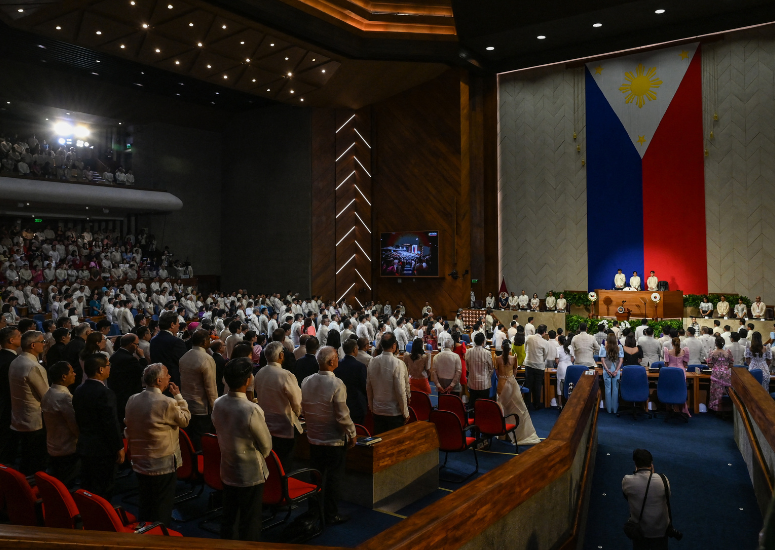
Calilung found that the speech lacked discussion on institutional reforms, particularly in the bureaucracy, justice system, and electoral governance. He said it also should have touched even a bit on the ongoing impeachment trial of Vice President Sara Duterte, who is also facing corruption allegations over confidential funds at the OVP and DepEd.
He also noted that there was limited discussion on peace and order, as well as problems with illegal drugs.
"We also need to look at the many problems that ordinary citizens are facing," he said, adding that the President also failed to discuss in detail his plans for key policy programs, such as "food self-sufficiency or agricultural productivity that is sustainable."
Did Marcos' priorities change?
The analysts also weighed in on whether Marcos' priorities had shifted from his previous SONAs.
For Arguelles, this year's address reflected a change in strategy, pointing to the absence of an ambitious legislative agenda. Instead, he said the President focused on "something that the administration can control" through executive powers, prioritizing "easy political wins" and "easy policy wins" over pursuing sweeping reforms.
Meanwhile, Calilung said he did not see a significant change in Marcos' priorities. "The stance of SONA is a bit defensive. It just spreads the priorities that will be its legacy for the remainder of its term. So in short, it's not about creating new trust in the future but rather just maintaining what is already there, maybe strengthening it a little bit further," he said, adding that the President's anti-corruption message was simply more pronounced because "that is what the people want" and "the demand of the people."
"I did not expect that he would be dropping his cousin. But as I said earlier, it's just part of a ploy. It's just part of a script. And ultimately, at the end of the day, nothing will happen to the case. So my challenge is, how fast the enemies will be put in jail; I hope it will be that fast," Calilung said.
"At the very least, we saw a SONA that is listening to our people. But it's a bit lacking because it's not only Martin Romualdez, supposedly the big fish that we should be looking at," he added.
From commitments to concrete action
While Marcos made strong pronouncements on anti-corruption, digitalization and artificial intelligence, energy, and the West Philippine Sea, among other issues, the analysts said the public should closely monitor whether these commitments translate into concrete action. Arguelles said Marcos' anti-corruption drive should ultimately be judged by results, not rhetoric.
"Judgment should be about conviction," he said, stressing that the President's anti-corruption ambitions "should be measured by actual prosecution rather than public announcements in the State of the Nation Address."
He urged the public to closely monitor the investigations into the flood control scandal "to make sure that accountability and justice will really be pursued."
Arguelles also said people should watch how the government funds and implements its promised social programs, warning against the risk of political patronage and misuse of public funds.
"We still have to make sure that these promises of the President will be implemented as cleanly as possible," he said.

WATCH: Pixar Summer Fest adventure at Hong Kong Disneyland
August 10, 2026