[OPINION] Duterte impeachment trial Day 7: What lies behind her tax, bank records?
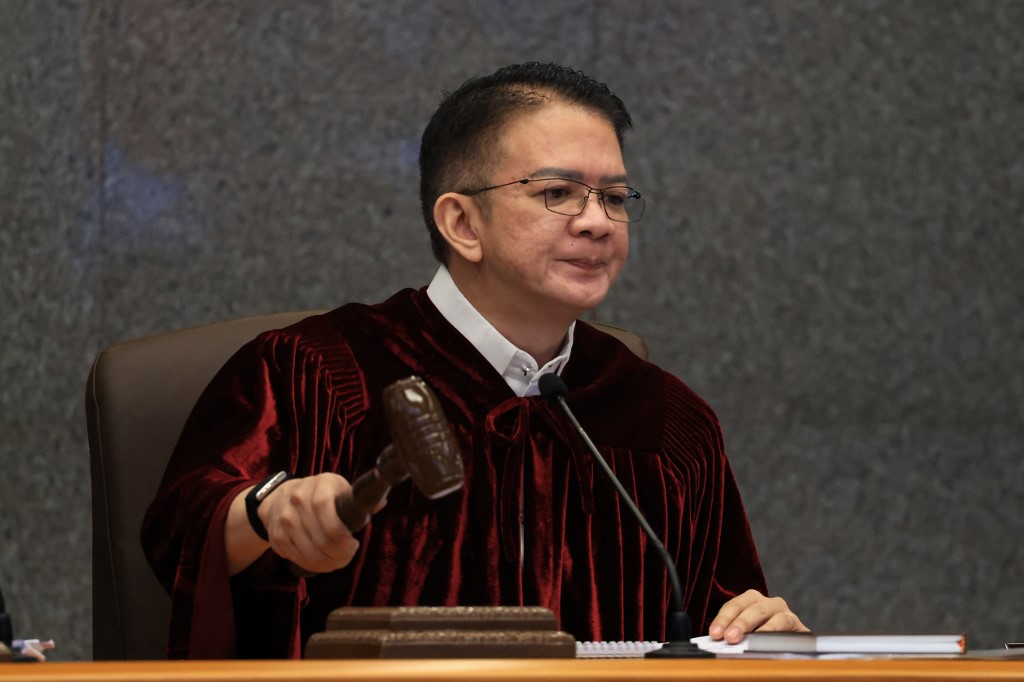
Now, the impeachment trial of Vice President Sara Duterte is coming to the more exciting part: The presiding officer, senator-judge Chiz Escudero, issued a ruling allowing—with some limitations and reservations—the production of her bank and tax records to reinforce the prosecution’s allegations that she had acquired some unexplained wealth.
Once enforced, Escudero’s ruling would grant the House prosecution panel's request for the submission of Duterte’s financial, bank, and tax records, those of her husband Mans Carpio, and their associated businesses.
The court expects to receive the documents before the end of the month.
Citing various past rulings by the Supreme Court, the Sandiganbayan, and previous impeachment courts, Escudero ruled that the requested documents are prima facie relevant and material to Article II of the impeachment complaint, which focuses on allegations of unexplained wealth and misdeclared assets.
But he denied the prosecution’s request to open Duterte’s foreign account, sans a waiver form from the depositor, the VP herself.
“Malaking tagumpay na po ito,” said prosecution lawyer, Rep. Leila de Lima, after the trial, cutting short another congressman whose opinion was sought about the foreign currency.
“We would not expect more. The issue here is that this is an impeachment trial, to determine the Vice President’s fitness for the position.”
Black cat in the dark room
If enforced, Escudero’s decision would provide the prosecution with the platform to pinpoint, if it can, given the defense’s claim that the prosecution seemed at a loss where to find the alleged ill-gotten wealth, because of the voluminous financial documents it had requested.
Whatever, it is expected to turn the tide in favor of the prosecution in terms of public perception, at the very least.
If handled well, the documents would provide what the prosecution had been needing all along—a smoking gun to pin down Duterte and get rid of her in the May 2028 elections.
But while listening to the decision, the prosecution didn’t show excitement; neither did the defense show dismay. They all looked subdued.
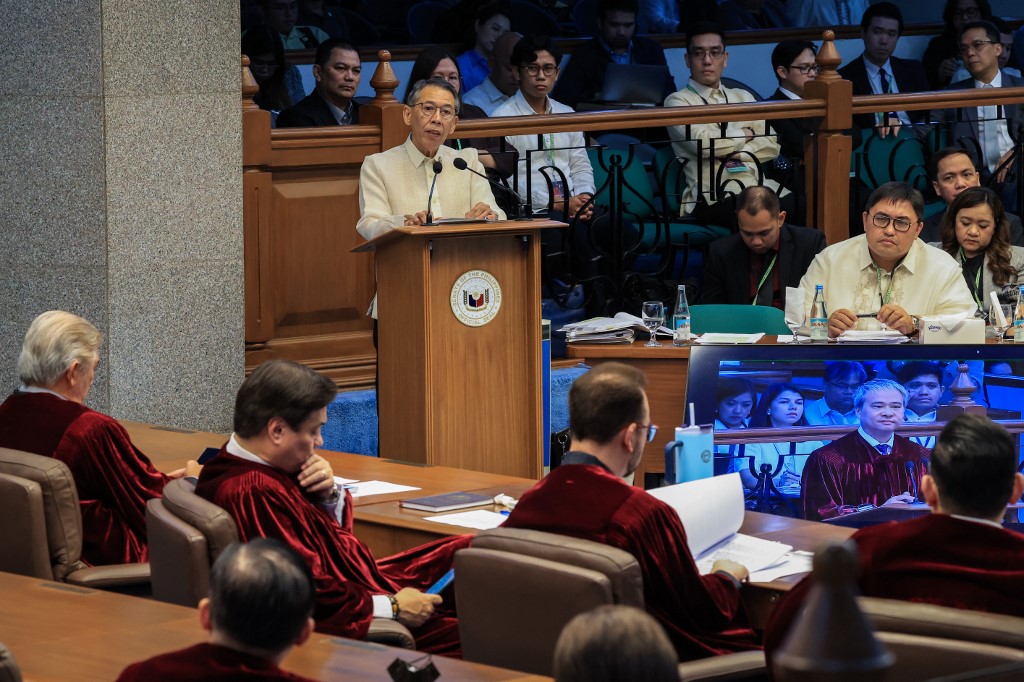
If anything, the public should celebrate the conduct of the Monday trial with prosecution lawyer Rep. Chel Diokno and defense counsel Atty. Michael Poa at the helm of the oral arguments. They were looking at the different sides of the same coin, yet the two managed to keep their cool, their sanity, and their civility despite forcibly arguing their respective positions.
Now if only their rah-rah boys, including ex-justices and former law deans, would behave similarly outside the court, the trial would not be as polarizing as it had been the past many, many weeks.
But no one would say for now that the prosecution wouldn’t find the proverbial black cat in the dark room, now that the court allowed it to switch on the light in the dark room, unless, of course, as the defense alleged, there was really no black cat in the room.
'Relevance, material'
Until after the trial was adjourned, the defense panel maintained that the prosecution failed to establish “relevance and material” as to the requested documents.
“This is just a subpoena, not evidence yet,” he said. We maintained that we should observe due process. Due process is tested when it is inconvenient, now when it is convenient.”
Escudero read his decision written in several pages, which seemed that he wrote it even before the court finished the oral arguments on the seventh day. (Editor's note: Impeachment court spokesperson Atty. Reginald Tongol, in a press conference after the July 20 hearing, said Escudero had been ready to rule on the prosecution's request for subpoenas as early as the impeachment trial's opening day on July 6. The presiding officer, however, decided to delay it following the prosecution's renewed motion seeking the same subpoenas.)
Only three senator-judges raised questions on Monday for the prosecution and defense panels: Joel Villanueva and siblings Alan Peter Cayetano and Pia Cayetano. Nobody knew what was on the mind of the other senator-judges, who did not speak up, especially those who issued scathing remarks about their colleagues over the weekend.
Their questions ranged from what the prosecution hoped to get from a court subpoena to why the defense was against it, what constituted “material evidence at hand,” and what the defense had been saying was a “fishing expedition” given the voluminous documents now subject to the court subpoena.
After listening to the decision, the Cayetanos expressed manifestations saying they would comment or add to the decision. So did senator-judges Imee Marcos, Loren Legarda, and Camille Villar.
Padilla did not question the Escudero ruling, but added that the Senate and other government institutions should now look at all other public officials.
Whether their manifestations would change Escudero’s decision or not, the defense said it was ready for the next session.
The defense didn’t know yet if it would appeal Escudero’s decision or bring it to the Supreme Court.
“There seems to be no appeal for consideration under this court,” Poa said. “But this is not something we didn’t expect.”
Sara's rights
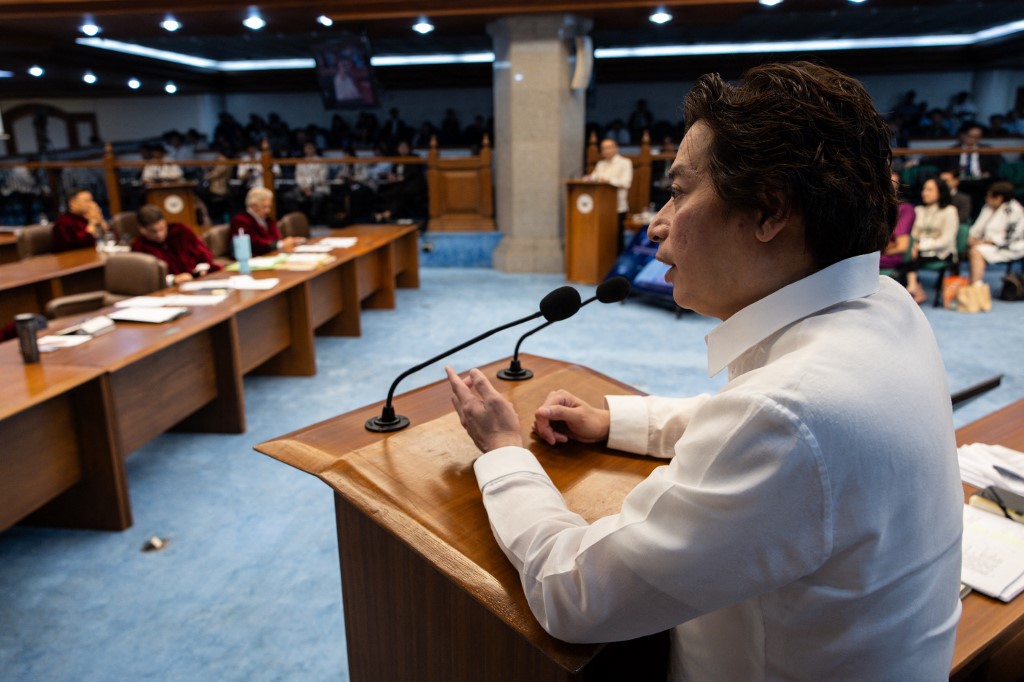
Early on, the legal arguments posed both by the prosecution and the defense panels zeroed in on whether the impeachment court had the power to open her bank and tax records in the face of laws limiting the same power.
If so, would that violate Duterte's right to due process and legitimize what the defense called the “prosecution’s fishing expedition,” having accused her and her husband of unexplained wealth, as the defense said, but even after the complaint was filed in the impeachment court, the prosecution still had yet to find evidence to support the complaint?
Over several hours of back-and-forth discussion over what constituted “probable cause,” “sufficient evidence,” or “fishing expedition” to look for the “unexplained wealth,” not necessarily “ill-gotten wealth,” what does the court, and the public by extension, hope to see if it opens Duterte’s bank and tax records?
Is there a law so powerful to circumscribe the impeachment court, a body created by the 1987 Constitution to find out if the Vice President had acquired unexplained wealth? Or amassed if you please, because the amount alleged was in billions?
Conversely, citing the legal maxim, “the spring cannot rise above the source,” Poa said. Is the court higher than the 1987 Constitution, which created it?
On the seventh day of the trial, the prosecution reinforced its position, saying it only wanted the truth on the alleged wealth, and the tax and bank records would lay it bare.
The defense blocked it every step of the way, claiming the prosecution, despite the many months of House hearing, found it difficult to look for a black cat in a dark room, because there was no black cat in the dark room in the first place.
Both panels spent the afternoon pushing for their legal arguments.
In doing so, the trial turned legalistic when both panels talked about Obiter dictum (Latin for "something said in passing") and ratio decidendi (the substance of the decision) when they tackled the Supreme Court decision dismissing the first House impeachment complaint in July 2025.
An obiter dictum is an incidental remark or observation made by the high tribunal in the July 2025 decision.
Unlike the ratio decidendi (the core, binding legal reasoning required to decide the case), these statements are not essential to the ruling and carry no precedential weight, the prosecution said.
Truth not confidential
Before the court opened the trial, members of the prosecution went to town using the word “katotohanan (truth)” in television and radio interviews while the defense stuck to its buzzword: “due process.”
Nobody in the trial, not the prosecution lawyer, not Diokno, for all his elegance in “laymanizing” the proceedings, bothered to talk about the facts of the allegations of ill-gotten wealth.
How much money do we know so far? What’s the rate of increase so far? Everything was based solely on the records provided by the Anti-Money Laundering Act, which the defense had questioned before the high tribunal.
Neither camp was willing to give up, but the prosecution team members, especially those quiet in the hearing, had the upper hand, exposure-wise, in media interviews. They were everywhere.
In contrast, the defense maintained a restrained stand, but went all out in the courtroom.
Last week, there was obvious impatience over the dragging trial because of so-called “legal technicalities.” The public at large, including former SC justices, spoke aloud in various public fora, unmindful of unduly influencing the proceedings.
While it was good that the public has remained vigilant over the trial, there’s another view that the court should not yield to collective public pressure, but rather decide based on the rules of court and on evidence. Even the political side of the trial does not allow it to operate based on mob rule.
Overall, there was nothing to be afraid of in the first place, according to Diokno, because a vote for the prosecution was not a vote to convict Duterte of unexplained wealth, as provided for in Article III of the impeachment complaint.
Poa said the same thing after Escudero handed down his decision.
So, what would Duterte's tax and bank records reveal? Now, everybody would like to see the black cat in the dark room.
Disclaimer: The views expressed in this article are those of the author and do not reflect the opinions of PhilSTAR L!fe, its parent company and affiliates, or its staff.