

What to do—and not to do—in a packed elevator
For people who either work or reside in multi-story office buildings and sleek residential high-rises, taking the elevator to and from their respective offices or homes is part of the routine. This may cause some to overlook the fact that riding in an elevator requires them to practice proper behavior as they would in other “shared spaces” like passenger planes, ships, buses, trains, and other public conveyances.
Elevator etiquette is particularly crucial since these building contraptions vary in size and passenger capacity. Consider the enormous “service elevators” of S&R that can easily accommodate a batch of customers and their large shopping carts—or even a wheeled-in emergency bed. And then there are those nice-smelling elevators in luxury residential condominiums or those in shopping malls that have dedicated elevator persons to press your desired floor once you quietly announce your destination.
Thus, when a gentleman friend and colleague messaged me about his unpleasant encounters in elevators, I heeded his suggestion about tackling this topic in this week’s column.
No to loud chatter in a packed elevator
Q: My office is on the 29th floor of a building, so I take the elevator at least four times a day. It was beyond irritating when I recently encountered these two occurrences:

1. A group entered and hogged the space in a modest-sized elevator and proceeded to carry on with their loud chatter, cracking jokes at the top of their voices and laughing wildly, oblivious to the presence of other passengers.
2. I stepped into a packed elevator, with passengers only a few inches apart and practically inhaling each other’s breath. I found myself standing behind a girl who repeatedly ran her fingers through her long hair, even mindlessly flicking it. Rooted to a spot with no room to maneuver, I cringed at the thought of the dust and microbes in her hair being deposited in my face!
CONTINUE READING BELOW

What must one do under such circumstances? Would it be ungentlemanly to shush the boisterous group of passengers—and tell them to take their chatter outside the elevator?
How can one call the attention of the hair-flicking girl without sounding hostile?—Bob Z.
A: Except for those designated as exclusive for VIPs, elevators in both office and residential buildings are considered public spaces and are therefore intended to serve the buildings’ regular tenants and their guests—and the general public.
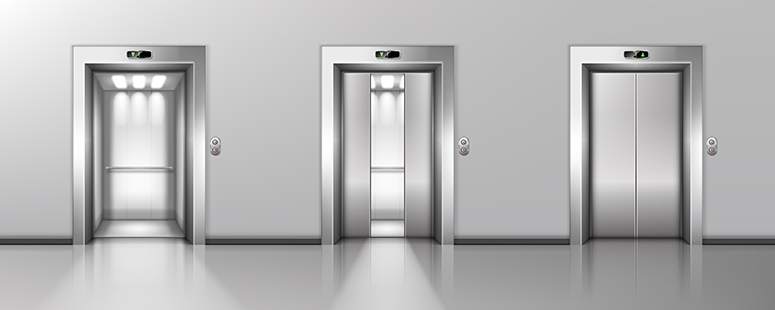
The restricted spaces in elevators are often not given a second thought since elevator trips are normally brief, taking only a few minutes, even in those skyscrapers in central business districts. However, it may feel rather awkward when we are forced into a social space where everybody pretends that other people don’t exist. This is why it is imperative that we, as elevator passengers, follow certain rules of etiquette so that we may feel less discomfited.
To answer the question above, most people would feel annoyed or even stressed out by strident voices in a cramped space. You could have given them a sweeping glance of disapproval, or you could have expressed your disapproval by saying, “Excuse us, guys, but can you please keep your voices down? This is a small elevator!”
It would have certainly not been ungentlemanly to call out the woman who had carelessly flicked her hair onto your face. Being unable to move away, you could have calmly but pointedly told her: “Excuse me, miss. Your hair is in my face.” Sometimes it might be just what hair-flicking females need to hear and heed.

11 dos and don’ts for sharing elevator space
- Don’t get into an elevator that is obviously full to capacity. You may impatiently try to squeeze into a little available space that you see, but please be gracious enough to wait for the next one.
- Don’t rush into an elevator when the doors open. Stand to the side and allow the passengers some space to exit before you enter.
- When you’re headed for the higher floors, do step out of a full elevator to allow people at the rear to exit, even if you’re not yet getting off. Step aside on either side of the hallway to let people out, then you may get back on.
- Always stand facing the door. Don’t even try facing sideways or the rear of the elevator.
- If the elevator is not yet full, passengers should not obstruct those entering. On the other hand, those who are entering must step into either side or go all the way to the back.
- Move to the back of the elevator if you’re going to a high-rise’s upper levels. If you’re going to the 30th floor, for example, don’t keep your position close to the door. Allow those who are exiting at the lower floors to be in front.
- If you are standing near the control panel, be willing to press buttons for them. Others might politely request, “Could you press 7, please?” And say thank you when they do.
- Avoid talking loudly while in the shared space of an elevator. Don’t use your mobile phone or stop talking to your companion upon entering an elevator. Resume your conversation after you’ve stepped out.
- Be alert as your floor approaches. If there is no elevator attendant and the elevator is full, politely announce your stop with a simple “Excuse me, this is my floor,” and make your way to the front.
- Respect the queues. If the elevators are busy and have people lining up, never break the line and wait for your turn. If there are dedicated elevators that give priority to seniors, PWDs, and the pregnant, allow them to go ahead and join them only if there’s room.
- We all try to practice good hygiene, but odors and health habits become more important when we take the elevator on a regular basis. This is because body odors and sounds are heightened in its small, confined space. Try not to cough wildly and avoid belching while inside the elevator. Do stifle a sneeze with a handkerchief, and for heaven’s sake, try not to pass gas! If any of the above accidentally happens, please say excuse me.
Still on odors, avoid bringing extremely smelly food inside the elevator. If you can’t avoid it, pack the items in tight food keepers. Never eat or nibble on snacks during an elevator ride. And lastly, don’t apply perfume or cologne because people respond differently to various scents. What smells alluring to you could make your co-passengers gasp for breath.
Overall, being considerate and thoughtful always works best when sharing small spaces. Heaven forbid that you ever find yourselves in a stuck elevator due to a power outage. But if and when you do, that’s when your real character comes out.

WATCH: Is OPM still as good as it used to be? (Generations Ep. 20)
September 9, 2026
WATCH: Can we talk about death and grief? (Generations Ep. 25)
October 14, 2026
WATCH: How to experience Bangkok and Kanchanaburi in one trip
October 21, 2026