

NEPO BABIES
The handbag is real, the flood wall imaginary
The Philippines has always been a country of extremes. At one end, the minimum wage worker doing math in the grocery aisle, deciding whether sardines or instant noodles stretch longer. At the other, the children of corrupt officials and shady government contractors—“nepo babies,” in today’s parlance—who treat a P300,000 bag as just another “starter tote.” Welcome to Instagram, where the only thing louder than the flex is the silence of a Bureau of Internal Revenue lifestyle check.
This isn’t new, of course. Our political class has long been adept at converting public service into private splendor. But what used to be whispered about in gated subdivisions now gets blasted in 4K across social media feeds. We no longer have to speculate about corruption—it has been conveniently documented, filtered, and uploaded for public consumption. The new archives of plunder are not stored in dusty court records but in Stories and Reels captioned, “Another blessed day.”
The latest parade of privilege sparkles with the usual luxury-brand suspects, plus a sports car or two for flair. Scroll a little further and you’ll find brunch in Tokyo, champagne in Paris, a condo selfie with the BGC skyline, or a house/closet tour. Corruption in this country doesn’t just build dynasties anymore—it builds content. Sometimes handbags. Sometimes, phantom flood walls.
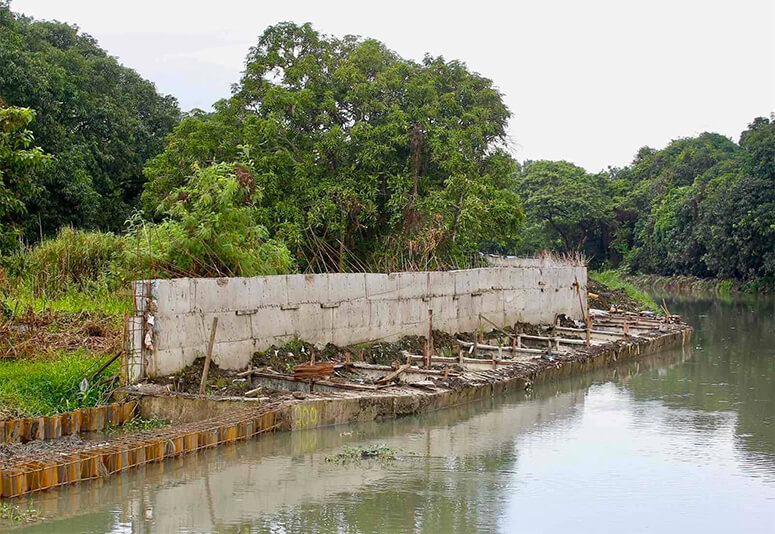
What’s almost impressive is the choreography. Every post follows the same formula: tilt the bag, pout, add a caption that reads “hard work pays off.” Hard work, of course, being code for “my father works hard at public office.” It’s the kind of narrative that almost makes you believe a Lazada side hustle selling phone cases can finance a BMW. Almost. Then you remember: If we can build a P55-million river wall that never stood, maybe a German luxury car can also appear by magic. Ghost projects, ghost walls, ghost accountability—but the Van Cleef & Arpels, at least, is tangible.
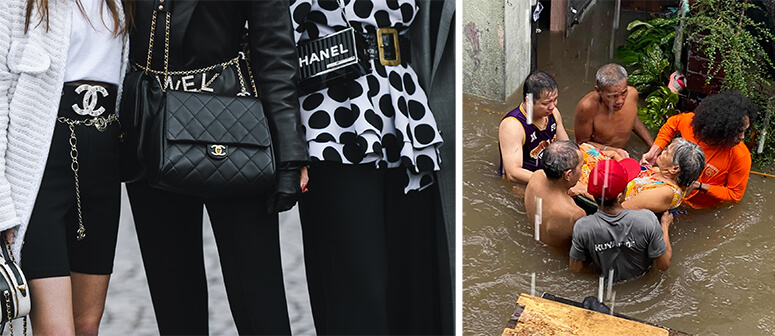
Meanwhile, there’s the call for lifestyle checks, which borders on comedy. Will investigators be required to follow these nepo babies on Instagram? “Good morning, Sir, we noticed your daughter’s Chanel haul from her Story last night. Care to explain?”
CONTINUE READING BELOW

And while we’re at it, perhaps someone could also check on the country’s other lifestyle flex: the ghost flood control projects. A P55-million river wall in Bulacan that never materialized. The P300-million worth of phantom works in Negros. Roads that vanish on inspection. Dikes that exist only in press releases. Public funds disappear faster than a Story highlight. The same government that can’t seem to build a dike manages to bankroll a Richard Mille. Coincidence? Hardly.
This is what makes the spectacle infuriating: the excess isn’t just tacky, it’s instructive. Corruption has a face, and lately it has an Instagram handle. It’s not the foggy abstraction of “misused public funds.” It’s a teenager clutching a Dior, captioned “Blessed.” It’s a twentysomething traipsing in Milan, hashtag #workhardplayhard, paid for by taxpayers. A ghost project turns into a ghost lifestyle—except the luxury bags and watches, unlike the river wall, are very, very real.
Filipinos, of course, aren’t blind. Screenshots spread faster than fake news, and the backlash comes swifter than a 9.9 sale. We laugh, we rage, we tsk-tsk in group chats. The memes write themselves: miraculous businesses, impossible side hustles, the audacity of “hard work pays off” posts. But the script is familiar. After the backlash comes the parents’ cry of cancel culture, the children’s switch to private accounts, and the country’s famously short memory.
Because this is the cycle: outrage, denial, amnesia. The bags remain, the cars remain, the condos remain. What doesn’t remain? The missing billions, the unbuilt flood walls, the projects that could have kept communities safe from drowning. The Philippines is flooded—literally—and still, somehow, it is the taxpayers who are asked to tighten their belts while the heirs of corruption loosen theirs to make room for another accessory.
Until then, it’s content. And if nothing else, this generation of spoiled heirs has taught us a modern truth: Corruption photographs beautifully. The filters are free, the outrage is instant but fleeting, and the rest of us, as usual, just foot the bill. Because in the Philippines, handbags are concrete and flood walls are imaginary. The dike collapses into nothing, but the Chanel is undeniable. The river wall vanishes, but the Richard Mille ticks on.
And perhaps that is the bitterest irony of all: In a country that cannot build the infrastructure to save its people from disaster, it has perfected the infrastructure to broadcast its corruption in real time. Welcome to the Philippines—where ghost projects vanish into the flood, but the flex, tragically, always floats.

WATCH: Discovering Vietnam in three days
June 9, 2026
WATCH: Is OPM still as good as it used to be? (Generations Ep. 20)
September 9, 2026