

My Roman Empire … is Rome
Lately, I have been rewatching Rome, the HBO drama whose main characters were not the headlining celebrities of the time, but two Roman legionaries who were mere pawns in a high-stakes geopolitical game.
The first time I watched the series was more than a decade ago, when every Sunday meant anxiously waiting for the next episode to air (just like what House of the Dragon is doing to me now). My interest was rekindled by my current reading, James Islington’s hefty 720-page fantasy novel The Will of the Many, whose politics, institutions and social hierarchy owe an unmistakable debt to ancient Rome.
When I mentioned this to my daughter, who gave me the book to begin with, she asked, “Dad, have you heard of the ‘My Roman Empire’ meme?”
Stories of ancient Rome endure— with the main themes of greed, murder, treachery, revenge, debauchery, tyranny, social inequality and conquest.
After I shook my head, she explained that it describes that one subject a person keeps returning to: an obsession, a fascination, or simply something that occupies far more mental space than anyone else would expect. The original joke was that if you asked a man how often he thought about the Roman Empire, the answer was almost always, “More often than you’d think.”
Then she laughed at the realization that my Roman Empire is actually Rome. Evidently, this is the least imaginative answer possible. It was not an entirely inaccurate conclusion.
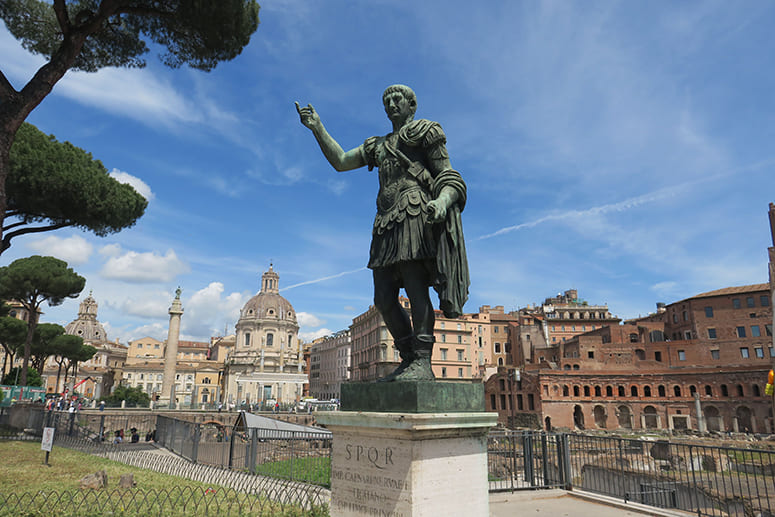
This latest rewatch of Rome is only the most recent stop on a journey that has lasted years. At different stages of my life, I have immersed myself in I, Claudius, Spartacus, Ben-Hur, The Eagle, and both Gladiator films. I have read enough historical accounts about the Republic; the First Triumvirate of Caesar, Pompey and Crassus; the conspiracy of Brutus and Cassius; and the love affair of Mark Antony and Cleopatra to make the ancient Senate feel almost familiar. There is an addictive comfort in these stories, where grand historical epics neatly mirror the petty cycles of modern human nature.
CONTINUE READING BELOW

Even our family trips to Europe betrayed where my interests truly lay. Paris has its Eiffel Tower, Arc de Triomphe and Notre-Dame Cathedral. Berlin has its remaining wall, Brandenburg Gate and Checkpoint Charlie. London has its Buckingham Palace, Tower of London and Westminster Abbey.
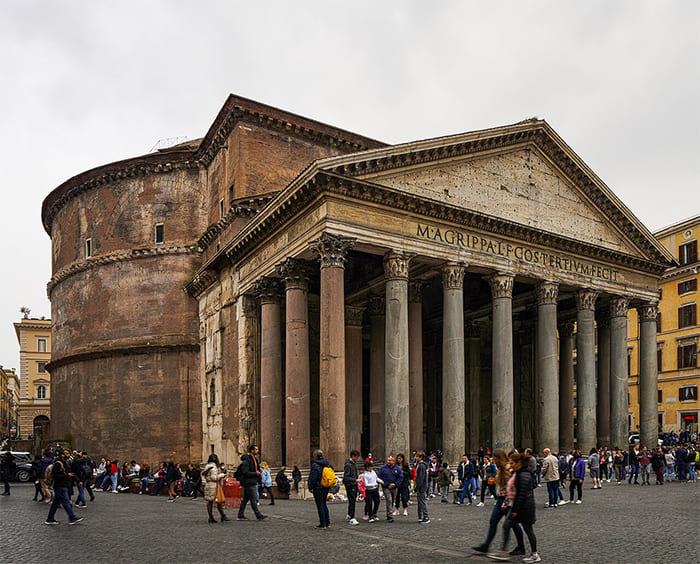
But the city I remember the most, the one I would never hesitate to revisit even without throwing a coin into the Trevi Fountain, is Rome. Walking through the Forum, standing beneath the soaring dome of the Pantheon, and wandering the Colosseum took me back to an era that was both highly civilized and unapologetically barbaric. I basked in the history of it all, reveling in places I had long inhabited only through films and literature.
So yes, my daughter was absolutely right. At least for now, my Roman Empire is Rome.
The funny thing is that one does not need a deep interest in history to keep thinking about Rome, because it seems Rome never really left.
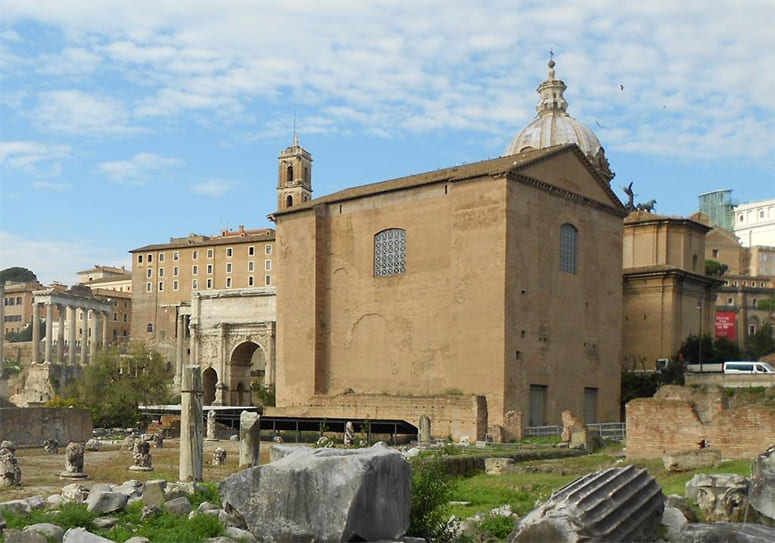
These days, at our very own Senate, lawyers and politicians still grandstand by channeling their inner Roman—peppering their arguments with Latin legalese like sub judice, pro bono, sui generis, prima facie, subpoena duces tecum and subpoena ad testificandum, ab initio, sine die, ad cautelam, or the highly impressive Actus non facit reum nisi mens sit rea. This has prompted the impeachment adviser and spokesperson of the House prosecution panel to say that the trial should be conducted and explained in Tagalog. Good luck to that.
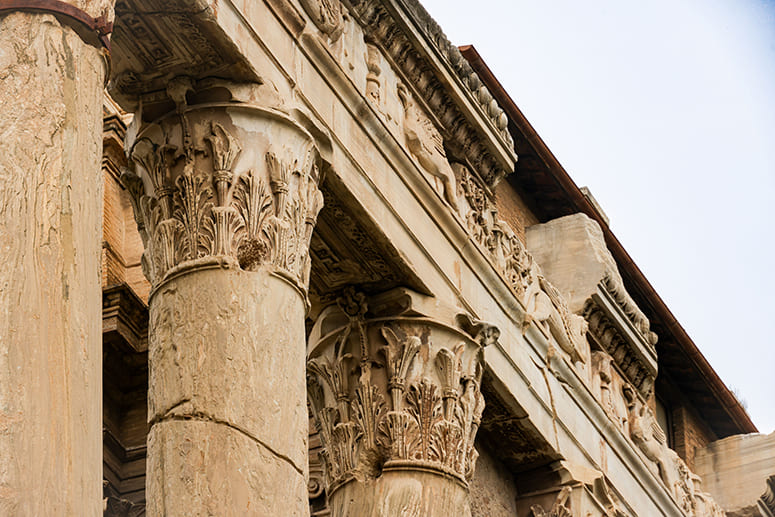
Meanwhile, architects continue to replicate classic Roman columns. Military organizations borrow Roman terminology, including orderly legionary field formations. Every ambitious ruler eventually gets compared to Caesar, every traitor to Brutus, and every declining superpower gets measured against the fall of the Empire. We use their blueprints to build our courts, our laws and our dramas.
Stories of ancient Rome endure to tickle the human imagination. A number of writers keep reimagining them without deviating much from the main themes of greed, murder, treachery, revenge, debauchery, tyranny, social inequality and conquest.
Perhaps that’s why the internet chose Rome for its meme. It is not merely a civilization that existed two thousand years ago, but an idea that continues to echo through almost everything that came after it. Even the English language is rife with words that originated in ancient Rome— roughly 60 percent of the English vocabulary boasts Latin roots, by some estimates.
But then again, maybe the meme was never really about Rome. Perhaps it was about the subjects that quietly become our lifelong companions. Some people can recall the names and statistics of every great athlete from the last 50 years. Others can spend hours discussing Middle-earth, Marvel storylines, gaming tactics, or every Studio Ghibli production.
We all have topics that reward endless curiosity. We revisit them not because they are useful, but because each return reveals something we somehow missed before—like reading a book or watching a film again a decade or two after the first encounter. Or maybe we do it just because we find the experience immensely rewarding and satisfying.
Mine just happens to involve emperors, republics, legions and roads that supposedly led to one city.
I believe that once you’ve crossed the Rubicon—yet another reference to that bygone-yet-not-really-bygone era—there is just no going back.
So yes, my Roman Empire at the moment is Rome. But at other times, it is dragons or magic, or both. Sometimes, I streak to the other end of the spectrum and end up in a galaxy far, far away. And when I want to stay grounded, my Roman Empire takes me to places where I need subtitles to appreciate the narrative.
How about you? What is your Roman Empire?

WATCH: Is Philippine cinema still thriving? (Generations Ep. 19)
September 2, 2026