

AuroraPH: Bringing light and learning
BrandedUp in partnership with

Aurora means “daybreak” in Latin—and, true to its root, AuroraPH brings that first appearance of light to last-mile schools in the Philippines.
Last-mile schools are under-resourced and disadvantaged learning facilities, often isolated by geography and still lacking basic utilities like electricity. While almost 99 percent of public schools already have access to power, more than a million Filipino students still go through their day without it, hence widening the digital divide in education.
To help reach the last 1 percent, AuroraPH, Aboitiz Foundation’s flagship education and connectivity initiative in partnership with the Department of Education and other organizations, aims to support 300 last-mile schools across the country with solar power, internet systems, digital learning tools, and capacity building—serving as a signal of hope and a new beginning.
With support from Aboitiz Power Corporation (AboitizPower), its subsidiaries, and other local partners, iterations of AuroraPH have already reached remote schools in Nasipit, Mariveles, and Davao, among other areas in its host communities.
The Matigsalug people in Davao City
The elementary schools in Sitios Kabangbang and Lapinig in the Marilog District of Davao City both had to rely on gas lamps when the sky grew dark.
Students from the Matigsalug tribe were used to living in unenergized homes and studying in a school that had no electricity.
CONTINUE READING BELOW

“One of the biggest challenges is technology. On how we can keep up with the trends outside; how we can more effectively explain so that students can understand better,” explained Lapinig Elementary School Head Judy R. Patac.
“The laptops we use don’t last long because once they get drained, there’s no available electricity to charge them. Same with cellphones; we cannot charge them. Even the basic need of having light is also hard,” explained teacher Marima Guillen of Kabangbang Elementary School.
To help these far-flung schools, the Aboitiz Foundation, together with Davao Light and Power Co., an AboitizPower distribution utility, provided them with five-kilowatt solar panels with battery storage through AuroraPH last November 2025. The initiative also provided them with internet connectivity and digital learning tools.
“Our children have long endured the hardship of studying in the dark. Now, they can really focus on their studies because there is light. That is why they are really thankful for Davao Light’s help. Their lessons are now easier to understand,” shared Matigsalog Datu Ariston Mabayao, the local chieftain.
“It wasn’t just light that AuroraPH brought to us and the children, but also a new hope that their education can prosper,” added Patac. “The teachers think that it is a big help. They no longer have to make and color their visual aids because the actual pictures are much more colorful. It brings more life to what we teach.”
The Higaonon Community in Nasipit
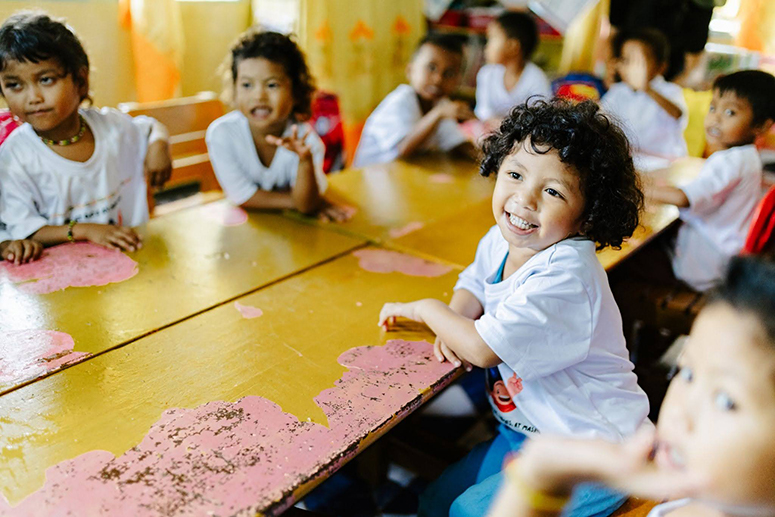
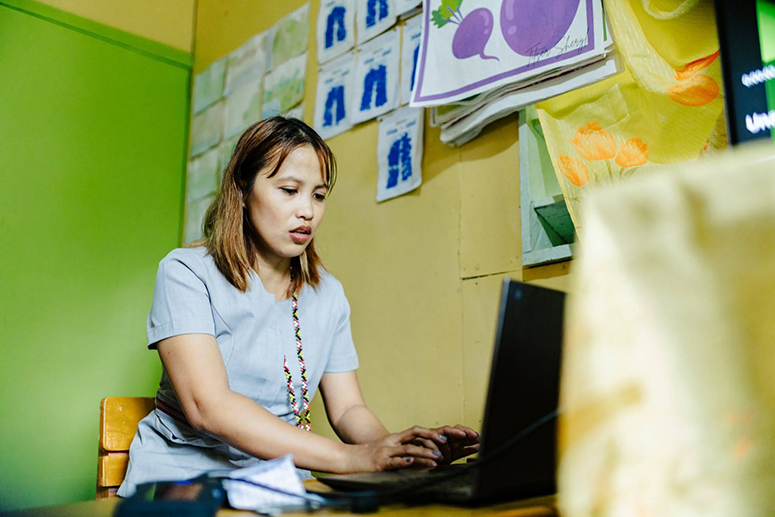
For years, the faint glow of kerosene lamps and improvised battery-powered lighting lit sitios Baboy-Baboy and Mangumihay in Nasipit, Agusan del Sur. For these remote communities, the lack of reliable electricity severely limited classrooms serving the indigenous Higaonon community.
Reaching the two sitios from the city proper takes about an hour to reach on a habal-habal—an informal motorcycle taxi—and requires passage through dirt roads. As a result, having access to electricity, the internet, and educational resources was difficult and became inadequate.
“Before, we relied on basic tools like chalk, blackboards, and books for our lessons. We had to go down to the town just to access the internet because there was no electricity in our community,” recalled Higaonon native and licensed teacher Jimboy Mandolihay. “We also had no way of recording and preserving our culture and the knowledge shared by our elders.”
Just this year, Mandolihay’s hope for better opportunities for the students at the Baboy-Baboy and Mangumihay elementary schools began to take shape with help from AuroraPH.
AboitizPower subsidiary Therma Marine, Inc. and Aboitiz Foundation facilitated the satellite internet connectivity, allowing learners and teachers to browse the internet and do research.
At the same time, Aboitiz Construction Inc. provided a 5.49-kilowatt peak solar PV system, while the local government and other private sector stakeholders donated digital learning tools.
“We hope that through these opportunities, more people from our community will achieve their dreams, whether becoming teachers like me or pursuing whatever goals they have in life,” said Mandolihay.
“These schools are really among the farthest in the province. Around 90 percent of the inhabitants here are really indigenous peoples belonging to the Higaonon Tribe,” explained Agusan del Norte Governor Angelica Rosedell Amante.
“The impact of this is that we are giving equal opportunities to the children living in far-flung areas to be able to receive the same kind of education that those students in the town proper are getting,” she added. “This is already a technology-driven era, so they will not be left behind.”
The Aeta Magbukún Tribes in Mariveles, Bataan
In Mariveles, Bataan, a school that began outdoors under trees with makeshift learning aids was also equipped to meet the evolving needs of its students, which include those from the indigenous Aeta Magbukún tribes.
In the early 2000s, almost 99 percent of the natives couldn’t read or write. Today, the Biaan Aeta Integrated School faces new challenges.
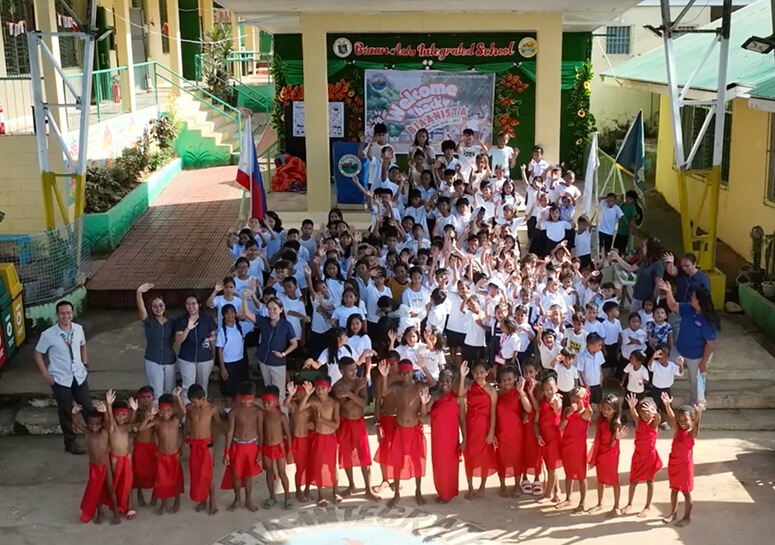
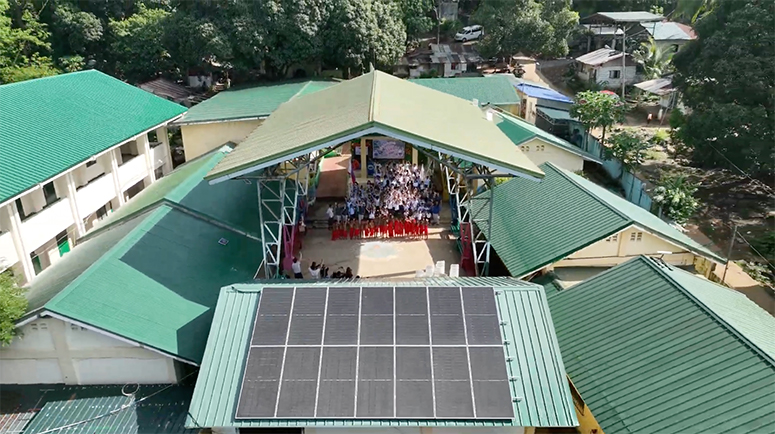
“It’s really difficult for us because there is absolutely no signal. I felt bad for the students because they were struggling, especially with their research,” said senior high school teacher Laarnie P. Oliveros. “One of the reasons I am so determined to teach here is because of the children. I see their dedication—they truly want to finish their studies.”
Last July 2025, AuroraPH climbed up the mountains and arrived at Biaan Aeta, bringing solar PVs to power 12 classrooms and Wi-Fi that connects to Low Earth Orbit satellites for internet—bypassing the need for traditional cables or cell towers.
The initiative was done in partnership with AboitizPower through GNPower Mariveles Energy Center and GNPower Dinginin, together with non-profit organizations and the government. It is the first on-grid school to benefit from AuroraPH, enhancing its existing infrastructure to reduce electricity costs and vastly improve online connectivity.
Thanks to the initiative, high achievers like Arianne Khaye G. Perio can focus more on their education and chase their dream of lifting their family out of poverty.
“When it comes to studying, I can say that I am 100 percent hardworking,” the Aeta student shared. “What I’m grateful to AboitizPower for is that they transformed our lives as students and made studying much easier.”
“I’m proud of her. She’s always on the honor roll,” said Arianne’s mother.
Since it began, AuroraPH has completed over 85 schools and benefited more than 9,000 students across the country. It is aligned with both national developmental goals and the United Nations’ Sustainable Development Goal 4, calling for “Quality Education,” or ensuring “inclusive and equitable quality education” and promoting “lifelong learning opportunities for all”.
* * *
Editor’s Note: This article was provided by Aboitiz Power Corporation.

WATCH: Save for retirement or enjoy life now? (Generations Ep. 21)
September 16, 2026
WATCH: Is Gen Z too soft? (Generations Ep. 23)
September 30, 2026