

‘Do you remember me?’ The problem comes when you don’t
We Filipinos are known to be the most resilient, multi-talented (especially in singing), and one of the happiest people in the world. We always find humor and instantly become creative in every situation, and even when we are in the middle of conflicts, crises, or disasters, we create memes, jokes and some of the funniest posters that readily make us smile and temporarily forget our problems.
This level of resilience is uniquely Pinoy and invariably ascribed to our close family ties, our lively social life, and a consistent positivity born out of our deep and strong faith in God.

So what happens when Pinoys are faced with unexpected and potentially embarrassing social situations?
There was a time when Good Manners and Right Conduct was taught as a subject in elementary schools as part of the curriculum, but now people find themselves in a quandary on how to act appropriately or decently.
This column will attempt to take a look at commonplace or special and unusual situations and hopefully give answers and suggestions that may inform how Pinoys (and people in general) should deal with or handle potential conflicts or problems when dealing with others, whether they’re with their families, friends, officemates, or even complete strangers.
Senior moments
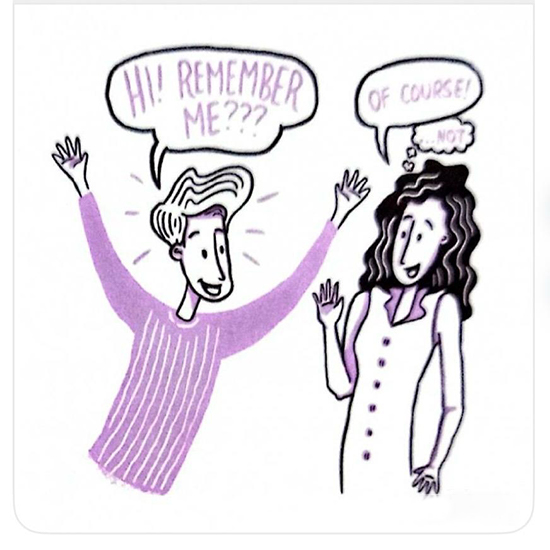

Question: Is it just me or is it actually annoying to have someone approach you at cocktail parties or at social events and introduce themselves with, “Hi, Ma’am or Ms.. Do you remember me?” The problem is I don’t. I meet legions of people in my profession and I have, at best, only vague memories of those encounters. How must I respond to this?
Answer: It’s not your fault if someone’s enthusiastic greeting fails to spur your hippocampus into instant recognition. And no, it’s not brain fog either. Their approach is wrong to begin with.
At encounters like this, the person starting the conversation can simply say: “Excuse me, Ma’am or Ms.. My name is __________. You may no longer remember me but we first met at the ______ (state the event and the specific place where you were introduced and try to mention clues that would jog their memory).” You may give specific details like: “We met at the opening of the Ayala Museum in 2019 when I was still the director of marketing. We were introduced by _____ (provide the name of your boss or the most prominent person she might know) and you were our guest speaker on the topic ______. (Give a detail that will remind her.) Do allow her to process the information so she can properly reply.
To the person who was approached, you may say: “Oh yes, I do recall that event at Ayala Museum. Is (name of a friend you know in Ayala) _______ still there? How is he?”
If you have somewhere to be and prefer not to pursue the conversation, you might say: “Excuse me, but I need to join a friend over there. It was nice meeting you again.”
Question: In the present times when our elders are increasingly being heard and seen, seniors enjoy certain benefits like priority service at establishments. However, I think that there are seniors who tend to abuse this privilege. An example is when seniors jump the queue at a fully occupied ladies’ room. They assume they are free to bypass such rules to the exasperation of those waiting patiently for their turn. Should this be tolerated at all? What is an acceptable system here?
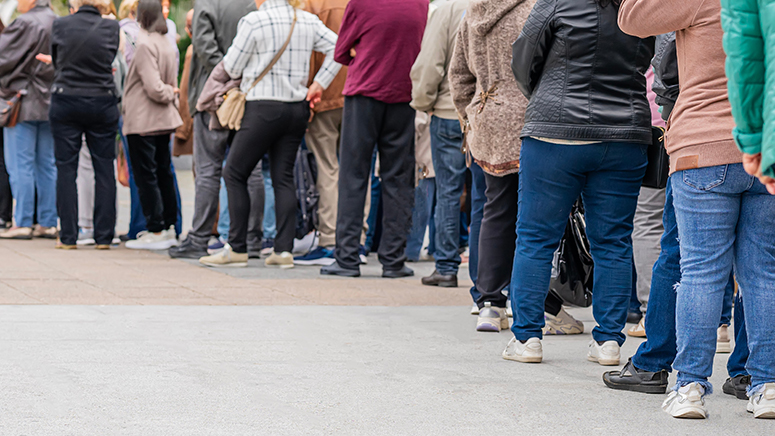
Answer: Seniors in the Philippines are quite a pampered lot and there are admittedly some who are inclined to exploit their privileges. Ignoring the queue at a ladies’ room is one of the ways they do and like it or not, this can be a contentious issue in most situations. After all, people go to restrooms to heed the call of nature and most of them really just need to get it over and done with.
In this regard, I believe that seniors must fall in line like all the others. In case of “emergencies,” however, the elderly can request for priority, something that younger people rarely decline. Filipinos, especially, are known to be extra helpful to seniors.
Not incidentally, large establishments like shopping malls now offer separate restrooms for seniors and PWDs. These are spacious enough to accommodate them and feature amenities such as metal bars, bidets, and toiletries.
As I was saying, seniors in the Philippines are, indeed, a pampered lot.
Formal dinners
Question: In numerous formal dinners and weddings I have attended, I have noted people casually switching nameplates on their assigned tables so they can be seated beside the guest of their choice. I have always assumed bridal couples give serious thought to formal seating arrangements, hence the use of nameplates. Is there any rule on this issue?
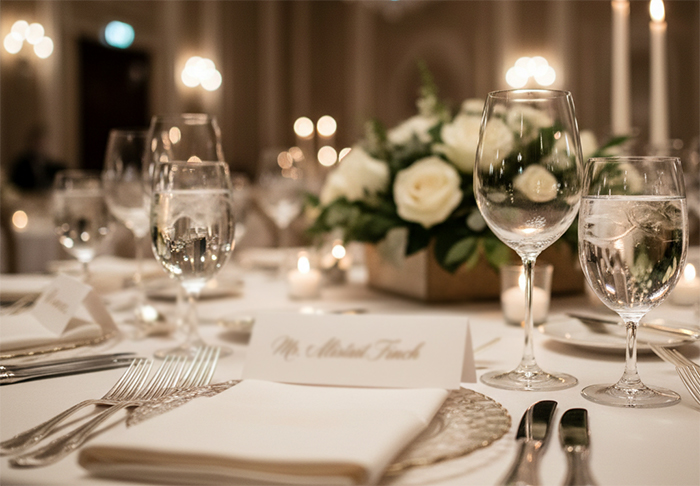
Answer: In Philippine social settings, where the hosts usually know all the invitees, and where guests are simply excited to socialize with friends they rarely get together with, switching places may be done discreetly, and only after a quick word with the hosts—and the affected guests—as an act of courtesy. However, under no circumstances should seating arrangements be altered at strictly formal functions, especially where foreign dignitaries or members of the diplomatic corps are honored guests. We all know that organizers of such formal events need to observe protocol and ensure proper placement of guests. Whim and caprice have no place in these social affairs.
Question: Is it still the norm for women at social gatherings to go to the ladies’ room to retouch their lip color or makeup? I wonder about this, having recently observed some female guests at formal sit-down dinners nonchalantly doing this vanity ritual right at their table.
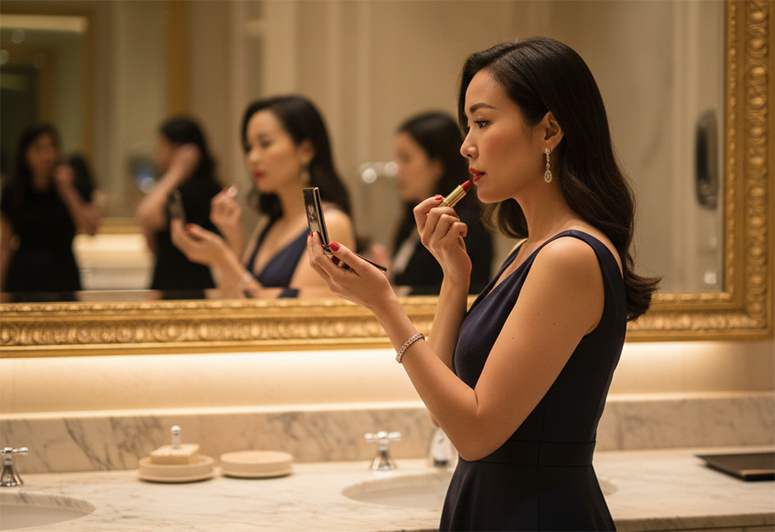
Answer: It’s still a no-no to retouch makeup during formal dinners: no lipstick application, no face powder, and—horrors—brushing one’s hair at the table. Just excuse yourselves and go to the restroom to reapply lipstick or to check your makeup.
However, this rule may be slightly revised in informal settings like lunch or coffee with your friends or family. Before whipping out those camera phones for your de rigueur group photos or selfies, you may retouch your lipstick or do a quick, discreet dab of oil blotter on your face. But if your powder application requires the use of a brush or sponge, do the entire process in the restroom, especially if it’s a business lunch with clients and/or industry colleagues.

WATCH: Discovering Vietnam in three days
June 9, 2026
WATCH: Is Philippine cinema still thriving? (Generations Ep. 19)
September 2, 2026
WATCH: Is Gen Z too soft? (Generations Ep. 23)
September 30, 2026