

Why we celebrate Filipino women
Since it’s National Women’s Month, let’s talk about women—despite the stain recently left by a certain lascivious lawmaker who couldn’t contain his lust for a married actress and mother right on the Congress floor. If anything, it simply underscores why we celebrate women this month: for their strength, their dignity, and an ability to multitask that clearly escapes some of our elected officials.
Let’s start with the star of the moment: tennis sensation Alex Eala.
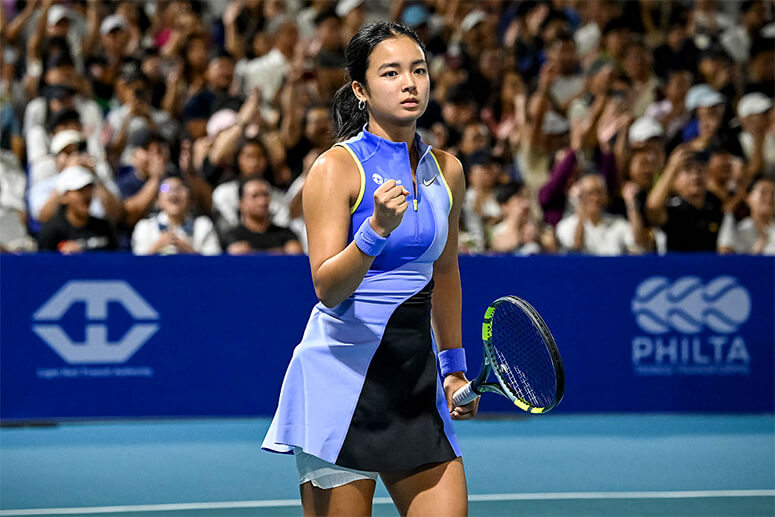
As of March 2026, she has soared to world No. 32 in the WTA rankings—a rise so dizzying it could give you vertigo just looking at the charts. She has transitioned from a promising junior to a global contender, with sold-out matches and a Nike endorsement that proves she’s “just doing it” better than most. While analysts credit the Filipino diaspora—including our resilient OFWs in the Middle East—the truth is more striking: Pinoy fans are actually flying across borders, not just waiting for the circus to come to town but following the caravan, armed with seat-sale tickets and enough Philippine flags to cover a small community.
Experts have likened the “Eala Phenomenon” to Manny Pacquiao, whose bouts famously caused even conflicts in Mindanao to pause. For a few sacred rounds, the nation—and every Filipino with a working Wi-Fi connection—held its breath together.
In sports as in music, we are arguably the best fans on the planet. Try to imagine if even one member of BTS turned out to have a drop of Filipino blood; the Pinoy ARMY wouldn’t just be a fandom anymore—it would be a horde.

That is Filipino pride—and I mean it like a lion’s pride, where every Pinoy is not just a kababayan (countryman) or ka-tribo (tribe member) but family, even if adopted by distance, a thick accent, or a blue passport. We claim one another instinctively, fiercely, and sometimes even before the person realizes they’re related to us.
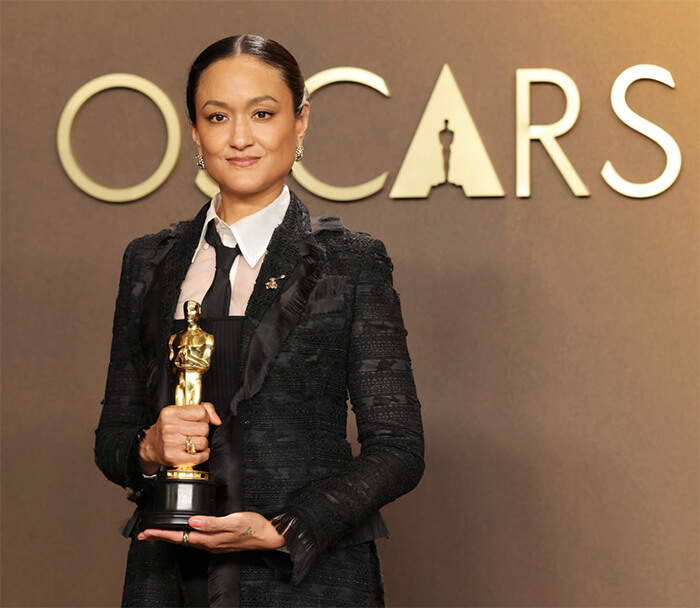
This is why we beam when someone with even a whisper of Filipino blood wins on foreign soil. At the 32nd Annual Actor Awards on March 2, four Filipino-American actresses secured major wins: Isa Briones, Amielyn Abellera, and Kristin Villanueva for The Pitt, and Hailee Steinfeld (our gritty True Grit and MCU star) for Sinners. When Isa’s father, Jon Jon Briones, noted that “everyone in the Philippines right now is crying and their hearts are full,” he was only slightly exaggerating—the other half were likely busy updating Wikipedia to reflect their “Pinoy Pride” status. (Add to the list Autumn Durald Arkapaw, the half-Filipino American cinematographer who became the first woman to win in that category for Sinners at this year’s Oscars.)
Even Broadway is feeling the heat. Fil-Ams Darren Criss and Nicole Scherzinger both earned Tonys recently—Darren for playing a plantito robot in Maybe Happy Ending (a role every millennial can relate to), and Nicole as a modern-day Norma Desmond in Sunset Boulevard.
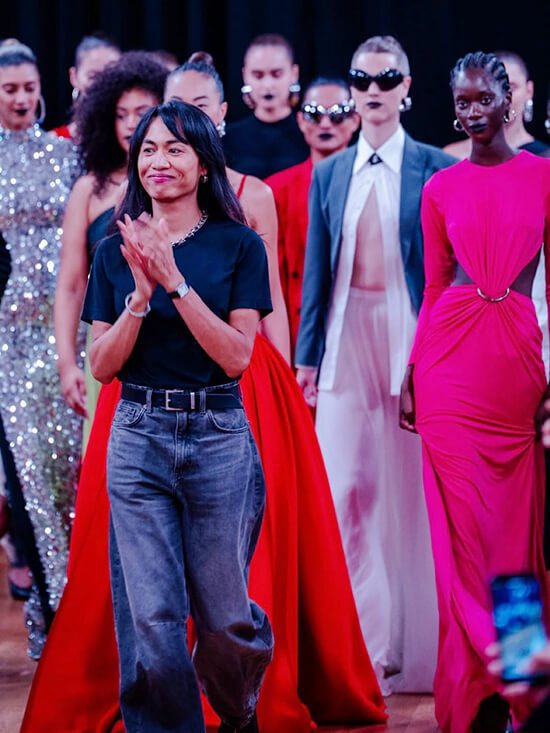
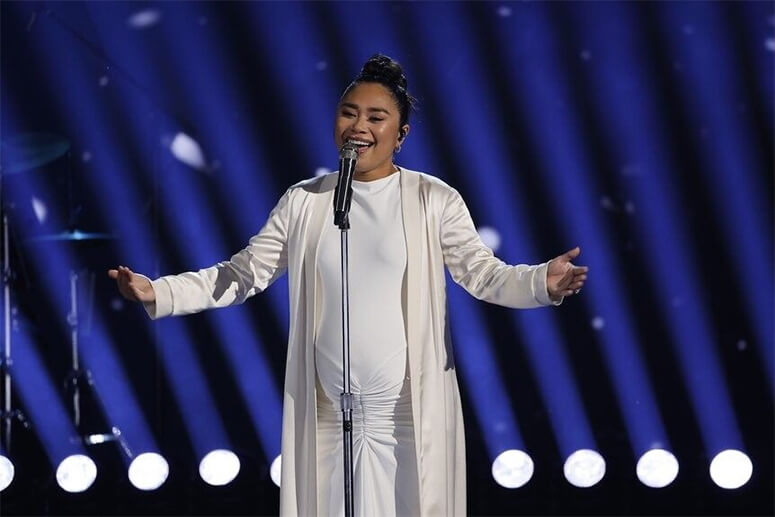
On reality TV, Jessica Sanchez won America’s Got Talent last September with a finale performance of Die with a Smile that was almost literal —her belly was so ready to pop that she gave birth just 19 days later; talk about a “show-stopping” entrance. Meanwhile, on Project Runway, Veejay Floresca made history as the first Filipino and first openly transgender woman to win after 21 seasons, proving that Filipino style is a global cut above the rest.
We see this same energy in beauty pageants. From R’Bonney Gabriel (USA) and Fatima Bosch (Spain) to Mexican Andrea Meza’s DNA-proven Pinoy roots—to borrow a Pokémon catchphrase—we “gotta claim ’em all.” We do it with affection, not appropriation. If there’s a crown within a 50-kilometer radius of a Filipino, we’re probably going to help polish it.
The same story unfolds in the arena of athletics. The 2025 Southeast Asian Games was a talent showcase for familiar names like pole vaulter EJ Obiena, boxers Aira Villegas and Nesthy Petecio, and Eala herself as flag-bearer. Young standouts like 11-year-old skateboarder Mazel Paris Alegado, triathlete Kira Ellis, and gymnast Jasmine Ramilo hit their marks, while the Filipinas ended a 40-year drought with football gold.
We celebrate the global footprint of Fil-Am gymnast Aleah Finnegan, goalkeeper Olivia McDaniel, and swimmer Kayla Sanchez. We invoke the names of Carlos Yulo and Hidilyn Diaz, who altered our sporting imagination forever. I even unabashedly claim my niece, Paralympian Gia Pergolini, as a Filipino back-to-back gold medalist at heart—even if she represented the US in Tokyo and Paris.
This narrative begins with women, and rightly so. Filipinas are racking up impressive sports statistics, winning awards, and wearing crowns. Yet this pride extends to our men, our artists, and the millions of OFWs—the nurses and doctors, caregivers and farm workers, engineers and seafarers—who carry our story to every corner of the world.
Filipino pride is a reflex of recognition. It is the instinct to declare, “May dugong Pinoy ’yan” (“He or she is part Filipino”) whenever excellence is achieved. As the late rapper Francis Magalona famously declared in Mga Kababayan (1990): “Ako’y Pilipino, buong katapatang ipinagmamalaki ko” (“I’m truly proud to be a Filipino”).
Across the oceans, this is the heartbeat behind every flag waved, every tear shed, every triumphant shout.

WATCH: Save for retirement or enjoy life now? (Generations Ep. 21)
September 16, 2026
WATCH: Is OPM still as good as it used to be? (Generations Ep. 20)
September 9, 2026