

Is Marcos being genuine or performative in his anti-corruption campaign?
Corruption in the Philippine government and countless talks about it have reached unprecedented levels.
After July rains turned different parts of the Philippines into a waterworld, flood control projects became the selling point of President Ferdinand Marcos Jr.’s fourth State of the Nation Address, as he called out officials allegedly committing corruption in flood control projects.
"Mahiya naman kayo sa mga kabahayan nating naanod o nalubog ng pagbaha. Miya naman kayo lalo sa mga anak natin na magmamana sa mga utang na ginawa ninyo nang ibinulsa niyo lang ang pera," he said.
Soon after the clarion call, Department of Public Works and Highways contractors Curlee and Sarah Discaya made the rounds after Pasig Mayor Vico Sotto called out "lifestyle" media interviews highlighting their "rags to riches" story. The couple’s interviews angered the public, and that anger rubbed off on other contractors and their “nepo baby” children, who flaunt their devilishly extravagant lives.
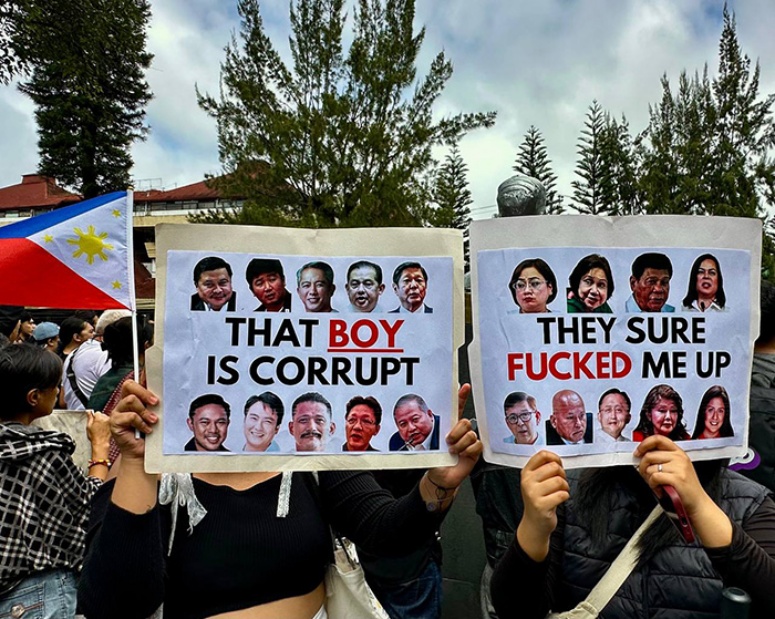
The issue, initially confined to the DPWH, seeped through the Senate and the House of Representatives. Several officials have been implicated, including the two chambers’ former leaders, Sen. Chiz Escudero and Rep. Martin Romualdez. Congressional hearings filled the news headlines and social media feeds. Marcos showed anger and sadness—even crying on-camera, in his podcast. A “Sumbong sa Pangulo” website went online. An investigating body called the Independent Commission on Infrastructure was established. The public, angrier than ever, took to the streets to protest.
CONTINUE READING BELOW

But after all that’s been said and done, the question remains: Is Marcos, who’s in the last three years of his presidency, serious about addressing the country’s corruption problem?
Julio Teehankee, a political scientist from De La Salle University, questioned whether the anti-corruption initiatives set forth by Marcos are genuine. Teehankee pointed out the elephant in the room: the Marcoses themselves being accused of corruption. This, he said, amounts to a “performative irony.”
Marcos’s dictator father and namesake placed the country under martial law in 1972. The dark period in Philippine history, marked by corruption and human rights abuses, would see its end in 1986 through a series of bloodless demonstrations known as the EDSA People Power. Since then, the Marcoses managed to claw their way back to power and rehabilitate their images, securing local and national positions here and there. It culminated with Marcos Jr. assuming the presidency in 2022 as the first majority president since EDSA.
“He himself became sort of a whistleblower by exposing all this massive corruption within his own watch, his own administration,” Teehankee said in an interview with One News’ Money Talks. “Are we seeing this Marcos—whose family has been involved in the same issue—[more] as a PNoy 2.0?” (PNoy, the late president Noynoy Aquino, was known for his “Kung walang corrupt, walang mahirap” slogan under his “Daang Matuwid” campaign.)
Teehankee, though initially saying there are “some rhetorical similarities” between the two, believes Marcos’s call may just be a “ploy to salvage the second half of his presidency, particularly his legacy.” He cited the president’s recent political setbacks: the underperformance of the administration’s coalition in the midterm elections and the Supreme Court declaring the impeachment case against Vice President Sara Duterte, his former ally, as unconstitutional.
But with Marcos addressing the corruption issue, Teehankee said it’s a means to “prove that he’s still in control and is no longer a lame duck president.”
“Nature cooperated with him and God gave him his wish,” he said. “All of this series of torrential rains and typhoons exposed a syndicate within the DPWH and within the legislature.”
Suspicions remain
Dr. Jean Franco of the University of the Philippines Department of Political Science told PhilSTAR L!fe that while it’s “okay” that Marcos used his SONA to call out corruption, several people will remain suspicious of him because of his family background.
“People will say that the call is illegitimate until such time that he admits to the legacy of corruption during the time of his father,” Franco said. “That's something that will bother his administration until the very end… especially if he will not address these accusations against him and his family.”
Echoing Teehankee’s points, Franco cited how the first three years of the Marcos presidency were defined by political issues, particularly the unraveling of the UniTeam and the Duterte impeachment. But in terms of achievement, she noted that one cannot really pinpoint what Marcos has done, especially when it comes to his campaign promise of P20 per kilo of rice.
(In his SONA, Marcos noted that the P20-per-kilo rice program has been mainly implemented through the KADIWA ng Pangulo outlets across the country, like in Metro Manila, Bulacan, Cavite, Laguna, Mindoro, and Rizal. The National Food Authority provides the rice, which is purchased directly from local farmers.)
“Marcos is trying to change or bring back the narrative around him,” Franco said. “These issues have generated public opinion suggesting that he's a bit weak. He flip-flops on his statements; he's not really in control like the previous presidents.”
Franco pointed out that the only way Marcos’s anti-corruption campaign will be warmly received is if it leads to the arrests of the people involved.
“Moving forward, it is best that he actually makes sure he leaves no stone unturned, that people will go to jail, and that the investigation by the ICI is legitimate, acceptable, and fair,” she said.
SONA call-out an essential first step
For his part, Asec. Gervy Gumarit, who represents Luzon of the National Youth Commission, told L!fe that what Marcos did in his SONA was an essential first step to what is likely a massive crusade against something large.
“It has made a lot of noise in the country,” Gumarit said. “We were thinking, what if he didn't say 'Mahiya naman kayo' in his SONA? What if he did the investigation in a very discreet manner? If that happened, it wouldn't be like this, the youth going out and protesting. There won't be reports about the flood control project anomalies.”
“I cannot question the wisdom of the president and preempt what his goals are. We believe when he says that he wants to clean the government,” he added.
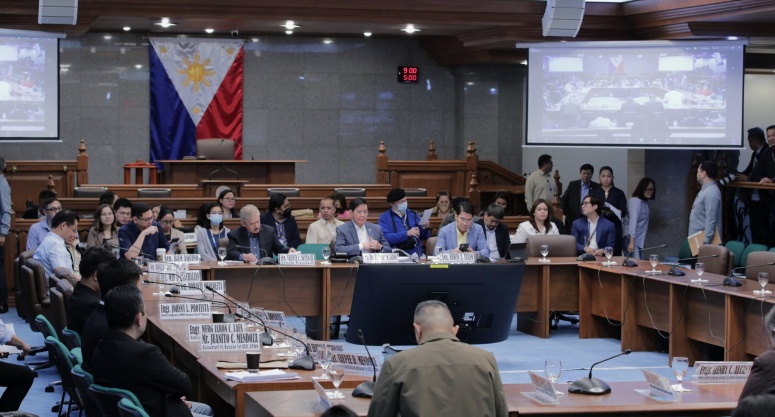
Gumarit believes that the anomalies in the DPWH are just the beginning, and other government agencies hounded with issues may also face scrutiny.
“It's just the tip of the iceberg... pero ang gusto sigurong iparating ng pangulo that we support, really, is that we have to start with something,” he said.
Gumarit noted that the youth today are watching the issue closely and are eager for the results.
“We have seen what the youth's sentiments are, online and in person,” he said. “[Kung] masesentensiyahan ba nang todo, kahit ang mga kaalyado ng administrasyon.”
For Gumarit, Marcos has to give the ICI more powers to be able to address the corruption issue further.
According to Executive Order No. 94, the ICI’s powers include conduct hearings; issue subpoenas to witnesses; inform who can apply for witness protection; recommend to the Department of Justice who can become a state witness; obtain pertinent documents from the Senate, the House and financial institution; request hold departure orders; request the freezing or seizure of assets; transfer evidence to prosecutorial bodies; recommend preventive suspensions of public officials; work with the necessary public officials or experts in the private sector during investigation; and engage the services of professionals and resourcepersons.
“He has to give the ICI more teeth. It's still new, and it still needs a lot of improvements,” Gumarit said, adding that addressing the corruption issue lies in the hands of legislators.
People power reawakened
In his interview, Teehankee noted that the so-called "people power" has been reawakened amid the issue, which puts pressure on the government to “provide lasting results.”
“We're seeing the impact of this renewed vigilance among the public,” he said, adding that the public is expecting that those who are guilty should be punished.
Teehankee, however, acknowledged the gargantuan task of eradicating corruption, saying it’s a systemic, structural problem.
“Corruption is only one thing that can be addressed by strengthening accountability and good governance measures,” he said. “The real root of the problem is political monopoly, with only a handful of people in control of power, and they're using it for their social, economic, and political privileges.”
Teehankee believes that ultimately, the key is to ensure the organization of people and the support of new blood who can pave the way for a new kind of public service. He took note of the power of the ordinary people, particularly the youth, whom he said are “talented and have the vision and idealism to really serve the country.”
“Going to 2028, let us talk not about personalities,” he said. “Let us take it upon ourselves to organize ourselves and form new political blocs and organizations and, eventually, a political party that will definitely introduce new politics.”

WATCH: Why is it so hard to make friends? (Generations Ep. 26)
October 21, 2026
WATCH: Pixar Summer Fest adventure at Hong Kong Disneyland
August 10, 2026
WATCH: Can you still trust someone who betrayed you? (Generations Ep. 22)
September 23, 2026
WATCH: LGBTQIA+ people with unlikely professions
June 28, 2026