

The Land of the Rising Sun: Where serenity & speed co-exist
From the stillness of Mount Fuji to the speed and precision of Tokyo and Osaka’s rail systems—Japan is where serenity and science move in harmony. From sacred stillness to neon brilliance—the East Asian country holds both.
Some 20 years after I last visited Japan (for the Expo 2005 in Nagoya), I stepped foot again in the Land of the Rising Sun to discover that though Japan is always ahead of itself in science, it remains willingly chained to tradition.
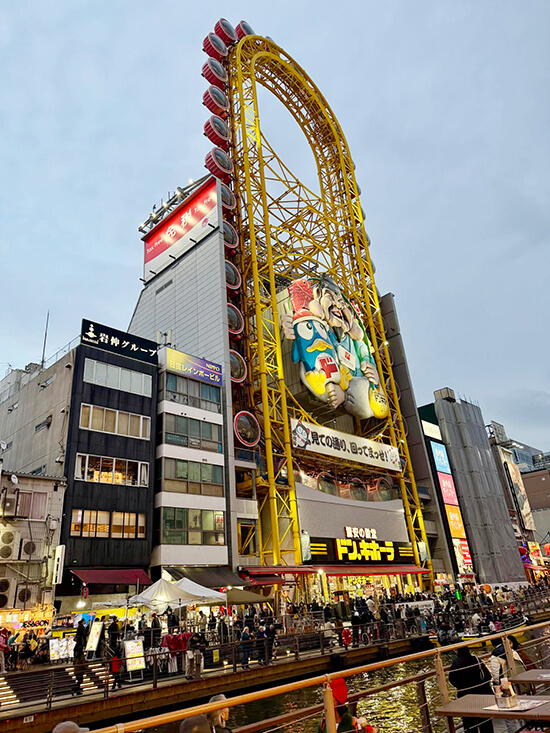
So, I would say that though there are 12 packed floors of Uniqlo in Ginza now, Mount Fuji remains shy, while sacred springs and gardens are still loudly silent.
In 1994, I had joined Philippine Airlines’ inaugural flight to Osaka and found that the Kansai International Airport already had driverless trains to take you from Point A to Point B within the terminal, and that toilet seats in Osaka and Tokyo were already warm thrones. So in 2026, going back to Japan was like going back to the future.
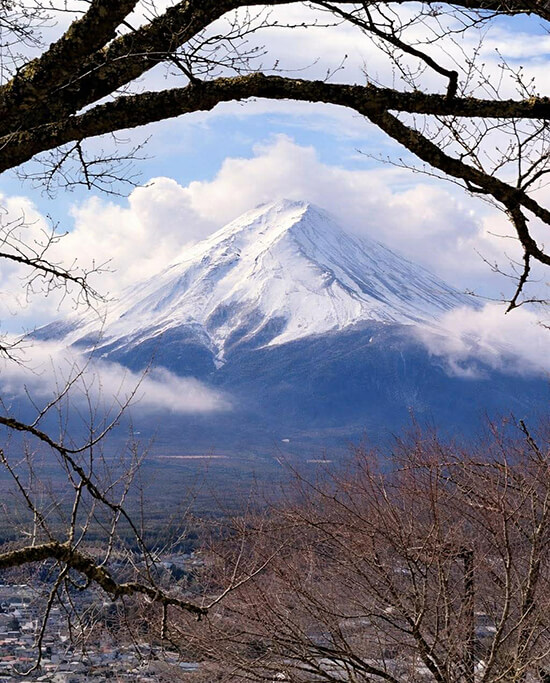
My husband Ed, son Chino, and daughter-in-law Gi-Anne flew to Japan in early spring, as the ephemeral sakura was unfurling its petals. We had timed the trip to celebrate Chino’s birthday and to fulfill Ed’s forever dream of watching a sumo wrestling match live.
His pilgrimage was to an arena in Osaka whereas mine was to majestic Mount Fuji in Tokyo and the lush parks where sakura trees were like stations of worship. Chino and Gi-Anne had their own itinerary. But we all agreed that Japanese food is celestial—especially when served with a ritual—and Wagyu is divine.
Kyoto

I had written last Friday about participating in a once-in-a-lifetime sumo wrestling bout at the Edion Arena in Osaka—as a spectator, of course, with Ed giving me a crash course on the intricacies of what seems to be merely a physical sport.
But also on our itinerary, meticulously planned by Gi-Anne, with Chino plotting the train connections to the exact second, was a visit to Kyoto. In Japan, I joke that one has to be “well-trained.” I would not have survived the labyrinth of turnstiles, platforms and exits in those train stations without these two millennials as navigators. The signs are in English but my sense of direction is nil!
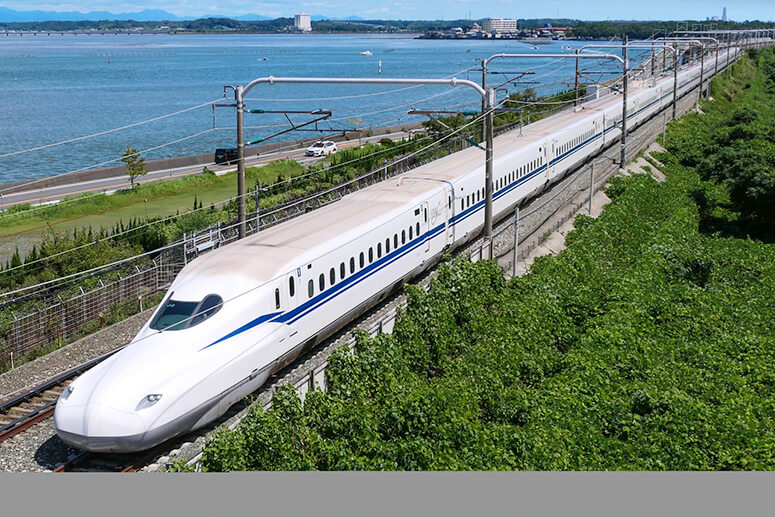
In Tokyo and Osaka, train systems operate with minute-level precision, carrying millions daily through networks optimized by engineering, data, and discipline.
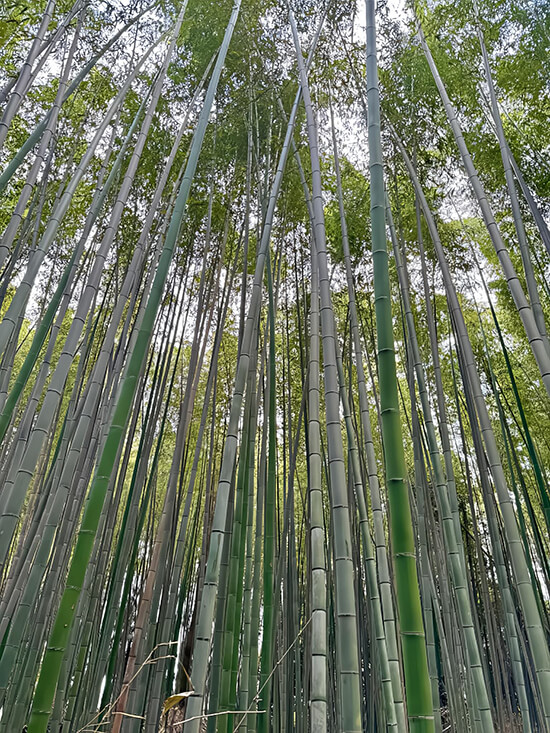
Our first stop in Kyoto was Arashiyama, a historic district in western Kyoto renowned for its traditional atmosphere, scenic bamboo groves, and cultural sites. From the train station, we walked through the Arashiyama Bamboo Grove, one of Kyoto’s most iconic sights. The grove is a network of paths with towering bamboo trees forming arches over the paths. When the light filters through the dense bamboo forest, it’s heavenly. However, do manage your expectations because the more beautiful bamboo-lined paths are closed off to pedestrians, but open to rickshaws.
If there is a bamboo forest, there is also a Kimono Forest, which has 600 illuminated pillars lining a path. Each colorful pillar is wrapped with vibrant kimono fabric, showcasing a total of 32 different traditional Kyo-yuzen designs. At night, walking through this man-made forest is enchanting.
Also in Arashimaya is the historic Saga-Toriimoto preserved street, where rickshaws still ply the road. Chino and Gi-Anne had meat hitsumabushi, a dish where you can eat Wagyu four ways from one tray (go figure!), in one of the restaurants we picked at random. (In Japan, you can hardly ever go wrong with your choice of restaurant, and prices even in good restaurants are reasonable.)
We walked off our hearty lunch by visiting the UNESCO-listed Tenryu-ji Temple, and the scenic Togetsukyo Bridge, before heading back to the train station through quiet roads lined by smaller temples and—food carts!
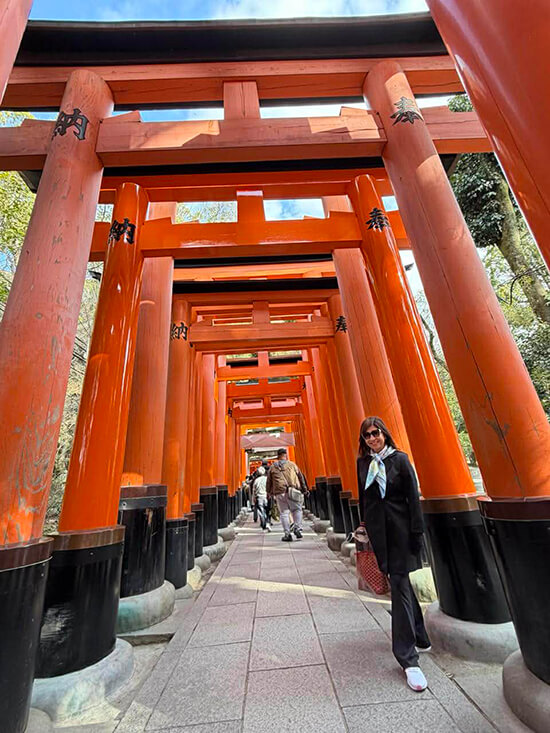
Our next stop was a place I had already visited in my Google meanderings. And the Fushimi Inari Shrine with its vermilion gates didn’t disappoint. The seemingly endless row of vibrant orange torii gates (approximately 10,000) forms arches over the path leading up to the 233-meter-tall Mount Inari. This long tunnel of vibrant orange torii gates is an iconic sight in Kyoto.
There is serenity within these gates or arches, even if you are sure to have company (Japan was visited by over 40 million tourists in 2025). Still, like in a pedestrian lane, people come and go through the tunnels, and yes, just stay still, and you will find yourself owning a piece of the orange-gilded tunnel for a shock-and-awe photo.
I think the tunnel of torii gates is one of the reasons there’s Instagram.
(To be concluded)

WATCH: Is OPM still as good as it used to be? (Generations Ep. 20)
September 9, 2026
WATCH: Pixar Summer Fest adventure at Hong Kong Disneyland
August 10, 2026