

Sumo & sakura
Thirty-two years after I joined Philippine Airlines’ inaugural flight to Kansai airport in Osaka, I flew the flag carrier again to the city for something monumental.
At least to my husband Ed and our son Chino.
We timed our return to the Land of the Rising Sun to watch live the 2026 March Grand Sumo Tournament at the Edion Arena in Osaka. For my boys, it was like the “Army” flying to Seoul to watch BTS.
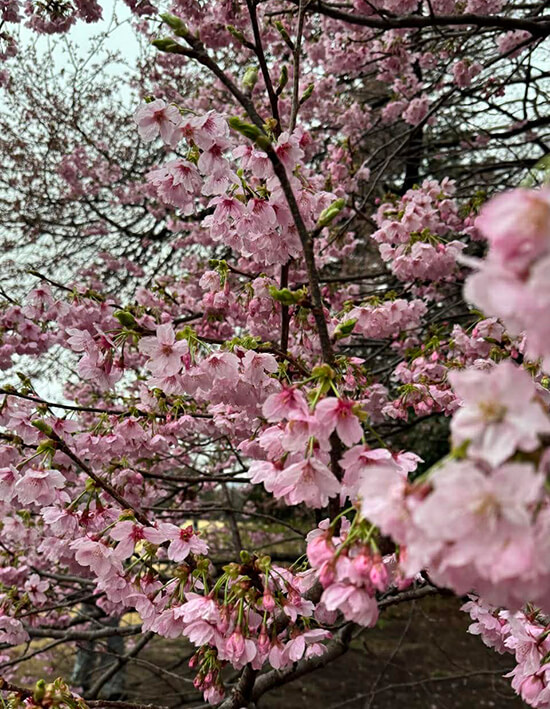
The world blushed pink before my very eyes. But you blink, and they’re gone, to return only in spring next year. (They actually bloom for about 10 days a year only.)
Sumo, sakura, an early spring, and maybe sake? That was the alchemy of bliss that invigorated us all.

It was a pilgrimage of sorts for Ed, who watches sumo matches almost daily on NHK. He had found his Holy Grail of sports.
For Chino, a WWE fan, it was no less monumental.
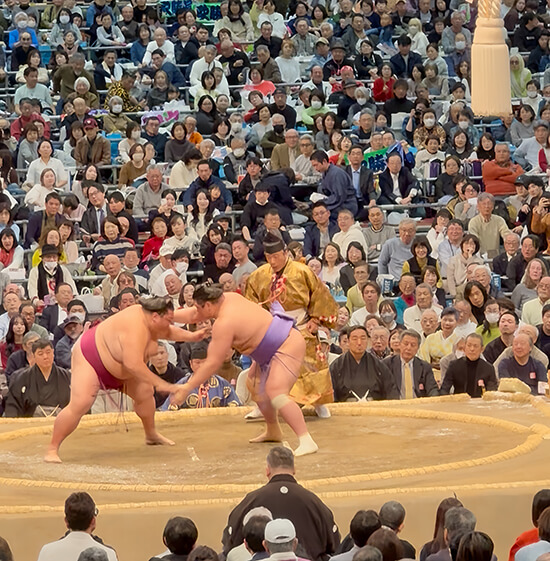
For those like me who simply identified the sport with its iconic wrestlers (pony-tailed and “huge”), sumo is a form of competitive full-contact wrestling where a rikishi (wrestler) attempts to force his opponent out of a circular ring (dohyō) or into touching the ground with any body part other than the soles of his feet (usually by throwing, shoving or pushing him down).
I quizzed Ed about his fascination, bordering on veneration, for sumo.
“It only takes a few seconds to win a championship bout, but it takes close to a lifetime just to be able to contend in one,” explained my husband, a deep thinker.
“Sumo wrestling isn’t a brutal sport despite the behemoths that charge like bulls in the ring. It is one that demands finesse, tactics, strategy, composure and even psychology,” he added.
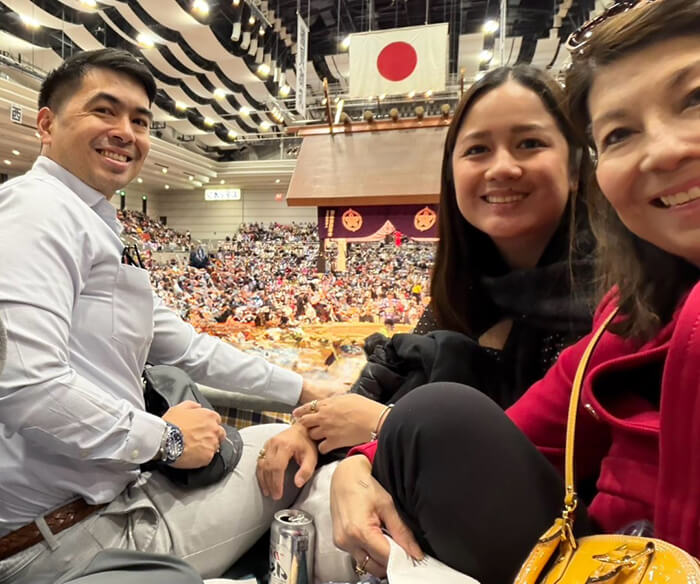
We caught the afternoon bouts on March 16, and found the Edion Arena, which seats 8,000 people in rings where spectators squat on pillows, Indian-style, filled to the last ring. The audience included 86-year-olds and a six-month-old, whose mother was cradling her behind our ring. She put headphones over the baby’s ears and the little one seemed to enjoy the colors of the banners and the warmth of her mother’s lap.
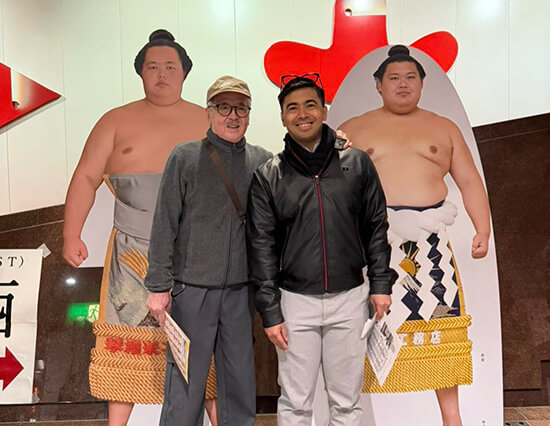
There were older children in the audience, too, who probably were fascinated with the wrestlers. Wrestlers often have strong identities, backstories and rivalries. In fact, there was a gift shop outside the arena selling all sorts of sumo merchandise.
And there were women! I would say half of the people in the audience were women. Many women appreciate the elegance and symbolism alongside the competition. Its appeal isn’t just about sport; it’s cultural, emotional, and even aesthetic.
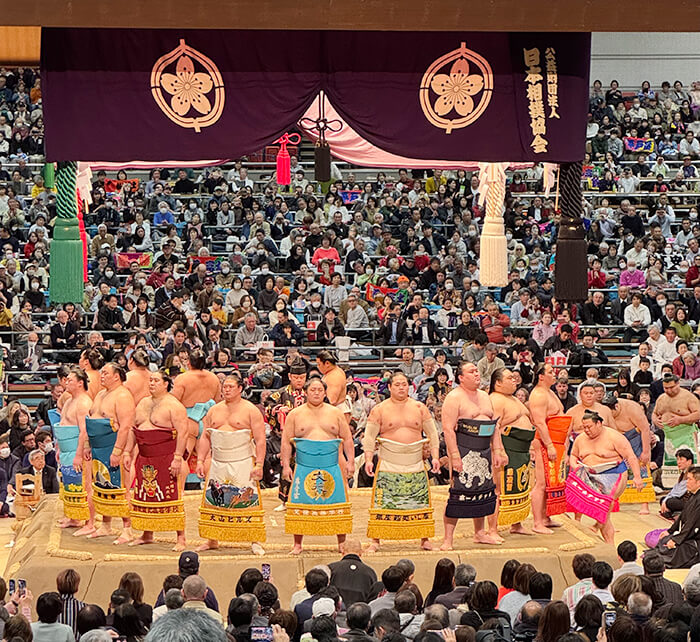
The show began with wrestlers on parade onstage, wearing the mawashi, a thick, heavy loincloth belt wrapped around the waist and between the legs. While it may look simple, the costume is highly specialized based on rank, training, and ceremony.
Before every bout, which really just takes seconds, the opponents look like a combination of two bulls ready to lock horns and two chess players sizing each other up.
“For example, a wrestler would slap his opponent’s face to annoy him and make him lose his focus and cool. Within those few seconds during a bout, a sumo wrestler must be able to apply an array of offensive and defensive options available. It is a sport where the mind must move as fast and precise as the muscles,” Ed, the sumo expert, patiently pointed out to me.
For him, “sumo is the perfect example of the Japanese mindset: calm, collected, creative and disciplined.”
Unlike fast, high-intensity sports, sumo has a calm rhythm. There’s buildup, ritual, and anticipation before a very short burst of action. No one draws first blood. And from where I sat, it looked like it was all about the circle on which the wrestlers faced off. Either you’re in or you’re out of the circle. When you’re out of the circle, you’re out. It’s as simple as that. You don’t need to understand complex scoring systems. But staying in the circle, explained Ed, demands both brains and brawn.
Sodeska!
***
I was particularly thrilled that there were two wrestlers of Filipino descent on the ring that afternoon. Mitakeumi Hisashi, born in Nagano, Japan, has a Filipino mother who hails from Pangasinan. He has reached the rank of Ōzeki and won his bout against Oshoumi on the afternoon we were in Edion. Also in competition that day was Takayasu Akira, whose mother is from the island of Bohol. Ed says Takayasu is “always the bridesmaid, never the bride” because he always is within a breath away of being the champ. At the March 2026 tournament, Takayasu won his first five bouts only to suffer a seven-match losing streak after his chronic lower back pain worsened. He has yet to become a Yokozuna (a household word in Casa Ramirez, I kid thee not), which means a grand champion sumo wrestler.
Whew, I never thought I would respect sumo wrestlers and their sport this much.
But what I was really looking forward to during this monumental visit were the sakura blossoms wrestling with the gentle wind.

WATCH: Pixar Summer Fest adventure at Hong Kong Disneyland
August 10, 2026
WATCH: Save for retirement or enjoy life now? (Generations Ep. 21)
September 16, 2026
WATCH: Can you still trust someone who betrayed you? (Generations Ep. 22)
September 23, 2026