Attention, commuters: Here are the updated fares for airport taxis, TNVS, other PUVs starting March 19
The LTFRB announced fare adjustments on public utility vehicles amid rising fuel prices due to tensions in the Middle East.
In a statement released on LTFRB's Facebook page on Tuesday, March 17, chairperson Atty. Vigor D. Mendoza II said that the computation for the fare hikes "was thoroughly deliberated and was supported by data and analysis, including that of the Department of Economy, Planning, and Development."
Fare adjustments have so far been made on traditional and modern jeepneys, airport taxis, transportation network vehicle services, metro/city buses, provincial buses, and P2P buses.
Here are the updated fares on PUVs, which will take effect on Thursday, March 19.
Jeepneys
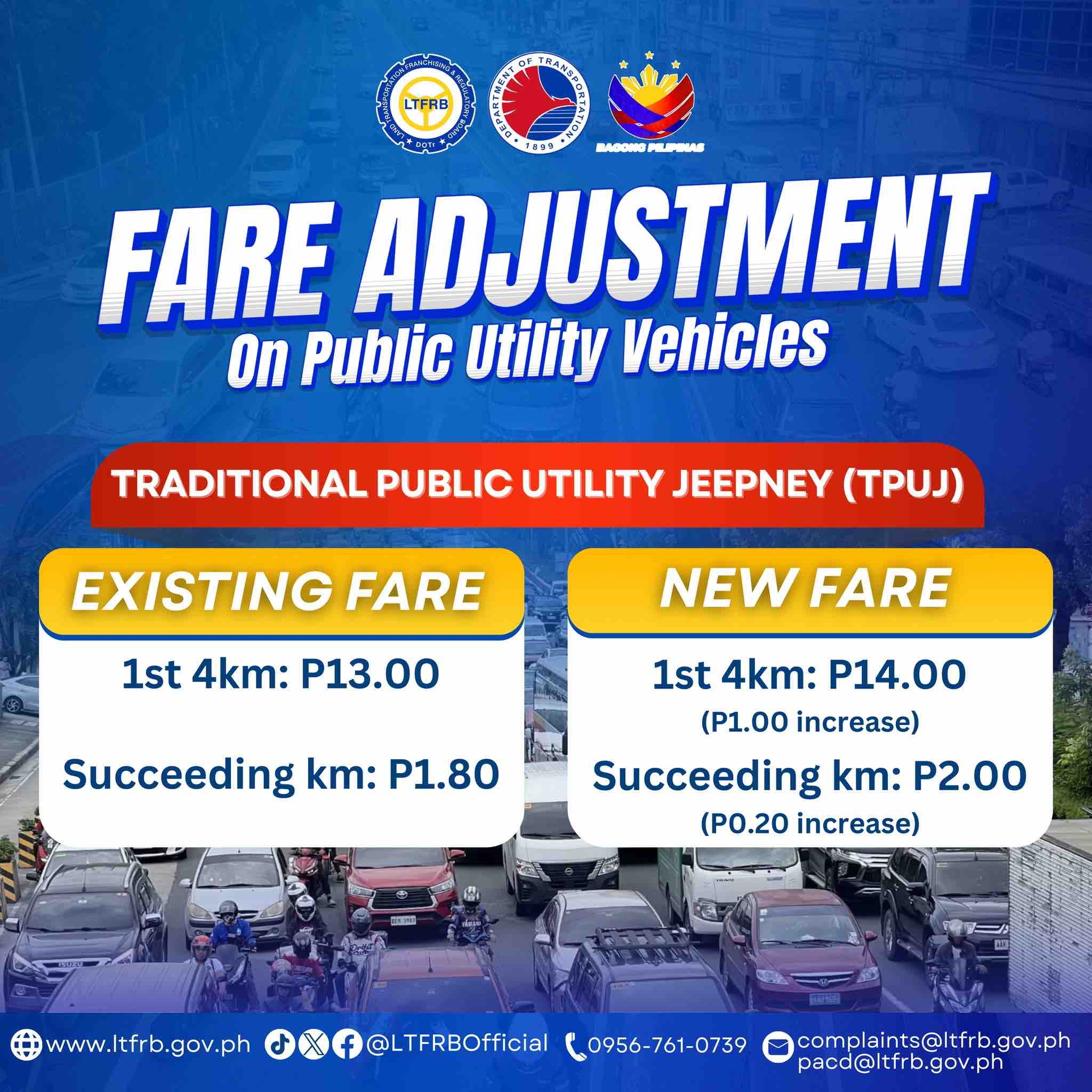
There will be a P1 increase for the first kilometer or minimum fare, and 20 centavos for every succeeding kilometer for traditional jeepneys—from P1.80 to P2 per succeeding kilometer. The minimum fare would be P14 (from P13).
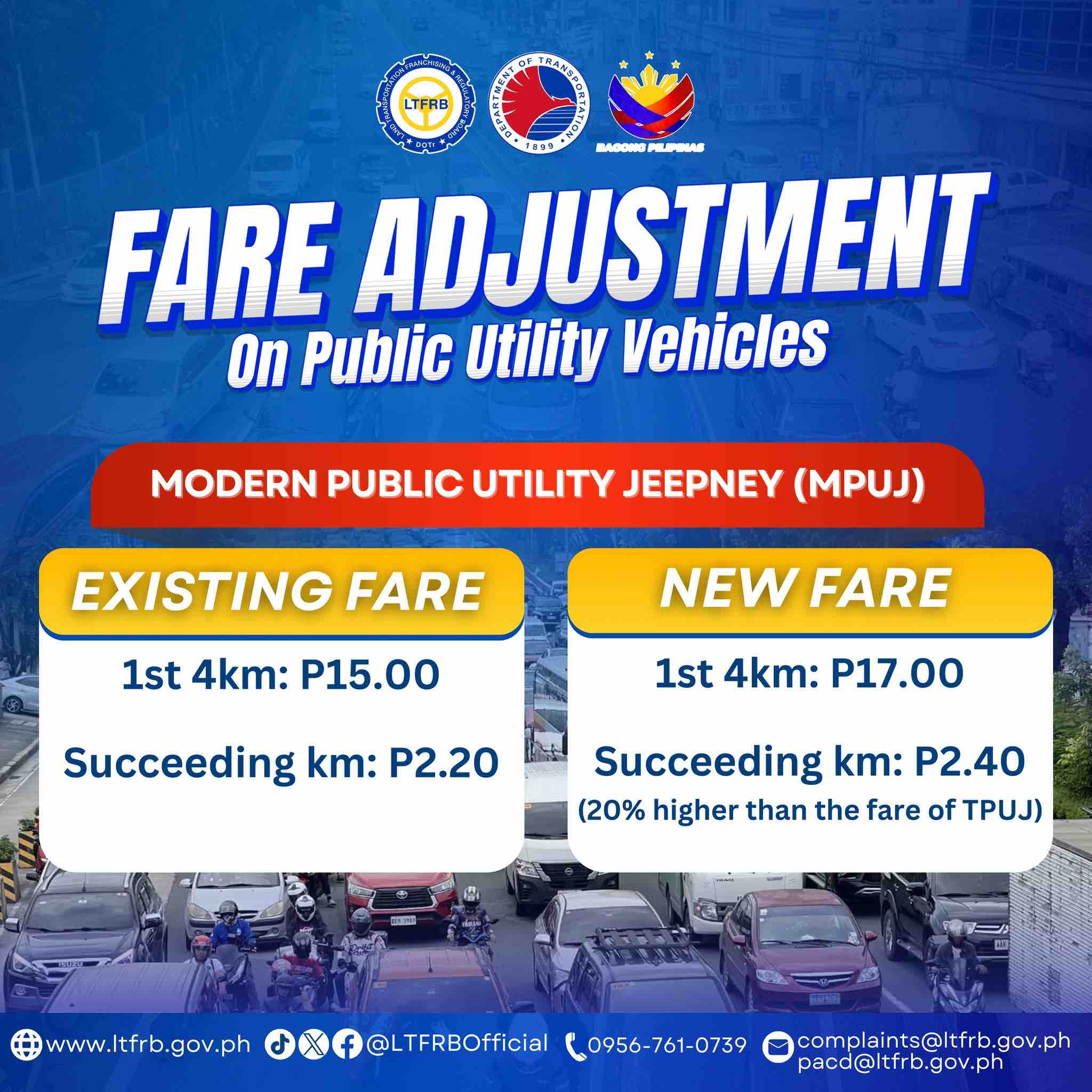
Fares on modern jeepneys, meanwhile, will have a P2 increase, raising the minimum from P15 to P17. It will then jump by 10 centavos in the succeeding kilometer—from P2.20 to P2.30 per succeeding kilometer.
Know more about the jeepney fare hike here.
Airport taxis
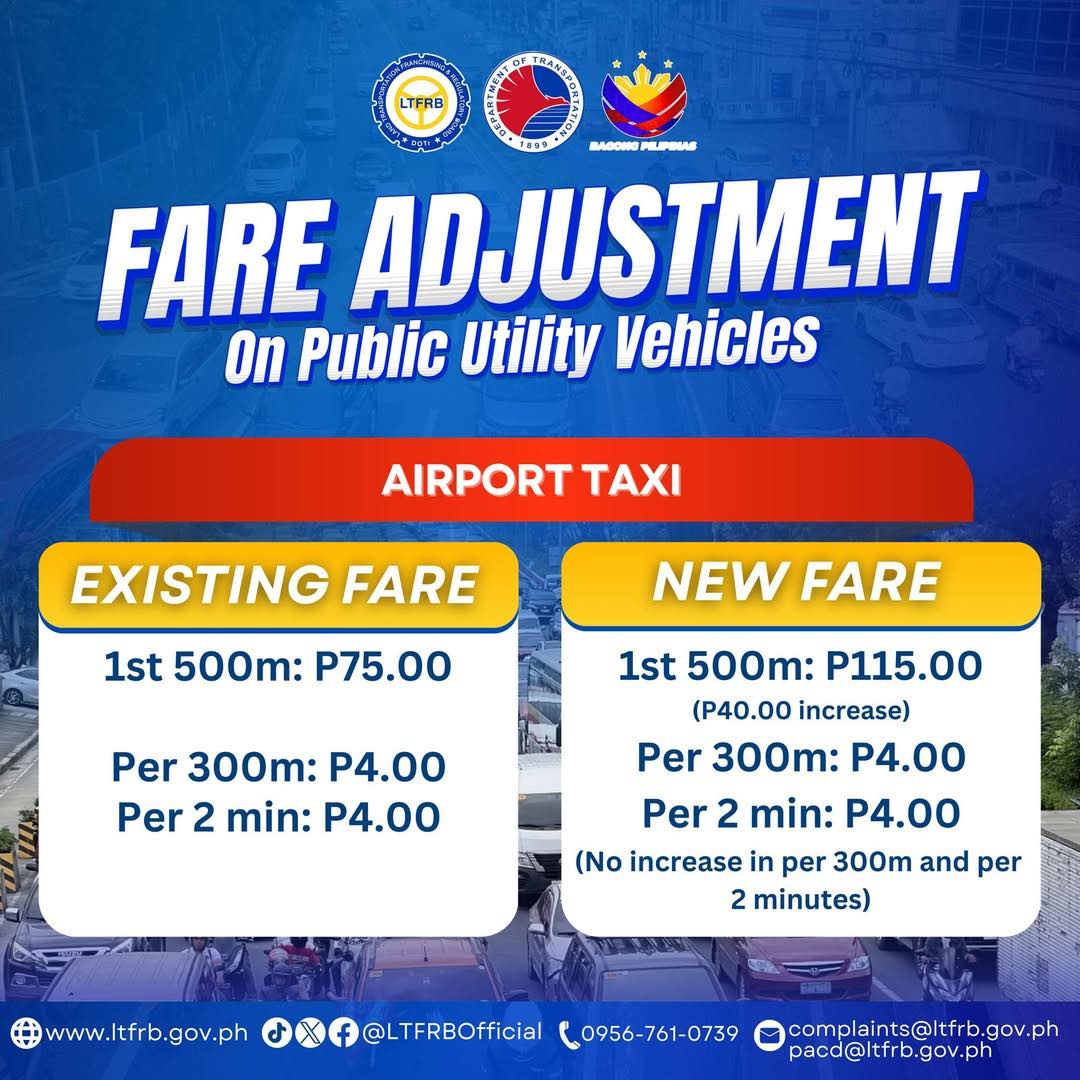
Airport taxis will have a P40 increase in the flag-down rate or the first 500 meters, raising it from P75 to P115.
No changes will be implemented in the charges for the succeeding 300 meters and waiting time of two minutes.
TNVS
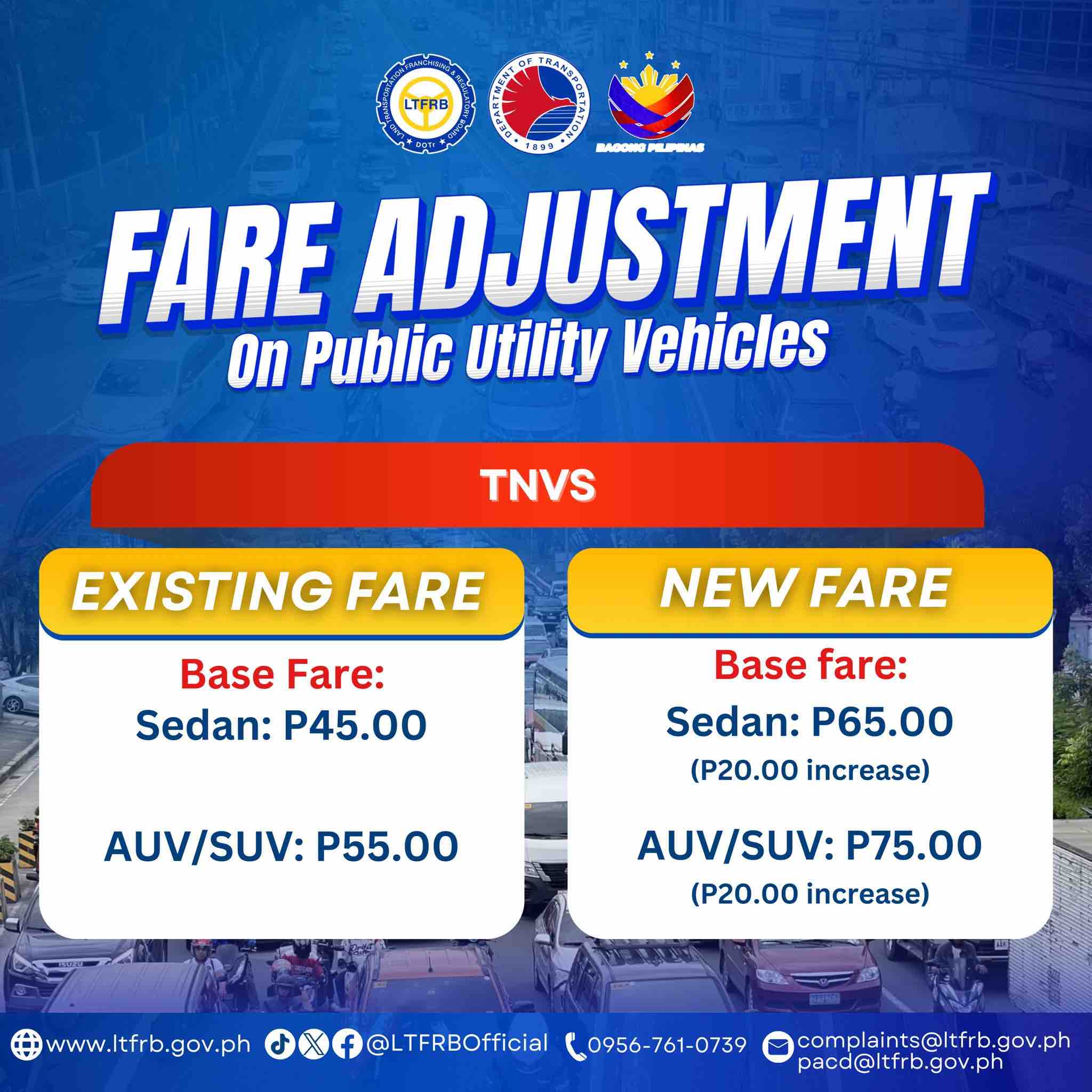
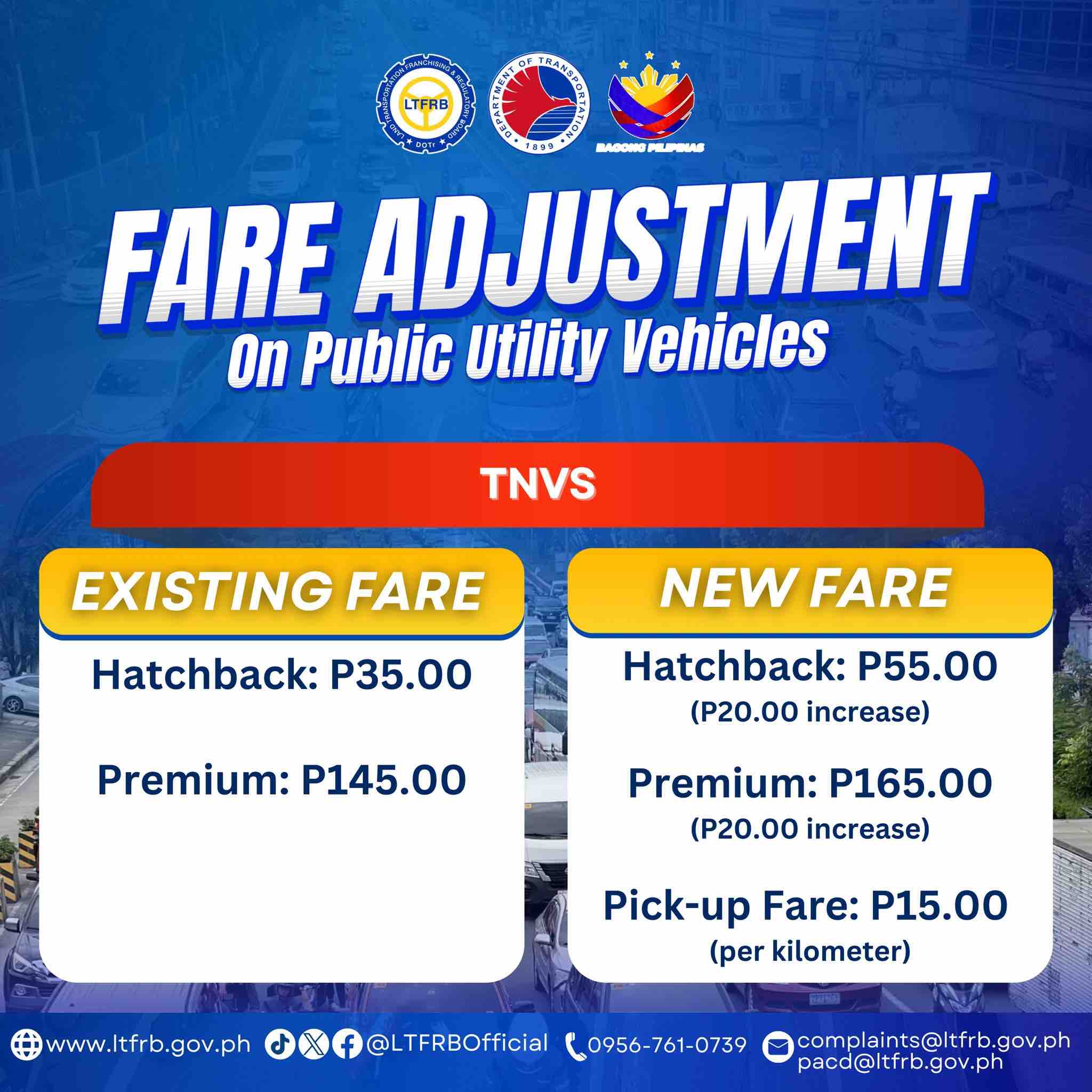
There will also be a P20 increase and a P15 pickup fare per kilometer for transport network vehicle services.
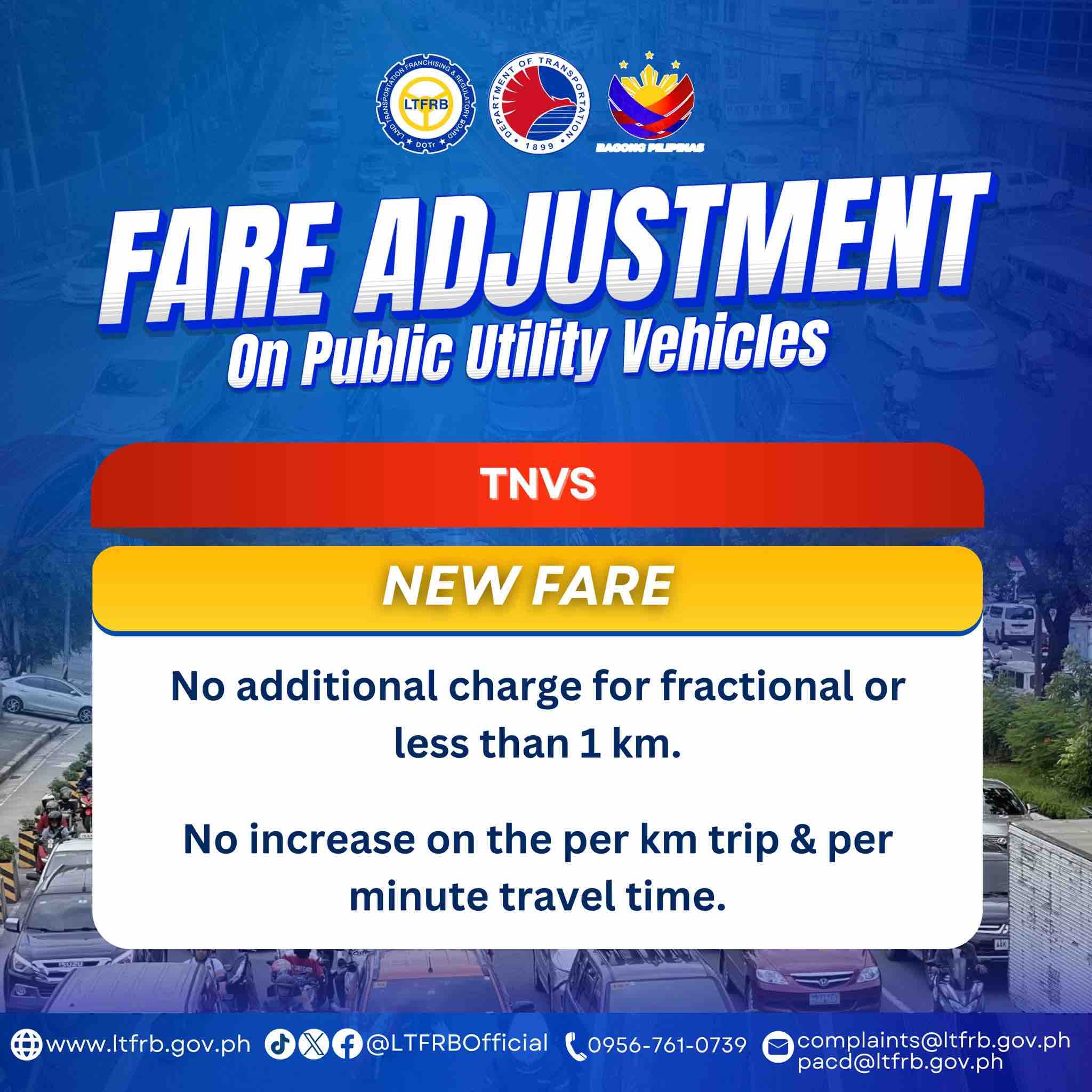
But according to the board, TNVS will have no increase in the charges per kilometer and per minute travel time.
Metro/city buses
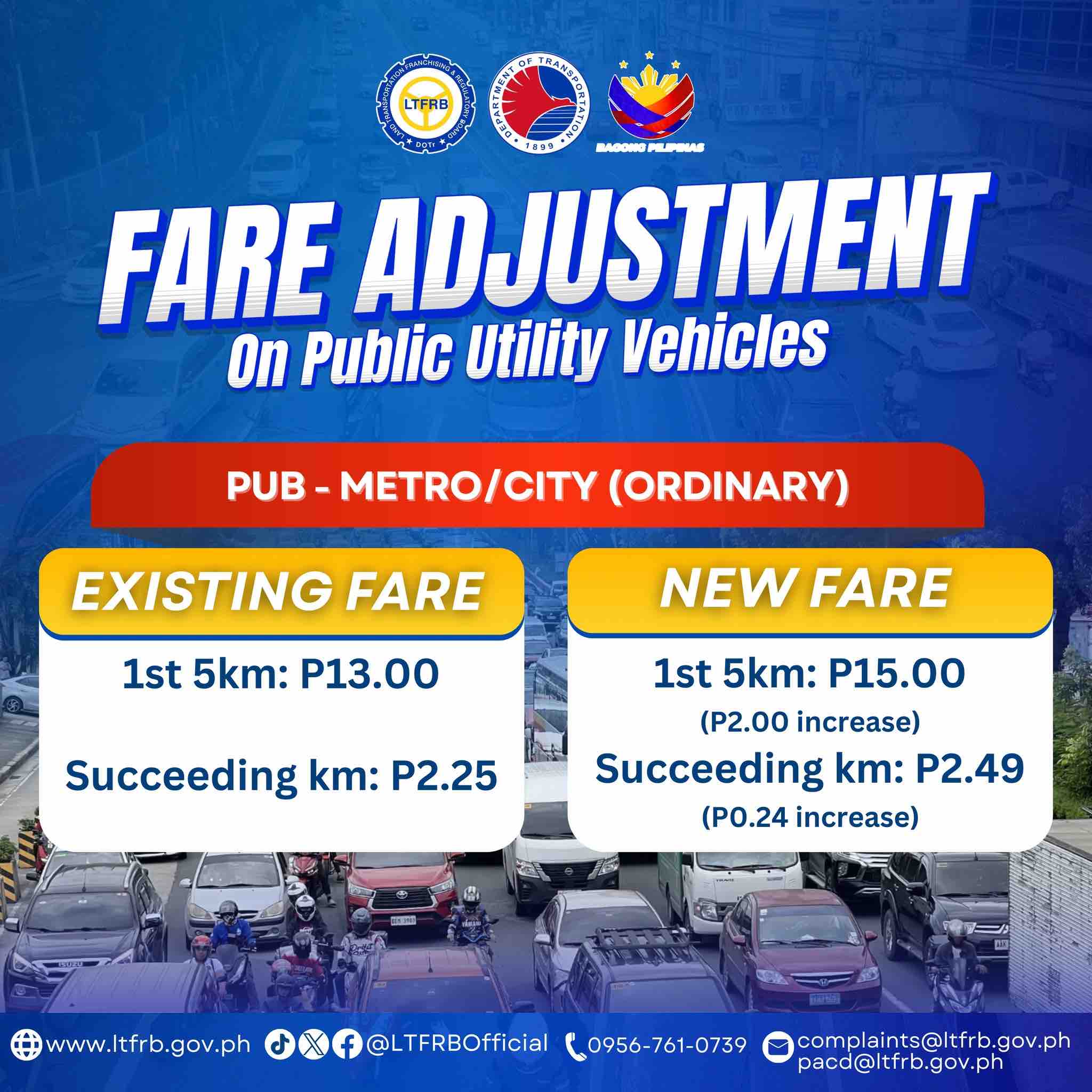
The board confirmed a P2 hike for the base fare of ordinary metro/city buses, raising the starting price from P13 to P15. The fare for each following kilometer will climb by 24 centavos—from P2.25 to P2.49.
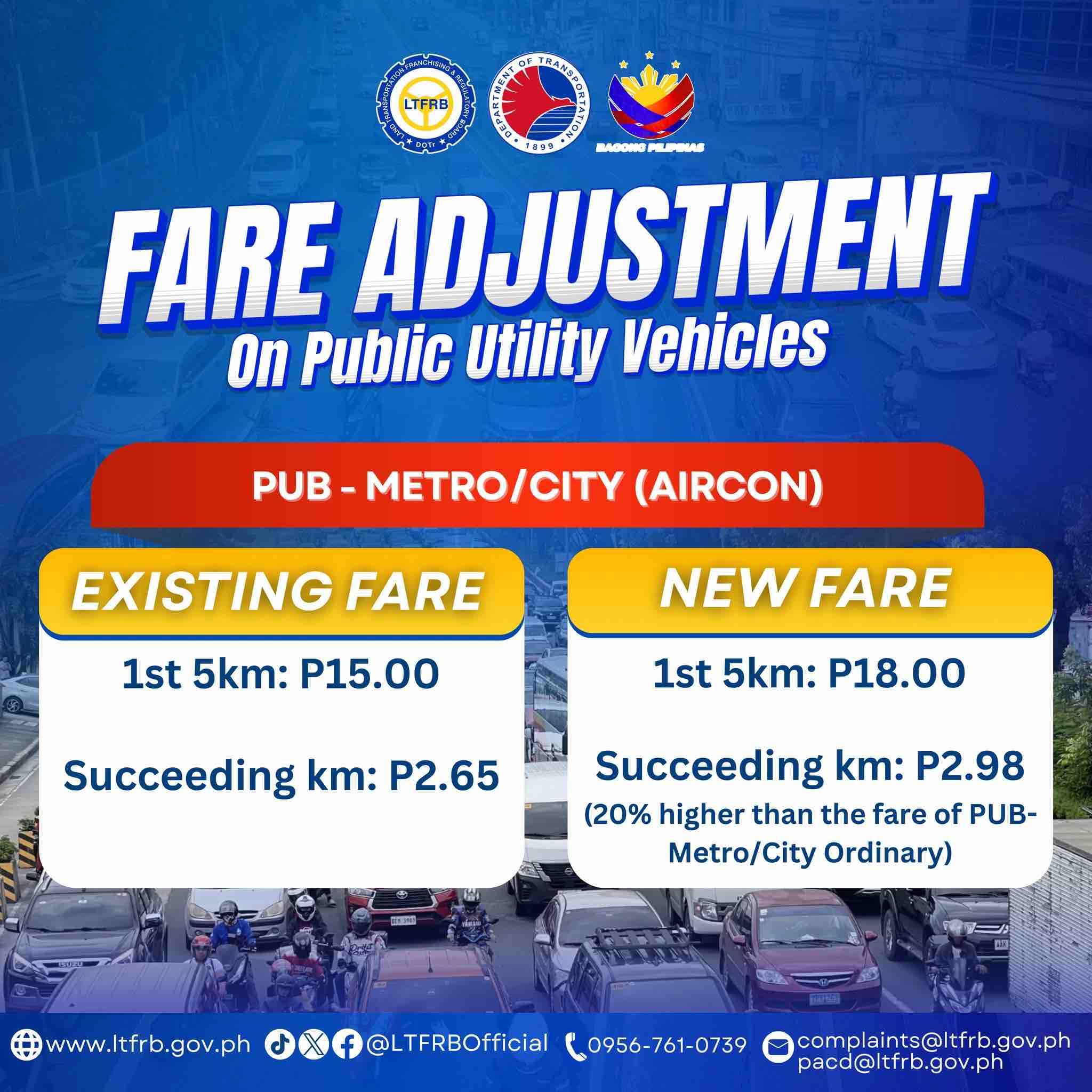
Commuters on air-conditioned metro/city buses will see a P3 jump in the starting fare, from P15 to P18. It will increase by 33 centavos for every succeeding kilometer, shifting the rate from P2.65 to P2.98.
Provincial buses
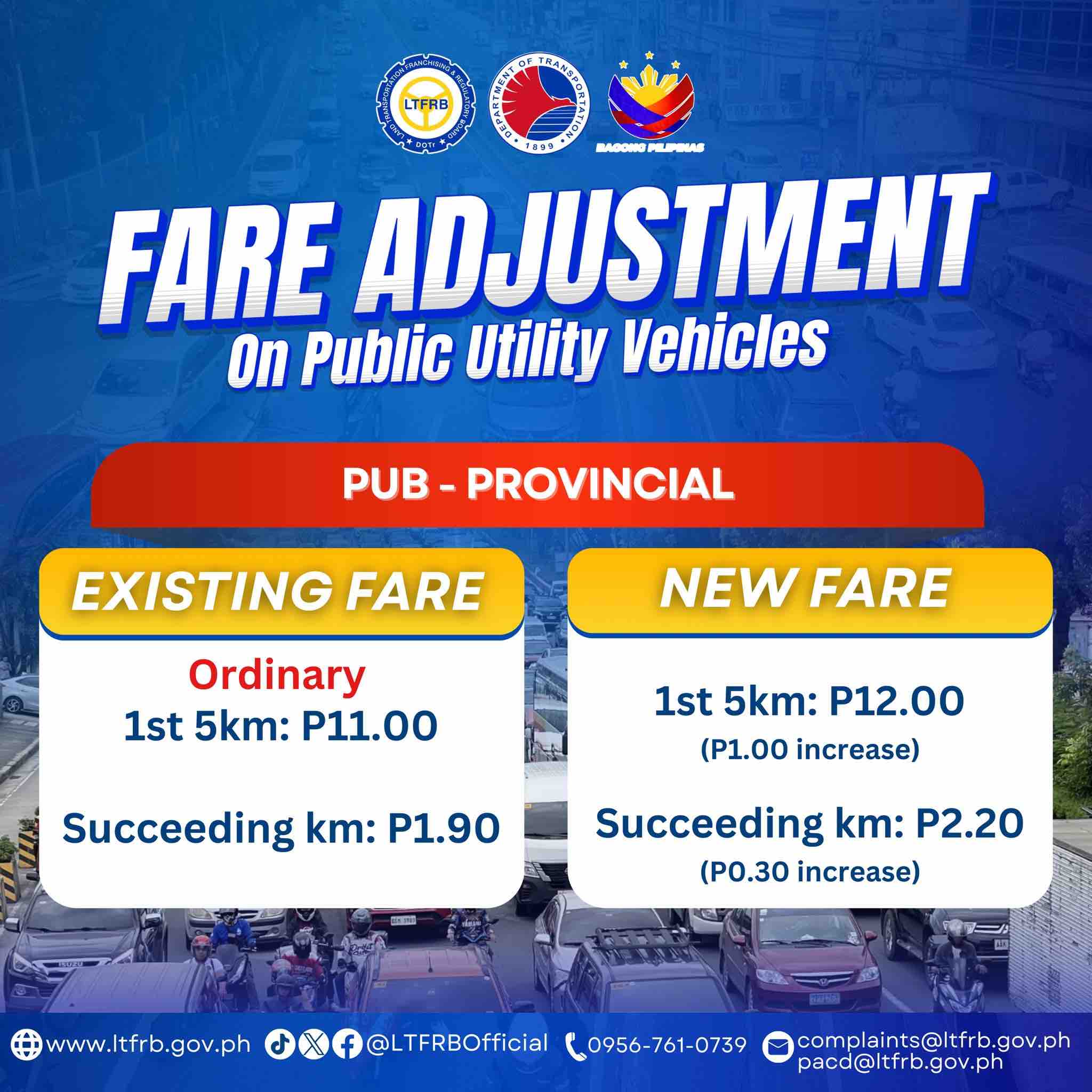
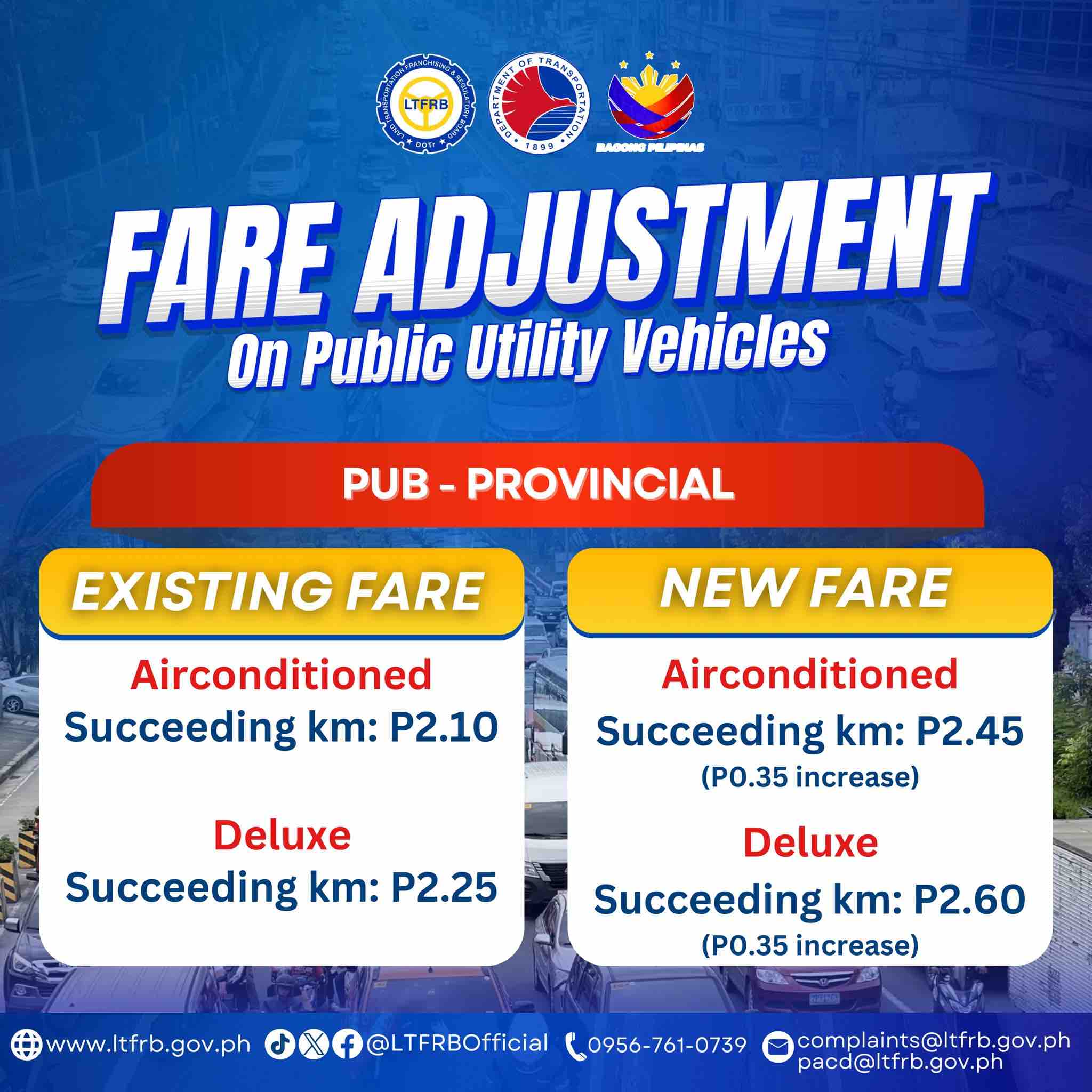
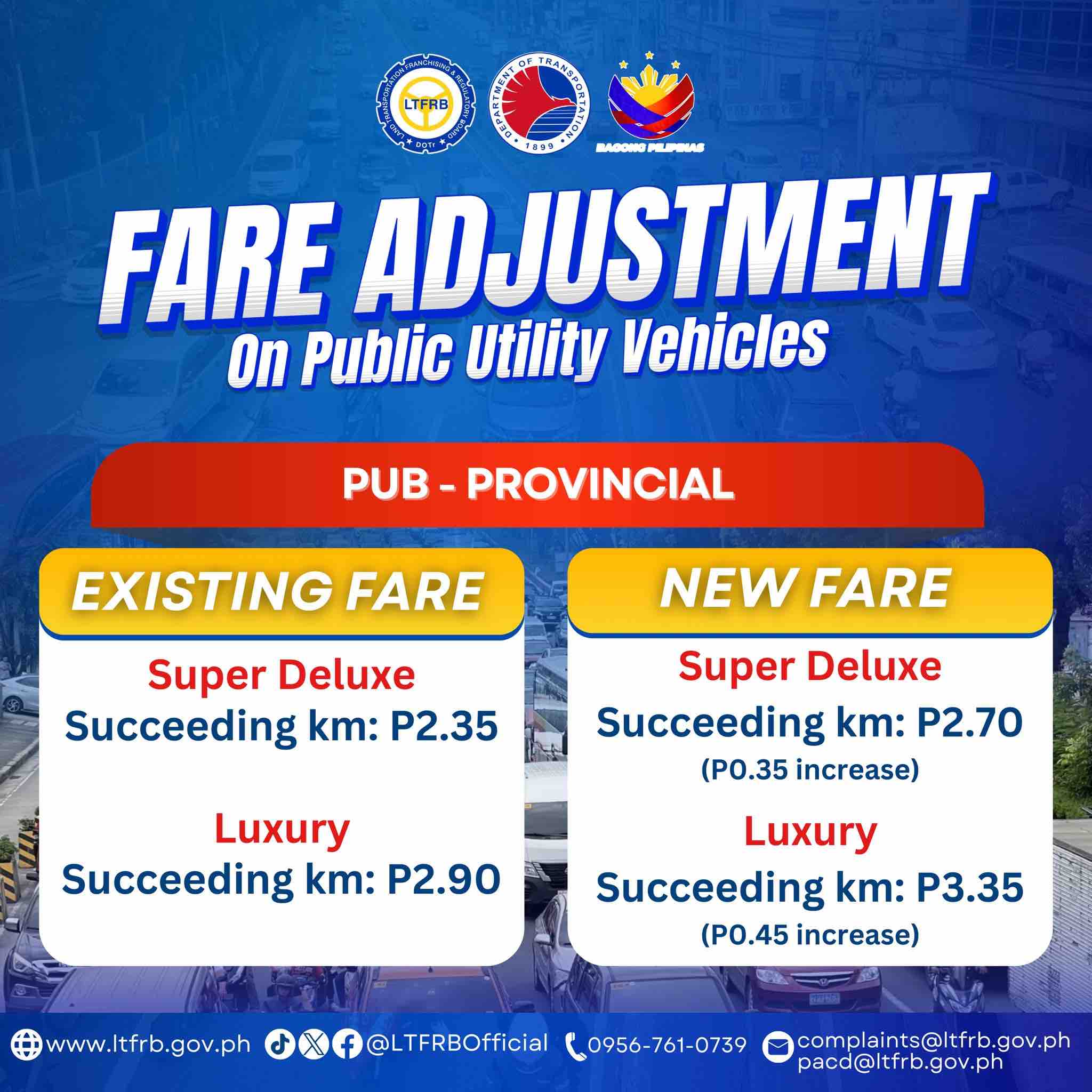
For provincial buses, the board approved a P1 increase for the first five kilometers of ordinary bus trips. However, the price hikes for the remaining distance will depend specifically on the types of passenger buses.
There will be an additional 30-centavo fare per succeeding kilometer (from P1.90 to P2.20) for ordinary buses; 35 centavos for air-conditioned (from P2.10 to P2.45), deluxe (from P2.25 to P2.60), and super deluxe buses (from P2.35 to P2.70); and 45 centavos for luxury buses (from P2.90 to P3.35) per succeeding kilometer.
Check out the updated fare guide for provincial buses here.
P2P buses
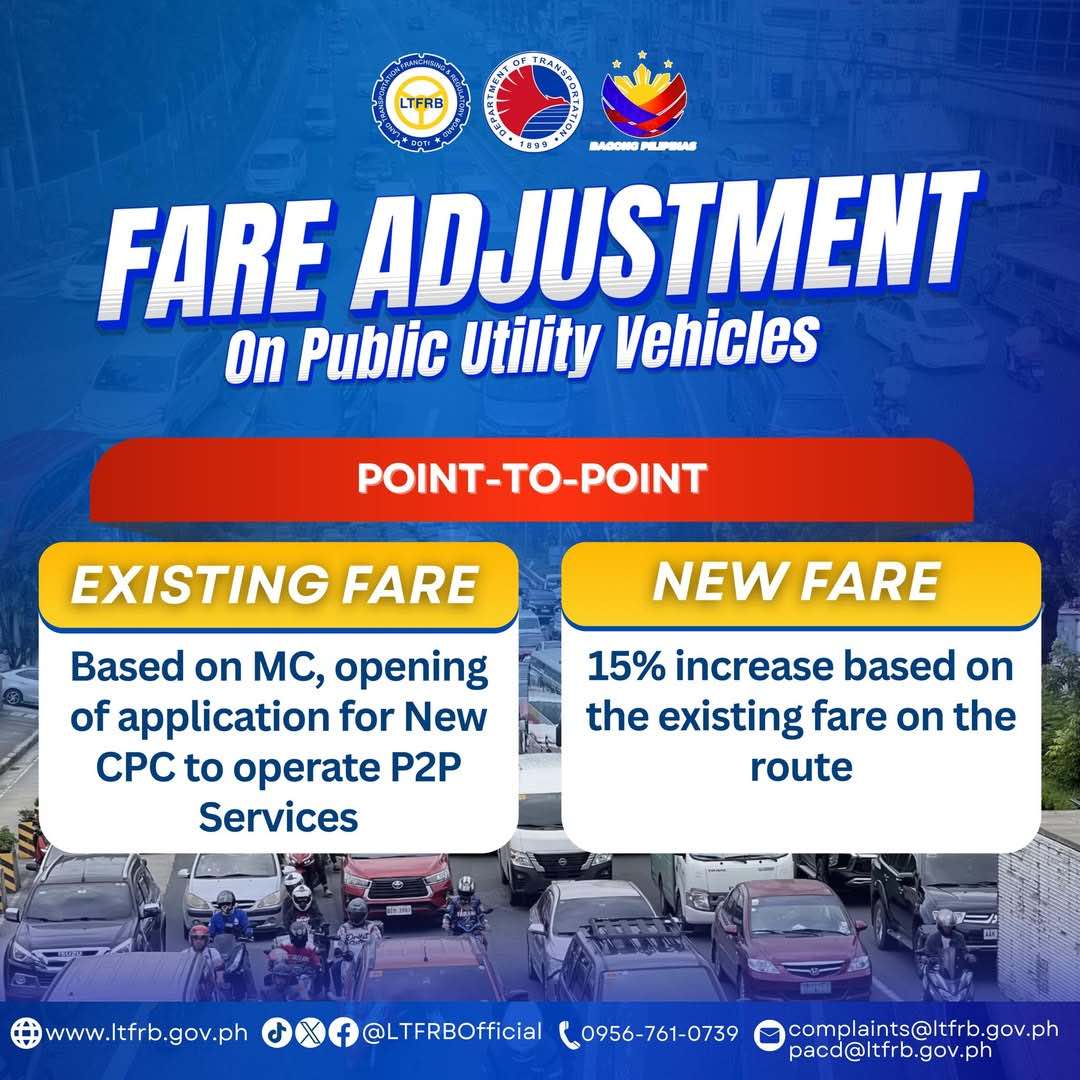
The starting fare for P2P buses, meanwhile, will have a 15% increase based on your chosen route.
Per Mendoza, petitions for fare hikes on ordinary taxis and UV Express have also been filed by transport groups, though the board has yet to reach a final decision on the adjustments.
There's a 19% jump in PUV fares across all regions, he noted.
The fare hikes are coming amid rising fuel prices due to the conflict in the Middle East. Within days of being attacked by the US and Israel, Iran blocked passage of oil tankers through the narrow Strait of Hormuz, severely crippling much of the world's fuel supply.
To mitigate rising prices, the House of Representatives, on Monday, March 16, approved a bill granting President Ferdinand "Bongbong" Marcos Jr. the authority to temporarily suspend or reduce excise taxes on fuel during national emergencies.