

Island of the dragons
It looks ready to bite off a piece of your arm, injecting deadly venom that can soon turn you into its day’s meal. In 2001 at the Los Angeles Zoo, one took a bite off the left foot of a journalist who entered the enclosure of the carnivorous, cannibalistic reptile—the largest of the monitor lizards.
And yet, when I finally came face-to-face with a real-life Komodo dragon, the fearsome-looking monster lizard was so serene and unmindful of the people posing with it for pictures that it almost looked cute.
Which was just as well, because if it had behaved true to its wild nature, I couldn’t have followed its juveniles in climbing the palm trees all the way to the top to burrow into the trunk and hide from the cannibal mama dragon.
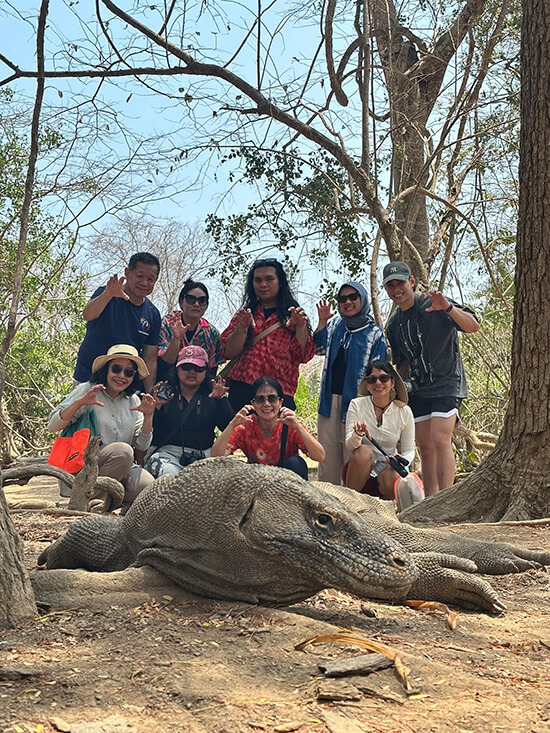
Like other efforts to protect wildlife and save endangered species, constant exposure to humans risks taking the wildness out of the Komodo dragon.
On the other hand, revenues from regulated visits to wildlife natural habitats contribute to conservation efforts.
There are only about 3,400 Komodo dragons left, and all can be found only on islands in the Komodo National Park, located in the Indonesian port town of Labuan Bajo.
CONTINUE READING BELOW

From the moment you land at the town’s gateway named (what else?) Komodo International Airport, the images and replicas of the lizard dragon are everywhere. Life-size sculptures of the reptile, made usually of wood or concrete, greet visitors at the entrance to hotels and dining places.
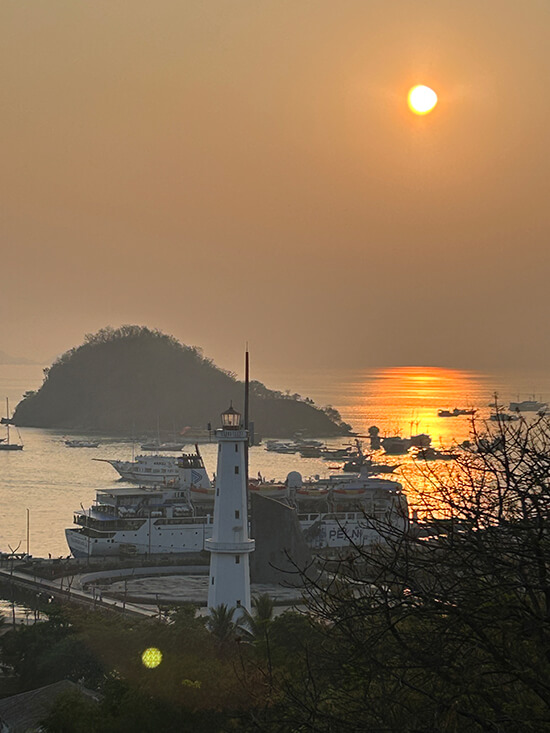
But there are many other things to do in Labuan Bajo, besides dodging a hungry dragon.
After the four-hour flight from Manila to Bali followed by a one-hour hop to Labuan Bajo, you may need to freshen up in the numerous types of accommodations nestled on the hillsides, mostly overlooking the bay. There are also boat hotels.
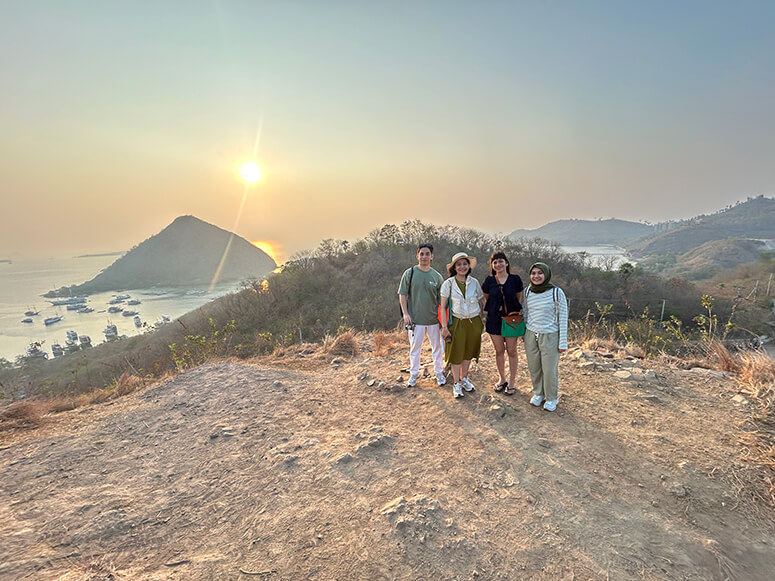
You can watch the spectacular sunset from your hotel, or from a promenade in the heart of town. Or if you still have energy left after the flights, you can hike up to the top of Sylvia Hill for a panoramic view of the bay as the sun sets.
Island-hopping can start once you’re fully rested, because you will need a lot of energy for the activities at the Komodo National Park that typically start early in the morning.
Climbing up
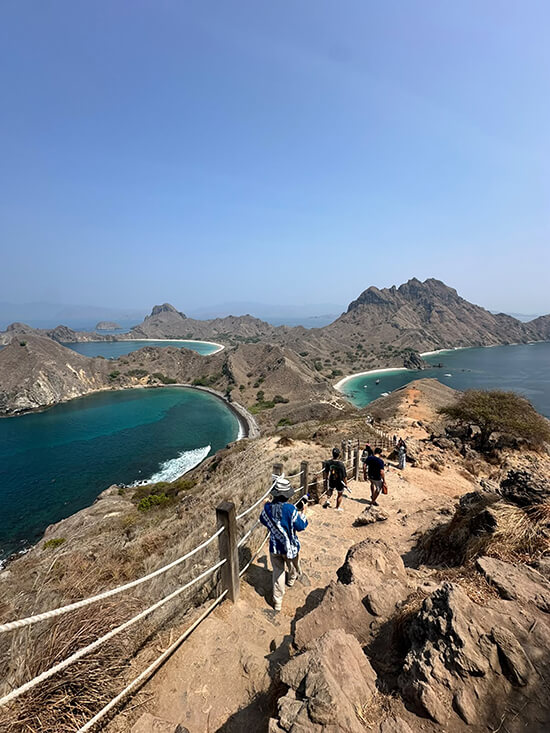
The first stop is Padar Island, where you can test your stamina by climbing the 800 steps or so all the way to the top of the mountain for one of the iconic images of Labuan Bajo: a panoramic view of three bays with sand of different colors—white, pink, and black.
From Padar Island, a yacht takes you to Komodo Island, where you may get a glimpse not only of the giant lizard, but also of the other wildlife inhabitants: the Timor Deer, wild boar, crab-eating Macaque, and carabao or kerbau. That’s Bahasa for water buffalo, and the beast looks exactly the same as our kalabaw.
A ranger, responding to my question, said that yes, there are snakes on Komodo Island—venomous cobras that may slither up a tree and fall on your head as you look around you for any lurking hungry, deadly Komodo dragon. I’m not sure if he was joking.
After surviving the dragons’ lair, you’ll be ready for more island-hopping in the pristine waters of Komodo National Park, a UNESCO World Heritage Site.
A sand bar in the park has been turned into a stop for snorkeling. Much of the area around the sand bar is shallow, so adult non-swimmers and children can safely enjoy the sparkling waters.
This is followed by a stop in deeper waters for more snorkeling and to hunt for manta rays—another top attraction in Labuan Bajo. Unfortunately for me, I failed to see one.
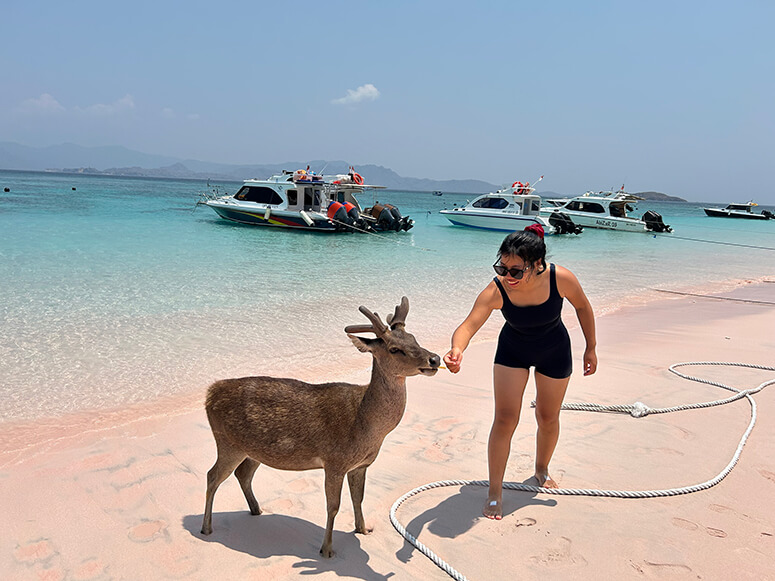
The last stop for the day is swimming and sunbathing on Pink Beach—so-called because red and pink shells from microscopic marine organisms mix with the white sand, turning everything an exquisite coral pink.
While resting on the beach, a deer apparently tamed by tourists feeding it for photos approached and nuzzled people, to the delight of children.
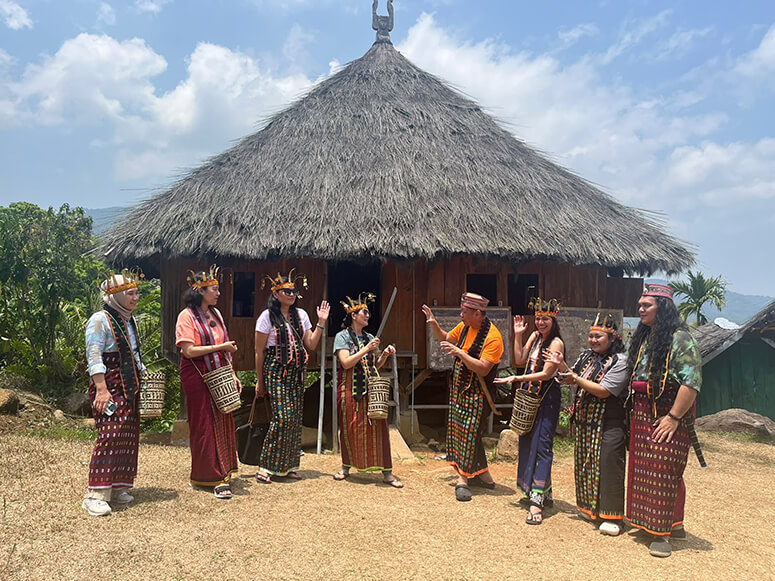
The next morning was reserved for a glimpse into the islands’ indigenous Manggarai culture, at the Melo Traditional Village. It is perched on a hill that is reached through a narrow winding road with steeper and sharper curves than Kennon Road.
An elder welcomed visitors to a traditional house with a cone-shaped roof, set on grounds landscaped with yellow bells and a sprawling aratiles tree.
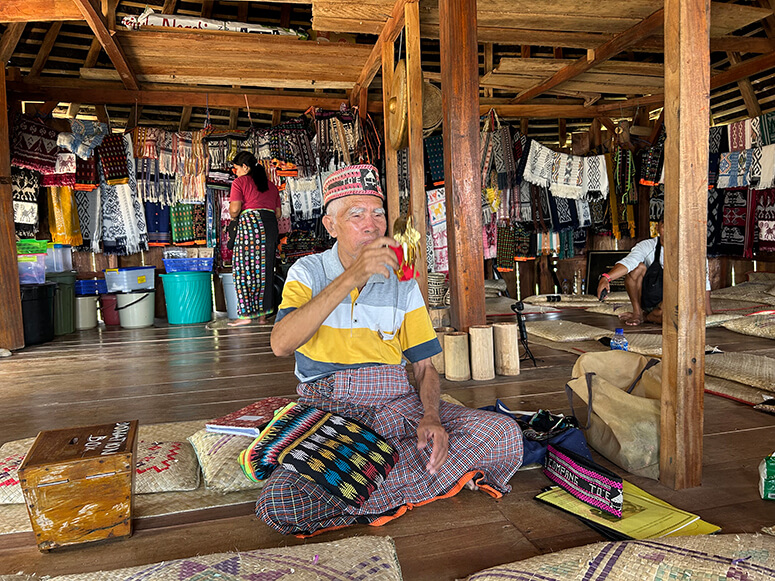
As visitors sat on woven mats like our banig and mat-covered pillows, the elder explained through an interpreter the traditions behind tribal clothing and accessories. Visitors can borrow the attire and accessories for photos beside a giant gong.
You can buy Manggarai coffee in this village along with vanilla beans and cinnamon bark at a fraction of their price in Manila.
Climbing down
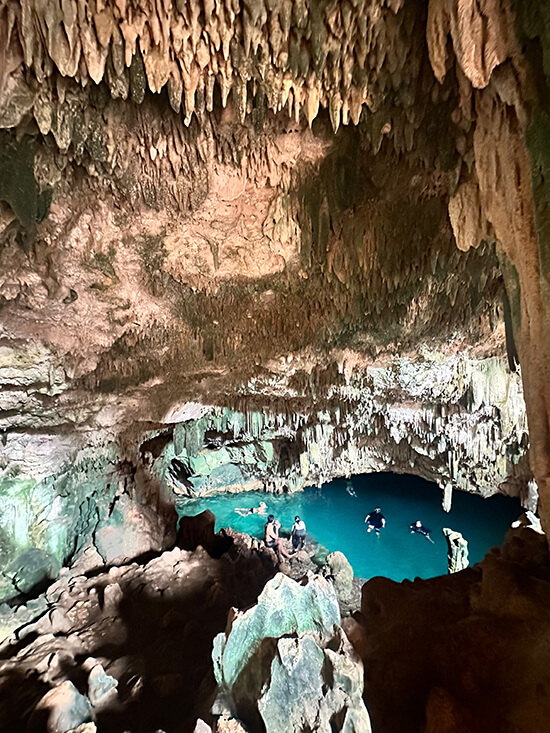
From Melo, there’s a stop for lunch before another highlight of a visit to Labuan Bajo: Rangko Cave. The timing is critical for the visit, to ensure the best photos. Sunlight streams in through breaks in the limestone cave between 1:30 and 3:30 p.m., allowing the best shots as visitors clamber down the steep, rocky slope and dive into the natural saltwater pool.
Rangko Cave is a 15-minute banca ride to another island within Komodo park. Floating on my back in the crystal-clear, still water while looking at the stalactites and stalagmites in the karst cave is a sublime moment of serenity.
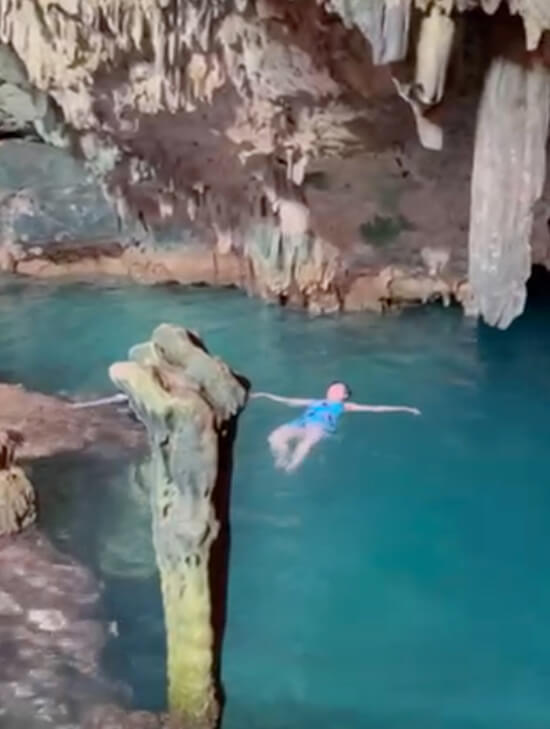
As I floated to the back of the cave, I spotted two flying creatures, which I thought looked like bats, but maybe they were small sea birds.
The water in the pool is deep, but there are rocks around the steps for holding on to or sitting.
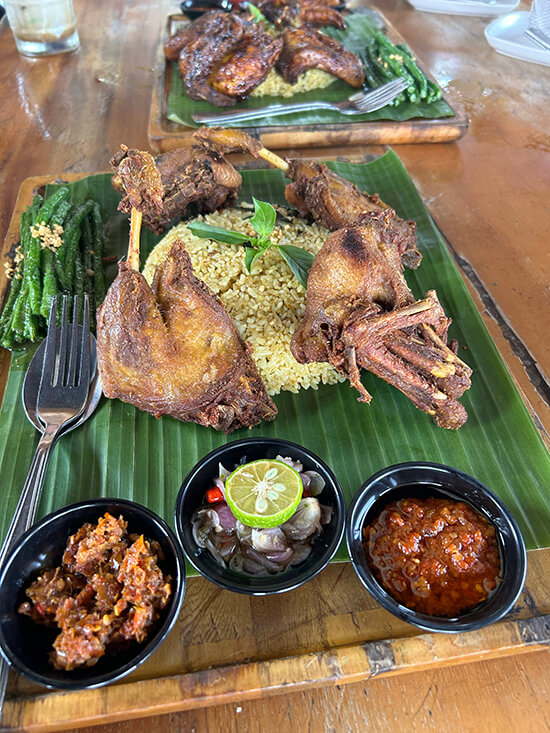
After the relaxing dip, the boat takes you back to the town center, where you can watch the sun set over the bay before heading on to a feast of the day’s fresh catch at the seaside wharf, or to sample Indonesia’s delectable deep-fried duck, Bebek Goreng, with fiery sambal dip on the side.
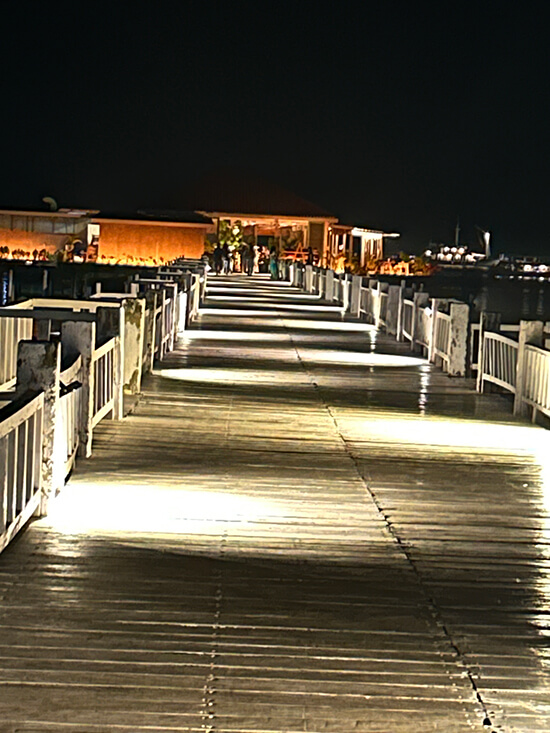
It’s a fitting ending to the trip to islands where the sun, sand, and sea are made exciting by the thought that a Komodo dragon might emerge from the shadows, not breathing fire, but well fed and ready for a photo op.
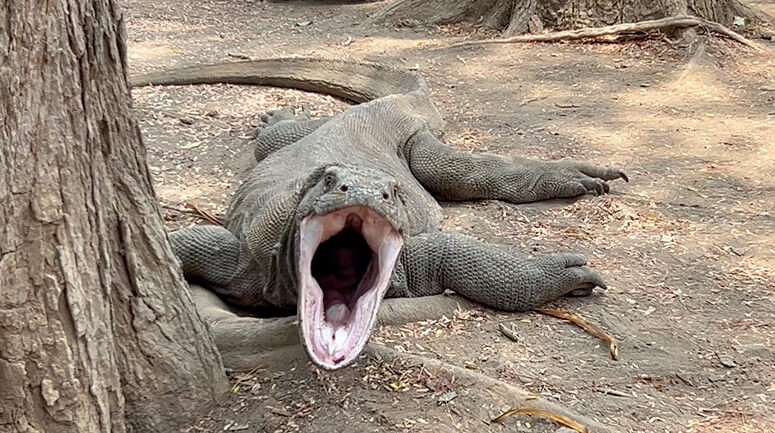
Fast facts about the Komodo Dragon:
- With a life span of about 30 years, it can grow up to 10 feet long, weigh over 330 pounds and run as fast as 20 kilometers per hour.
- In the absence of males for mating, the female can reproduce on its own, through parthenogenesis, but only males are produced.
- Cannibalistic, both male and female dragons can eat their young. The hatchlings learn early to take shelter in surrounding trees.
- The dragons hunt using their sense of smell, constantly flicking out their long forked tongues to collect microscopic scent particles in the air. They can detect the scent of blood, meat or rotting carrion up to eight kilometers away.
- They know how to camouflage while waiting for prey. They use their claws and serrated teeth to clamp down, releasing venom that induces shock as they eviscerate prey. If the wounded prey manages to get away, the Komodo knows how to follow patiently until the venom takes full effect.
- A Komodo dragon can consume 80 percent of its body weight in a single feeding.
* * *
For more information on Indonesia’s tourist attractions, you may check out @indonesiainmanila, #inDiplomasi #IndonesianWay, #WonderfulIndonesia, #pesonaindonesia, #indonesiainmanila or #labuanbajo

WATCH: Good parent ka ba? (Generations Ep. 28)
November 4, 2026
WATCH: Is OPM still as good as it used to be? (Generations Ep. 20)
September 9, 2026