

The streets of old Hong Kong
A few turns into its smaller streets, Hong Kong begins to disclose a personality much older. There are markets with histories beneath their floors, stairways built for daily trade, temples fragrant with incense, and restaurants that make a detour worthwhile. I set out for a walk and discover that the distance between one century and another can be measured in a few blocks.
Central Market is a good place to begin. It occupies land that, in the 1840s, was close to the shoreline. The site was part of the Marine Lot, with rights to 100 feet of waterfront for a pier. Queen’s Road followed the coast, taking its name from Queen Victoria, while a public market served the growing settlement of Victoria and the Chinese migrants arriving from Guangdong.
For years, historians argued over where the original market stood, but old land records and maps trace Colonel George Malcolm’s 1842 structure to this exact ground. As migration swelled the settlement during the Taiping Rebellion, a second market took its place, bounded by Jubilee and Queen Victoria Streets. Inside, the preserved terrazzo staircase remains a tangible reminder of the generations who have passed through daily life here.
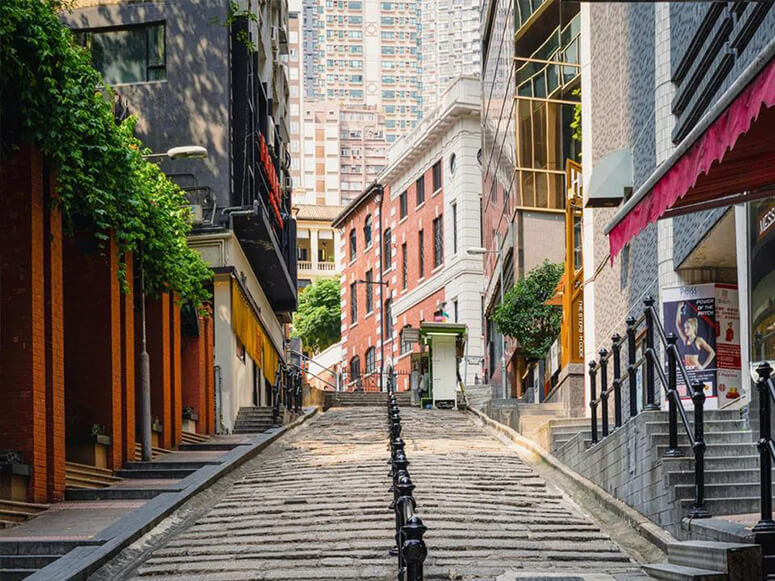
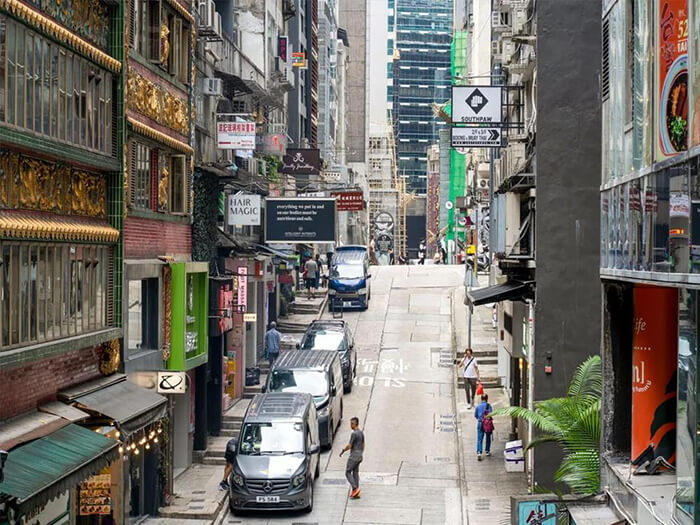
From there, I make my way to Pottinger Street, where the climb is part of the attraction. Its local name, Stone Slabs Street, is easier for Hong Kongers to pronounce than its official name, a linguistic challenge that has given the street its more familiar identity. It was named after Sir Henry Pottinger, the first governor of Hong Kong, who served from 1843 to 1844. Its unusual paving has a purpose beyond charm. Broad slabs alternate with shallow steps, allowing pedestrians to negotiate the incline while handcarts can roll over the edges. The arrangement has served hawkers wheeling their merchandise for generations.
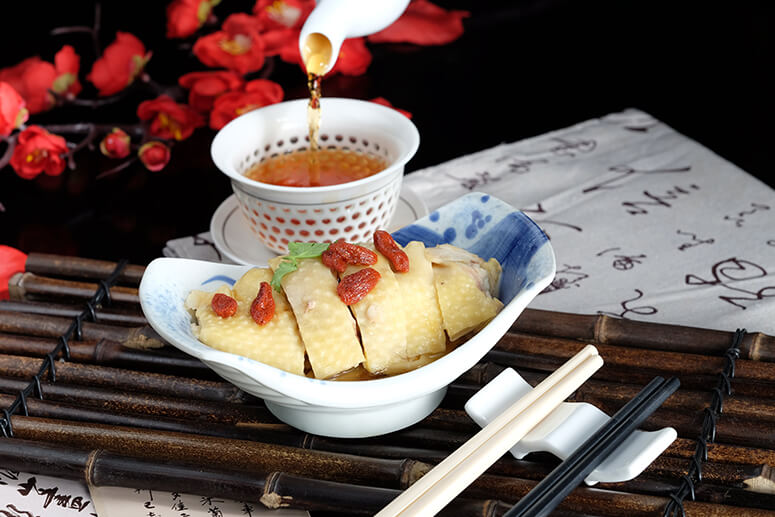
Classic poultry: Chilled drunken chicken lightly steeped in aromatic Chinese rice wine and crowned with goji berries. Photos courtesy of HKTB
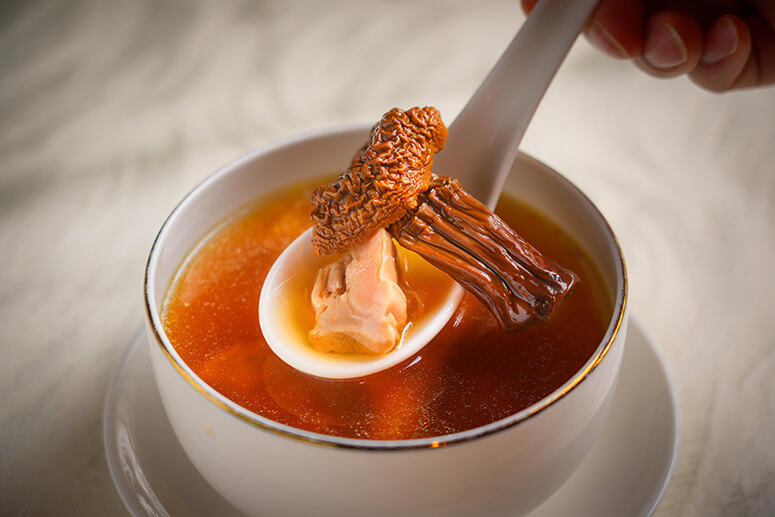
Nourishing clarity: Double-boiled pork rib soup infused with dried sea conch and earthy himematsutake mushrooms. Photos courtesy of HKTB
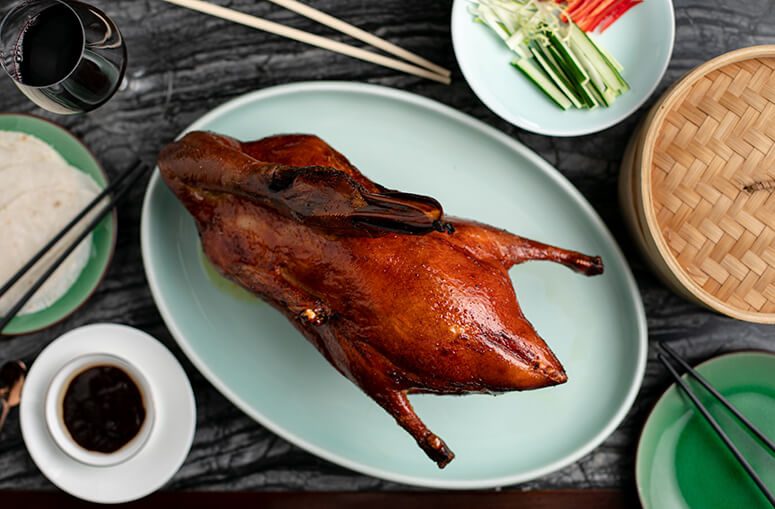
Colonial feast: Whole roasted Peking duck served with thin wheat pancakes, plum sauce, and crisp julienned scallions at Madame Fù. Photos courtesy of HKTB
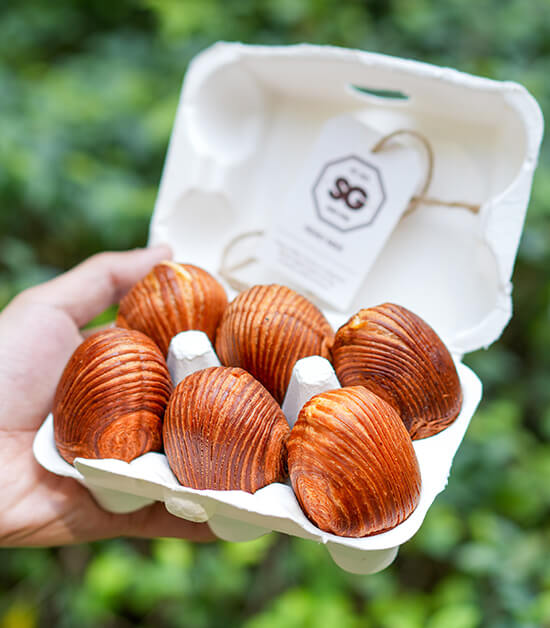
Playful baking: Social Goods Club packages its French-Cantonese Eggies inside a classic egg carton. Photos courtesy of HKTB
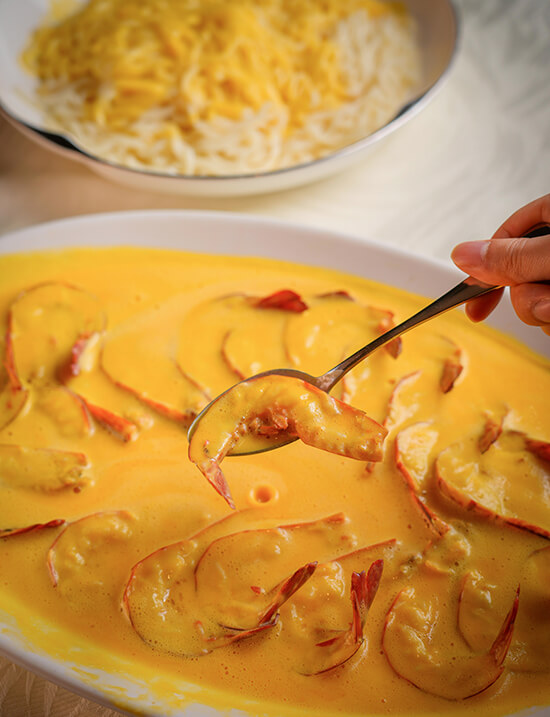
Coastal silk: Wild sea prawns poached in chicken oil and aromatic Huadiao wine, served at Ship Kee alongside thick udon to soak up the rich, golden sauce. Photos courtesy of HKTB
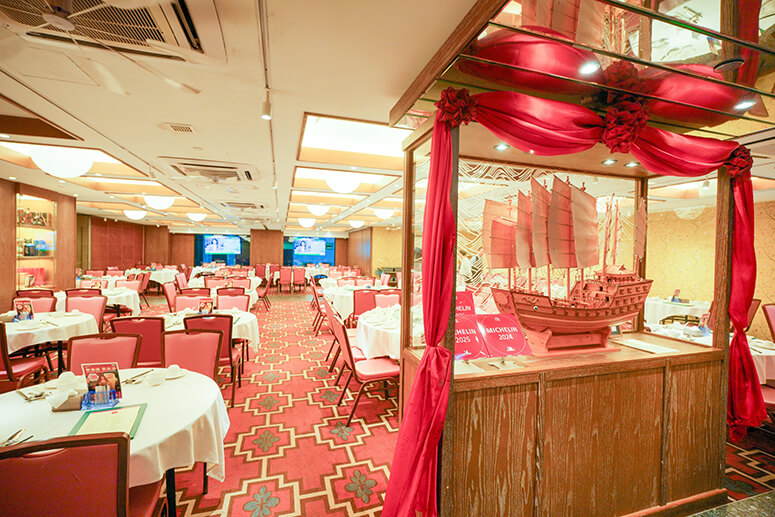
Heritage dining: A traditional red wooden junk frame anchors the Michelin-recognized dining room at Ship Kee. Photos courtesy of HKTB
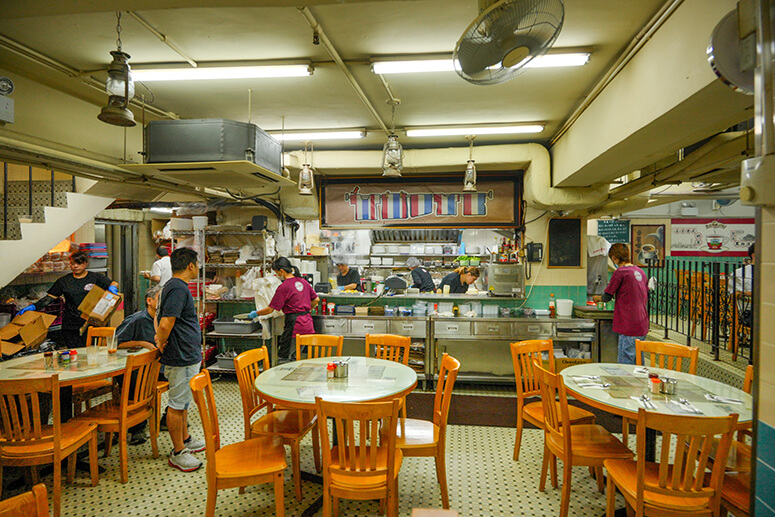
Timeless Cha Chaan Teng: Formica round tables and green tiles preserve the no-nonsense charm of classic Hong Kong diner culture. Photos courtesy of HKTB
Classic poultry: Chilled drunken chicken lightly steeped in aromatic Chinese rice wine and crowned with goji berries. Photos courtesy of HKTB
Nourishing clarity: Double-boiled pork rib soup infused with dried sea conch and earthy himematsutake mushrooms. Photos courtesy of HKTB
Colonial feast: Whole roasted Peking duck served with thin wheat pancakes, plum sauce, and crisp julienned scallions at Madame Fù. Photos courtesy of HKTB
Playful baking: Social Goods Club packages its French-Cantonese Eggies inside a classic egg carton. Photos courtesy of HKTB
Coastal silk: Wild sea prawns poached in chicken oil and aromatic Huadiao wine, served at Ship Kee alongside thick udon to soak up the rich, golden sauce. Photos courtesy of HKTB
Heritage dining: A traditional red wooden junk frame anchors the Michelin-recognized dining room at Ship Kee. Photos courtesy of HKTB
Timeless Cha Chaan Teng: Formica round tables and green tiles preserve the no-nonsense charm of classic Hong Kong diner culture. Photos courtesy of HKTB
CLOSE
Along the way, the street stalls become a changing display of the city’s calendar. Halloween brings masks and ghoulish merchandise, Christmas introduces tinsel and decorations, and Lunar New Year turns the steps into a celebration of red banners and paper ornaments. Even my short walk up the hill is an encounter with the seasons.
CONTINUE READING BELOW

As the slope steepens toward Staunton and Wellington Streets, the appetite takes over. Here, Bakehouse Soho has made a persuasive case for the egg tart. Chef Grégoire Michaud’s version has a deeply browned custard, rich and velvety against the crisp layers of its sourdough pastry. Nearby, on Wellington Street, Social Goods Club offers Eggies, a French Cantonese interpretation with a lighter sweetness, shaped like eggs and presented in an egg carton. Hong Kong has never been short of opinions about where to eat. Even its egg tarts invite comparison, and there is pleasure in having two good contenders within walking distance of each other.
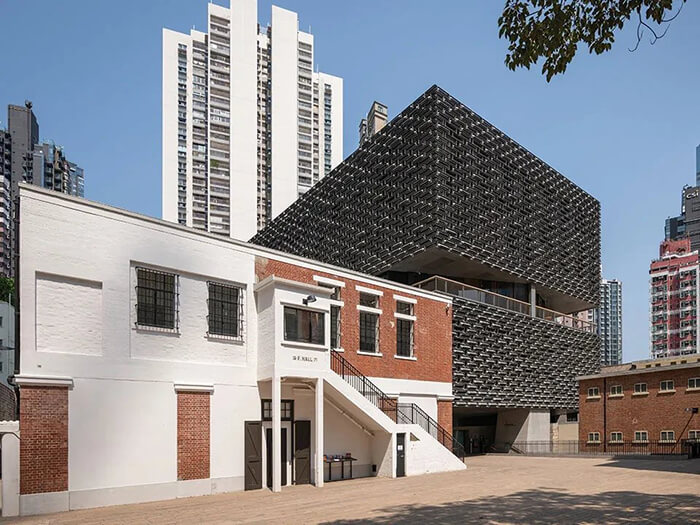
The uphill route leads to Tai Kwun, the former Central Police Station compound on Hollywood Road and Arbuthnot Road. Its old buildings once housed the machinery of colonial law enforcement and justice. The Parade Ground and former prison cells offer glimpses of that history, while the contemporary spaces have given the complex a new life as a center for art, heritage, dining, and cultural activity. The architecture makes for an intriguing encounter between eras. Old brickwork meets a dark, modern addition whose façade recalls a wall of cast-aluminium bricks, a striking intervention in a compound so closely associated with Hong Kong’s colonial past.
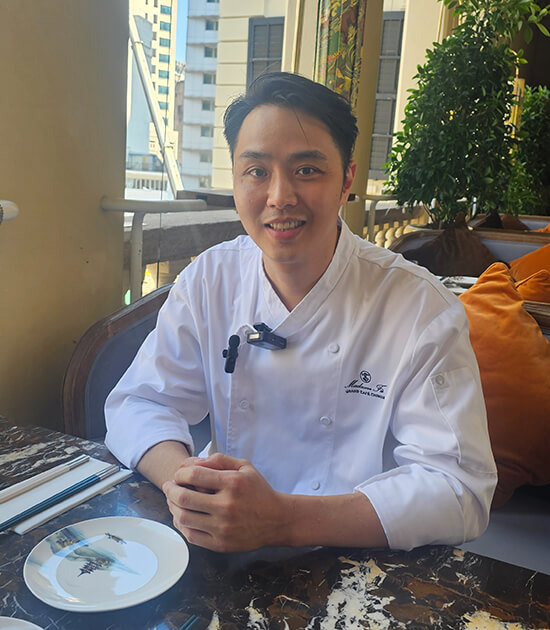
Lunch is a mood at Madame Fù, in the former Barrack Block. The veranda and the old building set the scene before the food arrives. My mind wanders into a Wong Kar Wai film. Maggie Cheung in a cheongsam, stopping in the neon haze of a weathered dai pai dong. Tony Leung in an immaculate black suit, sipping cheap tea from a plastic cup at a cha chaan teng. The characters could be anywhere in Hong Kong, and the city itself seems to have supplied the production design. Chef Kit Liao moves comfortably within this cinematic frame, pairing classic Peking duck and truffle-crisped chicken with unexpected turns like potato noodles sharpened with pickled peppers and vinegar, or a Paris-Brest with a Yuen Yeung center, its French pastry concealing the distinctly Hong Kong pairing of milk tea and coffee. For a while, I am content to inhabit this particular movie, with its own cast of flavors, characters, and setting.
Hollywood Road is next, its antique shops displaying Chinese porcelain, jade, and furniture from another era. I browse, more interested in the objects and the histories they might carry than in acquiring anything. The street has long been associated with the trade in Chinese antiques, and its shop windows offer glimpses of the craftsmanship and collecting traditions that have connected Hong Kong to the wider world. Further up the road, banyan roots spread over old stone walls, gripping the masonry with such tenacity that the trees seem as much a part of the architecture as the buildings themselves.
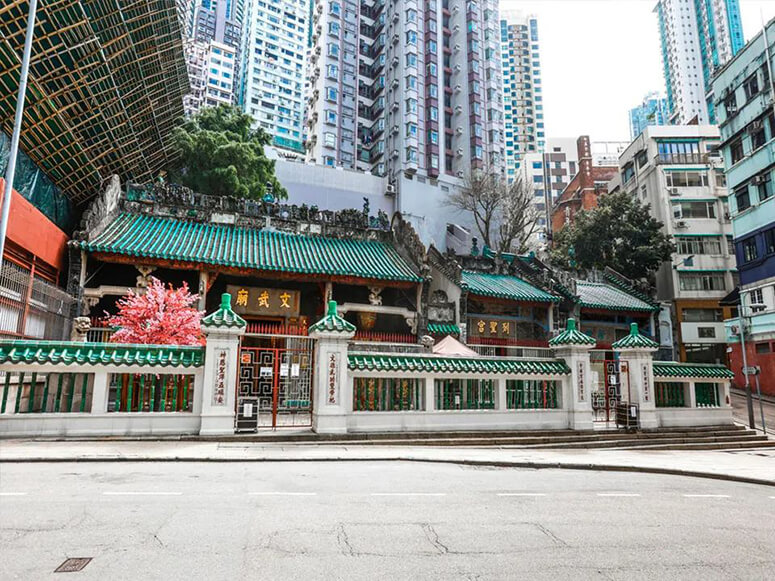
At Man Mo Temple, the walk reaches its spiritual destination. Built in the mid-19th century, the temple honors the gods of literature and war. Coils of incense suspended overhead lend the interior its distinctive atmosphere, while shafts of daylight find their way through the smoke and illuminate the altars. Inside, the rituals connect present-day Hong Kong to traditions that have endured through generations. Outside, the city carries on at its usual pace, with centuries of history folded into the business of another day.

WATCH: Is OPM still as good as it used to be? (Generations Ep. 20)
September 9, 2026
WATCH: LGBTQIA+ people with unlikely professions
June 28, 2026