

Why the world loves ube
Back in 2017, when I first wrote about the humble purple yam, dioscorea alata (affectionately known to us as “ube”), it occupied a very different cultural space. To most of the world, it was a curiosity, an insider secret of Filipino cuisine made eye-catching by its brilliant, vivid, electric-violet hue.
I fondly remember watching my grandmother toil in the kitchen to prepare halaya from scratch (though young modern chefs now say you can replace lola with a Thermomix). At that time, writing about ube was a way to validate it as a cherished local treasure. I never thought I would see it offered as a special treat in European cafés or featured as a star ingredient in popular reality cooking shows. In under a decade, that quiet culinary ripple of ube became a global tidal wave.
During recent travels through Europe, wandering into specialty cafés, international patisseries, and even mainstream establishments like Starbucks, I was struck by how deeply the purple yam has woven itself into food culture. From vibrant lattes and marbled croissants to bespoke pastries in high-end capitals, ube is everywhere.
Hailed by some as “the next matcha,” this viral trend is well on its way to becoming a permanent fixture of modern gastronomy, largely thanks to ube’s impressive lineup of health benefits.
Ube’s journey to world domination didn’t happen overnight. Filipino bakers, pastry chefs, and home cooks abroad planted the seeds in multicultural hubs like New York, San Francisco, London, and Toronto, transforming traditional halaya and pandesal into modern fusion treats. But what truly supercharged its growth was the visual currency of social media. In spaces driven by Instagram and TikTok, ube is the ultimate scroll-stopper. Its naturally deep, saturated violet shade triggers instant visual engagement.
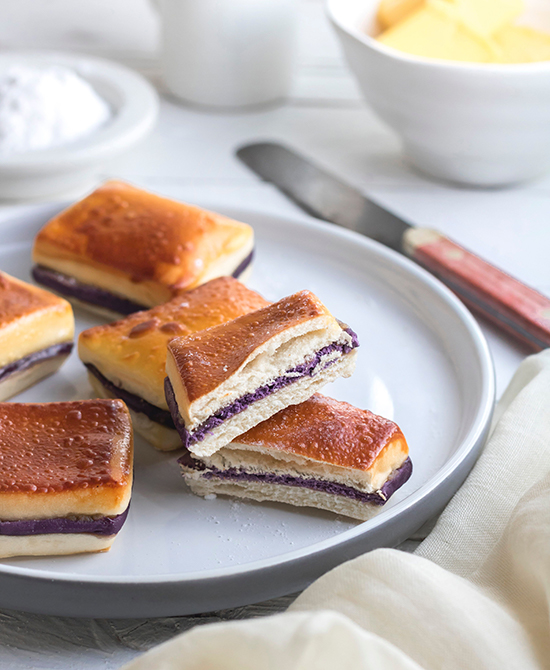
Ube also arrived precisely when global consumers began demanding “new and exotic” flavors that still felt comforting. Its subtle, sweet profile naturally won over palates worldwide. Furthermore, the commercial development of shelf-stable ube powders, purées, and high-performance extracts allowed international food-service giants to standardize the ingredient across thousands of storefronts.

While internet culture initially fell in love with ube for its looks, nutritional scientists stayed for its biochemistry. As ube transitioned from a simple comfort food into a functional wellness ingredient, recent scientific literature has taken a closer look at its makeup. Contemporary reviews and clinical evaluations of the tuber explain why this vibrant root deserves its expanding superfood reputation.
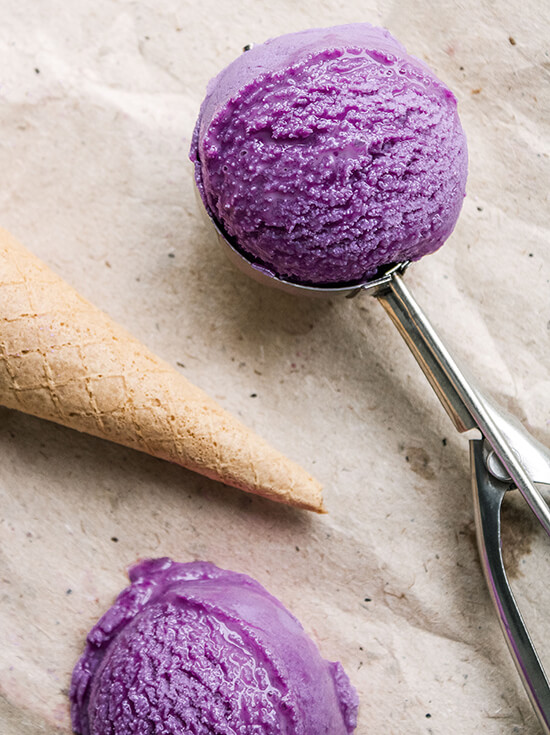
The signature hue of ube comes from anthocyanins—the same potent flavonoid pigments found in blueberries, blackberries, and açaí. These anthocyanins are remarkably stable and pack a formidable punch against oxidative stress, helping neutralize the free radicals responsible for cellular aging and chronic systemic inflammation.
Despite being a satisfying, starchy root, ube boasts a surprisingly moderate-to-low glycemic index (GI) compared to refined carbohydrates. Nutritional assessments point to its high concentration of dietary fiber and resistant starch, which work together to slow glucose absorption and promote a more stable insulin response. Furthermore, studies indicate that its unique flavonoid profile may actively assist in metabolic regulation.
The resistant starch found in purple yam also acts as a natural prebiotic. It passes through the upper GI tract largely undigested to nourish beneficial gut bacteria, thereby supporting intestinal lining integrity, reducing systemic inflammation, and fostering overall gut-brain wellness.
Beyond direct physiological benefits, food scientists increasingly value ube as a health-forward, clean-label alternative to synthetic, petroleum-derived food colorings, satisfying a global consumer base that actively seeks functional, plant-based, and allergen-free ingredients.
The DOST-FNRI (Department of Science and Technology Food and Nutrition Research Institute) has published official nutrition data for our local purple yam. Every 100 grams of ube provides 118 calories, 27.9 grams of mainly complex carbohydrates, 4.1 grams of dietary fiber (double that of potatoes), 816 mg of potassium (rivaling bananas and more than double that of sweet potatoes), 17.1 mg of vitamin C, and 130 mg of anthocyanins (matching or even exceeding blueberries).
Researchers from the University of the Philippines and various agricultural institutes looking into Philippine yam cultivars, like the prized Kinampay variety, have long verified that local dioscorea alata strains contain dense concentrations of phenolic compounds and active antioxidant properties.
FNRI data further highlights that ube outpaces several common root crops and local staples in specific micronutrients, notably boasting high potassium levels and robust dietary fiber that outscores standard potatoes, all while maintaining a moderate glycemic index.
While growing ube in your backyard is entirely possible, it requires a bit of patience. Ube is a resilient tropical vine that doesn’t demand heavy maintenance or constant pampering if planted in the right climate, but it takes at least eight to 10 months (sometimes a full year) to harvest an heirloom cultivar like Kinampay. Because it is a root crop, you need loose, deeply tilled, and well-draining soil so the tubers can expand without being stunted. The vines also require sturdy fences or trellises and can stretch 10 to 15 feet. Ube is sensitive to sudden temperature shifts and microclimate changes, thriving best in partially shaded areas.
Now, I know what you might be thinking: How can ube be good for you when all the popular ube treats are sweet and sugary, like ube halaya, pastillas, hopia and champorado?
The answer is to experiment with using the root crop in savory dishes. Many cooks find it can easily take the place of taro (gabi) in sour broths like sinigang, coconut-based curries, and stews. Others use it as a direct substitute for sweet potatoes (camote), russet or Yukon Gold potatoes, cassava, or even squash and pumpkin.
A quick search on YouTube will give you plenty of examples of how adventurous home cooks use ube for vegetable fritters (okoy), soups, mashed sides, gnocchi or stir-fried pork dishes. Of course, the platform is still wonderfully full of all the sweet delicacies and drinks you can concoct with the purple tuber.

WATCH: LGBTQIA+ people with unlikely professions
June 28, 2026
WATCH: Discovering Vietnam in three days
June 9, 2026