

Ube is trending abroad: Is the Philippines optimizing the moment?
In 2015, Rhea Topacio and Dennis Rogacion disrupted the European food scene with tubs of Luneta Ice Cream under their banner brand Pamana World BV. Among all the Philippine flavors of the ice cream was "purple yam." Ube.
A vibrant purple dessert that tastes a little like nutty white chocolate? Europeans were more than curious and markets in Germany, the UK, Spain, and Italy, in particular, opened their doors, turning ube into the brand's flagship flavor. Then in 2016, this versatile tuber got its moment in the US, with food blogs and mainstream media tagging it as a "hipster food trend" in restaurants and cafés.
But what people expected to be just a temporary Instagram darling in the Western Hemisphere has remained since then. This year, according to a report by CNN, ube is commanding a "purple reign" across the US, Europe, and Australia.
The Philippines, where many believe ube originated, has taken note. According to the Department of Trade and Industry, the country made $3.06 million (about P218,777,400) off of ube and ube-based product exports in 2025. It was a 20% increase from 2024 figures.
If ube is supposedly native to the Philippines, is the industry optimizing the international demand as much as it can?
A Southeast Asian root crop
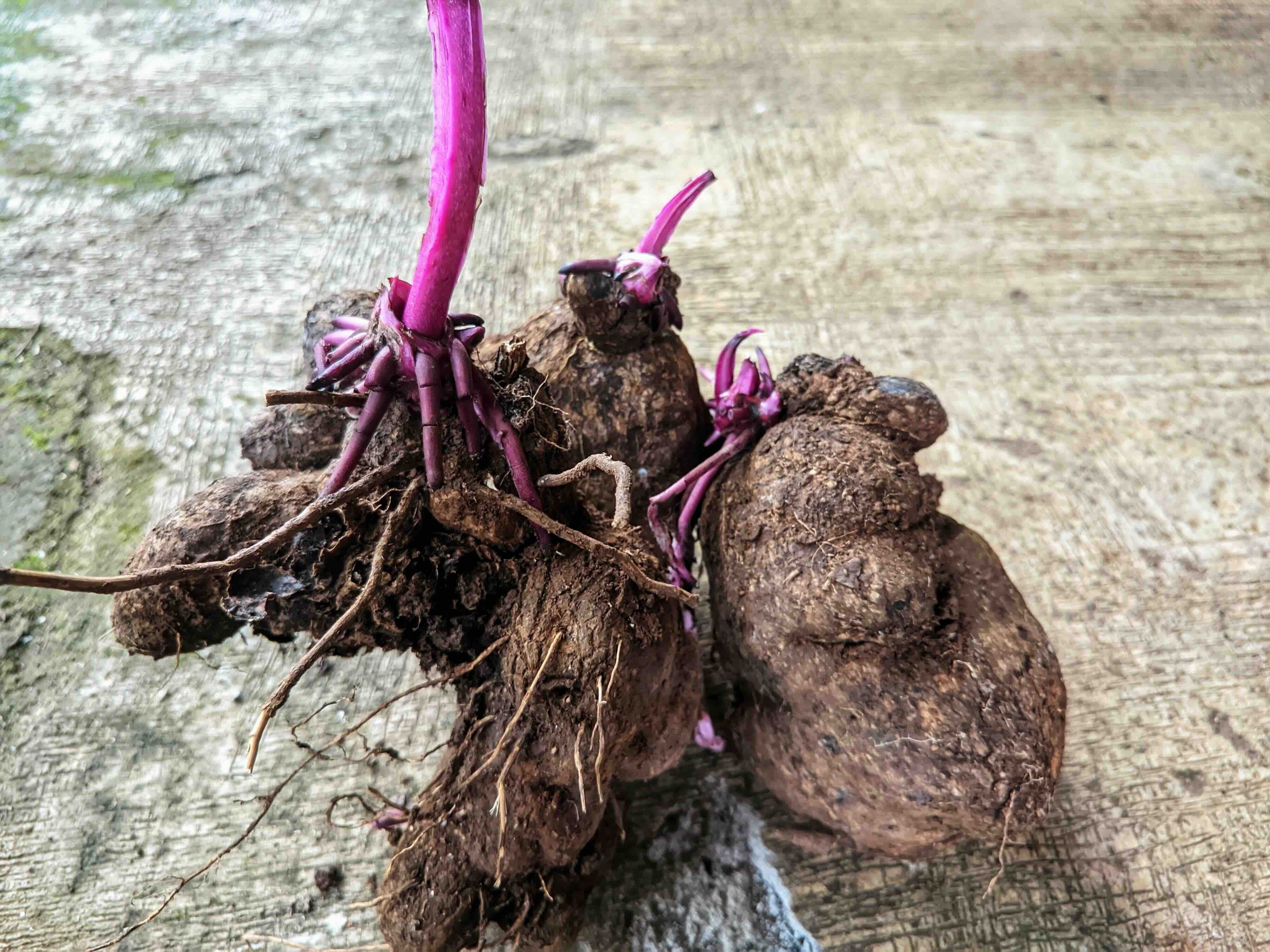
A clarification is in order. The Philippines does not have sole ownership of Dioscorea alata, more commonly known in the country as ube.

When a product becomes popular worldwide, it can trigger passionate online discussions. The frequent contention about ube is that non-Filipinos unfamiliar with the tuber's origin misrepresent it. They mistake it for taro or purple sweet potato. Pinoy social media users do not take the inaccuracies lightly, demanding the world acknowledge the "Filipino-ness" of ube. But they may not be completely correct, either.
On Threads, Darel Antesco, agriculturist and researcher at the University of the Philippines - Los Baños, explained ube's origin. Calling some Filipinos' misplaced territorial feelings about ube "toxic patriotism," Antesco argued they are "forcing the narrative that the crop exclusively originated from the Philippines and should be given credit."
Ube is native to the entire Southeast Asian Region, with the possibility of Melanasian roots, as well, asserted Antesco. Filipinos just picked up the Austronesian word "ubi," referring to the tuber, and Tagalized it into "ube."
Weak local production
The Department of Agriculture estimates it takes ube 10 to 11 months to be ready for harvest, making it a slow and sensitive crop vulnerable to climate change. According to a report by CNA, erratic rainfall and rising temperatures have hampered the industry, while limited investment in processing and logistics has kept Filipino farmers restricted to small-scale, seasonal planting.
As a result, the Philippines imports much of its ube from Southeast Asian neighbors, particularly Vietnam, to keep up with export orders.
Last year, a project was initiated to allow Pamana World to import ube powder directly from the Philippines. The initiative, as well as her company's constant need for ube products, has given Topacio more nuanced insights about the value of support for farmers in the country.
"Filipino ube farmers can play a key role in optimizing the crop's growing popularity abroad," Topacio told PhilSTAR L!fe. "Because of ube's increasing global demand, farmers can, and should, gain greater access to the resources and support needed to scale and sustain production."
She argues that scaling production requires consistent modern education, teaching farmers to utilize agricultural technology and organized planting systems to protect harvests from pests and volatile weather.
Additionally, Topacio suggested farmers be given access to financial support and funding networks, and direct market connections. To compete globally, Filipino farmers also need to understand export standards, quality certifications, and regulatory requirements.
"Establishing a support system of experts can help farmers consistently produce export-ready crops," added Topacio.
Finally, Topacio emphasized the need for consumer to brush up on their ube knowledge as well. At the most basic level, they have to understand that ube is not purple matcha, and that it ranges in color from vibrant purple, which it has come to be known for, to light lavender.
"Clear positioning and education will enhance [ube's] perceived value and drive sustained demand—ultimately benefiting farmers," Topacio told L!fe.
The conversation on culture
Filipinos tend to take misrepresentations of ube personally because of how intricately the tuber is tied to Philippine culture.
"We usually associate ube with birthdays, fiestas, New Year celebrations, and pasalubong, something special or festive, thanks to its taste and vibrant appearance. But the role of ube runs much deeper in Philippine culture," said John Sherwin Felix, founder of Lokalpedia, a Filipino food heritage online archive.
According to him, ube, one of the Philippines' earliest crops along with taro, millet, and other grains, predates the ubiquitous rice.
"These were what our ancestors originally ate. Rice, in pre-colonial times, was not yet the everyday staple we now consider it to be," Felix told L!fe.
"Before it became a trend, before it found its way into donuts and spreads, ube was, and still is, an important source of sustenance," he added.
It is this heritage that first pushed Topacio and her business partners to bring the goodness of ube to a wider European market. Aside from Luneta Ice Cream's ube-flavored bestseller, Pamana also carried Ubeness, its flavoring brand.
"As immigrants ourselves, we understand the deep connection between food, identity, and belonging," said Topacio. "We believe millions of Filipinos living abroad deserve the same opportunity to experience and enjoy their heritage, no matter where they are in the world."
The demand is there; so are the farmers. All they need to maximize the industry is consistent, innovative, and financially robust support. It is time the Philippines steps up for the humble yet lucrative ube.

WATCH: Pixar Summer Fest adventure at Hong Kong Disneyland
August 10, 2026