

Travels with my mother in Colombia: Cruising the Magdalena River
As I mentioned in Part 1 of this series, “Travels with my mother” seems to be the title of an unfolding travelogue I am finding myself in more often these days. Now, in Part 2, it involves a visit to Colombia, which included a week-long cruise down a storied Colombian waterway—the mighty Magdalena River.
My mother is both a serious reader and traveler, and to prepare ourselves for the experience of Colombia, we were “encouraged” to have some literary backup. I was assigned the Gabriel Garcia Marquez novel Love in the Time of Cholera, which she purchased for me in a Cartagena bookshop. Even before arriving in Colombia, both my travel companions—mom and godmother, “Tita Bunny”—were already ploughing their way through the extensive, authoritative book on the Magdalena River by Wade Davis, Magdalena: River of Dreams: A Story of Colombia. Davis, an anthropologist and historian, wrote of the cultural and economic significance of the Magdalena River as the most significant waterway of the country, playing a huge role in its development.
The Magdalena River has a difficult history, most recently as a dumping ground for the victims of Colombia’s civil warfare between militant armed groups and the related drug wars. In centuries past, the river was known to harbor cholera, with the boats traveling up and down it causing the spread of the disease. The Magdalena runs through unique geographic landscapes that include the high-altitude Andes mountain range and low-altitude tropical wetlands. The river basin is incredibly biodiverse, as it is home to numerous species of birds, monkeys, wildcats such as jaguars and pumas, iguanas, caimans, and the critically endangered manatees (known as dugong in the Philippines).
After a heady four days in Cartagena, we boarded the boat, the AmaMagdalena, run by the AmaWaterways company, to embark on the week-long journey, from south to north, towards the cruise port city of Barranquilla by the Caribbean Sea on the Atlantic side. It is important to note that because of the civil war in Colombia, which was concentrated in the river basin, passenger boats had stopped plying the river in the early 1960s. Roads and trains offered an easier alternative to dangerous river travel. The river was considered safe for tourism only as recently as 2016, the year in which a peace agreement between the FARC guerrillas and the government decisively ended 50 years of fighting.
CONTINUE READING BELOW

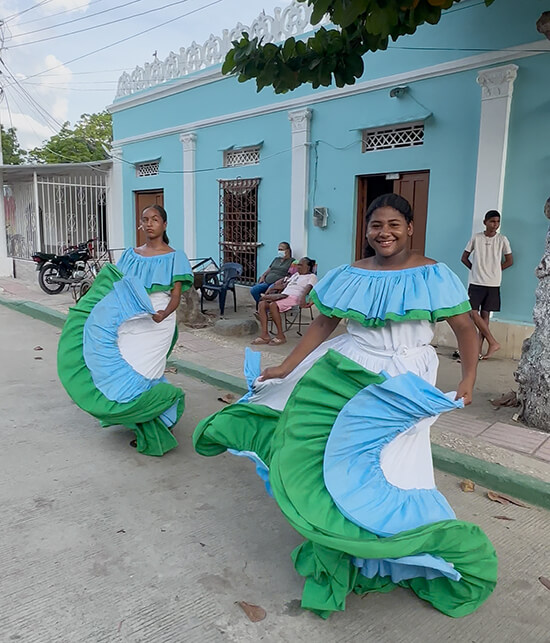
The AmaMagdalena is one of two custom-built river boats accommodating around 60 passengers each, which started the cruises up and down the river as recently as 2025, passing small colonial-era towns that are easy to access from the river. Certainly, in many of them, it felt like time had stood still. Cultural immersion tours were offered at each stop, usually preceded by short, informative lectures onboard on subjects such as the iconic cumbia dance, the varied native fruits, and even the difficult political history of Colombia.
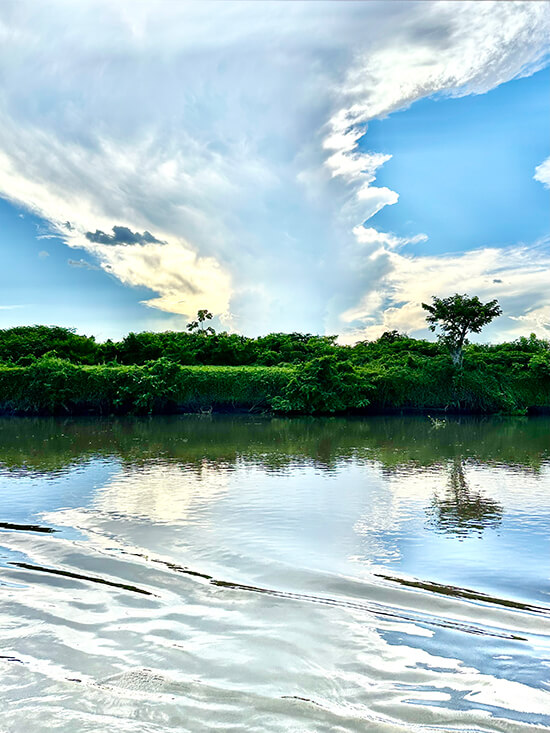
Though parts of the Magdalena seemed as wide as a sea, we often traveled along its narrower tributaries, or canals. What I found amazing was how green and lush the riverbanks were, with huge trees and clusters of palm trees abounding. There were hardly any people or built structures, such as houses or docks, along the river. This brings home the point that Colombia, a huge country almost four times the land area of the Philippines, is not as densely populated.
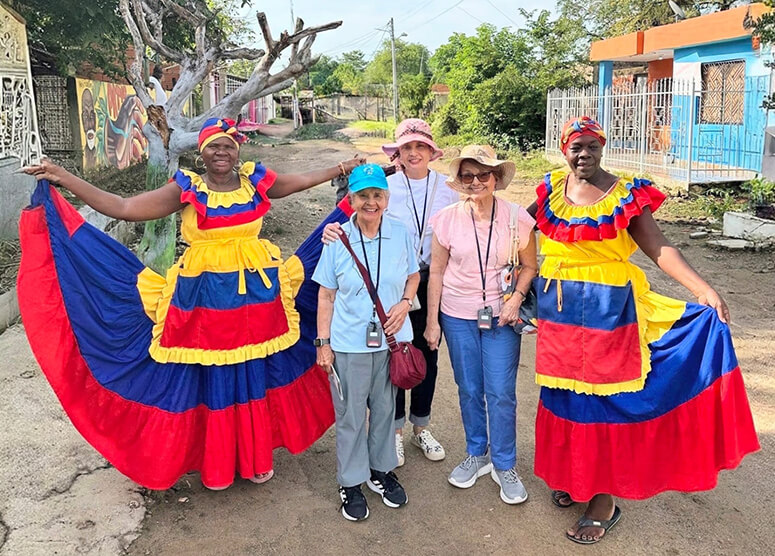
We started our journey on a Sunday. The first stop was the “free town” of San Basilio de Palenque, founded by slaves who fled a life of slavery as far back as the 17th century. They journeyed deep into jungle areas which were difficult to access, and founded their remote settlements, called palenques, all over the Americas. Similar to the Filipino word for market, palenque in Colombia means “town.” The place still had the feel of a settlement with simple single-story buildings and dirt roads. We met a local healer, or medicine man, much like our own Philippine hilots; explored a traditional mud home, and listened to a musical demonstration, heavy on percussion instruments. That Sunday was the day of a crucial election runoff for two presidential candidates. As in the Philippines, voting was held in the local school, and there was quite a turnout. We witnessed some older people being helped into a school to vote.
Later that afternoon, we visited the small fishing town of Calamar, settled in the 1840s. Everyone there seemed to be celebrating the election weekend in groups milling around street corners, front gardens and backyards, enjoying an energizing cacophony of loud music and dancing.
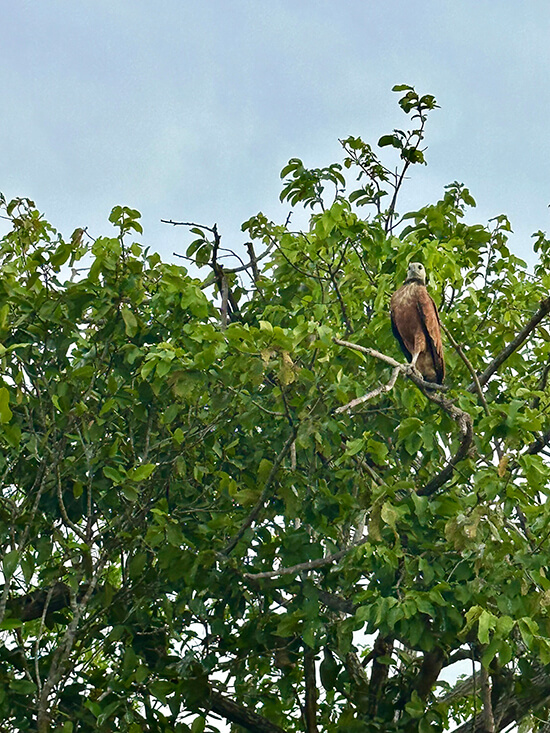
A highlight of the cruise was a small boat tour through the winding canals of Tacaloa, a wetlands tributary of the Magdalena. We had the opportunity to spot the local birds perched on trees and flying about, and catch sight of tiny caimans, their beady eyes just above the waterline. Along the river, an interesting sight was of a few dogs here and there, intensely scouring the riverbank edges for unsuspecting iguanas, ready to pounce. Colombia has about two thousand species of birds, the most of any country in the world. We were handed a pictorial checklist of birds to spot from which we identified the relatively common white great egrets and black vultures, green kingfishers, the greater ani, large-billed terns, snail kites, southern lapwings, striated herons, and the yellow-headed caracara—named after the distinctive and ubiquitous sound it made. It all seemed to be a birdwatcher’s dream destination.
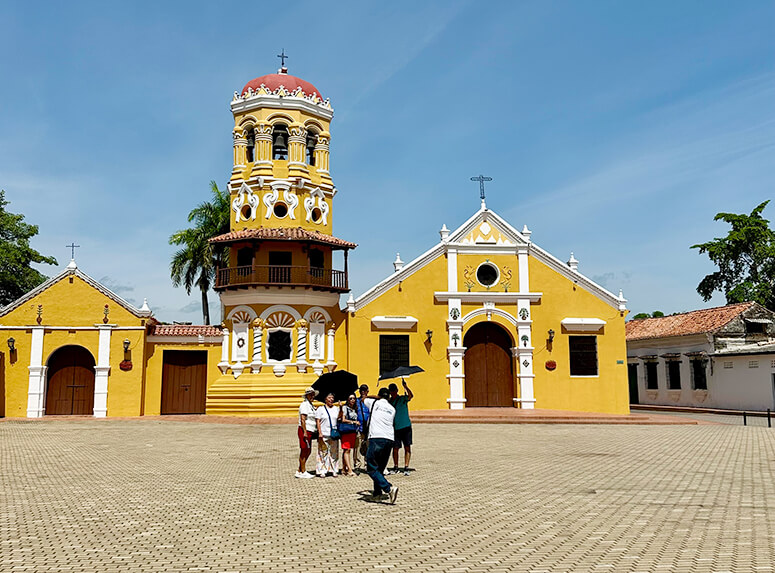
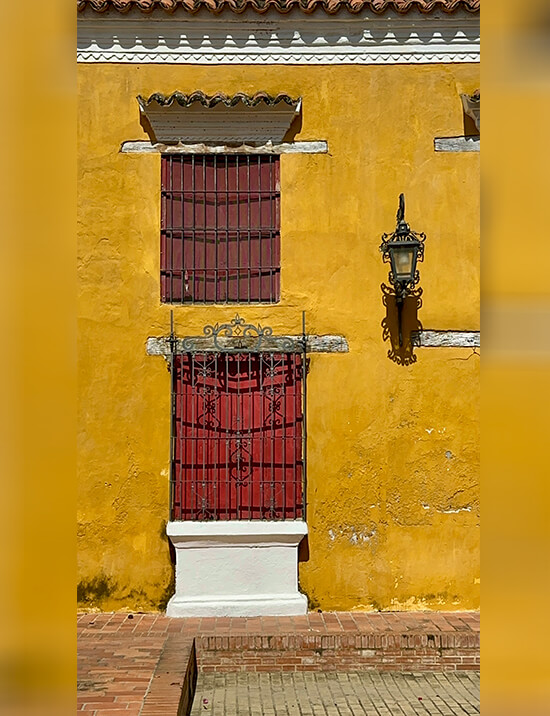
Another day, we docked at Mompox (Sta. Cruz de Mompós), a beautifully preserved colonial-era town of only 50,000 residents that prospered due to its proximity to the river. It was a hiding place for the precious gold and silver riches kept away from the frequent pillaging of Cartagena by French, English, and Dutch privateers and pirates. Mompox became famous for the craft of filigree jewelry, now sold in shops all over the town. The end of our visit there was marked by a workshop wherein we produced our own tiny silver filigree heart pendants. Since 2012, Mompox (or Mompós) has been the venue for a famous yearly jazz festival. Appropriately, we ended the day listening to a lively jazz trio onboard, while the boat was docked on the river by the town.
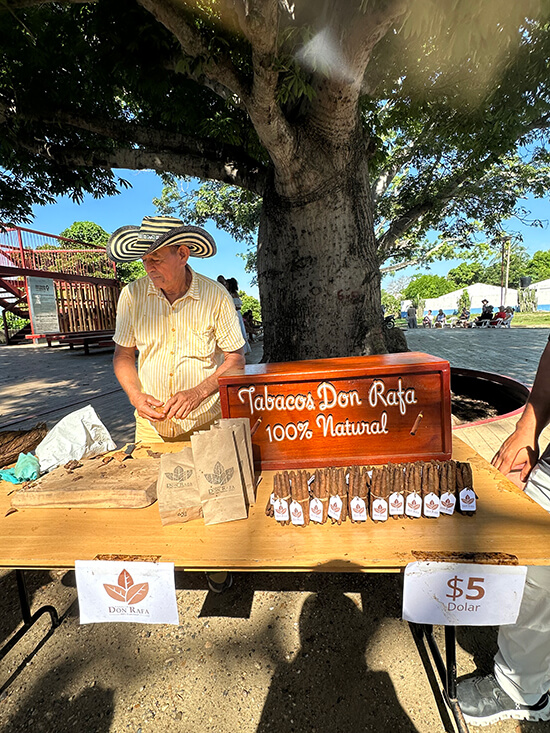
Our last stop before reaching Baranquilla was the tiny town of Sta. Barbara de Pinto, home to only 13,000 residents. We were led from the boat to a shady area beneath majestic ceiba, or kapok, trees with a small white church nearby. We were treated to a demonstration of tobacco-rolling cigarillos, by the owner of the eponymous Don Rafa brand. We learned how rope fishing nets are still hand-knotted by a few fishermen, a dying art. A few local children giggled as they squatted on the grass, pretending to be the fish over which the net was thrown. We were treated to the performance of Bollo Limpio, a dance related to the harvest season. As we made our way back to the boat, we chatted with one of the dancers, a young woman, aptly named Barbara after the patron saint of the town. Without being asked, she quietly helped my mom over puddles and steep grassy slopes towards the boat, a sign of the kindness and respect towards elders that the Colombians have.
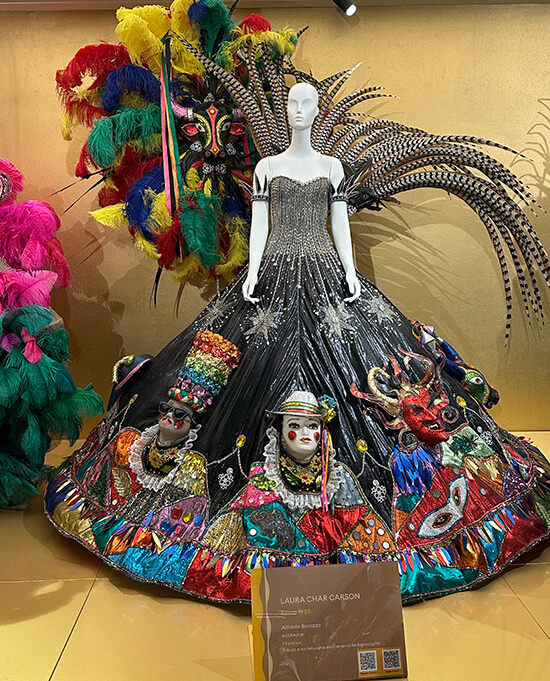
We ended the cruise in Barranquilla, mainly known as an industrial port city. The highlight of the city tour here was visiting the giant statues on the city baywalk of the singer Shakira and the actress Sofia Vergara, both famous “Baranquilleras.” Barranquilla is best known for the vibrant yearly pre-Lenten festival held in February known as the Carnaval de Barranquilla. It is the largest cultural festival in Colombia, combining Spanish, Afro-Caribbean and indigenous influences and features elaborate floats, dances, bands, famous festival characters, and above all, the Carnival Queen, who is probably equal in standing in Colombia to a Miss Universe. Again, I would say the Colombians are just as obsessed with beauty queens and fiestas as we Filipinos are, a legacy perhaps of our common colonial and indigenous backgrounds.
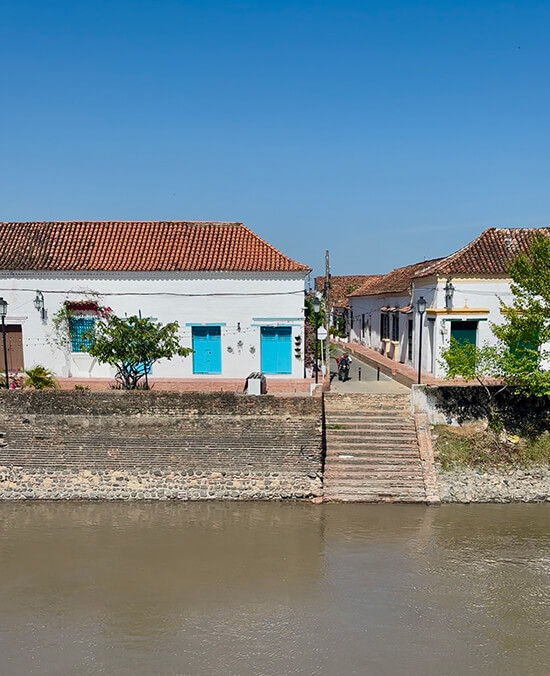
In Barranquilla, our exotic Colombian sojourn had come to an end. The week-long cruise afforded us a brief but eye-opening insight into the country’s heartland, given life by the majestic Magdalena River. The combination of warm Colombian hospitality and the pride in the built heritage of its small colonial-era towns and cities impressed us, along with the beauty and incredible diversity of its carefully protected and preserved environmental ecosystem, something we Filipinos could learn from.
Unexpectedly, our ten days in Colombia also gave us a feeling of home, as we felt very comfortable in a culture imbued with a deep attachment to music, dance and beauty queens, very much in sync with our own.

WATCH: Is Gen Z too soft? (Generations Ep. 23)
September 30, 2026
WATCH: Can we talk about death and grief? (Generations Ep. 25)
October 14, 2026