

Travels with my mother in Colombia: Love in the city of Gabriel Garcia Márquez
Travels with my mother” seems to be the title of an unfolding travelogue I am finding myself in more often these days. Recently, it involved a visit to Colombia which included a week-long cruise down a storied Colombian waterway—the mighty Magdalena River.
My mother is almost 90 years old, and so is her traveling buddy, her childhood friend who is also my godmother, notably named Katherine Pamintuan von Heiland-Haffke, aka “Tita Bunny.”
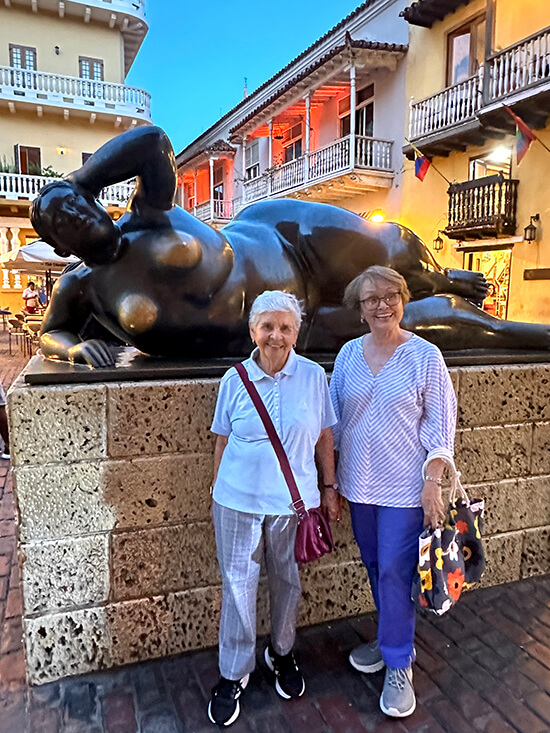
Tita Bunny had asked Mom if she wanted to explore Colombia via a relatively new river cruise on the Magdalena River, starting in Cartagena in the south and ending in Baranquilla in the north, both port cities situated along the Caribbean coast. Unsurprisingly, my mother, the intrepid traveler, thought this exotic expedition would be right up her alley, and promptly roped me in. With my adventurous and independent travel companions having “age-defying” qualities, I thought it only prudent to keep a watchful eye. We were extremely fortunate to have a Philippine-based Colombian friend who offered her historically significant and beautiful home in Cartagena to us for a few days before we were to embark on the river cruise.
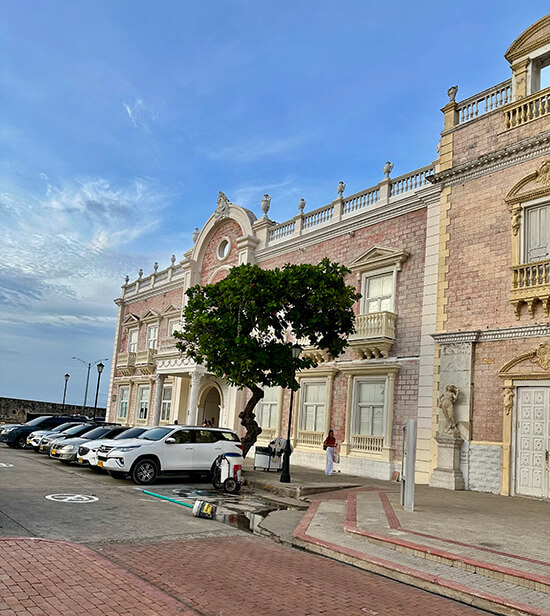
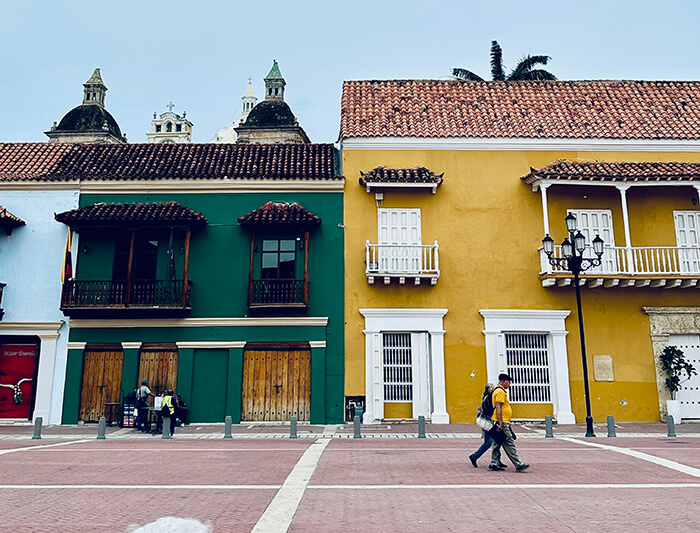
The heart of Cartagena de Indias (its official name) is a compact walled city, quite similar to our Intramuros. This fabled port, founded in the 16th century by a Spanish conquistador, was a crossroads for the slave trade and the immense wealth in silver and gold from the Americas that was disseminated by the Spanish colonial masters to the rest of Europe. A mix of Spanish colonial and Afro-Caribbean influences permeates this incredibly photogenic city filled with colorful historic homes and buildings, churches and small plazas, seemingly unchanged over the centuries.
CONTINUE READING BELOW

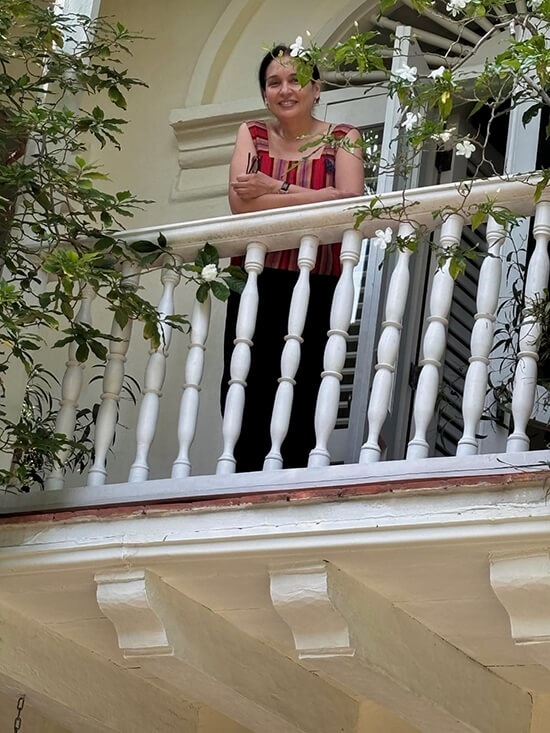
There is a wealth of preserved heritage structures in Cartagena. A classically designed building by the sea, Teatro Heredia, has been revived for opera and theatre productions. A former convent is now the elegant Sofitel Sta Clara hotel, though we could not enter to have a look at its atmospheric courtyard as the American ambassador was hosting a large reception on its rooftop. A Four Seasons hotel that combines several colonial structures, such as a cloister and old theaters, recently opened on the outskirts of the Walled City. Many centuries-old houses had bougainvillea-draped wooden balconies, rooftop spaces, as well as unusual floor-level half-moon balconies, enclosed with wooden grills from top to bottom.
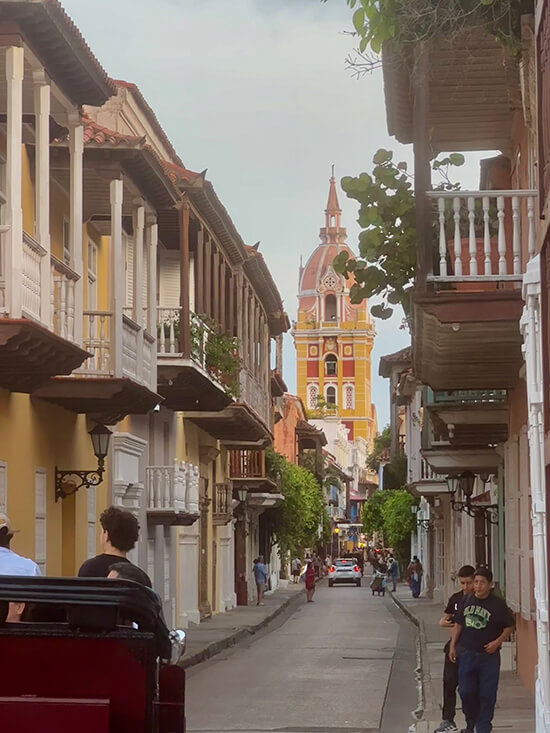
These cage-like spaces with window seats gave young women in past times the opportunity to safely peer out onto the streets and discreetly display themselves to possible suitors. Following typical Spanish colonial-style urban planning, plazas and churches are dotted throughout the city.

A guided city tour we took unexpectedly coincided with the wonderful sight of several quinceañeras, teenage girls celebrating their 15th birthdays, a Latin American coming-of-age tradition. Dressed in elaborate full-skirted gowns and tiaras, they literally stopped traffic as they posed for professional photographs in various picturesque locations around town, always accompanied by an entourage of family members, also dressed to the nines. We stopped to enter a university with a lush central garden surrounded by arched walkways and caught a concert of lively Colombian music. Unusually, a harp was among the instruments being energetically played.
The bustling streets of Cartagena are filled with shops and vendors offering food, handicrafts, jewelry—especially Colombian emeralds—and lots of tourists. Plazas and open spaces become venues for the performance of many joyful and exuberant dance forms deeply rooted in their culture—such as the Spanish and African-inspired cumbia and champeta dances. In the colorful and vibrant Getsemani district, on the edge of the Walled City, we witnessed a Michael Jackson look-alike perform to an enthusiastic local crowd in the small central plaza by the church, complete with boom box music blaring and jaded street dogs wandering in and out of the performance area. Just as we Filipinos love to sing at the drop of a hat, the Colombians are the same with dance.
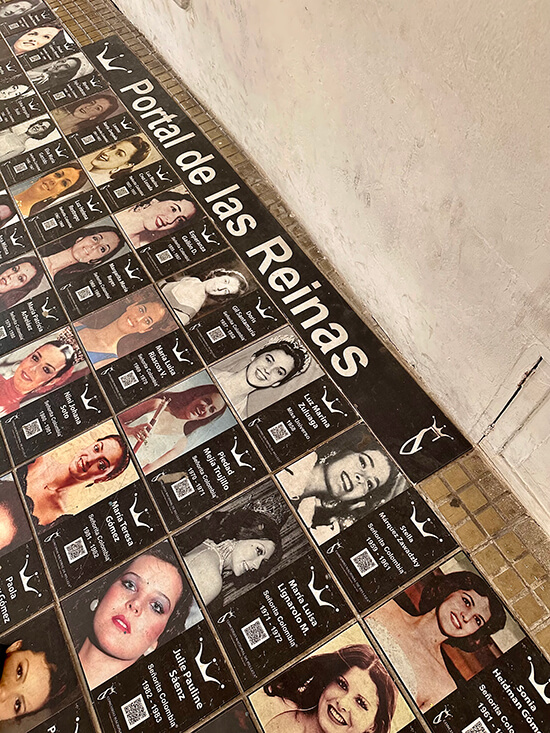
Again, like Filipinos, Colombians love their beauty queens. We came across an arcaded walkway—“Portal de las Reinas”—which was tiled with photographs of Colombian beauty queens from the late 1940s to the present, complete with their names, dates of their reign, and QR codes for more information; a serious business, indeed. We, of course, spotted the photo of Stella Marquez Zawadsky, who won Miss International 1960, and visited Manila a year later, famously marrying Filipino businessman Jorge Araneta and settling in the Philippines.
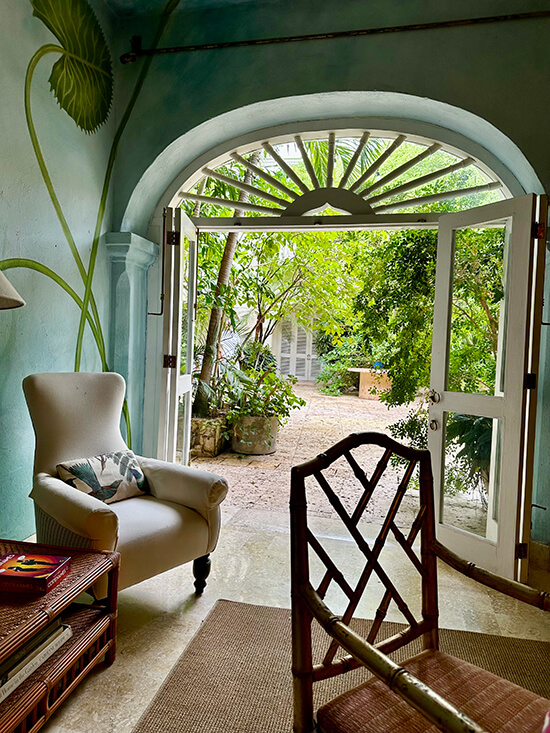
Cartagena has found fame as the spiritual home of the literary master of magical realism, Gabriel Garcia Márquez. “Gabo,” as he is fondly referred to in Colombia, studied and worked in Cartagena in his younger years; visiting frequently through the years and eventually maintaining a second home there, overlooking the sea. In his writing, there are many references to Cartagena locales, many of which still exist. Amazingly, the home we stayed in, known as the Casa de Don Benito after its original owner in the 16th century, was the inspiration for the house of the female protagonist, Fermina Daza, in his novel, Love in the Time of Cholera. Its description in the book, of a house with a central tree-filled stone courtyard surrounded by arched terraces and overhanging balconies, was thrillingly recognizable to us. In the present day, the courtyard houses a lovely waterlily-filled pond, home to a turtle named Benito and large potted plants amongst which a feral cat with lovely green eyes called Esmeralda likes to hide and sleep. The leafy little park situated right at the doorstep of the Casa de Don Benito is the same novel’s Parque de los Evangelios where Fermina Daza’s admirer often lingered in the hopes of catching sight of her; now renamed Plaza Fernandez de Madrid.
Our host suggested we visit the historically significant Castillo San Felipe de Barajas, a massive 17th-century fortress built on a hill outside the walled city of Cartagena. Famed as the most impregnable of Spanish fortresses in the Americas, it protected Cartagena from the constant pillaging of its riches. Today, it is a UNESCO World Heritage Site. Constructed on many levels, with a maze of tunnels and chambers, exploring the fort involved a zigzag walk uphill where the topmost levels afforded beautiful views over the old and new city of Cartagena. Leaving the fort, we passed the river dock where we spotted our cruise ship, waiting for its passengers to board the next day, a reminder that our brief visit was coming to an end.
Our time in Cartagena now seems like a dreamlike step back in time to centuries ago. The highlight of our visit was certainly the extraordinary experience of staying in a historic house referenced in Garcia-Marquez’s famous novel. Walking around the atmospheric walled city with its lingering echoes of the past, lively local traditions of dance and music, and links to the literary world of magic realism gave one a slightly surreal feeling that both past and present had magically combined in a sort of film set, gifting us with an unforgettable introduction to Colombia.

WATCH: Is Gen Z too soft? (Generations Ep. 23)
September 30, 2026
WATCH: Do you still believe in marriage? (Generations Ep. 17)
August 19, 2026
WATCH: Is OPM still as good as it used to be? (Generations Ep. 20)
September 9, 2026