

How Iloilo earns its place as a UNESCO Creative City of Gastronomy
Being named a UNESCO Creative City of Gastronomy is not merely an award or an honor. Speakers at a recent food symposium in Iloilo, which has been given this designation, emphasized as much. To them, this title is both a brand and a mandate that comes with a commitment.
As a result, Iloilo has gone all out to show that it’s not taking this distinction lightly. In conjunction with the celebration of Filipino Food Month, Iloilo recently held a four-day program spearheaded by the National Commission for Culture and the Arts (NCCA), in cooperation with the Department of Agriculture, the Department of Tourism, and the Philippine Culinary Heritage Movement. The program included a symposium, a chef exchange program, a cooking competition, culinary and market tours, as well as visits to museums and farms. The overall theme: “Connected by Taste: The Filipino Food in the Flavors of ASEAN.”
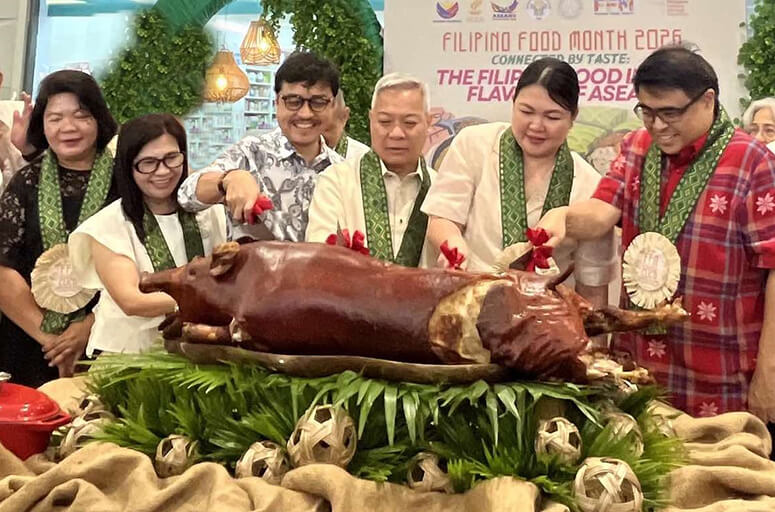
During the opening ceremony held at the newly modernized Iloilo Terminal Public Market, Mayor Raisa Treñas noted that the event serves as a platform to foster unity. “We celebrate not only our shared love for food, but also the connections it builds across communities and cultures,” she said.
Dr. Ivan Henares, secretary general of the UNESCO National Commission of the Philippines, pointed out that its designation as a Creative City of Gastronomy puts Iloilo “on par with global culinary cities like Macao, Rouen and Phetchaburi, cities that place food at the center of sustainable development.”
Beyond batchoy, Iloilo's true flavor lies in its generosity, heritage and the belief that good food should be shared by all.
Likewise, Dr. Eric Zerrudo, chair and executive director of NCCA, said that there are familiar notes across borders which show the interconnectivity of food and flavor, such as the balance of sweet, sour, and savory, the use of local herbs and spices, and the centrality of food in community life.
Having grown up in the small town of Ajuy, Zerrudo is familiar with Iloilo’s simple dishes like alubgati and laswa, as well as with the more festive ones like Valenciana, which his mother would cook for fiestas. He recalls how they would wear their Sunday best to eat batchoy in La Paz market, “because we were eating the best.”
CONTINUE READING BELOW

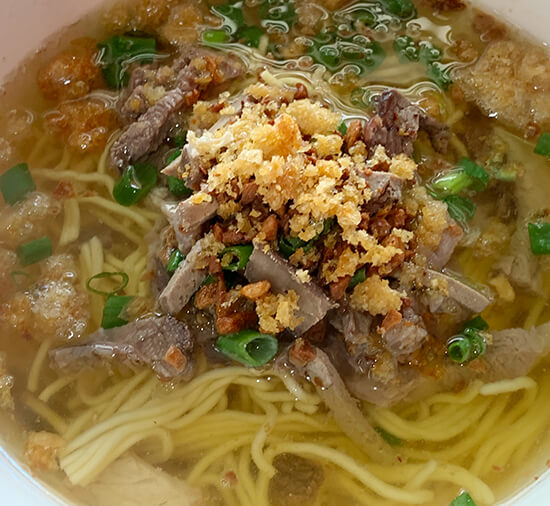
And speaking of batchoy, a highlight of the culinary tour was a taste of authentic batchoy at Netong’s in La Paz Public Market. Greeting us at the counter was a cauldron of steaming beef and pork broth that had been patiently simmered for three long hours. Beside it were slivers of beef, pork and pork liver, mounds of finely shaved chicharon, chopped garlic, green onions, and miki noodles.
Patrick Guillergan, a third-generation owner of Netong’s, carefully filled a bowl with noodles, ladled generous heaps of broth into the bowl, then spooned in the beef, pork, liver, green onions and garlic before topping the bowl with colossal amounts of chicharon.
One sip of the batchoy was enough to silence our otherwise rowdy group. For a moment, nothing mattered but this enchanting bowl before us. Every spoonful was a gastronomic adventure, delivering a world of flavors and textures. The hearty broth was an elixir that cleared our thoughts and soothed our souls. The strips of pork and beef were substantial yet tender; the chicharon added bubbles of crunchiness that melted at first bite. Whenever the richness became unbearably delightful, we would take occasional bites of steamed puto, which was inexplicably both sweet and bland. This, I felt, is the soup that can bring world peace.

Beyond being all that, batchoy to the Ilonggos is the embodiment of all the things their beloved city has to offer. Leny Ledesma, focal point for UNESCO Creative City of Gastronomy and executive assistant to the mayor for special projects, said it best when she used batchoy as a metaphor for one of their advocacies: the democratization of food.
“Good food must be available to all,” she said, and nothing fulfills this more than batchoy. At just a little over P100 for a generous bowl, it’s affordable for both rich and poor, for the man in barong Tagalog as well as for the farmer in T-shirt and tsinelas. They could be sitting side by side in the market, enjoying the same meal at the same reasonable price, though their social status may differ. And best of all, in most restaurants, the customer, whether rich or poor, can ask for a free refill of the comforting broth and noodles. It’s enough to fill the hunger in any Ilonggo’s stomach.
“Everyone must have access to good, fresh ingredients. By making good food available even to the less affluent, you restore their dignity,” Ledesma adds.
There are other ways in which Ilonggos make sure no one goes hungry in their city. At the 7,000-square-meter Iloilo Agri-Nursery Farm, fruits and vegetables are grown in abundance, ducks, geese, and chickens are raised free range, and their harvests are given to the numerous community kitchens which feed the indigents and those affected by disasters. This was especially useful during the lockdown a few years ago, when some areas were sealed to prevent the spread of COVID. Instead of just feeding the villagers processed foods like ramen noodles and canned goods, said former Mayor Jerry P. Treñas, the community kitchens fed them fresh fruits and vegetables, eggs, and chickens harvested from the farm. The city has even commissioned chefs to develop dishes that are not only nutritious but tasty as well.
In addition, “We have been blessed by an abundance, given our terroir,” says Ledesma. “We are surrounded by seas, rivers, farms, lowland and upland areas—thus providing the unique ingredients for our signature dishes, from KBL to our chicken binakol or just the fresh oysters we are able to enjoy.” The city is also committed to pursuing sustainable programs that protect their gastro ecosystem.
Fresh oysters were indeed in abundance at the beachside restaurant called Tatoy’s, where we had dinner one evening. Even before we had sat down, mountains of oysters were already waiting for us at the table. My companions lost no time shucking them, in between bites of grilled pompano and charcoal-broiled native chicken scented with lemongrass.
As for KBL, it’s probably the second most famous soup in Iloilo (along with Pancit Molo). Its hearty broth is enriched with small nutty beans called kadyos (pigeon peas), tenderized pork, and large chunks of unripe langka (jackfruit). A mellow sour taste comes from the infusion of batuan, an indigenous fruit that grows abundantly in the fields of Iloilo.
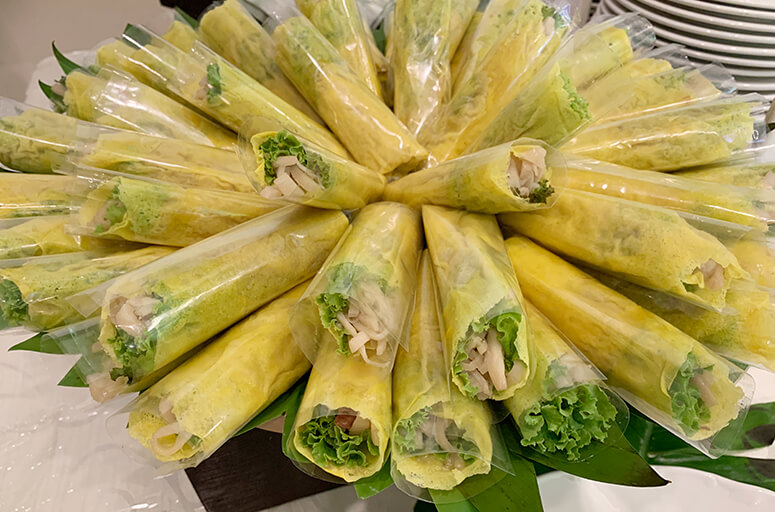
At the dinner in Hotel del Rio hosted by Region 6 of the Department of Tourism, the KBL elicited exclamations of joy and reverence. For Blooey Singson, head of accounts of Mediasense who grew up in Iloilo, it was the best KBL she’s ever had, next to the one her mother cooks. I myself, a first-time kadyos eater, relished the KBL, along with the succulent roast beef and the neatly wrapped fresh lumpia, another Ilonggo heritage delicacy (it’s said that every family in Iloilo has their own secret recipe for lumpia).
While celebrating their rich culinary history and culture, the Ilonggos acknowledge the interconnectedness with food that lies beyond borders. During the symposium, food writer Micky Fenix traced the shared traditions between Filipino cuisine and those of other ASEAN countries: the use of rice as a staple food, for instance, the practice of fermentation to preserve food, and the various iterations of noodles in ASEAN countries.
Food historian Felice Sta. Maria, on the other hand, in her speech Eating Our Roots, traced back to 67,000 years ago the origins of Filipino food and talked about archaeological remains that show proof of what ancient Filipinos ate.
Chef Tatung Sarthou observed how the Ilonggos are grounded in their communities, how they take care of their farmers, and how successfully they have cultivated and managed their environment. Other speakers were Dr. Harold Bueno, dean of Far Eastern University, Dhang Tecson, founder and chief executive of Mermaid, and book author Ige Ramos, who moderated the open forum.
As much as Ilonggos cherish their traditional food, they’re also open to its reinventions. At Mestizo restaurant located by the Esplanade, chefs Miles Diez and Bea Magalona impressed everyone with the use of indigenous ingredients to turn the conventional into the contemporary.
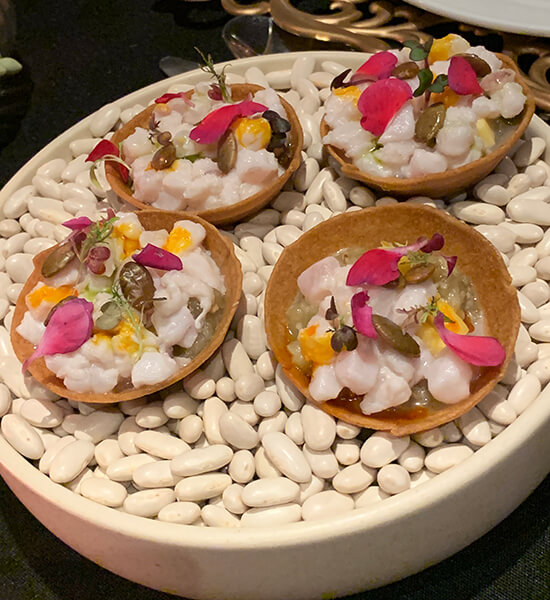
The meal started with barquillos, rolled cylinders of wafers usually eaten as a snack. Into its hollow, the chefs had piped in chunks of Ilonggo-style adobo, giving it more substance and umami flavor. Then there was the kinilaw, made from gingaw, a red snapper that thrives in the lush mangroves of Iloilo. Cured with native vinegar and infused with coconut milk, it was layered with roasted eggplants, chopped green mangoes from nearby Guimaras Island, roasted watermelon seeds, all seasoned with artisanal tultul salt. Served in tartlets on a bed of beans, and adorned with pink petals, it was a complexity of flavors presented with sophistication.
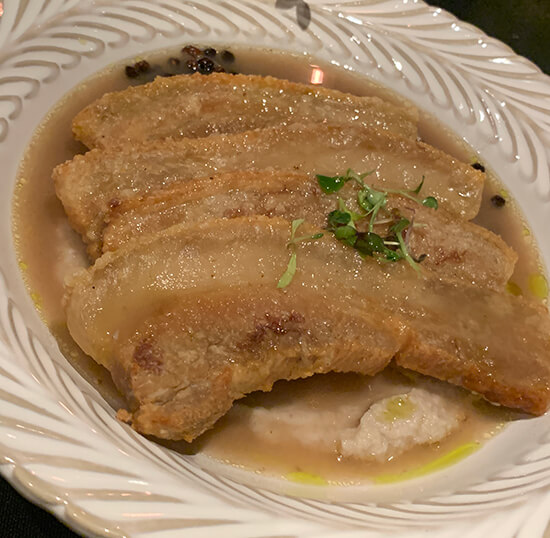
The KBL, on the other hand, was a master in deconstruction. The kadios were puffed up, the langka was puréed, and both served as a cradle for the glistening slices of fried pork belly.
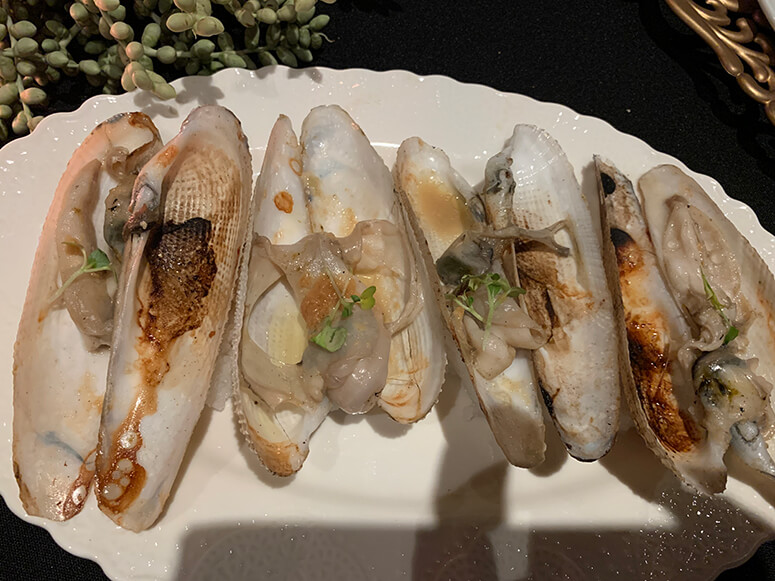
We were especially awed by the diwal, clams embedded in shells shaped like angel wings. Because of their seasonality, diwal is rare and highly prized. Chefs Diez and Magalona highlighted its sweet and delicate flavor by topping it with melting garlic butter. It was so heavenly our group just had to ask for seconds.
The main course was a succulent ribeye steak, which the chefs weren’t about to leave alone. Instead, they anointed it with a reduction of kansi, the mildly sour soup from the Ilonggo version of nilaga. Grilled king oyster mushroom added a regal touch, while the purée of sweet potatoes and langka functioned as an indigenous steak sauce.
Dessert was brioche soaked in milk, but in keeping with the theme, it was garnished with caramel made from native muscovado sugar and sweet mangoes from the upland area of Leon. The mangoes in Iloilo, I learned from Ledesma, don’t have to come from Guimaras to be sweet—they all are (whereupon I regretted not buying the mangoes I saw earlier in the market).
Given all these, how can Iloilo not be honored with the title of UNESCO Creative City of Gastronomy? Their story is one of rich culinary history, culture, and heritage, as well as sustainability, says Ledesma. “Forty percent of our endemic ingredients are used in making our dishes, making it uniquely Ilonggo,” she adds. Moreover, abundance is everywhere: in the rich harvests from the sea and farmlands, in the daily sharing of food, in the community kitchens, and in the open houses during fiestas where food is served to all visitors who come knocking.
“In our restaurants, the food is always served family-style, never solo,” says Ledesma. “So it’s cultural. It’s in our psyche but it’s also historical.”
It’s also one reason why Iloilo is called the City of Love. “Food is our language of love,” says Ledesma. “We literally start the day thinking of food, what to serve for breakfast, then we think about our snacks, and then lunch, and then we plan our menu for merienda and dinner. Our kitchens were always the heart of our homes, our mothers and grandmothers who cook are celebrated and honored as they feed the family.”
That, plus the Ilonggos’ endearing way of speaking where every sentence sounds affectionate (malambing), truly justifies Iloilo’s claim for being the City of Love. And now it’s a well-deserved UNESCO Creative City of Gastronomy, too.

WATCH: Is Philippine cinema still thriving? (Generations Ep. 19)
September 2, 2026
WATCH: Is Gen Z too soft? (Generations Ep. 23)
September 30, 2026