Gestures of sympathy and condolences
I don’t mean to be morose or morbid, but I believe that the older we get, the more funerals or wakes we are wont to attend.
In my youth, I would, in fact, note my own mother setting out to pay her last respects to departed kin or family friends in our town of Parañaque. Being the eldest among her siblings, she was frequently tasked with conveying her family’s condolences to the bereaved—a ritual she dutifully carried on for as long as I can recall. During those times, my mom always made sure that she had an envelope in which to put some cash as their traditional “abuloy,” or aid for the grieving family.
Fast forward to 2026, when the passing of friends, acquaintances, colleagues, relatives and even high-profile personalities is brought to our attention via social media. This enables us to condole, in real time, with the deceased’s family or post words of comfort in their time of loss.
On Facebook, for instance, we are able to share and repost obituaries containing details on wakes, interment or inurnment and memorial rites, both onsite and virtual.

Indeed, friends and colleagues share photographs of good times with the deceased, or at the very least express their grief through images of a lone, flickering candle on their profiles. Best of all, these gestures are immediate, spontaneous, and personal—with many easily going viral.
Here, let’s take a look at a few guidelines on how we can genuinely provide comfort to people who are dealing with personal loss...
Words that heal; Words that hurt
Q: I have been to a lot of wakes and funeral tributes for friends and relatives, and I often see practices that I think are quite inappropriate or out of place—mainly in settings where people are supposed to honor the dead or remember them with respect. What is the most acceptable way of expressing one’s sympathies to people who have just lost a loved one?—Marivic I.
A: To answer your question, here are some suggested ways of condoling with the bereaved.

What not to say
Death can be a most difficult time for those who are left behind. We must take care when offering our help and avoid causing further stress.
It is, of course, appropriate for us to say, “Please accept our condolences or sympathies...” or “I’m very sorry to hear about your loss.”
But after talking to friends who have experienced the passing of loved ones, I’ve learned that there are some statements they would rather not hear.
Here are a few that we should avoid saying, even if we mean well:
- “It’s okay, he’s in a much better place now.” We would like to believe that the deceased is truly resting in peace, but the grieving family may still be processing the loss, and the “concept” of a better place may not yet bring comfort. Offering your sincere condolences and, if appropriate, a hug may help ease their pain.
- To a young mother who has lost her newborn baby: “It’s okay, you’re still young—you can have another child.” It is not okay. It is extremely painful. And a baby is irreplaceable.
- “I know how painful this must be for you because I’ve lost a loved one, too.” You cannot fully know the depth of another person’s grief, so this may not bring comfort.
- “What happened to ___? I saw her at the mall last week and she was looking fine.” A wake or viewing is neither the time nor the place to ask for details about how a loved one passed away. You may express your sympathies briefly instead. In cases of untimely passing, the bereaved may still be in shock, and probing for details may only add to their distress.
However, if the bereaved choose to share information about how the deceased passed on, simply listen attentively and show compassion.
Expressions of sympathy
So how may one express sympathy and offer help to the grieving family?
Sometimes, a hug and a few words, such as “I’m so sorry for your loss. If there’s anything I can do to help, please let me know” are enough.
Often, your presence and the act of condoling with the bereaved will suffice, but giving a sympathy card, offering Mass intentions, or sending flowers or food to the wake are also highly appreciated gestures.
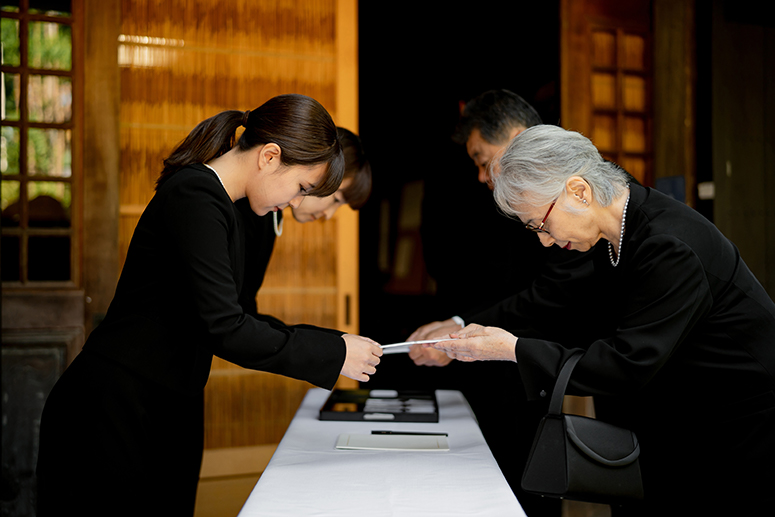
Here in the Philippines, it is likewise acceptable to hand over an envelope with whatever monetary contribution you can afford to help support funeral expenses and other postmortem considerations.
Cathy S. Babao, a dear friend and an expert in grief counseling, said it best when she wrote a column about “words that grieving people need to hear.” Here are excerpts from her article:
“Loss is a universal experience, and at some point, we will encounter it either personally or through a friend or loved one. Wondering what to say or how to respond when one is on the receiving end of sad news is often awkward or puzzling. One must show not just sympathy, but empathy and a great deal of compassion as well.”
When you are the recipient of sad news, here are some ways others can respond with genuine compassion and care:
Angel on your shoulder
“You are in my thoughts and prayers (Pinagdarasal kita).” Knowing that someone has heard you, understands your situation, and has committed to praying for you can be very comforting. It’s been said that every prayer that is verbalized and promised is like sending an angel to sit on the shoulder of the one being prayed for. When you think about that image, a feeling of calm can come over you, knowing that you are covered in grace and prayer.
“Thank you for sharing your story with me (Mahalaga sa akin ang iyong pagtiwala. Salamat).” Giving people the space to share their story without fear of judgment is truly healing. Allowing them that sacred space and showing appreciation for it can be very comforting to someone who is going through a difficult time.
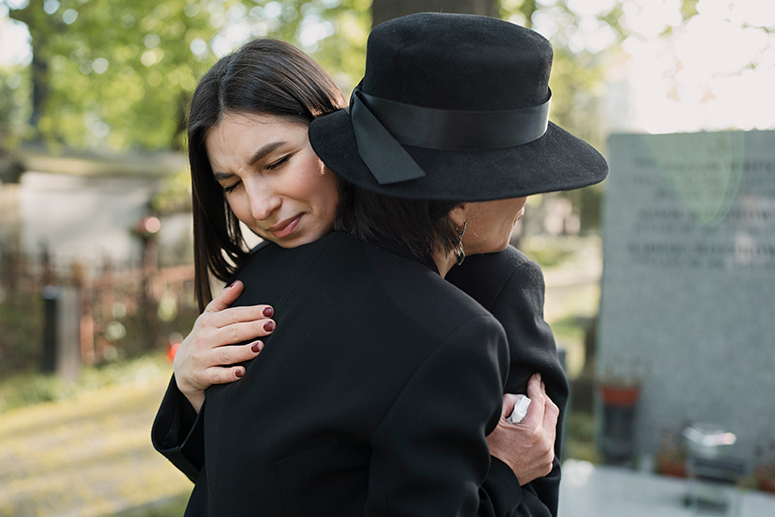
More often than not, rather than being presented with a solution, people who are encountering difficulties or loss find rest in being listened to attentively and being allowed to share honestly what they are going through.
“I’m coming to see you—please let me know what you need. (Maaari ba kitang puntahan? Ano ang maitutulong ko sa iyo?)” The physical presence of a friend with a helping hand is invaluable during a time of crisis. It’s not always easy to ask for help because we don’t want to impose on others, so when an offer of help comes, it is a grace. And don’t be shy to accept it—a difficult time can be draining both physically and emotionally.
“You are strong, and you will get through this. (Alam kong kaya mo ’yan. Pagtulungan natin.)” Positive affirmations can be a ray of sunshine on a gloomy day. Remind the person of their strength. A compassionate friend, it has been said, is someone who can sing the words of the song back to you when your heart has forgotten the lyrics.
“Take it a day at a time (Mahirap ang pinagdadaanan mo, pero may pag-asa sa bawat araw na darating).” In a crisis, the road ahead can feel overwhelming. It helps to be reminded that everything need not be faced all at once, and tasks can be broken into smaller steps.
“I’m here for you (Nandito ako para sa iyo).” Four powerful words that can be like a balm to an aching heart. A word of caution, though — say this only if you truly mean it and are able to follow through.