

505 years on a spit
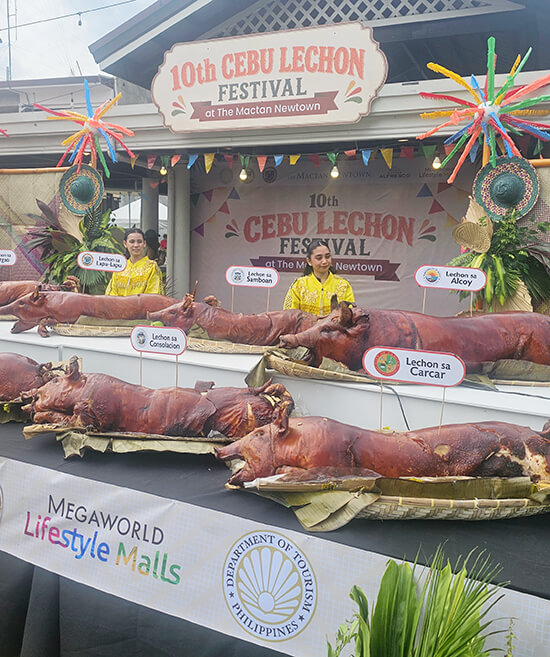
I spent the afternoon choking on smoke at Mactan Alfresco, wondering what Antonio Pigafetta, Ferdinand Magellan’s Italian diarist, would make of the grease on my fingers. We were crowd-surfing through the 10th Cebu Lechon Festival 2026, a shockingly young milestone for a dish whose earliest recorded ancestor was logged on these shores over five centuries ago.
Lechon, or inasal as the old-school Cebuanos still call it, is ancient fire. It comes from asal, the literal act of shoving a stick through an animal and spinning it over red-hot coals. Pigafetta, sailing with the three surviving ships of Magellan’s starved, scurvy-riddled fleet, didn’t mention pork when they first sighted Samar on March 16, 1521. They were too busy dying.
The pigs didn’t show up until Easter week on Limasawa Island. Pigafetta casually scribbled that the local king, Rajah Kolambu, sent over “two swine that he had killed” as a peace offering for Mass.
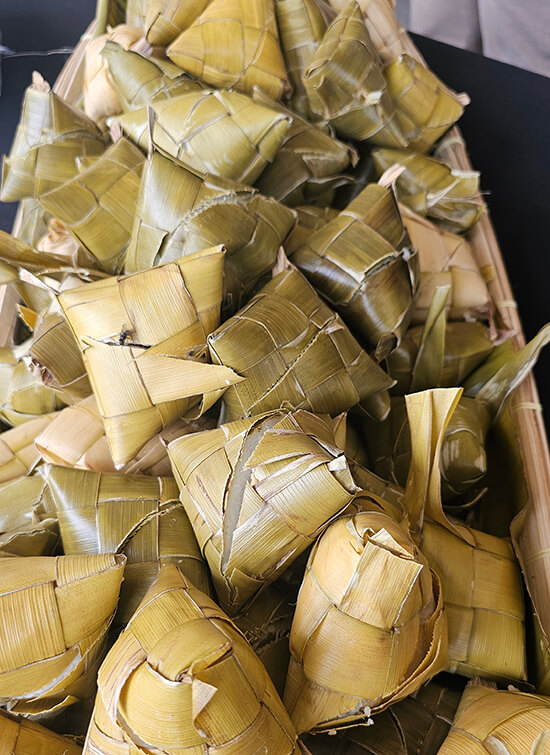
But the real, open-pit roasting didn’t enter the history books until they hit the bustling port of Cebu on April 7. Pigafetta missed the first party because he stayed behind on the flagship, but by April 9, he finally waded ashore. Sitting on a woven mat inside the house of the young prince, Rajah Tupas, he watched the locals smash plates of meat and fish “which they roast or grill,” paired with tinapai, dense rice cakes packed tightly inside woven leaves.
Sometime in that frantic two-week window before Magellan got hacked to death at Mactan, Pigafetta witnessed a bloody, hypnotic tribal ritual—the “Consecration of the Swine.” He watched two elderly priestesses blow bamboo trumpets, scream at the sun, and dance with wooden horns around a bound hog. The climax was brutal. One woman took a spear and drove it “cleanly through the heart of the said pig.” The old women kept the holy altar-side rice and wine strictly for themselves and the village women, but the dead pig’s blood was slapped onto the foreheads of all the local men before the carcass was scalded, scraped, and roasted for the village.

Back in 1521, that spit-roasted pig lacked the glistening, lacquered crimson skin we fight over today. Pigafetta never mentioned a brittle, glass-like crunch, noting only that the meat was carved up and served on imported Chinese porcelain plates. It was an unadorned, salt-rubbed roast, a dish already hardwired into the identity of the islanders long before European sails ever tore through the horizon.
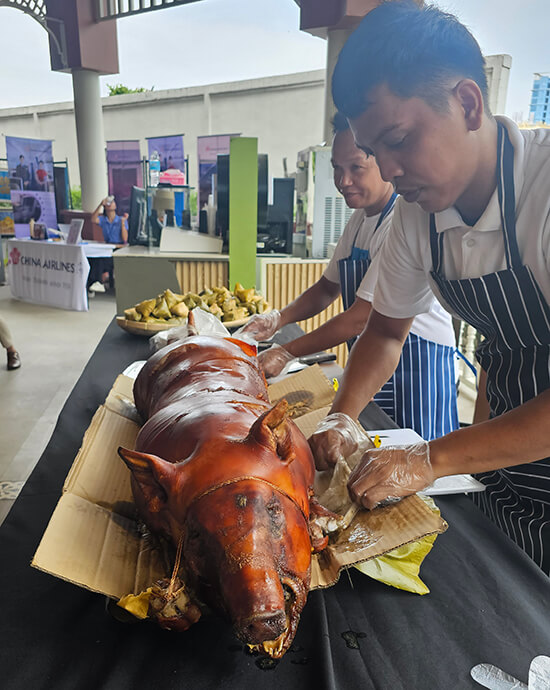

The word lechon is a Spanish hand-me-down, originally meaning a milk-fed suckling piglet. But spinning a massive hog over glowing coals was a native art long before any Western labels stuck to it. The pre-colonial flavor profile relied on whatever grew wild in the Visayan dirt, sharp native ginger (luya), crushed lemongrass (tanglad), and sea salt packed into the stomach cavity.
The modern version we argue over took shape after 1565, when the Manila-Acapulco Galleon Trade turned the Philippines into a global shipping hub. Cargo ships crossing the Pacific dumped New World ingredients into the local kitchens, completely rewriting the DNA of the roast. Annatto, or achuete, came from the Americas, and local pitmasters immediately started brushing its oil onto the skin to give it that sun-kissed, fiery crimson sheen.
And while Cebu lechon proudly rejects the thick liver gravy (sarsa) of Manila, its modern dips still owe everything to Mexico. The influx of transpacific chili peppers (sili) added a violent kick to native palm wine vinegar, morphing basic fermented tuba into a sharp, acidic counter-punch that slices right through heavy pork fat. Tomatoes and jicama (singkamas) trickled in next, creating the sour side salads we now use to clean our palates between bites.
Pigafetta was clearly flexed on by the opulence of the pre-colonial Cebuano court. He wrote about Rajah Humabon sitting naked on a mat, eating turtle eggs out of porcelain bowls and drinking palm wine through hollow bamboo straws, a massive gold chain heavy around his neck. But that 16th-century hospitality looks tiny next to the chaos currently taking over Mactan. He would have lost his mind at the sheer scale of a modern, multi-million-peso food festival, where a solitary sacrificial pig has exploded into a ruthless, province-wide culinary war.

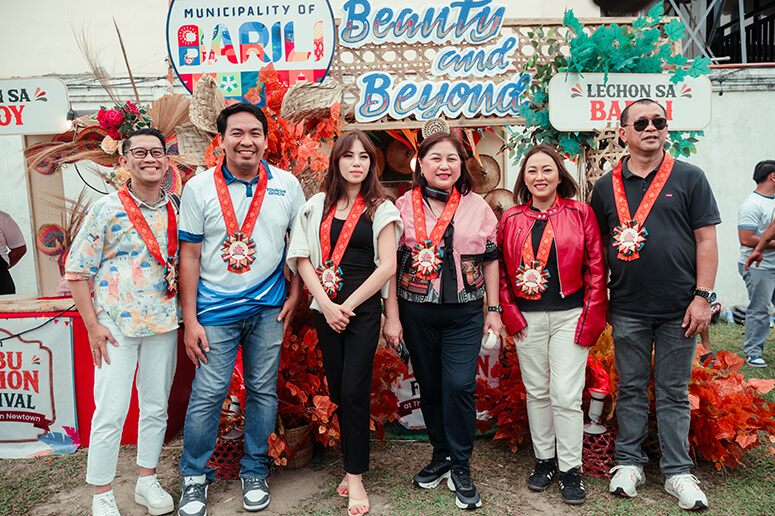
This year, Megaworld, which initiated the Cebu Lechon Festival in 2016, lined up signature roasting styles from 10 different communities across the province, including the legendary pig-belts of Carcar, Barili, and Argao. The opening-weekend pitmaster battles were blood sports. In the Booth category, Samboan took third, Argao snagged second, and Barili walked away with the grand championship. In the cutthroat Best Lechonero division, host Lapu-Lapu City took the ultimate trophy courtesy of the local crew at MyPapart’s Lechon.
When I sat down to eat that award-winning Lapu-Lapu roast, I pushed the pusô (hanging rice) to the side of the table. I wanted zero distractions, plus I wanted more room in my stomach for the lechon. I focused entirely on the shattering snap of the skin and the herb-stained, steaming rib meat. Biting into it felt like watching five centuries of maritime history collapse into a single, greasy moment.
I kept wondering what Pigafetta would write if he were sharing this bench with me. He watched his captain-general get slaughtered in the shallow waters of this very same island just days after writing down these people’s recipes. He might not recognize the neon glow of the achuete skin or the burn of the New World chilis, but he would instantly understand the noise, the smoke, and the heat. It’s the same ancient, unbroken island pride that still knows exactly how to turn a roasted pig into a monument of survival.

WATCH: Is OPM still as good as it used to be? (Generations Ep. 20)
September 9, 2026
WATCH: Discovering Vietnam in three days
June 9, 2026