

REVIEW: 'Toy Story 5' is a compelling continuation of a beloved franchise
When the first Toy Story hit big in 1995, it was seen as a gamble for the then-fledgling Pixar Animation Studios. While they had some experience creating short films and effects for commercials, Toy Story would be the first full-length computer-generated 3D animated film in history. Released the same year as Disney’s Pocahontas (just one year after The Lion King), the debut adventure of Buzz (Tim Allen), Woody (Tom Hanks), and friends would become one of 1995’s biggest hits, captivating critics and audiences alike.
Blending (then-) cutting-edge computer-generated imagery with a story grounded on themes of friendship and a fear of being replaced, Toy Story ushered in an animated technological shift whose effects are still being felt. As for Pixar, they would be acquired by Disney (which had previously only served as their distributor) in 1999, complementing the overwhelming success of that year’s Toy Story 2.
While the first three Toy Story films are near-untouchable classics, the fourth one divided audiences for following the absolute perfection that had been the third film’s ending; sure, it was nice to see old characters again, but the question still stood as to whether Toy Story 4 had any creative reason to be made in the first place. Thankfully, the screenplay for the latest film, by writer-director Andrew Stanton (Wall-E, Up), has more than a few good ones up its sleeve, replete with his penchant for visual storytelling and character depth.
Toy Story 5 is packed full of meaningful character interactions and fun set pieces, strung together by sequences that move with purpose, making it a joy to reconnect with our toyetic pals. Best of all, the script features progressions for the main characters that largely avoid recycling old scenarios.
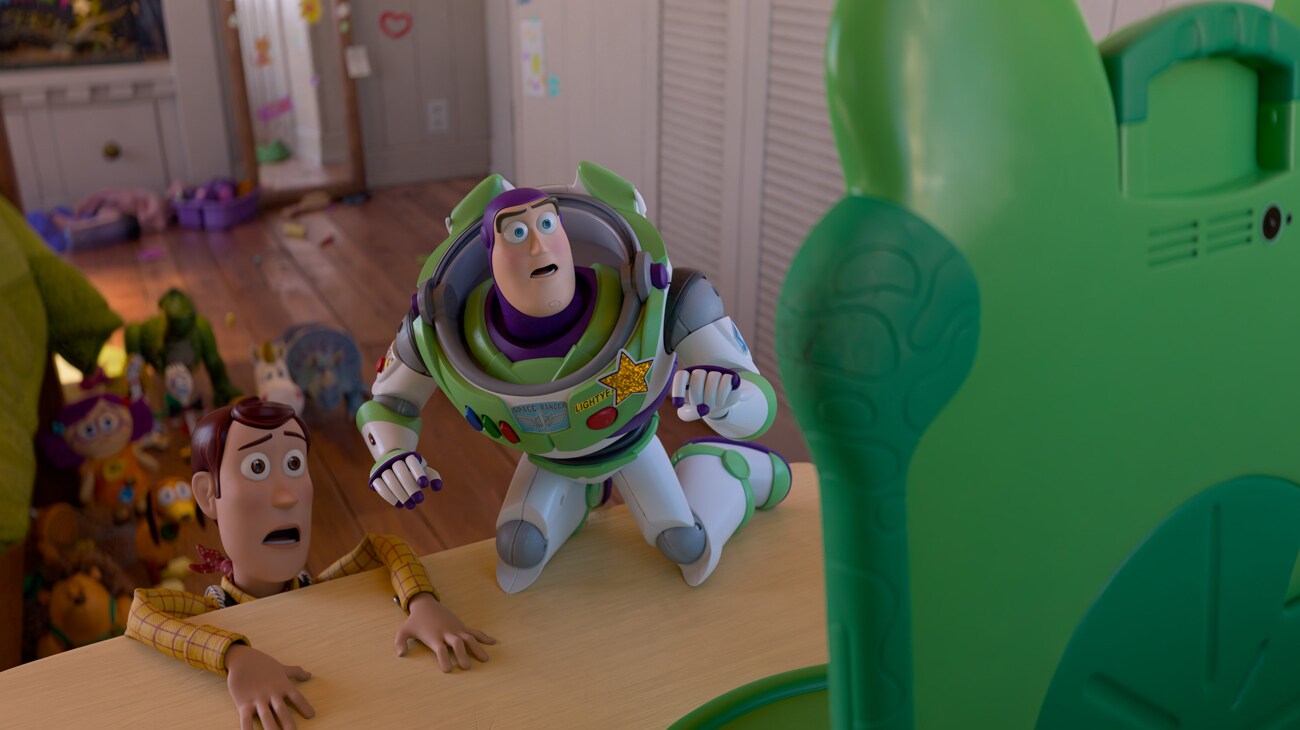

Instead of just tossing Buzz and Woody into yet another adventure to reunite with their rightful owner, we’re presented with a timely take on how screens have increasingly replaced children’s toys in recent years. As our aging heroes now face expendability on a scale none of them could have imagined, they quickly realize that being forgotten is potentially more painful than burning up in an incinerator.
Jessie (Joan Cusack) takes center stage here, with the current crisis being framed through the lens of her abandonment issues (first introduced in Toy Story 2). Juxtaposed against her strong distrust of technology is Jessie’s overall determination to live up to Woody’s legacy and do right by their owner, Bonnie (Scarlet Spears). Along the way, Jessie will encounter a trio of gadgets that will test her patience and resolve in ways she never could have imagined (though, admittedly, the list of people who could’ve imagined Conan O’Brien as an emotional potty-training device is probably pretty short).
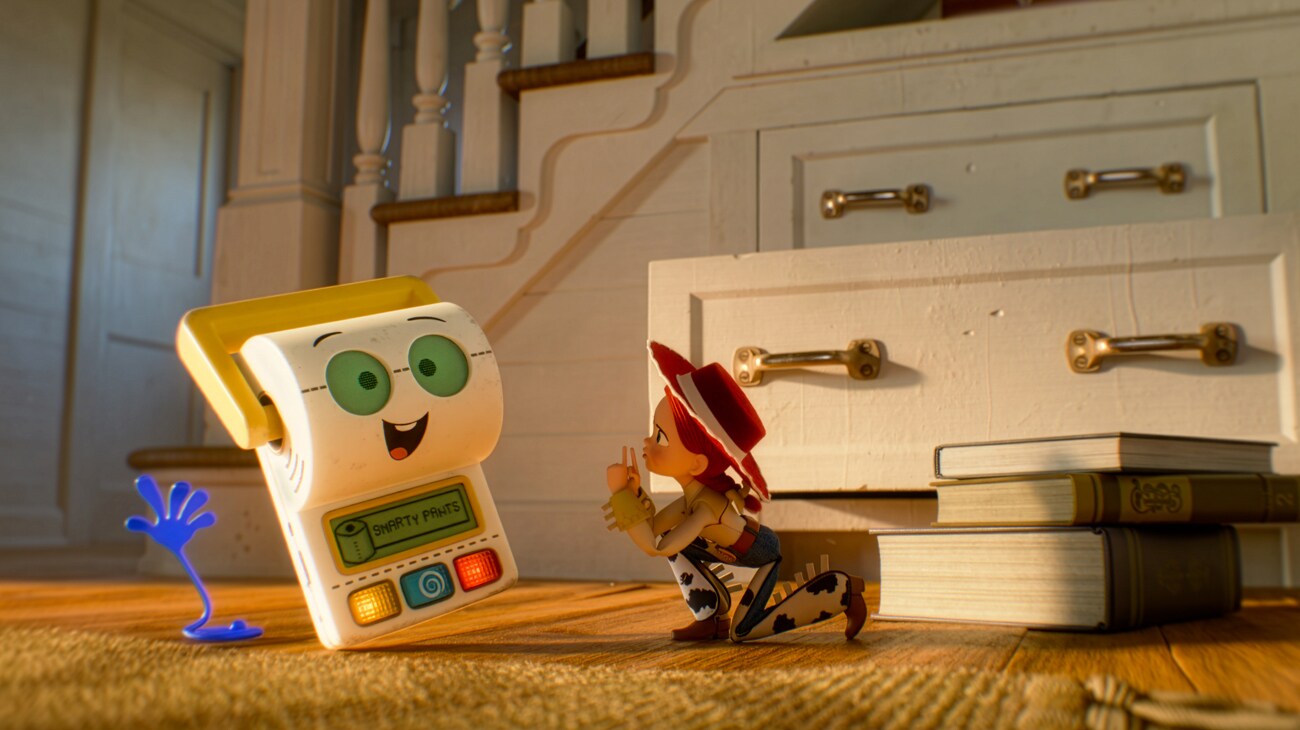
As always, Pixar ups their animation game, adding details and wear to the classic characters, while seamlessly incorporating new creations into their now-31-year-old(!) toy box. Of course, we wouldn’t dream of spoiling how or why said new creations include a pig, a horse, and a whole gaggle of space rangers, suffice it to say that they’ll all make sense when you see ‘em. The film also introduces a whimsical, watercolor-inspired treatment to illustrate Bonnie’s playtime sequences, further distinguishing how her imagination differs from (the toys’ previous owner) Andy’s. Colorful and inventive, these sequences were a big hit at the premiere screening, generating massive laughs.
On the acting side, Cusack is impeccable, believably building on Jessie’s previously established trauma to usher in the cowgirl’s well-deserved main character era. When Jessie uses her trademark expressive, high-energy tones in scenes with the newly arrived Lilypad tablet’s (Greta Lee) measured tones, the pain and exasperation are eminently clear. The fact that their rivalry is used to organically illustrate concepts and plot devices that didn’t even exist when the first Toy Story was released is a testament to the filmmakers’ ability to keep these characters contextually relevant.
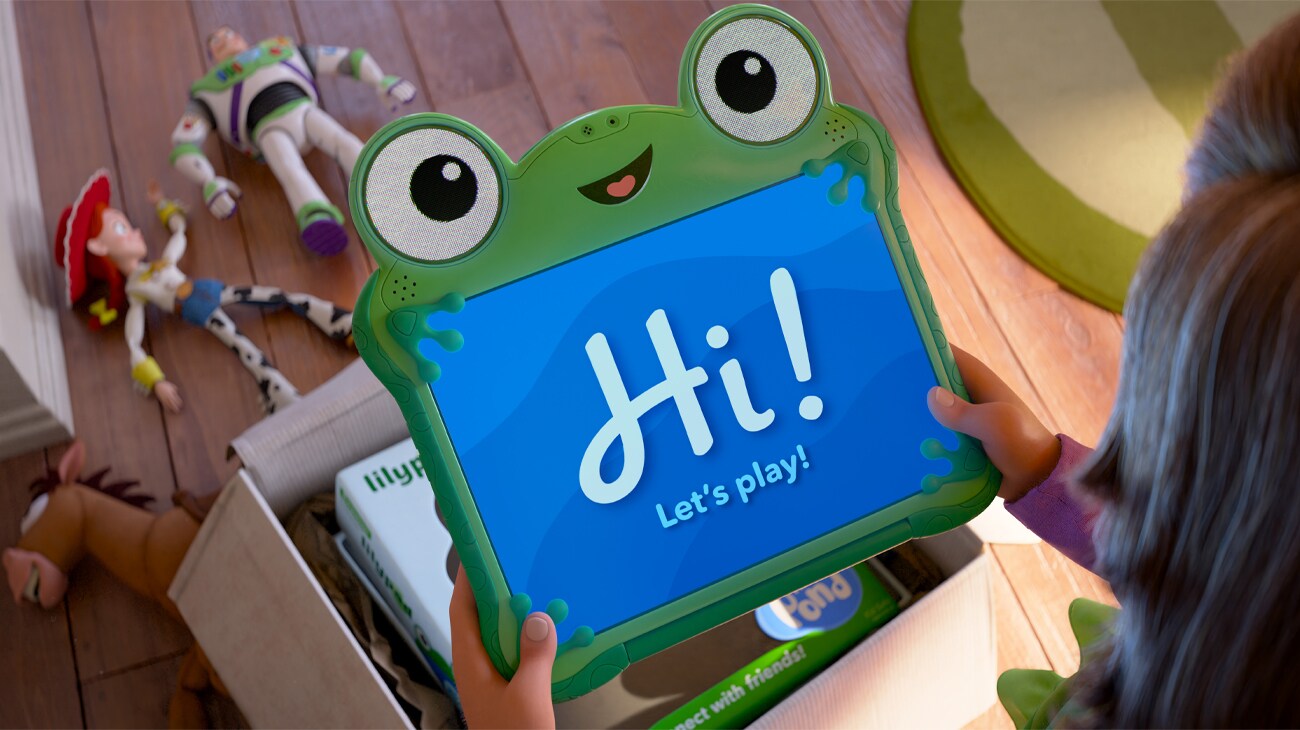
By this point, a large portion of the audience has aged alongside these characters, and the film reflects that growth; what could have easily been a cheap rehash of old themes—or, worse, a generic story about tech being evil—is made compelling by the film’s exploration of the often-ephemeral nature of friendship, peer pressure, and interpersonal connection in an isolating (digital) age. The fact that Toy Story 5 manages to do this without pandering is a testament to Pixar’s legendary ability to entertain while communicating human truths in direct, emotionally-resonant ways.
Given the economic viability of established franchises, one is under no illusion that this is the last time we’ll be seeing these characters on the big screen, but as long as the powers-that-be continue to trust in their characters’ (and the audience’s) ability to navigate more complex narratives, while simultaneously leaving room for them to evolve further, there’s no limit to the highs this series could yet achieve.
(To infinity and…well, you know.)

WATCH: Is Gen Z too soft? (Generations Ep. 23)
September 30, 2026
WATCH: Pixar Summer Fest adventure at Hong Kong Disneyland
August 10, 2026