

Filmmaker Samantha Lee reimagines queer futures
Many of us grew up expected to follow life with a set template: college, job, marriage, kids, retirement. As a queer person, however, we often feel thrown off-course—many of us experience life differently because we fashion our lives around alternatives. Coming out and staying accepted all but depends on a sheer stroke of luck, marriage becomes a privilege many can’t afford, and having a family is close to impossible.
Filmmaker Samantha Lee recognizes this experience intimately. Through films such as Baka Bukas, Billie and Emma, Rookie, and the series Sleep With Me, however, Lee crafts sapphic worlds that go beyond the survival we struggle with in our lives.
Her work asks a larger question: What happens when queer people are finally allowed to imagine futures for themselves?
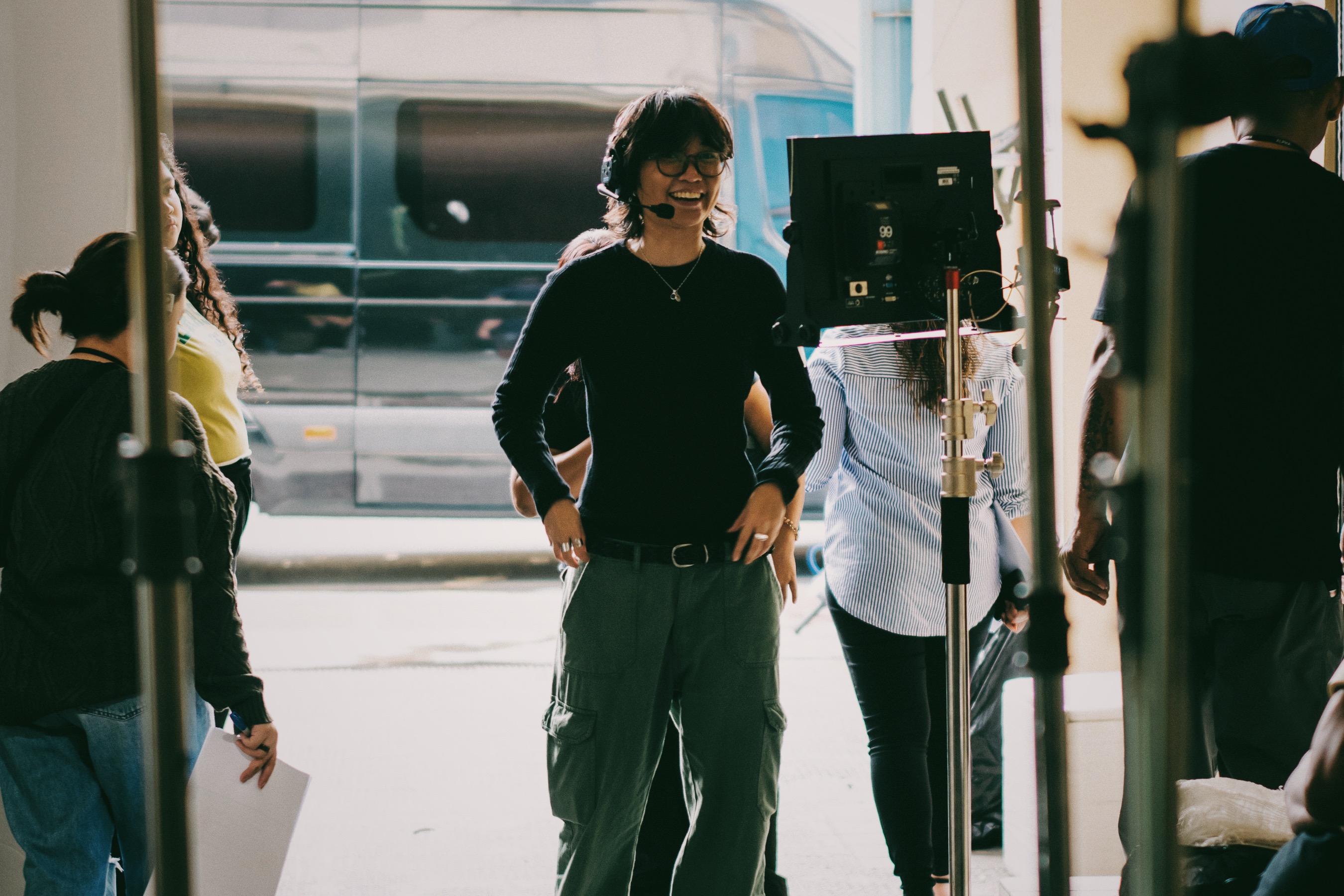
Initially, Lee had no plans of becoming a filmmaker, despite graduating from UP Diliman with a film degree. In her last year of college, she had only come out to her close circle of friends. Her work centered around content creation and BTS directing afterwards, before holding a job in the corporate industry. After making the decision to move to Melbourne to pursue further studies, she found herself in an entirely new environment that allowed her to explore her identity further.
“I was only able to come into my own in Melbourne, and that was because I was surrounded by women who were exactly like me,” Lee shared. “I was feeling free in this new environment. Why couldn’t I have done this back home? Why wasn’t I in an environment that made me feel this way, this free or this liberated?”

This question ultimately became the deciding factor that led to the rest of her career. “I think it was the most romantic decision of my life,” she said. “I was like, ‘I’m going to move back to the Philippines and make films that make younger people want to be gay.”
Building queer worlds
Lee’s approach to her films allows younger people the permission to imagine lives they once thought were impossible. In a country where, in her words, many still grow up “scared into being straight,” her films offer an alternative emotional reality: one where being queer is not the problem, but where society itself can be reimagined into something kinder and freer.
She noted, “It was a conscious effort of mine to make my films look beautiful. I wanted to make films that would make you look forward to the life you live in the Philippines.”
Lee also asserted the necessity of representation that her work fulfills. “You can’t be what you can’t see,” she said. “In my films, you’re able to ask your crush out to prom, or have supportive parents, or wear a suit to prom.”
In short, a future of queer possibility pervades. In her films, she reclaims what’s been absent in so many queer lives: a space to live, exist, and love freely. It’s the default to represent heterosexual relationships in so many different film genres. Her work strives to make queer relationships and narratives more common.
It was a conscious effort of mine to make my films look beautiful. I wanted to make films that would make you look forward to the life you live in the Philippines.
As Lee said, “What’s constantly recurring for cishet romances is still very few and far between for people like us. It’s a constant process of trying to bridge that gap.”
Behind queer cinema
Since 2023, sapphic media has been on the rise: for example, Bottoms (2023) and Love Lies Bleeding (2024) came out as internationally acclaimed films with storylines centered around sapphic characters. Locally, we can say the same for Rookie (2023) by Lee herself, Open Endings (2025), and just recently, I Fell, It’s Fine (2026).
But this rise in number doesn’t reflect the difficult realities that producing a queer film still takes on. “I can’t speak for the experiences of other filmmakers, but on social media, people always ask, ‘When’s your next film?’” Lee shared. “I think people assume I haven’t been doing anything since Rookie, but I’ve pitched over 10 films and none of them have been greenlit. At its most difficult, it’s about the project not getting funded.”
What remains to be done? Lee asserted the importance of profitability, and as a result, the importance of streams—and how it was essential for her audience not to stream her movies illegally. “It’s not because I want to make more money off my films, but I’ve walked into meetings where the number of streams matters,” she said. “If people want to see more sapphic narratives, they really need to support them legally.”
There’s so much that still needs to be caught up on. There are so many lived experiences by queer people that still need to be told. She addressed the fact that there’s still not enough representation of the many identities being sapphic can look like—older characters, for instance, aren’t as common as characters in high school or in their early 20s. Masculine-presenting sapphics and butches are characters that are harder to push for in mainstream production. The barriers definitely still exist, and not without the existence of an undercurrent of homophobia and a focus on profit. Despite this reality, however, Lee isn’t without hope: “It’s on my wish list to be able to do a film with a middle-aged woman, maybe a divorcee in a romance. It’s hard, trying to pitch something that producers think will make their money back. But it’s also about bridging this gap in little ways.”
Looking beyond
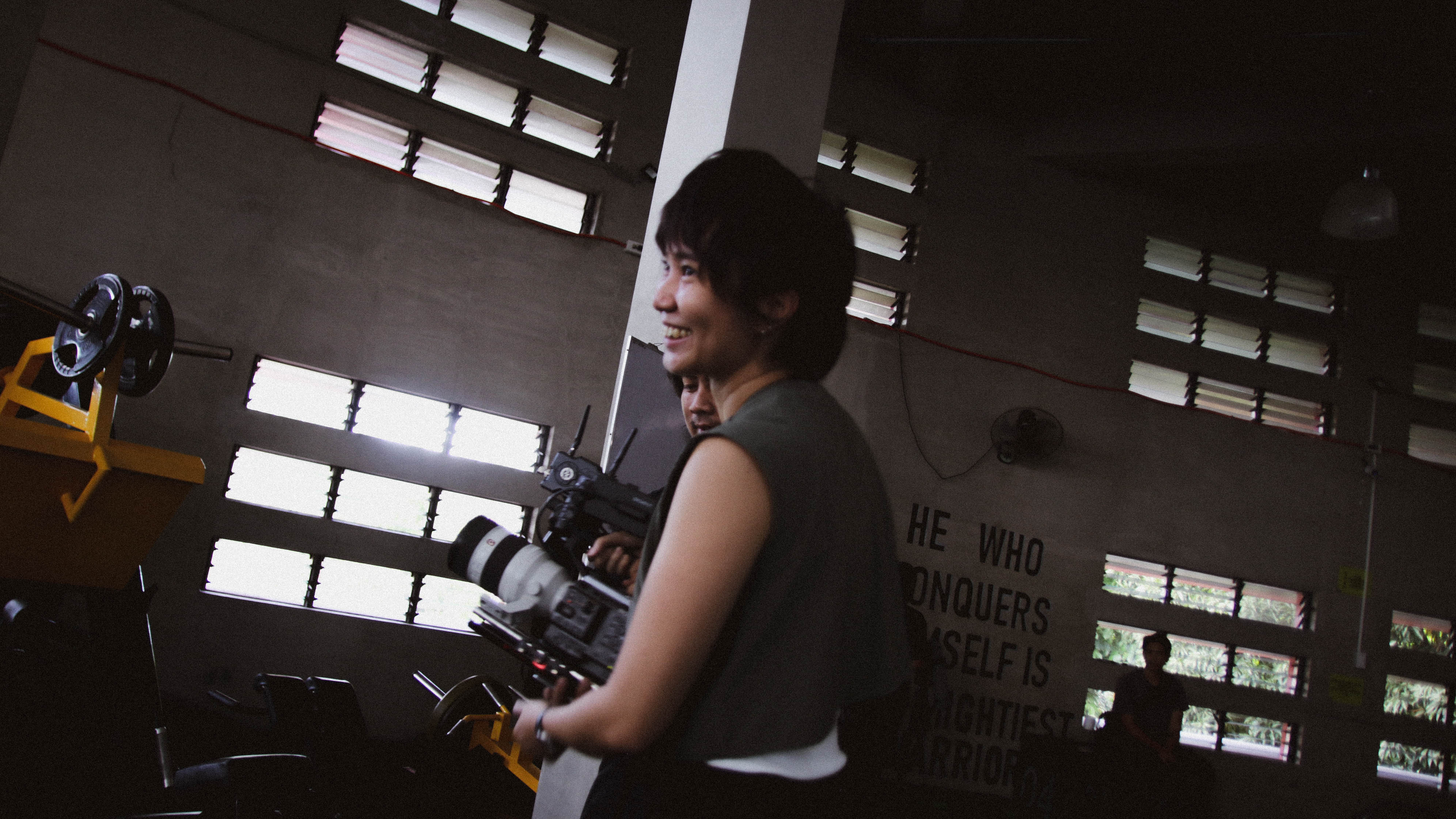
Given all this, it’s no wonder that visibility is still lacking for queer people. As she tried to bridge this gap, Lee pivoted back into the documentary space and came out with All the Worlds I Could Lift.
“It’s a documentary on how weightlifting helps us build our own bodies, especially as masculine-presenting gay women. The bodies we’re born into aren’t necessarily the bodies we wish we had, and that affects us in terms of our mental health. I was inspired by the creation myth of Malakas and Maganda, and I ask the question: Why can’t we be both?”
Lee’s film challenges the images that queer women have been presented in local media. Beyond being comfortable in the documentary genre, she was also honest: “It was the only way to get it funded. We have funding from Canada that helped us make this short film.”
As Lee continues to push boundaries to create media that can illuminate queer lives, she dreams of more: more stories, more characters, more films. “I want to be able to contribute more to the canon of queer cinema. My goal is to make a sapphic rom-com that’s a major studio film. And I want to have films that are culturally successful beyond our community.”
For many queer people, our lives don’t come with a clear roadmap. There are so many stories about what love, relationships, and happiness can look like, but these stories often don’t include us. Worse, some media reduce queer lives to ones of tragedy.
This is why Samantha Lee’s work is so significant. Despite the challenges she faces in getting her work out there, when she is able to get her work exposed to people, she imagines worlds where queer futures are as expansive and diverse as everyone else’s. Though funding remains scarce, she continues to push boundaries on what’s allowed to be represented onscreen and dares to imagine other worlds where queer people aren’t offered just visibility, but the freedom to lead lives where we are completely ourselves.

WATCH: How does impeachment in the Philippines work?
May 19, 2026
WATCH: Is OPM still as good as it used to be? (Generations Ep. 20)
September 9, 2026
WATCH: Do you still believe in marriage? (Generations Ep. 17)
August 19, 2026