

Take the long way home
There are some caveats, before going to see Christopher Nolan’s The Odyssey. It is nearly three hours long, which some—including their bladders—will find daunting. Second, the Hollywood and British actors here did not master Ancient Greek, instead speaking in consciously modern English that doesn’t pull you out of the story much, except when, say, Sinon (Eliot Page) implores Odysseus (Matt Damon) to share stories of his courage in battle when he goes home—and “feel free to add some stuff.”
But after all, they didn’t speak with English accents in Roman times, like they do in Ridley Scott’s Gladiator, either. So we should give that trope a rest.
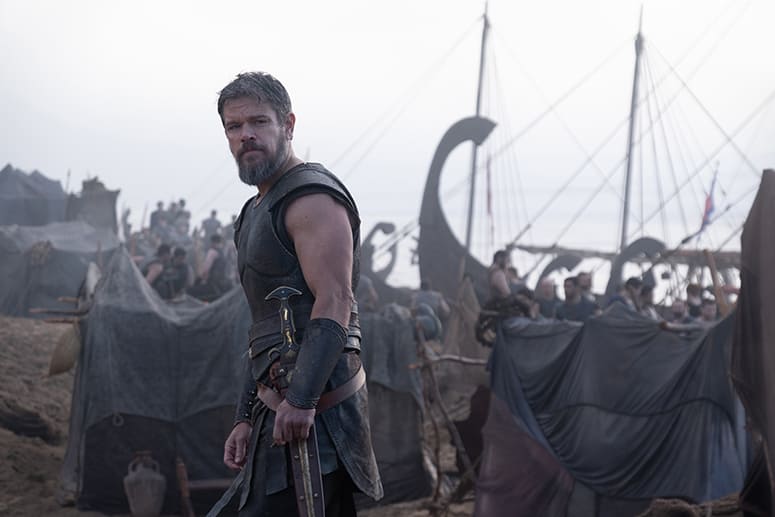
After the blockbuster summer of Oppenheimer, Nolan has crafted a lengthy epic movie that fires on all cylinders—entertaining and thought-provoking—and proves that there’s still some juice left in even the oldest tales. Nolan used IMAX cameras, which can only shoot three minutes of film before reloading, and he also came in under budget, which is crazy. The 70mm IMAX film accounts for the blueness of the Aegean Sea, the richness of the surrounding Greek and Italian locations bathed in sun.
As Odysseus, waylaid after the Trojan Wars by misfortune (a curse from Poseidon) and just plain bad life choices, Damon does look jacked— like those AI “Tai Chai Workout For Men Above 50” ads that keep popping up on YouTube. Good for him.
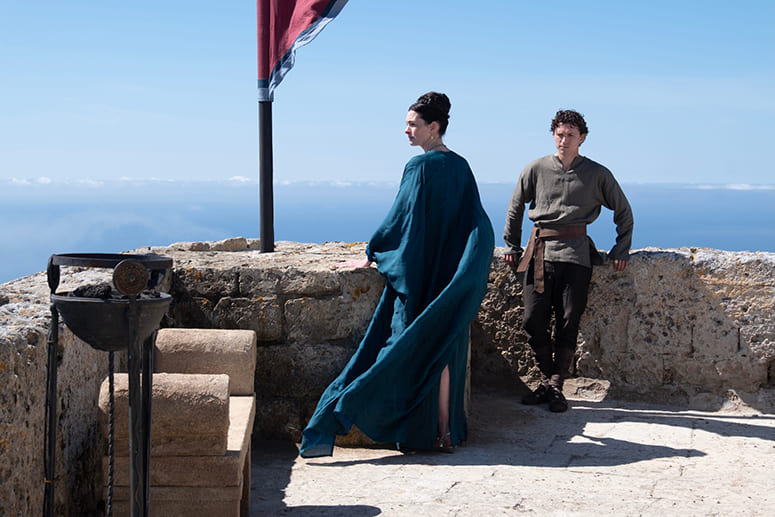
In typical Nolan fashion, our story zips around non-linearly, as we see Odysseus munching on lotus leaves with Calypso (Charlize Theron), trying to piece together his last 17 years away from home. We see him take leave of Penelope (Anne Hathaway) to go to war, sacking Troy with a craftily beach-buried metal horse (echoes of Dunkirk, perhaps?), surrounded by some of the sketchiest of Ithacan sailors (including Yesterday’s Himesh Patel) as they keep landing their ships on islands they must inevitably run away from screaming.
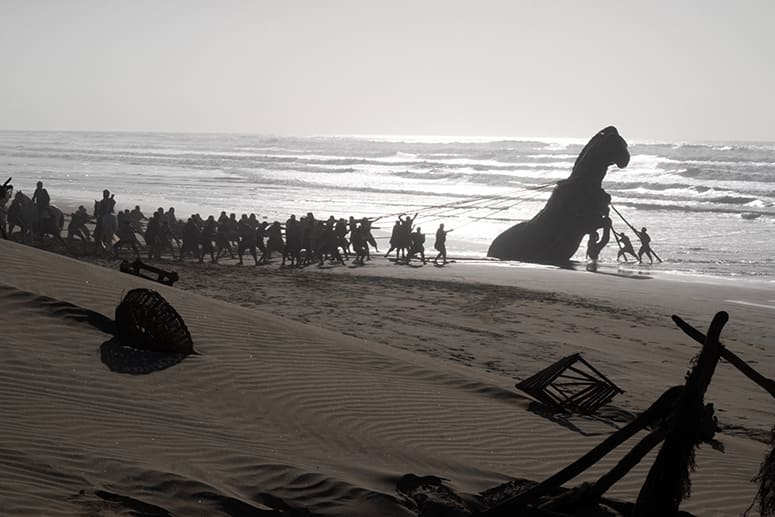
The tales of brave Ulysses here are rendered with unimpeachable cinematic skill—Nolan knows action—and it’s a great nod to our childhood encounters with Ray Harryhausen stop-motion creatures to have the Cyclops and Scylla look so convincing, so un-CGI-like.
CONTINUE READING BELOW

I figured going in that The Odyssey would be split down the middle—one half focused on adventures before and after war, the second half all about returning to Ithaca—but it’s not as easily divided as Oppenheimer, which was also about man contemplating the wages of warfare, the before-and-after of unleashing nuclear annihilation on the world.
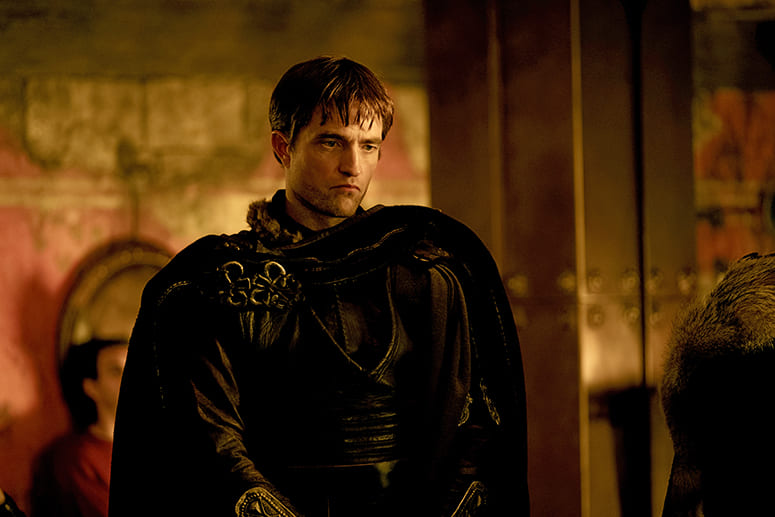
There are lots of plots to develop in The Odyssey, which makes it a gripping yarn, including what goes on back in Penelope’s chambers, as suitors line up, drink the palace wine and corrupt the servants while waiting for her to declare Odysseus dead and pick one of them as a husband. Among them is Robert Pattison, playing a greasy, treacherous Antinous. Off to find his lost father is Telemachus (Tom Holland), with John Leguizamo as blind but faithful swineherd Eumaeus.
The rest of the cast is a lengthy who’s who, with Jon Bernthal and Lupita Nyong’o playing edgy couple Menelaus and Helen of Troy; Benny Safdie practically a cameo as towering Agememnon: Zendaya sort of popping up like a ghost here and there as Athena; and Mia Goth as a loose maidservant to Penelope.
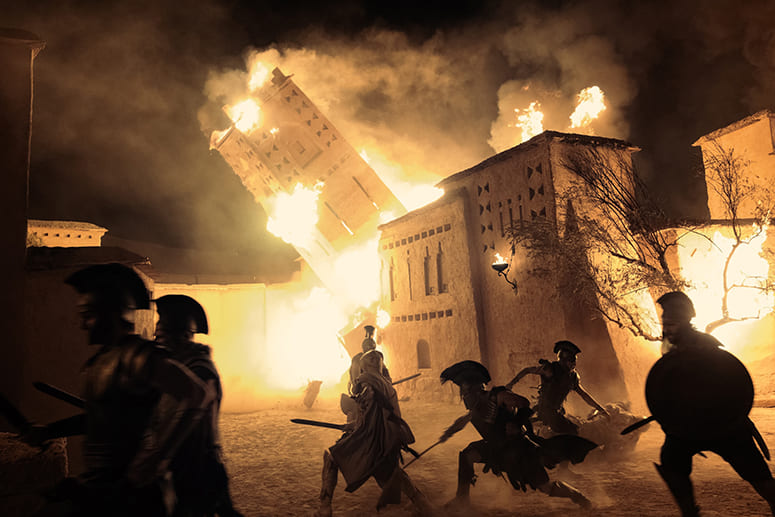
Damon, flexing his newly developed muscles, brings emotional heart to this story. He’s brave, strong and often smart, but he can also be a knucklehead. There are creepy encounters, Samantha Morton’s witchy Circe being the most scarifying. The Cyclops is also a freakin’ nightmare, and very effective. What lies at the heart of Nolan’s script, set in a “time of apparent magic,” is the nature of war, how it reshapes and warps us. There are wistful moments as Odysseus recalls his choice to sail past the Sirens with his ears unplugged, tied to the ship’s mast —his FOMO fully in charge—and first succumbing to the sweet song, then becoming overwhelmed and horrified by it: “It was the song of all the promises I failed to keep. And it told me I didn’t want to go home.”
Going home—returning to the way things were, to innocence after experience—is never easy. Nolan’s epic is a thrill voyage larded with poetic resonance, a journey that Hollywood rarely survives without crashing into the rocks.
As with Oppenheimer, Nolan wants us to think about how easily history is ignored, overlooked, wrongly read. His Odysseus has the last word on that: “And dawn will break on the new world… and once again our mistakes will be forgotten.”

WATCH: Do you still believe in marriage? (Generations Ep. 17)
August 19, 2026
WATCH: Save for retirement or enjoy life now? (Generations Ep. 21)
September 16, 2026
WATCH: Discovering Vietnam in three days
June 9, 2026
WATCH: Can you still trust someone who betrayed you? (Generations Ep. 22)
September 23, 2026