

REVIEW: 'The Odyssey' is a cinematic epic for the ages
At this point in his career, it’s genuinely difficult to approach a new Christopher Nolan release without elevated expectations. Inasmuch as one is supposed to be subjective going into any film, this is the director behind Memento, The Dark Knight Returns, Inception, and Oppenheimer, after all. Even in instances where his films didn’t necessarily resonate with this reviewer—Interstellar looks amazing, but it’s a glorified Doctor Who episode—the level of talent, craft, and ambition Nolan pours into his projects is always worth seeing at least once on the biggest screen possible.
The Odyssey plays out in (largely) non-linear fashion, beginning with Trojan soldiers finding a massive wooden horse on a beach formerly occupied by the Greek army. Transporting the horse back to their walled city, the Trojans seal their fate, one designed by their enemy, Odysseus (Matt Damon). Ten years later, Odysseus’ wife Queen Penelope (Anne Hathaway) and child Telemachus (Tom Holland) await news of his return to their native Ithaca. From there, the film cuts back and forth between Odysseus’ desperate attempts to get himself and his men home, while multiple suitors attempt to marry Penelope in his absence. But as the years drag on, will Odysseus find the strength to achieve his goal?
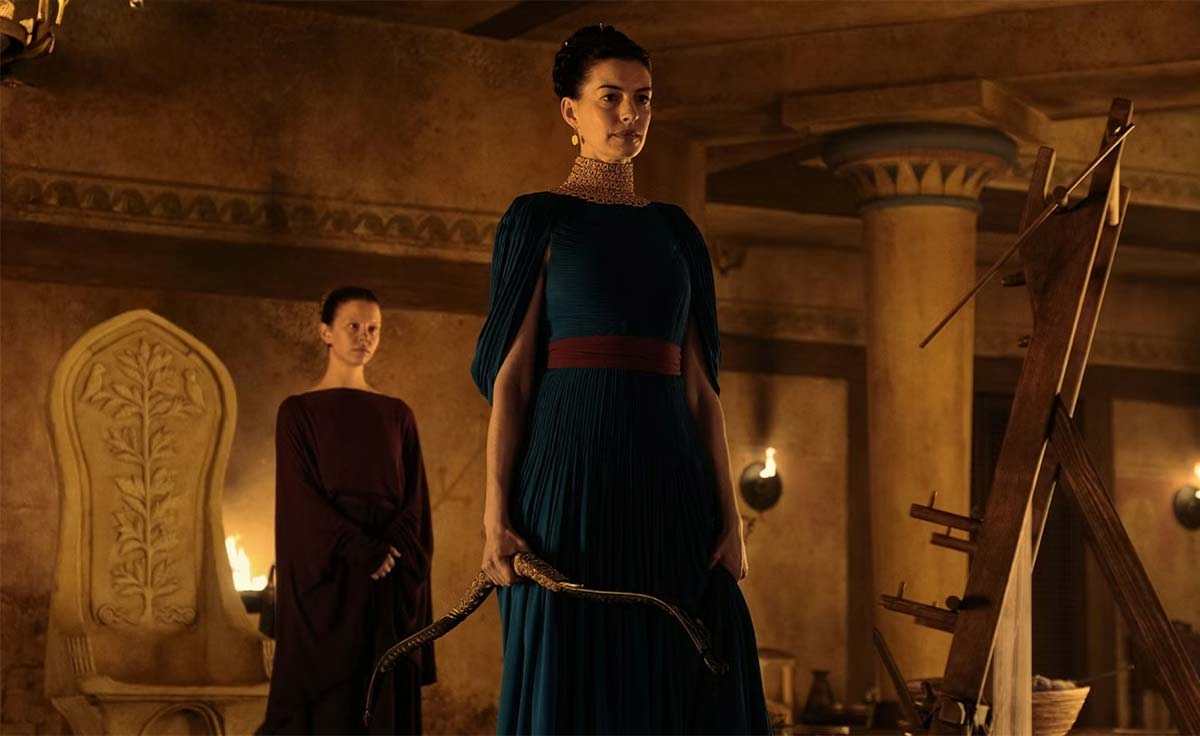
Nolan’s script for The Odyssey draws heavily from classicist Emily Wilson’s interpretation of Homer’s original materials, which was notable for stripping away centuries of embellishments that deified the main (male) characters by rooting them in the patriarchal stoicism ideals of their original translators. As in Wilson’s revised text, the film humanizes the characters, with the women, in particular, gaining agency beyond just existing to love, be loved, and/or be scornful. This is especially apparent in the film’s treatment of characters like Circe (Samantha Morton) and Calypso (Charlize Theron), who get actual motivations here, unlike their typical depictions as (stereotypically) manipulative women that Odysseus must (stoically) overcome.
Hathaway’s Penelope arguably benefits the most from the fresh perspective, eschewing the passive, pining wife of yore in favor of a three-dimensional person with thoughts and feelings about needing to be married off like so much property. Indeed, the portrayal of Penelope as an active participant here makes her infinitely more compelling, and Hathaway brings her to life brilliantly. Radiating strength and quiet dignity, Penelope is the film’s beating heart, remaining ever faithful to her husband, while simultaneously enacting plans to ensure her family’s survival.
As the lead, Matt Damon’s Odysseus is a broken man, delivering an initially aloof performance that evolves into something else entirely as we learn the motivations behind his actions, and their effect on his soul. As he leads his men through one supernatural obstacle after another in their quest to return home, Odysseus’ world-weariness gives way to obsession, with Damon handily selling the notion of a man being defined by his trauma. The manner in which the film addresses this and presents Odysseus’ inner turmoil as stemming from his faith is downright inspired, particularly in his confrontations with the goddess Athena (Zendaya). That his every action has consequences reaches a fever pitch towards the end, as Odysseus realizes what he must do if he is ever to truly find his way home.
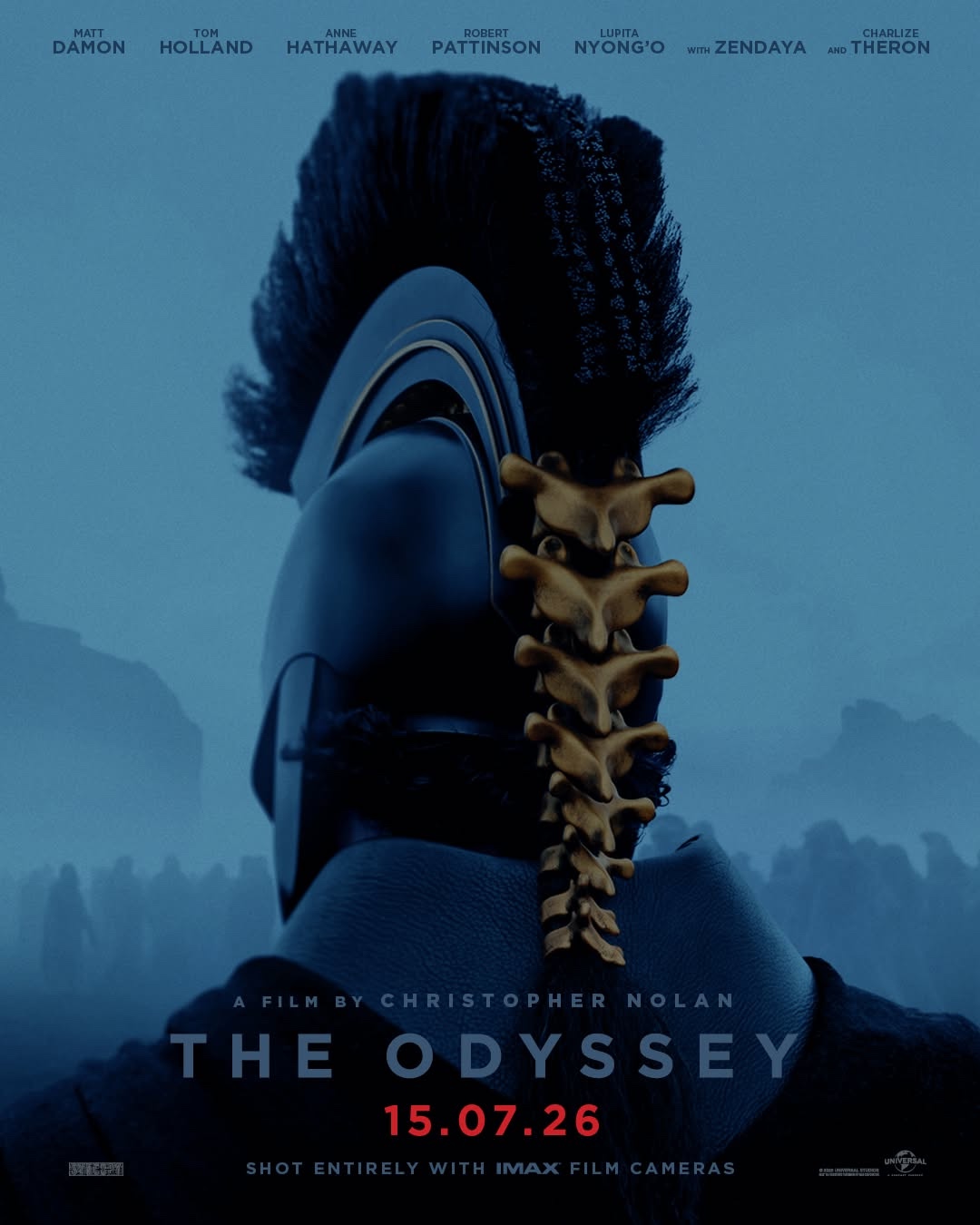

Despite what the trailers would have one believe, the gods of Olympus play major roles here, often operating just out of frame to impose their will on those who would worship them. For all the work that Nolan and his team have done to ground their film in a tangible (if stylized) reality, their dedication to preserving the story’s canonical pillars is an unexpected treat for mythology fans; this is a world where anything and everything can happen, from a cyclops contending with home invaders, to some seriously twisted witch-induced body horror, and the film is all the richer for it.
Admittedly, the American accents (and contemporary language) from virtually the entire cast were somewhat jarring at first, but it’s arguably no less anachronistic than the British accents these characters are usually saddled with. In any case, having them speak in an easily recognizable manner is well in line with The Odyssey’s original text having been written for a general audience. Besides, it’s not like Matt Damon (or any of his crew) looks particularly Greek anyway, and if artistic license can allow for American revolutionary history by way of multiethnic hip-hop, who are we to complain?
Blending grand visuals and ambitious worldbuilding with bold narrative choices, The Odyssey is every bit as spectacular as the story that inspired it. If the sold-out weekday crowd we saw it with was anything to go by, it’s likely the film will be remembered as much for its ambition as its director’s ultimate achievement: In daring to adapt one of the greatest epics of all time, Nolan went out and made one of his own.
The Odyssey opened in Philippine cinemas on July 15. Watch the official countdown trailer below.

WATCH: Is OPM still as good as it used to be? (Generations Ep. 20)
September 9, 2026