

REVIEW: Cinemalaya 2025 documentary 'Bloom Where You Are Planted' deftly wrestles with the power and cost of activism
Warning: This review contains spoilers.
Noni Abao's Bloom Where You Are Planted, as with most feature directorial debuts, is a continuation of the thematic corners he has mapped in his introductory short film Dagami Daytoy (2019). Both documentaries, shaped and sharpened by the filmmaker's field experience as a human rights worker in the Cagayan Valley Region, gesture toward notions of home and community eroded by state and neocolonial violence.
The full-length documentary's title already presents a provenance that the writer-director deftly complicates in a triptych of stories in which politics, history, and social geography bleed into each other. The effect is compelling. This is the kind of movie you’d never expect to be a blockbuster, in that it is likely to draw political censorship upon screening and distribution, even more so in a perceived independent film festival like Cinemalaya where it made its premiere.
The movie opens with a series of protests in the streets of Manila, where soundbites calling for justice and accountability poetically mesh with The General Strike’s acoustic rendition of Kawayanan, as the visual palette readily shifts from the metropolis to the countryside, immersing the viewer in stunning vistas of hunter green and dry brown. The people behind the voiceovers accompanying the images in sophisticated widescreen composition are unknown at first: They speak of Cagayan Valley as a rich terrain, where “you can grow anything,” but one that is also prone to typhoons and eroded by “yellow corn”; they speak of its farmers trapped in a debt cycle and forced to till land they don’t own; they speak of lives tenanted by hardship. A five-minute overture that precedes the title card, it serves both as a perfect context and subtext on what is about to unfold throughout the film’s lean 82-minute duration. It establishes that this is a talking picture, but one that, given its genre, is more incisive and expository than dramatized.
The documentary is divided into three chapters, each marked with the name of the subject at its center. The choice of the subjects, strategically positioned as the first three voices describing their connections to the region in the opener, is inspired and useful in that it not just gives the audience different points of view but textured points of view with which to make sense of the film’s assertions about human rights and land rights as well as the reparative power of activism and community organizing.
Cagayan Valley is succinctly mapped as a geopolitical site that is classed as well as militarized. To the west of the region is Ilocos Norte, the stronghold of the country’s current president, son and namesake of late president Ferdinand Marcos—a biting fact that mines layers of meaning on its own and offers the film a sense of history. Here is a landscape that, time and again, serves as a witness to despotic legacies.

Cagayan is the chosen worksite of land rights advocate Agnes Mesina, second home to political prisoner and artist Amanda Echanis, and the hometown of slain peace consultant Randy Malayao, who was supposed to be the primary focus of another film Abao could no longer make. At various points in their lives, all three of them had been intimidated, arrested, and red-tagged by state and paramilitary agents; all are prohibited to return home for varying circumstances that nevertheless intersect in political essence and exist in a revolving door of struggle and resistance.
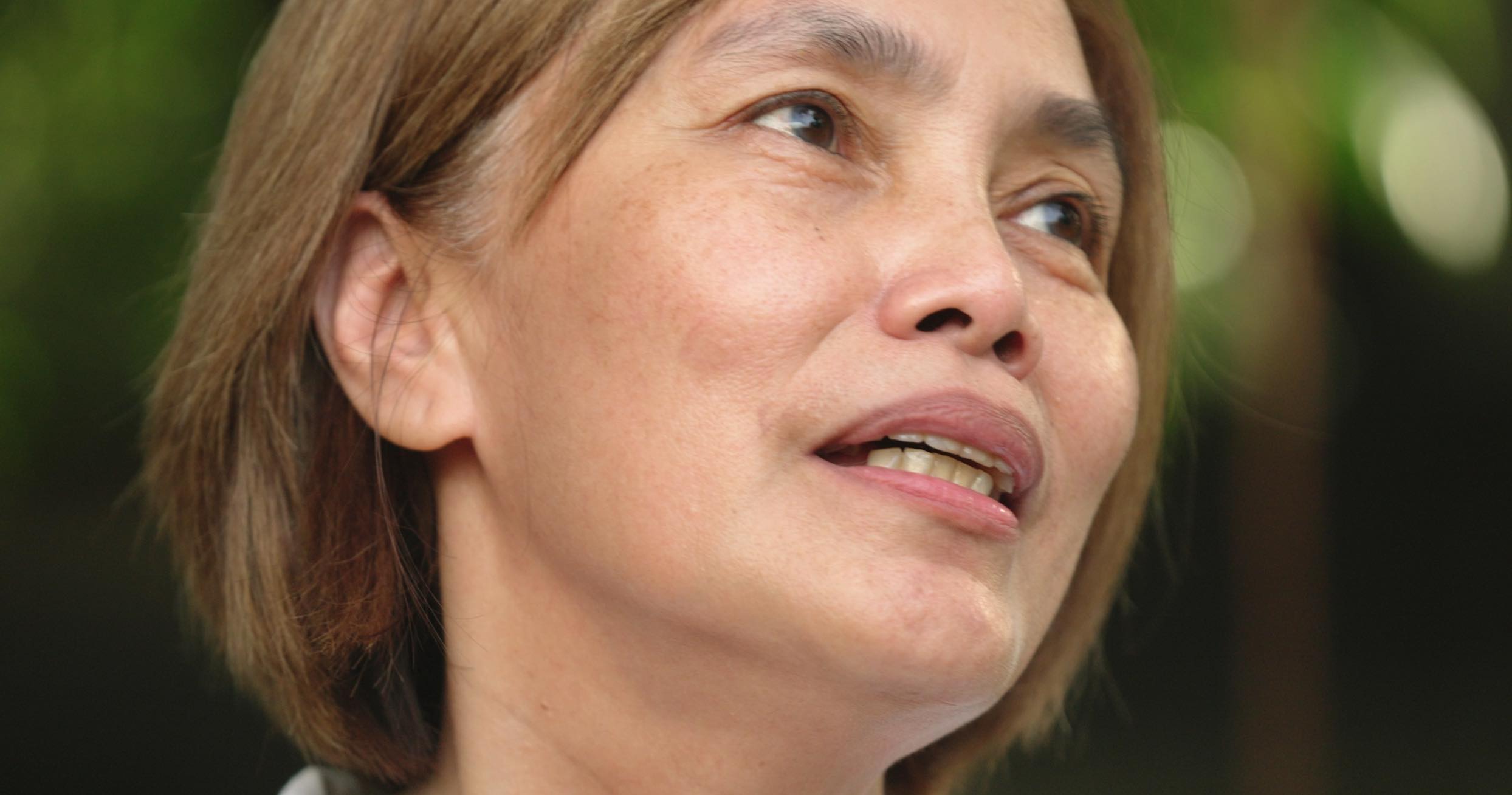
Though Abao still resorts to the documentary default that is the talking head, his images are not without textures, assembling archival footage, animation, news reports, photographs, and personal memorabilia in a meaningful manner. He has a great eye for space, and he isn’t one to elide details. The camera slides between locked-down and guerilla setups, with cinematographers Mike Olea and Steven Evangelio providing the film with some astutely realized mise en scène, which highlights not just the people that cultivate the land but also the forces that abuse it—from areas destroyed by illegal mining projects and deforestation to military paraphernalia red-tagging peasant organizers.
The director’s experience as a community organizer provides the film a deft touch as well as ideological heft and complexity. What he knows is apparent, but he’s even more honest about what he doesn’t know, instead of resorting to visual flourishes to paper over possible inadequacies; this allows the movie to further sharpen its critical edges. In many respects, Abao is a perceptive documentarist. Even as Che Tagyamon’s editing doesn’t let you hear the filmmaker asking the questions, you can tell there’s significant thought and care put into the interviews, enabling the subjects to shrewdly and candidly express themselves on camera, free from any veneer of performance. You can tell this isn’t just the work of Abao, hence the use of “dokumentaryo nina” in the film poster.
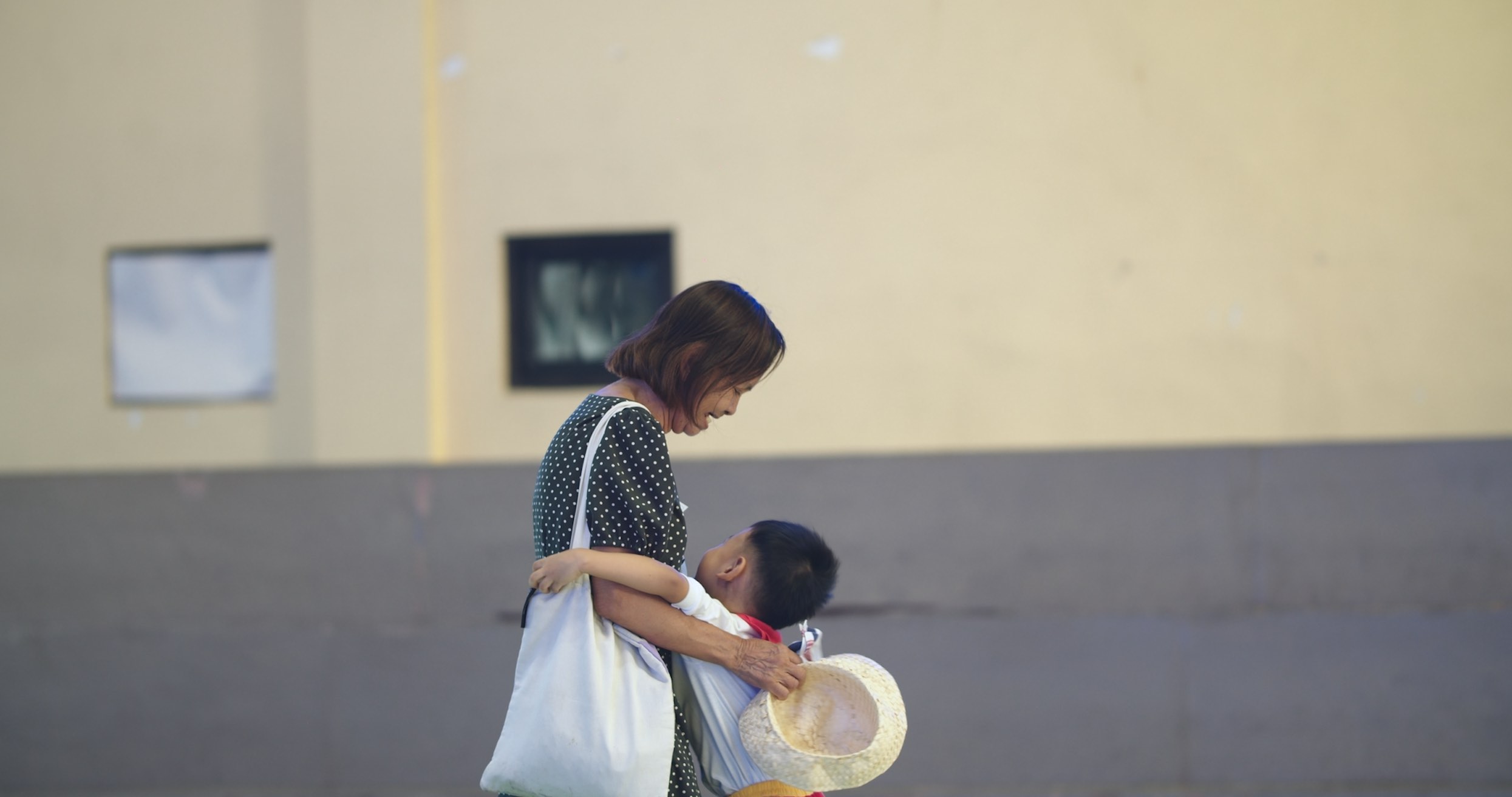
What’s most striking is how the film captures that state-sanctioned terror not just severs the activism of its “targets,” if indeed they succeed in doing so, but also their beautiful inner lives. Agnes could not be with her son because of the threat that’s increasingly becoming synonymous with her line of work, whose end goal is such an anathema to the useless people who run the state. Amanda—who was illegally arrested in December 2020, just four months after the brutal murder of her father, peasant leader Randall “Randy” Echanis—could only tend to her young son, now under the care of her still-grieving mother, Erlinda, via video calls from jail. In a cruel coincidence, journalist Raymund Villanueva would ride the same passenger bus where Randy, his longtime friend, was shot dead in January 2019.
And yet these people who have endured such unspeakable trauma refuse to cave in to sorrow and pessimism, though they have every right to feel so. This is evident in the way Agnes continues her fight for the Indigenous communities she organizes against corporate encroachment and destructive mining projects, just as Amanda carries her advocacies in prison and pursues her studies at the University of the Philippines Diliman, and has even made history as the first political detainee to win the university’s council elections. The film also highlights the support systems, and by extension the kind of labor, that sustain the resolve of its subjects.
Here’s an important layer the audience must not overlook: Much of the repression these activists faced was bannered under the Rodrigo Duterte regime’s counter-insurgency campaign, a whole-of-nation monster that continues to rear its ugly head. Five months before Amanda’s arrest, the government fast-tracked the passage of the anti-terror bill, which intensified the crackdown on dissent at the height of the global pandemic, not to mention the draconian drug war. We don’t live in a post-Duterte age, the film argues. If anything, we’re still in the process of reaping the horrors—all the carnage and corruption—that it sowed, and it is the soiled palm that shall nurture the resistance. This is not merely a story about hope and purpose, it enunciates the idea that there are sicker, conniving forces that facilitate our country’s fascination with scam messiahs, that make us forgive and forget so easily. In this fractured nation, nothing is an isolated case, nothing is mere coincidence.
There’s a juncture in the documentary in which Erlinda, while sharing family photographs to the camera, recounts her foray into community organizing. The conversation swiftly lapses into her torture and the violent killing of her husband. Unable to continue, she leaves the room and proceeds to smoke in silence. Later on, Amanda reads a heartbreaking poem about her parents’ enduring love, as the film shows Erlinda paying a visit to her husband’s grave, cigarette still in hand. This sequence doesn’t flaunt the film’s most satisfying images, the animation is even pedestrian, and yet it hits you like an exposed nerve, pulsating and immediate. It displays the kind of attention that gives the film depth and taps into the most granular impact of state-sanctioned suppression, of this cruel reality that recurs regime after regime.
Perhaps the movie's only misstep is its nearly vertiginous closing montage, which attempts to neatly condense its complex articulations, featuring Amanda’s poem Binhi ng Paglaya and rapper Ruby Ibarra’s Tiny Desk-winning track Bakunawa. Though powerful, this artistic pivot not just breaks the film’s well-calibrated rhythm but also feels like a separate film on its own. What precedes this is a majestic panning shot of the storied land as protest chants overwhelm the soundscape, which would have allowed for an airtight coda. Still, it’s just the small imprecision in an otherwise discerning and terrific work.
What results, ultimately, is a vision that holds up a mirror to a recognizable world that, though vexingly becoming inhospitable, still points to plenty of militant possibilities. It’s a visceral picture that is unmistakably Filipino. It channels the radical energy of Maricon Montajes’ River of Tears and Rage (2021) as well as the intimacy and tactility of JL Burgos’ Alipato at Muog (2024). It offers us a Gestalt shift and carries the exigence that makes documentaries of this kind so devastatingly sincere and significant. Throughout its runtime, I kept thinking about how we can meet the film’s political reality beyond the artistic function of cinema, past the lens and leash of cultural criticism. Barely a minute into the documentary, the answer is materially clear and obvious.
Editor's Note: PhilSTAR L!fe was given a free ticket to the showing of Bloom Where You Are Planted.

WATCH: Is OPM still as good as it used to be? (Generations Ep. 20)
September 9, 2026