

Women express empowerment through flamenco
After the success of La Luna Roja (The Red Moon), the first flamenco ballet to be staged in the Philippines, Emma Estrada, founder and artistic director of Centro Flamenco Philippines, had another inspiration for a follow-up.
“Mujeres Empoderadas (Empowered Women) was born from a simple but powerful belief,” she says. “Every woman has a voice, even when the world tries to silence it.”
After all, flamenco—the dance Estrada has devoted her life to learning, performing and teaching—is innately a dance of power. It had the power to claim space and give voice to the ostracized gitanos in 18th-century Spain, and still has the power to express deep sentiments that mesmerize audiences to this day.
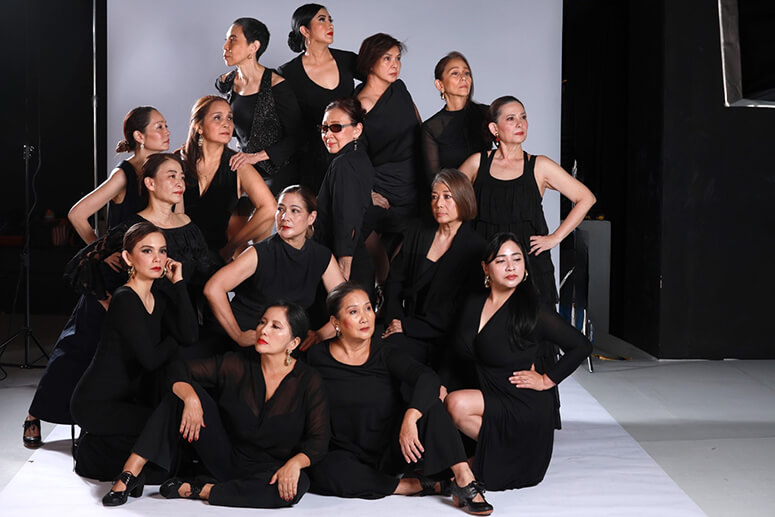
“Through the main performance, I wanted to take everyone watching on a journey, not only through the different ‘palos’ (musical styles) of flamenco, but through the emotions and experiences that shape us as women,” Estrada says.
Since Mujeres Empoderadas was essentially a non-narrative stage work, Estrada asked her collaborator of over 20 years who had directed La Luna Roja, stage and screen stalwart Leo Rialp, to direct the show, and he thought of the perfect story that could serve as a framework for Mujeres.
CONTINUE READING BELOW

“I had done a play before by Lope de Vega, and Laurencia was a character in his play Fuenteovejuna,” notes Rialp. “Laurencia was a pivotal character, where she was raped and abused by a commander who was the head of that area in Castile. And it’s a true story. She confronted the townspeople and said, ‘Look at me. This is what I have become because you have not done anything. Are you afraid? I’m afraid, too. But I’m going to fight and I’m going to end this guy.’ And then the townspeople were all moved to getting rid of this tyrant, and they eventually revolted and killed him.”
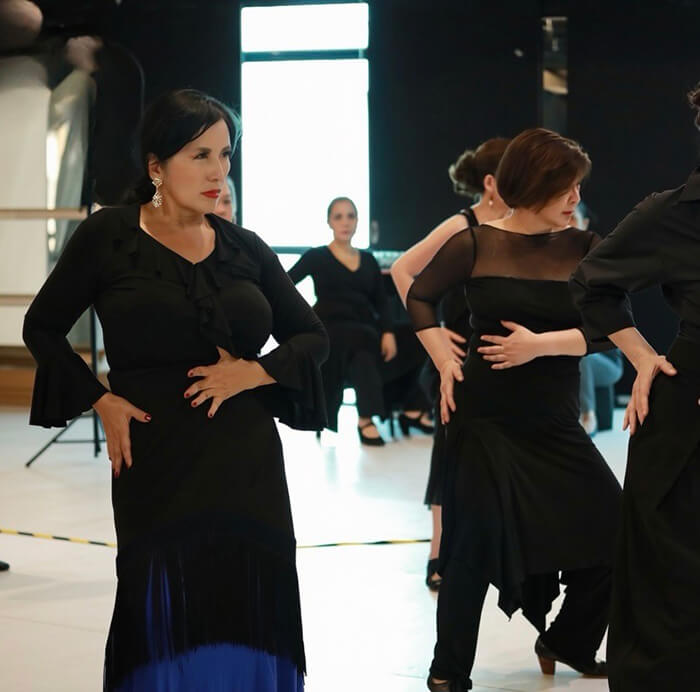
Laurencia became a symbol of women’s rights and freedom in Spain. “In fact, in Russia there is a street named Laurencia, and it is named after the character (in De Vega’s play), and it’s produced in Spain every year in the town of Fuenteovejuna,” notes Rialp.
“When Emma thought of the idea of Mujeres Empoderadas, I felt that it was timely,” he continues. “It makes a lot of sense, and then to depict it in flamenco was a real challenge. But to establish the theme of the flamenco show, it would be good to have the character of Laurencia. We had to depict women who were abused, women who were subjugated by society and by the menfolk also because of machismo in general, so it was a universal theme which is relevant now.”
The show is divided into two parts: the first is a showcase featuring the students of Fundación Centro Flamenco dancing choreographies that reflect their dedication, progress, and passion for the art of flamenco.
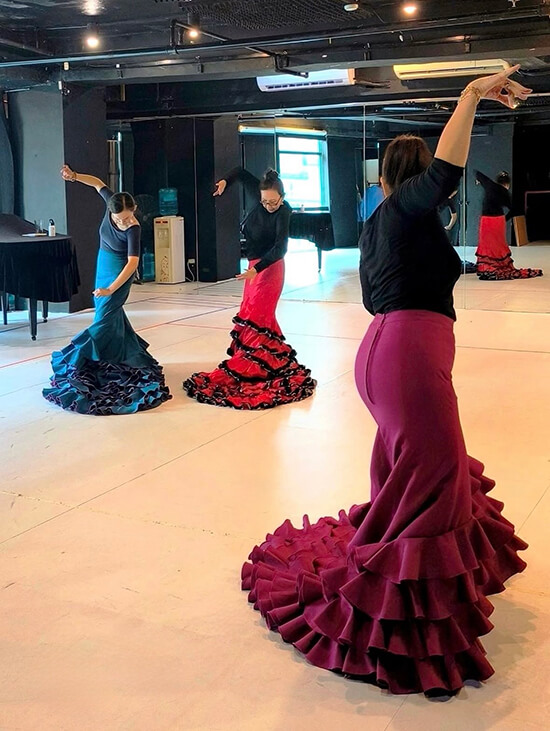
Part Two is the main performance by the top dancers of Fundación Centro Flamenco, led by Estrada through her powerful choreography.
“We begin with Laurencia’s voice rising against injustice,” Estrada reveals. “From there, we enter the darkness of the Martinete, the pain and struggle of the Seguiriya, and the endurance of the Tarantos. We carry our hidden voices beneath the mantón until, slowly, we begin to awaken.
Then comes the joy and freedom of the Alegrías, the strength and defiance of the Farruca, the vulnerability within a relationship, and finally Planta Siete where we stand together, no longer afraid of our own power.”
This year, Estrada is also proud to share the stage with flamenco students from Davao and Iloilo. “Their participation makes Empoderadas not only a performance, but a meeting of flamenco communities from different parts of the Philippines.”
She’s also proud of the teachers of Centro Flamenco, “women who were once my students and have grown into accomplished artists and teachers in their own right”: Eda Calonia-Bautista, Nina Prats, Mercedes Soler and Stella Gemperle Aguila. “Seeing them now share their knowledge, inspire others, and continue the cycle of learning is one of the most meaningful parts of my journey and a true reflection of Centro Flamenco’s vision.”
Though Estrada pioneered flamenco in the Philippines and is a creative visionary with a genius for choreography, she says that, above all, this work is a tribute to her students.
“Every woman you see on this stage has her own story. Every step, every movement, every pause and every moment of strength carries something of who she is. I have watched these women challenge themselves, fall, rise, cry, laugh, struggle and persevere. I hope those watching will see beyond our costumes, beyond the music and our movements. I hope they see women finding their voices, supporting one another, reclaiming their strength, and celebrating the freedom to express who we truly are.”
Mujeres Empoderadas will have two shows only on Sept. 12, Saturday, at 3 p.m. and 8 p.m. at The Black Box at the Proscenium Theater. Tickets are available at Ticket2Me.net.

WATCH: Why is it so hard to make friends? (Generations Ep. 26)
October 21, 2026
WATCH: Is Gen Z too soft? (Generations Ep. 23)
September 30, 2026