

Lope Lim and Regine Sophia Torres raise the barre
The ease and grace of the body’s movement; the elegant anatomical lines that move to the rhythm, the clean execution of a step accentuating a dance phrase… It all seems so easy while watching a dancer dance. But the truth of the matter is that dancers hold a higher score in key fitness measures than swimmers. Dancers take longer to reach the ultimate state of physical fatigue than football players. And yet, when watching a dance concert, one hardly notices the extreme breathing pattern, nor does the audience see physical effort in executing, say, a grande jeté (big leap) that can rise six to eight feet in the air. An Italian term describes it succinctly: “sprezzatura“ or “the art of making skilled, complex or elegant actions appear entirely effortless and natural.” But this doesn’t come easy, as it takes years of practice and discipline to get to this polished point of graceful physical strength.
Two fairly young dancers who have pursued their dance careers to get to the point of perfection are Lope Lim, who is with the Washington Ballet, and Regine Sophia Torres, who performs on Broadway.

Regine started taking formal lessons in ballet and hip-hop at the age of five, but she relates that from the age of three, she was singing pop songs, growing up listening to the hits of the ’70s and ’80s, which were constantly played at her home, growing up in Vietnam and the Philippines. In turn, Lope, after some years taking hip-hop classes at Steps Dance Studio, shifted to ballet at the prodding and encouragement of his teacher, Sofia Elizalde. “I was intrigued by the technical aspects of ballet and loved the challenge it presented me,” and at 11 years old had his first performance, taking the lead in Pepe’s Secret Christmas.
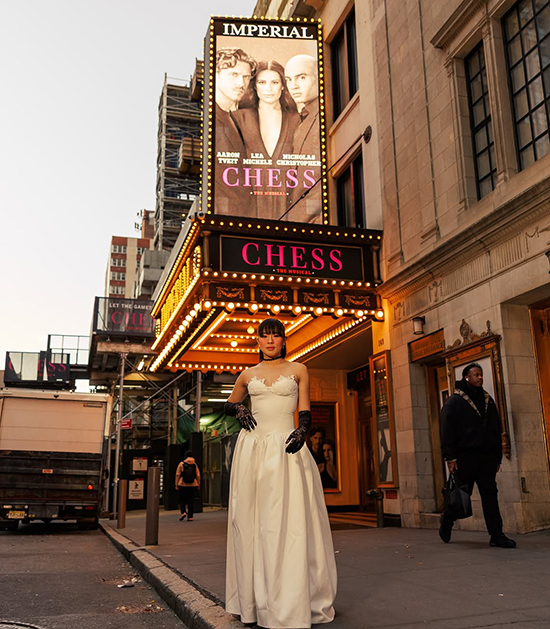
A recent graduate of Penn State University Park in 2025 with a magna cum laude citation in Musical Theater, minor in Psychology, Regine made her Broadway debut on Nov. 16, 2025. She is currently performing with the cast of the musical Chess at the Imperial Theater. She is what is called a “triple threat” performer who sings, dances, and acts. To prepare for the demands of her role, she took more dance classes and physical therapy sessions to keep up the stamina and strength required for the role—“a healthy physical routine,” as she terms it, for her to give her all for the choreography and the vocal-heavy material. “This show utilizes the ensemble as an extension of the characters, and in some ways, the audience as well,” she explains, her rationale for keeping in shape, physically, mentally, and emotionally, “to stay focused and committed to the material and message of the show.”
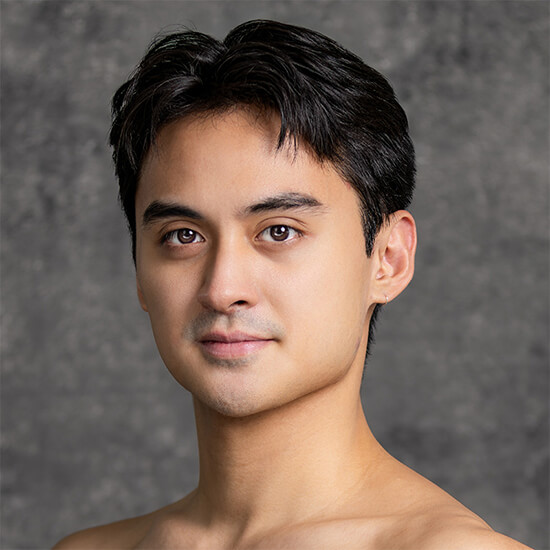
Lope looks back on his journey, from winning dance competitions—a silver medal in the Asian Grand Prix in Hong Kong in 2015, a bronze medal in the US later on—then a scholarship at the Kirov Academy of Ballet, spending summers dancing at the San Francisco Ballet, Ellison Ballet, and the Alvin Ailey American Dance Theater. It was at the Youth American Grand Prix that he received an offer from the Washington Ballet, eventually receiving his first professional contract in 2018 with the company where he is now a full company member, dancing significant roles by eminent choreographers like Kenneth Macmillan’s Romeo in the balcony scene of Romeo and Juliet, George Balanchine’s Tchaikovsky Pas de Deux, Allegro Brillante, Theme and Variations, Slaughter on Tenth Avenue, signature numbers by Julie Kent, Frederick Ashton, John Cranko and still a longer list of world-famous choreographers and their work.
CONTINUE READING BELOW

In retrospect, Lope says, “I find that ballet, while it is so beautiful, can be very painful. Even though I am only 25, my career has been punctuated by injuries. I’ve also had to deal with the various mental traumas that come with the art form… I’ve learned that these are not entirely low points and that they inform me to be a better artist and person.” It is this positivity that proves a big point against the intense perfectionism and internal pressure a dancer sometimes can go through.
When it comes to artists who have come before them, and who they’ve come to look up to in modeling their lives and their dedication to their respective art forms, Regine cites Lea Salonga as “a consistent model for me. She’s paved the way for many Filipino artists to break through barriers on a global level in the theater arts, so her impact and artistry remain a constant reminder of the journey I strive for as a performer and as a person.”
For Lope, Mikhail Baryshnikov comes up as a role model: “Ever since I started, I’ve loved the way he dances. I would love to dance like that. I try to dance like that. As far as emulate, I can separate that… I just seek to dance and dance a lot, to make art I believe in and that I am inspired by. The artist I emulate is one that is content and fulfilled by the work they get to do.”
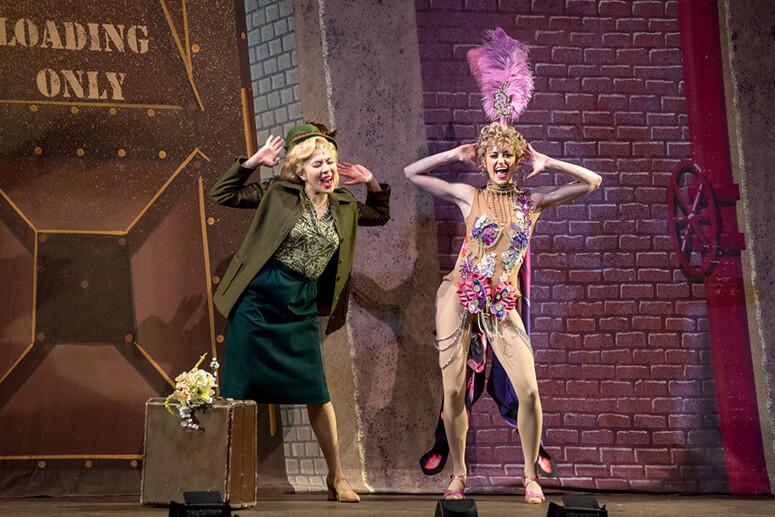
As their careers peak, both Lope and Regine look forward and see themselves still performing 10 years from now, while looking back on the time they spent in the Philippines, the country of their roots. Regine muses that “performing in the States has unlocked a new perspective for me that highlights different cultural topics and themes that artistic platforms share with audiences. It’s given me a broader outlook on how impactful the performing arts are and the beautiful ways it can expand and express human experience to others.” Ten years from now, she sees herself teaching and choreographing. In 2023, she taught and choreographed kids and teens as a camp counselor for the Rising Stars Youth Ensemble under Music Theater Wichita. “That experience unlocked a piece of my heart… (and) made me realize that I love the expansion and collaboration of sharing knowledge between generations of artists who could all benefit, grow, and learn from one another. It’s been a growing dream of mine, and I’d love to see it grow into fruition in the future.”
“Ten years from now, I see myself still dancing,” Lope enthuses, despite the physical pain he has endured. “I would love to go to college and even pursue higher education during that time, so that 10 years from now, I have many options after ballet… I would love to still have dance and art as part of my career in whatever form that may be. I am a direct product of the (Philippine) community that gave me unconditional support to pursue my dreams. I know that every time I perform onstage, I carry all the people who supported me in my heart. If one day, I can honor those people through my art, then I can consider myself a great artist.”
For both these young artists, it seems that success stems from knowing they are making the effort to become the best of which they are capable. Keeping their eyes on the stars, but their feet on the ground, they raise the dance barre.

WATCH: Pixar Summer Fest adventure at Hong Kong Disneyland
August 10, 2026
WATCH: How to experience Bangkok and Kanchanaburi in one trip
October 21, 2026
WATCH: Can we talk about death and grief? (Generations Ep. 25)
October 14, 2026