

How BookTok made reading cool again
As our attention spans shrink to 15-second clips, thousands of young Filipinos are once again sitting in silence, flipping through pages, annotating lines, and crying over fictional characters.
Online reading communities are nothing new. Readers have long gathered through blogs, book clubs, Goodreads forums, YouTube’s BookTube, and Instagram’s Bookstagram to discuss novels and share recommendations. Yet among these spaces, one community has become particularly influential in recent years.
On one side of TikTok is an online community called “BookTok” that has transformed reading from a solitary pastime to a social activity, with monthly reading wrap-ups, novel explainers, book hauls, and recommendation videos that have sent decades-old titles back onto bestseller lists overnight.
Powered by an algorithm that places content in front of users regardless of whether they follow book influencers, BookTok has expanded literary conversations beyond traditional reading circles by introducing books to audiences who may not have otherwise encountered them if not for their For You page.
Beyond a trend, BookTok, for many young readers, is a return to empathy. In the age of desensitization, it draws attention to stories that invite readers into experiences far removed from their own, from fairytales to memoirs; it reopens a form of understanding rooted in narrative emotion.
This comes at a time when the Philippines continues to grapple with functional illiteracy, where nearly three in every 10 Filipinos are considered functionally illiterate. In today’s digital age, the problem is not confined to access to and affordability of books, but is intertwined with shrinking attention spans, information overload, and a growing disengagement from long-form reading.

Functional illiteracy goes beyond the inability to read and points to difficulties in comprehension and critical thinking. BookTok’s answer to this is short-form content that encourages people to read long-form novels, where deeper comprehension is developed through sustained reading.
One of the many faces behind this reading community is BookTok influencer and Tatler Homes associate editor Celine Dabao, who believes that encouraging people to read in the digital age requires meeting audiences where they already are.
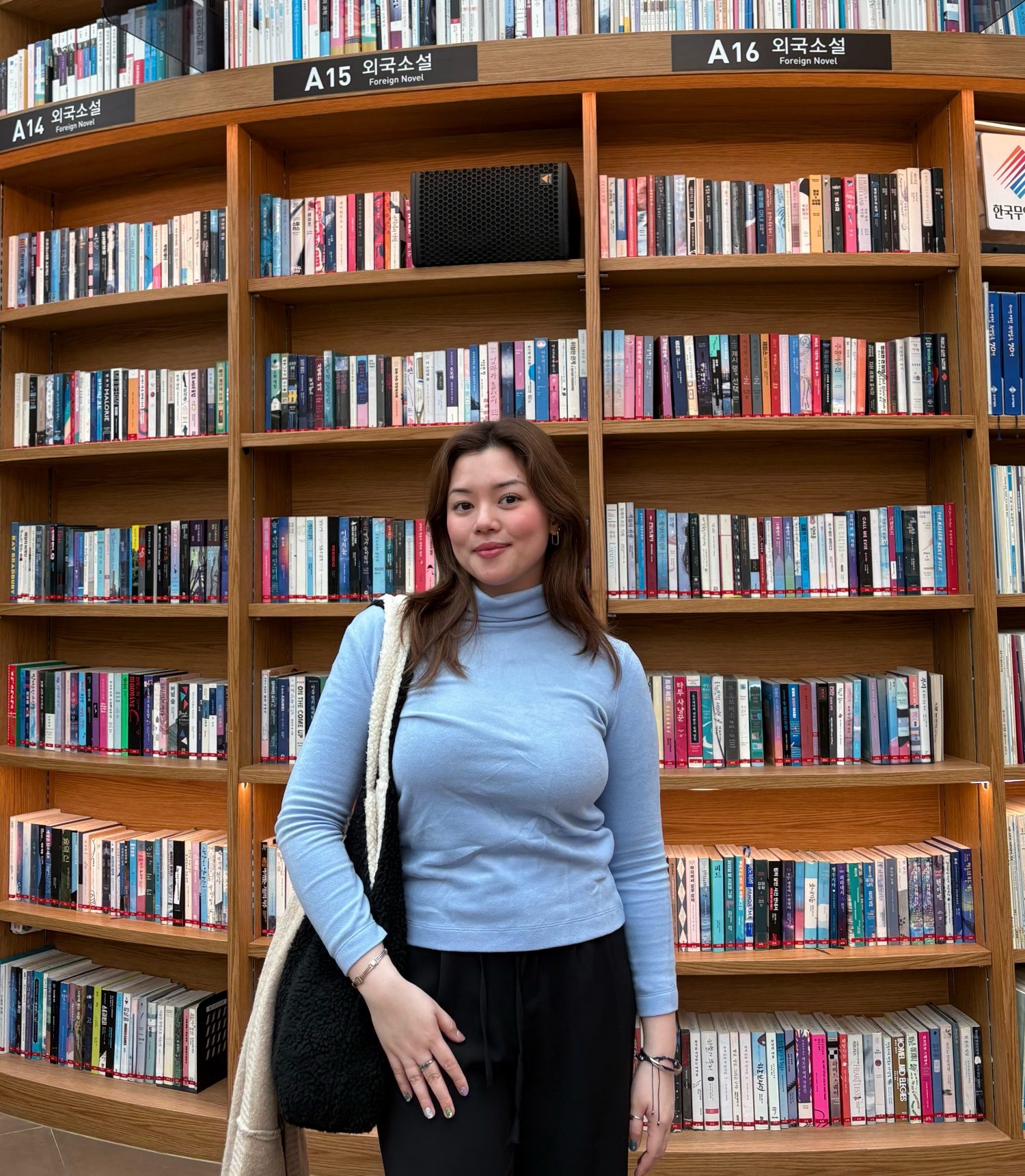
Dabao acknowledged that short-form content currently dominates the media landscape, but argued that this reality should not discourage efforts to reintroduce literature to old and young audiences, as short-form content is unlikely to disappear anytime soon.
“Somebody has to meet them where they are, and I am willing to be part of that conversation,” she said.
For Dabao, BookTok succeeds because it makes reading feel less like homework and more like a habit that can be naturally integrated, step by step, into daily life. She does this by creating content that makes sense of complex books through accessible entry points, hoping to slowly build her audience's confidence to engage with more demanding texts.
Still, this reading community, Dabao believes, is not a grand solution to the rate of functional illiteracy in the country, but a sustained effort to keep reading within reach.
BookTok has also extended from online discussions to physical book club meetings, building communities around a hobby that once might have been solely experienced in isolation.
Among them is Booked & Busy Book Club, founded in 2024 by Hershey Bulawin and Martina Santiago, who initially struggled to find a consistent space to share their love for reading outside their immediate social circles. The club was built to bridge this gap and create a community where busy students and young professionals could still sustain their reading habits alongside the demands of daily life.
Booked & Busy has grown into a reading circle of more than a hundred members. Monthly reading selections are chosen through group voting, which is commonly influenced by BookTok titles.
For its co-founder and head creative, Martina, BookTok plays a key role in shaping the club’s and her personal reading choices by introducing books she might not have encountered on her own. She described how simply seeing what others are reading online fosters a subtle connection to a wider community, even without direct interaction.
In this sense, BookTok revealed a broader culture of peer influence in reading, where choices are often guided by what is visible, recommended, and widely engaged with by other readers.
BookTok influencer Cedrix Eligio observed the same pattern even before the community was created. He recalled how he began to read in fifth grade after seeing a cousin his age reading Diary of a Wimpy Kid at a family reunion. That moment of recognition sparked his curiosity and eventually led him to pick up a book himself.
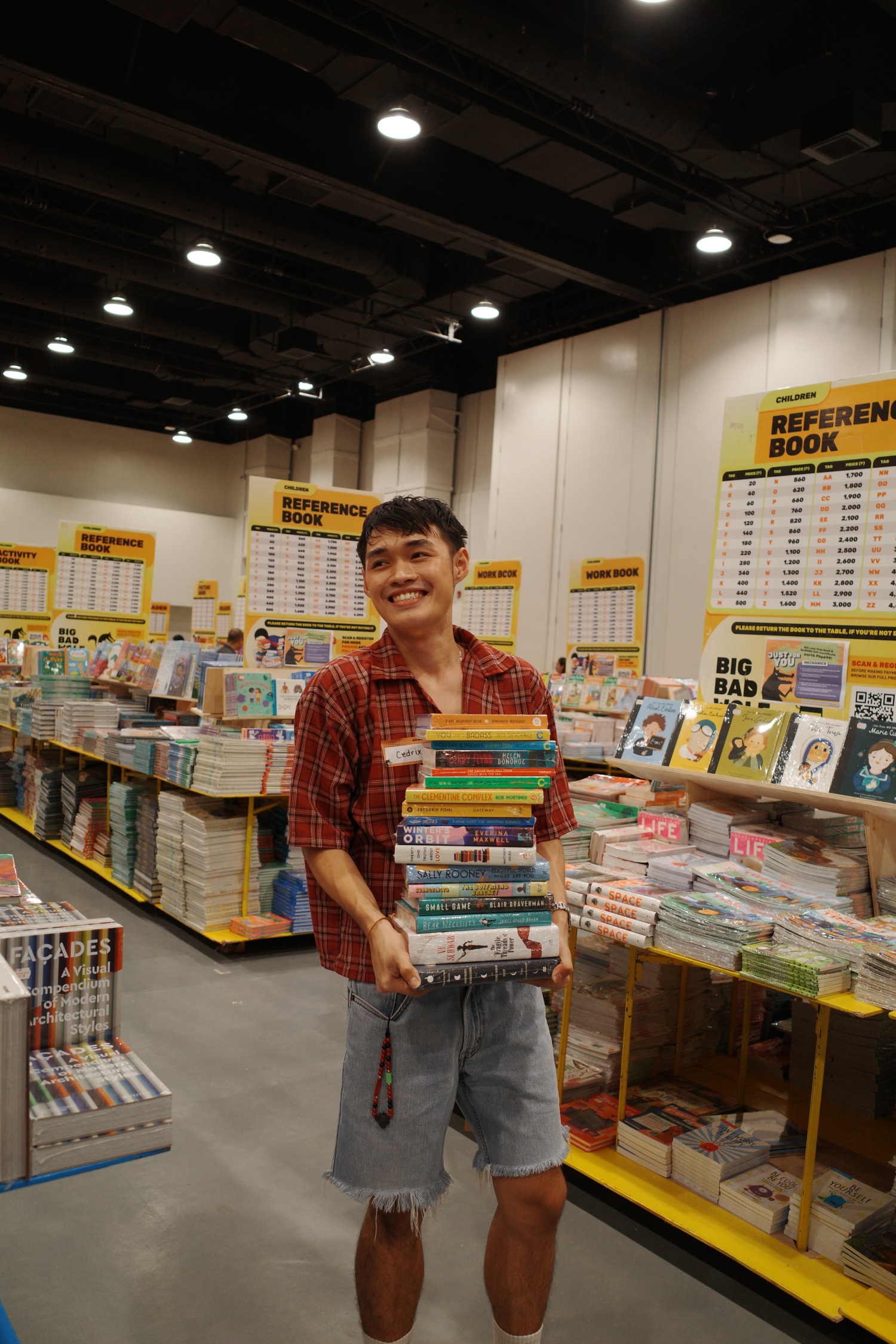
“Na-curious ako na I should start reading din, which is basically what is happening right now with BookTok. Kaya ‘pag nakikita nila ako na ka-age nila or near their age, nacu-curious sila and ayun, nagfafall in love sa reading,” he added.
But at the time, he recalled how reading was not always framed positively. Back then, he said it was associated with being “nerdy” in a negative sense and socially out of place when done in public.
Dabao shared a similar experience, as someone who grew up reading anything she could lay her hands on, whether it was an aircon manual or Charlotte’s Web by E.B. White. She recalled that while reading was something she naturally gravitated toward even at a young age, it was not always something positioned as a socially visible or celebrated activity.
@bookish_bellini if you’re going to watch any of my book recommendation videos all the way through, let it be this one 💙❤️☀️🤍 don’t forget that voter registration ends on may 18! here are my filipino nonfiction book recommendations for filipino voters, many of which i got from ateneo press (as usual) and fully booked!! these books really helped me unpack my previous understanding of social class, urban planning, and politics in the philippines so i hope you can add them to your library. here are all the books in order: - “moral politics in the philippines” by wataru kusaka - “the patchwork city” by marco garrido - “some people need killing” by patricia evangelista - “duterte’s china embrace” by marites vitug and camille elemia - “sikodiwa” by carl lorenz cervantes let me know if you’re adding these books to my tbr!! #booktokph #booktok #philippinepolitics #akdangpinoy #bookrecommendations ♬ original sound - celine ✿ books & journaling - celine ✿ books & fashion
Together, these experiences reflect a shift in how reading is perceived then and now.
“Parang dati, when you read, especially in public, parang, ‘Ay, nerd,’ ‘di ba? Pero now, it's so cool to see someone actually holding a book in public,” Eligio said.
Yet those who work in reading promotion caution against reducing reading to a passing aesthetic. At the National Library of the Philippines, the Children’s Library section head Jose Fernando observed that communities like BookTok have helped separate reading from the long-standing perception that it is merely an academic obligation, allowing it to also be seen as a form of leisure, rest, and personal enjoyment.
TikTok kasi, sobrang accessible na for all. Bata, matanda, mga elementary, high school, even mga toddlers, may access to TikTok. Even sa mga pinakabalayong lugar kung saan walang library, walang bookstore—merong TikTok.
“BookTok makes reading feel cool again in some way. BookTok changes the perception by turning books into trends, discussions, fandoms, and even emotional experiences,” Fernando said.
However, he notes that online visibility alone does not sustain a reading culture. Rather than keeping books fashionable, Fernando highlights the importance of reminding readers that books can occupy a space in everyday life as a source of enjoyment and shared interests.
@notcedrix come donate 59 books with me! 📚✨ #booktok #booktokph #booktokphilippines #bookhaul #books ♬ original sound - Cedrix Eligio *ੈ✩‧₊˚
In many ways, reading, whether it’s a book of poems, fiction, or a memoir, can offer a reader a sense of enlightenment with the simple act of inhabiting another person’s world and returning with a broader understanding of others and even oneself.
But today, BookTok’s influence is not only changing how reading is perceived, but also what readers are picking up.
As recommendation culture increasingly shapes reading habits, it has created a new visibility for Filipino authors, allowing local titles to circulate alongside international bestsellers and reach wider audiences beyond traditional literary spaces.
This can be seen in the growing number of readers and creators using their platforms to provide a spotlight for local literature across various social media platforms. Among them is Akdang Pinoy, a passion project created by Kathryn Leonorio and Saimon Perez, dedicated to introducing readers to Filipino stories by local authors and publishers.
What started as a reading challenge in August 2024 has grown into a broader advocacy through projects like Akdang Pinoy Readathon, The Filipino Shelf Book Tour, and the Filipino Authors in Focus series. These extend Filipino literature beyond seasonal or campaign-based initiatives into a more continuous reading practice shaped by community participation and growing social media visibility.
For Leonorio, the advocacy was born out of a realization that Filipino books were then mainly dismissed as class requirements. Western counterparts were seen as superior.
This perception, she noted, did not exist in isolation but was influenced by schools that mainly used English texts, bookstores that positioned Filipino sections further back, and online literary spaces where exposure to foreign titles often came first and most prominently.
Beyond long-held issues of visibility, National Book Development Board Executive Director Charisse Aquino-Tugade argued that there is another layer of meaning lost when we don’t read in our own language, present in the subtle distance when stories are filtered through translation or a dialect that is not fully one’s own.
“Kids need to see themselves in the books that they read. (They need to) go through their journey and experience how they see the world, and not always (through) the eyes of the parent. They're overcoming obstacles like bullying or sadness (in these books). That's really important.”
However, reading today is still widely acknowledged as a privilege and a luxury to some.
For the NBDB, encouraging Filipinos to read requires more than simply telling people to pick up a book, but creating an environment where literature is accessible, visible, and valued.
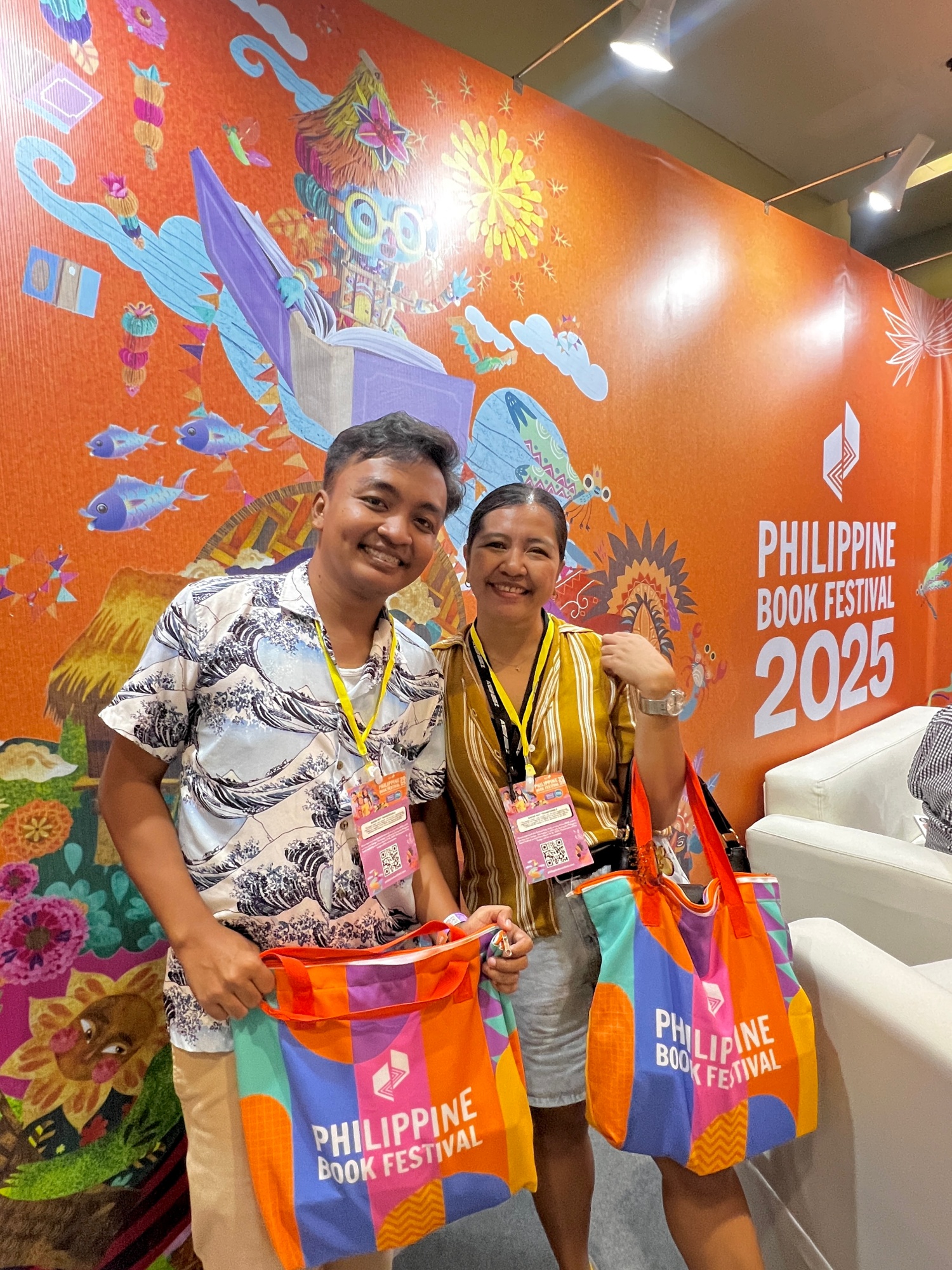
This philosophy has shaped a range of initiatives that seek to strengthen parts of the reading ecosystem, like the Philippine Book Festival, the country’s only all-Filipino book fair; regional book fairs that extend their reach from Metro Manila; and the establishment of 133 Book Nooks across the country.
For Perez, Akdang Pinoy’s co-founder, BookTok today succeeds because of its accessibility and algorithm-driven reach. “TikTok kasi, sobrang accessible na for all. Bata, matanda, mga elementary, high school, even mga toddlers may access to TikTok. Even sa mga pinakabalayong lugar kung saan walang library, walang bookstore, merong TikTok.”

WATCH: Can you still trust someone who betrayed you? (Generations Ep. 22)
September 23, 2026
WATCH: Is Philippine cinema still thriving? (Generations Ep. 19)
September 2, 2026