

Leon Gallery’s mid-year auction: ‘Marites,’ dasal, toothpick atbp.
At the recent mid-year auction of Leon Gallery, three distinctly Filipino facets of pop culture, celebrated in art, were among the spectacular works that stole the show.
Fetching P52.87 million was Anita Magsaysay-Ho’s “Five Senses,” her first prize-winning masterpiece that was a mid-century (1950) expression of chismisan.
In the 13” x 10” painting, which resurfaced in the Philippines after 76 years from a private collection in the United States, three women are seen whispering to each other, their eyes lively and animated.
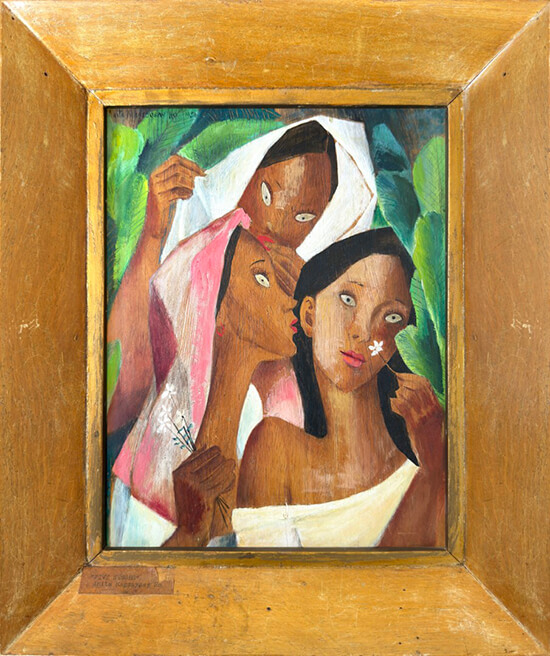
“The subject of the painting is very Filipino, as it touches on the popular pastime of chismisan, or gossiping, the easiest way to stay up to date on the latest happenings in the barangay or community,” Jaime Ponce de Leon, founder of Leon Gallery, points out.

In the accompanying brochure, the gallery notes: “In gossiping, all five senses are functioning: ears for hearing the inside scoop, eyes for intensified, and oftentimes over-the-top reactions, tongues and noses for nibbling and savoring snacks, and the sense of touch reserved for outrageous, campy reenactments of and feedback to the ‘intelligence report.’"
CONTINUE READING BELOW

“In contemporary pop culture, gossipers are known colloquially as ‘Marites,’ the name humorously attached to a nosy neighbor and said to be a contraction of the question, ‘Mare, anong latest’?”
Anita herself also said in an interview with Cid Reyes that it is the peculiarity of the Filipina, especially when laughing and conversing, that she was most drawn to. “I like the Filipina because she makes gestures; she’s very articulate,” she shared.
“'Five Senses' could be the centerpiece of any collection,” declares Jaime.
‘Angelus’
In “Angelus,” which fetched P13.217 million on the block, Amorsolo’s interpretation of the time-honored Filipino tradition shows the family still facing towards the direction of the church, with the father’s head bowed in reverence and the mother’s face in a solemn gaze.

Amorsolo’s “Angelus,” from the Ossorio family collection, reportedly serves as an interlude from his rice cycle works, in which the family pauses from their toiling to reflect on their faith and pray for a bountiful harvest.
Devout Catholics in the Philippines still stop whatever they’re doing when church bells toll at 6 p.m., signaling the Angelus. I remember as a child bowing before my grandparents to be “blessed,” usually with the palm of their hand on our head, whenever we were together at Angelus, with the children saying most reverently, “Mano po.”
Palitera
This solid silver artwork, forged from Mexican silver coins, is actually a toothpick (palillo) holder and won an amazing final bid of P3.604 million at Leon’s mid-year auction. This fixture in the dining rooms of Philippine nobility during the late Spanish colonial era shows just how prosperous and indeed, almost ostentatious, affluent families were at the time.
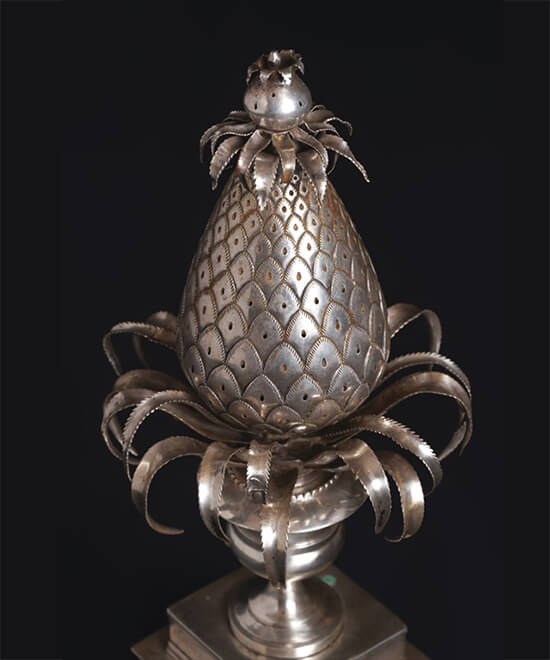
The classical pineapple-shaped palitera is the “Holy Grail” of antique Filipino domestic silver, according to the preeminent Filipiniana scholar Ramon N. Villegas.
These silver palitera or toothpick holders (as well as the equally exquisite buyeras/platillas para buya) were usually found in the estates of a certain generation of pre-1850 hacendero families in Pampanga, Bulacan, Manila, Laguna, Batangas, and Cavite.
Paliteras were used as centerpieces for “fiesta”/banquet tables. They were not displayed as is (as on modern dining tables); they were studded with silver toothpicks with flowers and leaves and wooden versions with exquisite whittle work, which made them look like bouquets, according to the gallery.
Toothpicks are no longer popularly used on the dining table nowadays—I wouldn’t dare. But they are still commonly offered in Southeast Asian and Asian restaurants, and better yet, in restrooms.
So this makes the paliteras of yore quite a conversation piece as they reflect how innovative and creative Filipino artisans were and are, even with seemingly mundane objects. Europe also had toothpick holders, but our paliteras were unique, featuring tropical motifs and the meticulous craftsmanship of Filipino artisans.
Now, people would fight tooth and nail for a palitera!
Roaring success
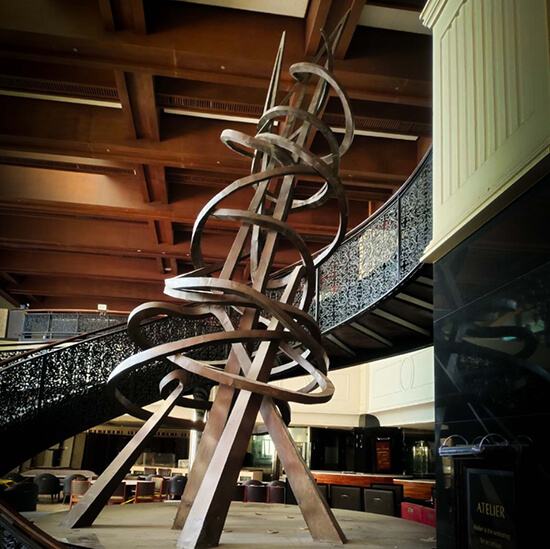
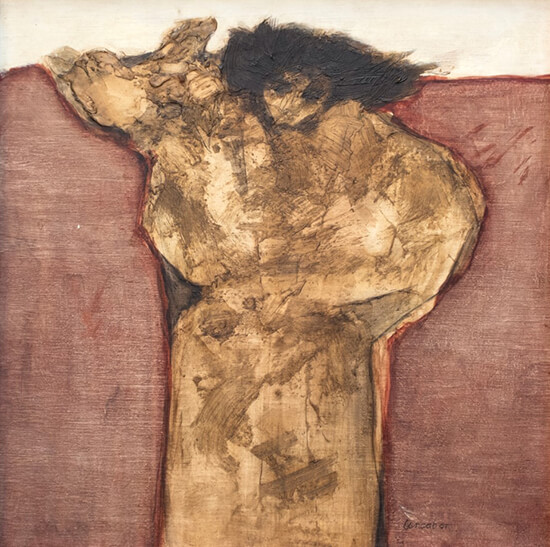
When congratulated on the success of Leon Gallery’s mid-year auction, which also featured an Eduardo Castrillo sculpture (memorable to those who frequented the iconic Philippine Plaza in the ‘90s) sold at P9 million, a BenCab with a winning bid of P5.7 million and a Lao Lianben at P5.5 million and several priceless historical memorabilia from Jose Rizal and the Malolos Congress, Jaime said, “This entailed a lot of pressure and sleepless nights. But luck comes the harder we work.”
What’s next on the horizon for Leon Gallery?
“We are working on another national treasure and hoping we can present it at the next auction,” he says.
Is it a painting?
“It’s an artwork,” he says. Enigmatically.

WATCH: Is Philippine cinema still thriving? (Generations Ep. 19)
September 2, 2026
WATCH: How to experience Bangkok and Kanchanaburi in one trip
October 21, 2026
WATCH: Do you still believe in marriage? (Generations Ep. 17)
August 19, 2026