

Memories make fragile monuments in ‘Kono Basho’
Jaime Pacena II’s debut film Kono Basho (This Place), a Cinemalaya entry in 2024, is the story of two estranged half-sisters, Ella (played by Gaby Padilla) and Reina (played by Arisa Nakano), who struggle to connect in their grief while piecing together memories of their father. Drawing from Pacena’s long-term research and artistic engagements in the city of Rikuzentakata, the film entwines personal grief and memory with the locality’s history as a city tragically wrought by the Tōhoku earthquake and tsunami in 2011.
The film, recently shown at Ateneo Art Gallery with a talkback with the director, opens with interspersing environmental shots, showing ambient views like a verdant blur of landscape from a train window, sea foam gently clashing against rocks on a shore, and decrepit construction sites from the aftermath of calamity. These shots appear and disappear in bouts to form an ever-unfinished grid, leaving in their wake gaps of black screen like blanks in an incomplete memory.
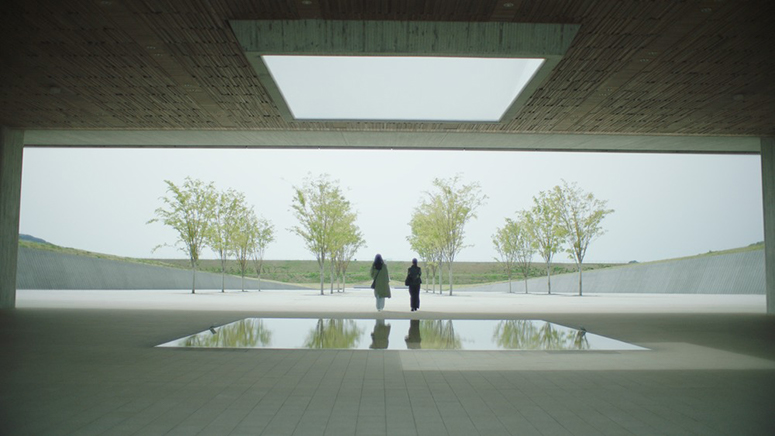
This visual sequence easily parallels what the two protagonists endeavor to do throughout the story—that is, piecing together memories of their father, only to realize that there is only so much each of them can really recollect of him. Ella, having been left back in the Philippines by her father, who had started a different family in Rikuzentakata, naturally harbors a great resentment towards him.
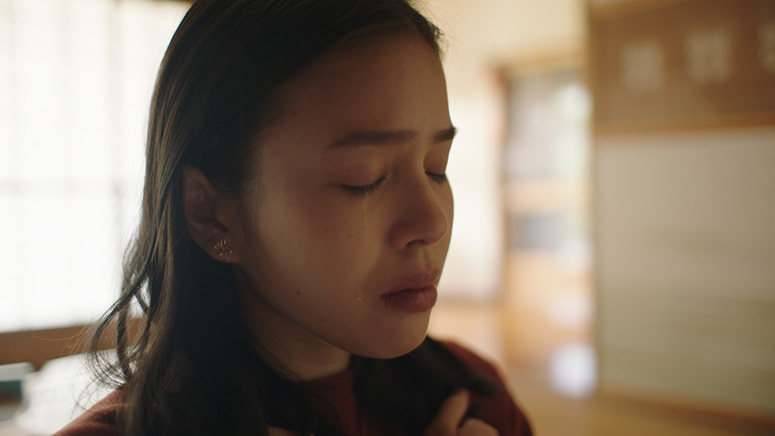
Meanwhile, Reina, afflicted by trauma from a tsunami that had devastated their city when she was younger, grows up to become overly dependent on their father, who had stayed with her all throughout the years until his death. Their father’s death rattles her in a way that Ella finds herself unable to empathize with, and it is this, particularly, that makes for heightened tensions in their relationship. For Ella, the task of remembering their father is a futile one. How do you grieve someone who left you with few precious memories to hold onto in the first place? What’s more, how do you empathize with someone who had everything you never had? But for her sister Reina, to keep remembering is to tether oneself to another: it is only human, after all, to give parts of ourselves to another and to allow them to become ours.
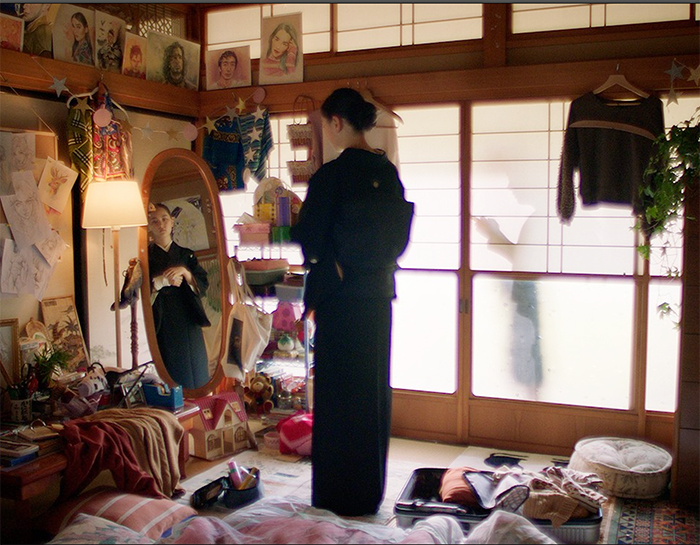
Making connections, im-perfecting memory
There is a palpable sense of the archival here—piecing together a memory, after all, is the work of the archive. Although this piecing together is among the preoccupations of the film, Kono Basho also seems to make peace with the imperfection and fragmented-ness of memory, as the film eventually homes in on developing the two protagonists’ relationship. As the story progresses, their familial estrangement is gradually drawn to a close, as they gain a newfound sense of connection through sharing fragments of their lives and memories with one another. We see these moments entwined as well with the city’s history: through the postcards collected by Ella and Reina’s father from the Tsunami survivors of Rikuzentakata, as well as the “miracle tree” that locals communally tend to in commemoration of the calamity that devastated their city. What we witness here is a relational turn, as the film progressively foregrounds human connections that can be made from moments of grief.
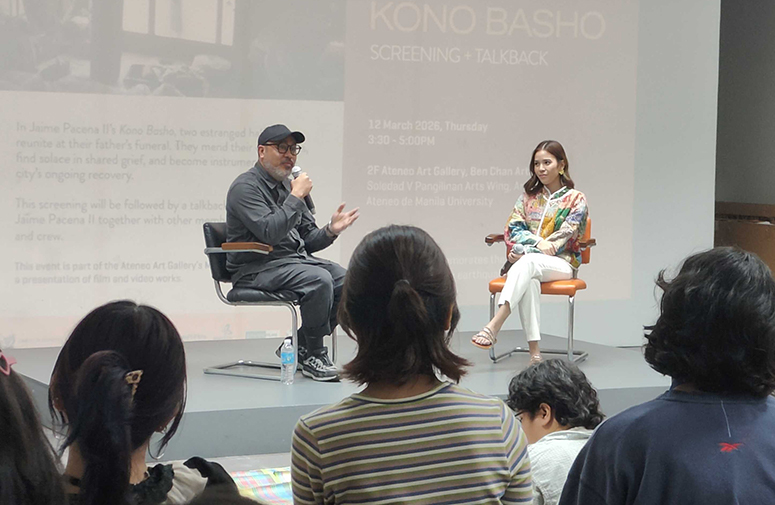
If there is then any monument here to speak of, it is a fragile one that allows people to impart fragments of their memories, becoming vulnerable pieces of themselves that they give to others.
Archiving emotion

To make a monument out of something is to freeze it in time, to keep holding onto something that has already passed—so much so that one stubbornly refuses any other possibility or any other connection. But what the film shows is a different kind of monument: one more like a memento, one that has made peace with its own ephemerality—akin to a postcard, a poem, or a blurry landscape viewed from a passing train.
Pacena’s archival sense in film has less to do with a static sense of monumentalizing or preserving, and more to do with remembering the feeling that comes with memory. As masterfully shown in Kono Basho, to archive emotion requires our vulnerability—to let ourselves be moved by the things and people around us, and so to understand that the monuments we make are only as fragile and (im)perfect as our memories.

WATCH: Can you still trust someone who betrayed you? (Generations Ep. 22)
September 23, 2026
WATCH: Pixar Summer Fest adventure at Hong Kong Disneyland
August 10, 2026