

Uncovering the Shroud of Turin
One of the most powerful, mysterious, and elusive relics of Christendom is the Holy Shroud of Turin.
Powerful, because it documents every mark of pain endured by the person buried with it. Mysterious, because of the many questions of its origin and authenticity. Elusive, because even those who seek it out are often unable to see it.
The Shroud of Turin is a linen cloth with marks of one tortured and crucified as described in the Gospels. On this piece of cloth is the full body image of a naked man which many believe to be Jesus as he lay in the sepulchre. The image has been found not to be painted with pigment. The markings have been made by anointing oils, blood, and radiation from an extreme burst of light coming from the body.
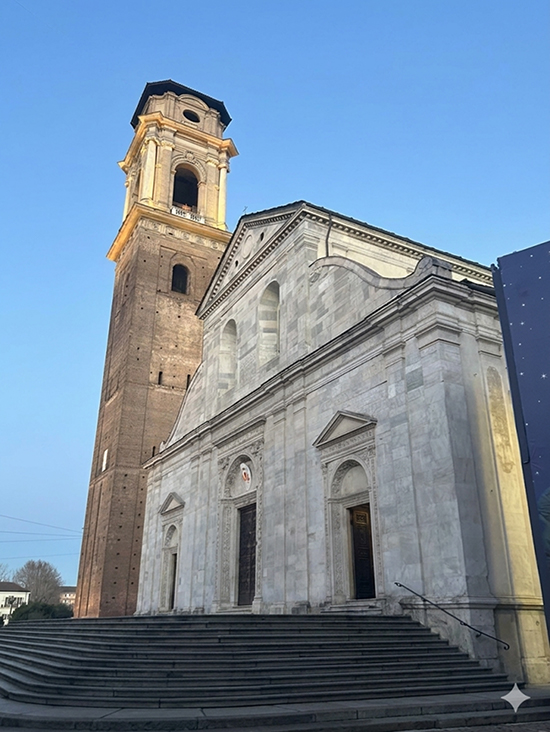
Housed within the Cathedral of Turin in the heart of this elegant, historic city, one would presume that the Shroud is within reach. However, it is not on display for veneration nor is it revealed to the public regularly. It was last seen by the public in the year 2015 and through an online exposition in 2021. Its next exposition is unknown even to those who attend to its care. Only the Pope, who is its owner-custodian after it was given to him by the Italian Royal House of Savoy, can determine that.
CONTINUE READING BELOW

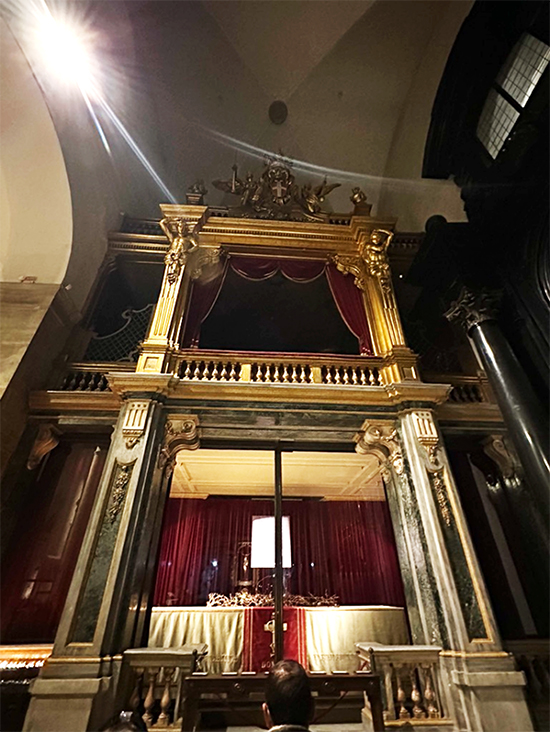
Visitors, upon finding it to the left of the main altar, can only kneel in prayer before a section of the church covered in glass. It is explained that the shroud is stretched flat in a bullet-proof, temperature-controlled case, which is placed into a metal box and hidden beneath the altar cloth. For the devotee, the experience is metaphoric: You cannot see Him, but you know He is there.
The shroud of Turin exhibition
Fifty years ago, an apostolate begun by Msgr. Giulio Ricci and Mother Maria Elisabetta Patrizi made the Shroud of Turin more accessible to believers and non-believers alike. They brought a replica of the Shroud to Manila, exhibited at the Manila Cathedral through the efforts of the Equestrian Order of the Holy Sepulchre of Jerusalem. A very well-attended lecture was consequently delivered by Msgr. Ricci.
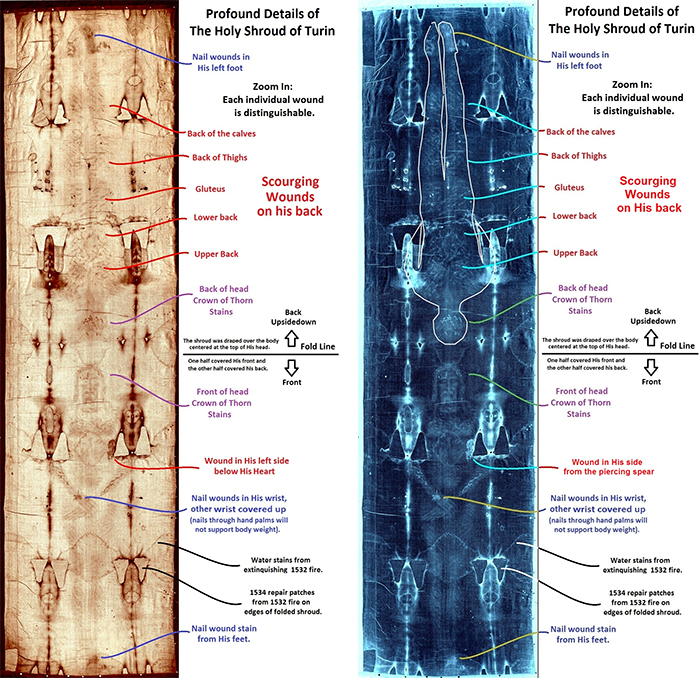
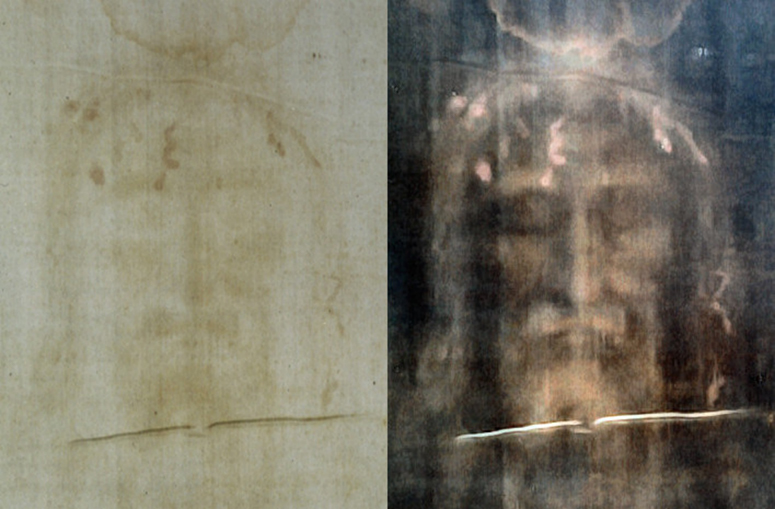
It was here that people were able to view the imprints on the Shroud at close range. Feeling the presence of the Lord, it was said that some who have seen even this replica were moved to conversion, becoming believers; and those who were already believers became even more fervent in their faith.
In fact, the religious order of the Missionary Sisters of the Holy Face of Jesus was founded by the exhibit’s curator, Mother Therese Vicente, born from the great devotion that developed shortly after the exhibit.
Half a century later
On the 50th anniversary of this exhibit, the Shroud of Turin’s blessed and official replica returns to the Manila Cathedral. This time it is an accurate copy printed on photo-canvas.
Vocations director Sister Claudine Lawrice Esguerra, MSHFJ, explains there will be two copies: one for viewing and another that visitors can touch, blessed by both Pope Benedict in 2012 and Pope Francis in 2015.
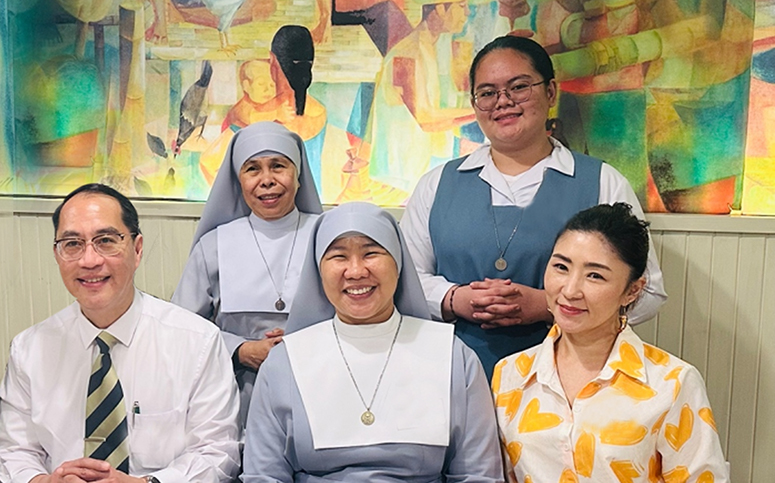
It is presented once more by the Equestrian Order of the Holy Sepulchre of Jerusalem and the Missionary Sisters of the Holy Face of Jesus, celebrating half a century of their collaboration.
A lecture on the Shroud is to be delivered on Oct. 2 by Sindonology expert Fr. Joseph Spence, FFM, a Catholic priest and professor from the Pontifical Athenaeum Regina Apostolorum in Rome. The exhibit is open to the public from Oct 3 to. 16.

The equestrian order of the holy sepulchre of Jerusalem
Evelyn Mate, a dame of the Equestrian Order of the Holy Sepulchre of Jerusalem, expresses her joy that the exhibition is once more sponsored by the Order, as it was in 1976 under the leadership of Architect Jose Maria Zaragoza.
Dr. Rowen Yolo, also a knight of the Order, explains the history of the Order and how it has been in existence for 73 years in the Philippines. Founded by Godfrey de Bouillon in the 11th century together with crusaders who provided safety for pilgrims traveling to the Holy Land, they also protected holy sites, particularly the Church of the Holy Sepulchre where Jesus was crucified, died, and buried.
Dame Evelyn adds that today, their mission is to support projects that sustain Christianity in the Holy Land through spiritual and financial means, mentioning they also regularly have recollections and pilgrimages to holy places, locally and abroad.
Cardinal Fernando Filoni is the Grand Master who has oversight over the order from its main office in Rome. Appointed by then Pope Francis in 2019 after serving as the Prefect of the Congregation for Evangelization of Peoples (a position now occupied by our own Cardinal Luis Antonio Tagle), the Pope is the Order’s Supreme Sovereign.
Rowena Tomeldan shared how one can become a member through recommendations by parish priests or other members. There are 30,000 members worldwide, 131 of whom are from the Philippines.
Dame Rowena fondly recalls how she joined the Order some years ago. She attended an investiture to support a friend and moments later found herself recruited. Really nothing happens by chance as her ways completely match their charism.
Though no longer mounting horses, by tradition members are given a military rank. Dame Nikki Tang says that, currently, the EOHSJ Lieutenant for the Philippines is Helen Castro Limcaoco, a post previously held by Ambassador Jesus Tambunting and Ambassador Jose Cuisia, Jr.
Features of the exhibit
The shroud replica measuring 13.6 x 3.7 feet will be accompanied by authenticated replicas of the Veil of Manoppello and the Veil of Veronica, both bearing the image of the face of Christ. A relic and a representation of the Sudarium of Oviedo, Spain, stained with Christ’s blood, will also be on view.
The Arma Christi reliquary is a unique collection of 13 relics from the birth until the Passion and death of Jesus, including relics of the 12 apostles and 46 other saints—a total of 71 relics. By decree of the Apostolic Penitentiary, the faithful may obtain plenary indulgence through the Arma Christi together with the fulfillment of other conditions.
Of particular note are relics of the Passion of Christ such as the pillar of flagellation, the crown of thorns, replica, and relic of the nails in the crucifixion, holy cross and holy lance among others—all connected directly to the markings seen in the Shroud.
Finally, a three-dimensional image of the man in the Shroud carved out of baticulin wood by Reden Ballesteros was commissioned by the Equestrian Order of Holy Sepulchre of Jerusalem for this specific exhibit, requested by Sister Claudine from Dame Helen.
Whether spiritual, scientific, historical, or educational, the exhibit will definitely leave a mark on its visitors.
* * *
Reservations to view the 2026 Exhibit may be made at the following sign-up platform: https://www.signupgenius.com/go/10C0445A4A929A1FCCE9-64521153-shroud

WATCH: Discovering Vietnam in three days
June 9, 2026
WATCH: Pixar Summer Fest adventure at Hong Kong Disneyland
August 10, 2026
WATCH: Do you still believe in marriage? (Generations Ep. 17)
August 19, 2026