Cleopatra: The it girl with rizz and slay energy
Even after more than two millennia after Cleopatra’s reign as the last Queen of the Ptolemaic Kingdom of Egypt, few figures loom as large or as enigmatic, evoking images of beauty, power and political intrigue. She remains a compelling figure in art, fashion, design, and pop culture—an “it girl” way ahead of her time, a feminist with the “slay” energy to protect her kingdom even if she had been unfairly branded by detractors as nothing but a seductress who lured Julius Caesar and Mark Antony.
This eroticized image has been a common depiction through the centuries. Just take a look at Juan Luna’s painting of her which won a silver medal at the National Exposition of Fine Arts in Madrid: lying in her bed, you can see her bare breasts beneath a transparent dress.
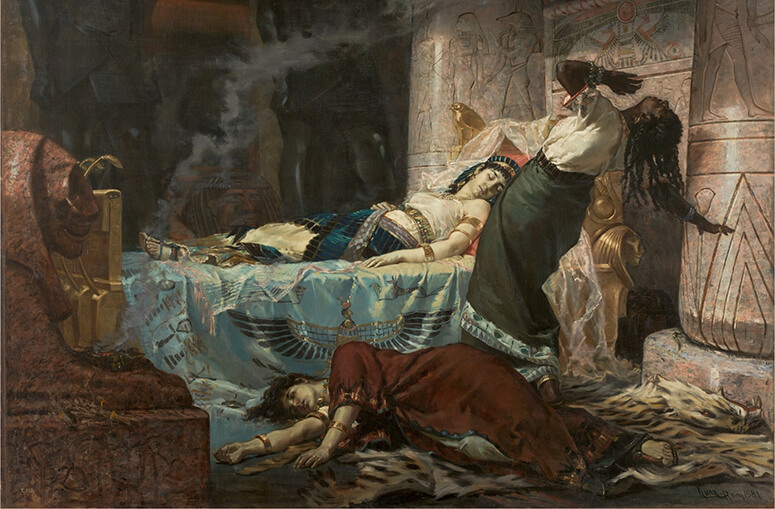
This stereotype has its roots in Rome where she was considered an enemy of rationality and moral order, all part of the propaganda designed to discredit her as enemies maneuvered to grab power.
In the 19th century, Orientalist painters cast her as an erotic figure of decadence. In the 20th century, Hollywood couldn’t get enough of her as played by Theda Bara, Claudette Colbert, Vivien Leigh, Sophia Loren, and Monica Bellucci.
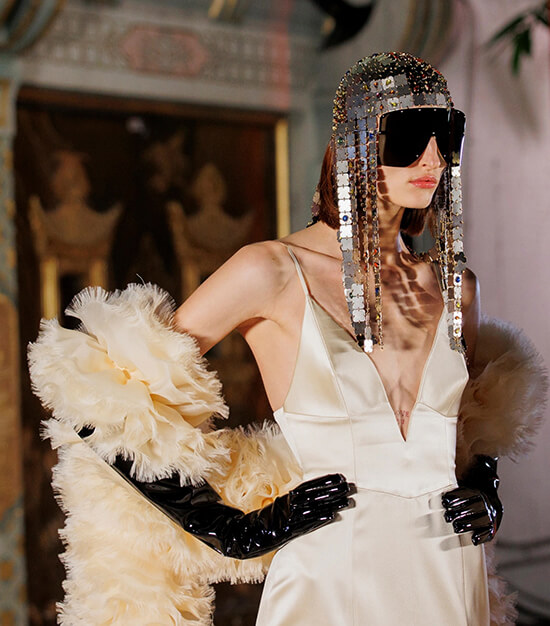
Elizabeth Taylor’s Cleopatra in the 1963 film is the most iconic: Dressed in stunning royal robes and headdresses, she had the most dramatic entrances, from meeting Caesar by being rolled out of a carpet to her magnificent procession into Egypt, a massive logistical feat requiring 20,000 extras, extensive costuming, massive set constructions, the flying in of palm trees from California, and Taylor’s 24k gold thread-embroidered costume and jewelry. It was easily one of the most expensive and visually spectacular sequences of all time.
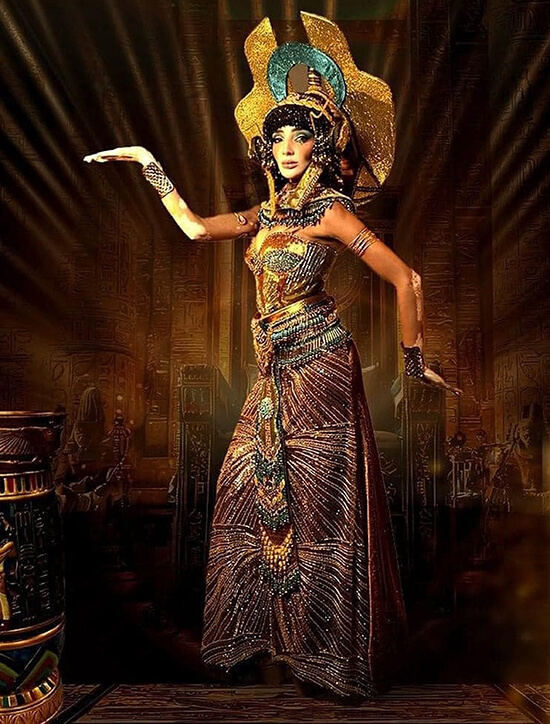
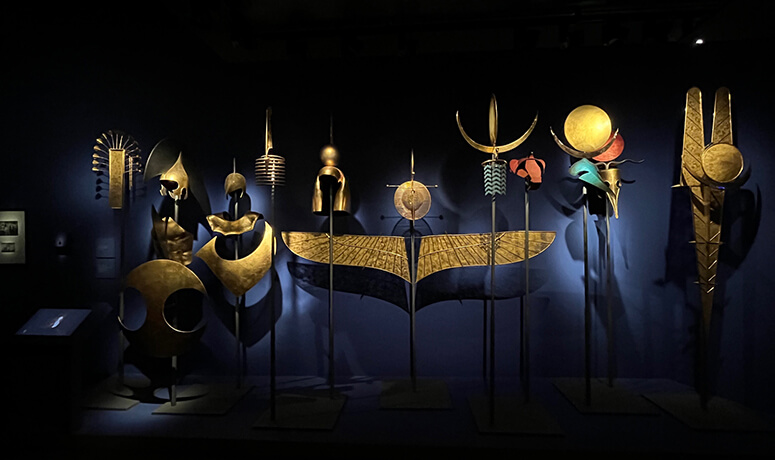
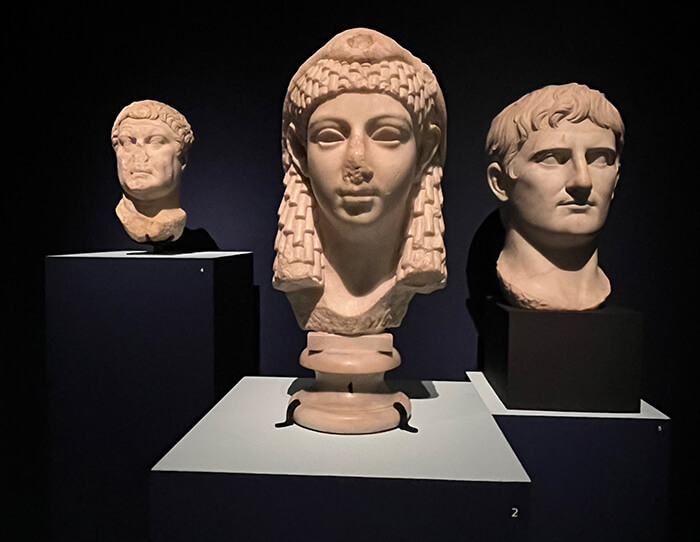
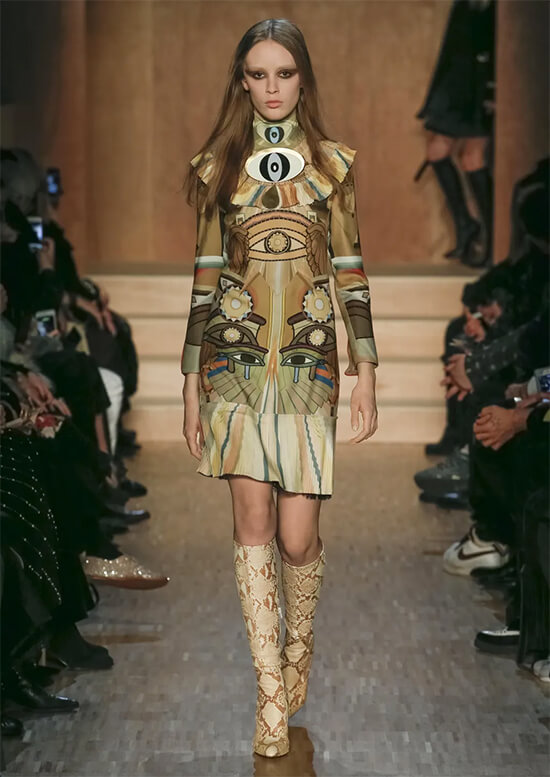
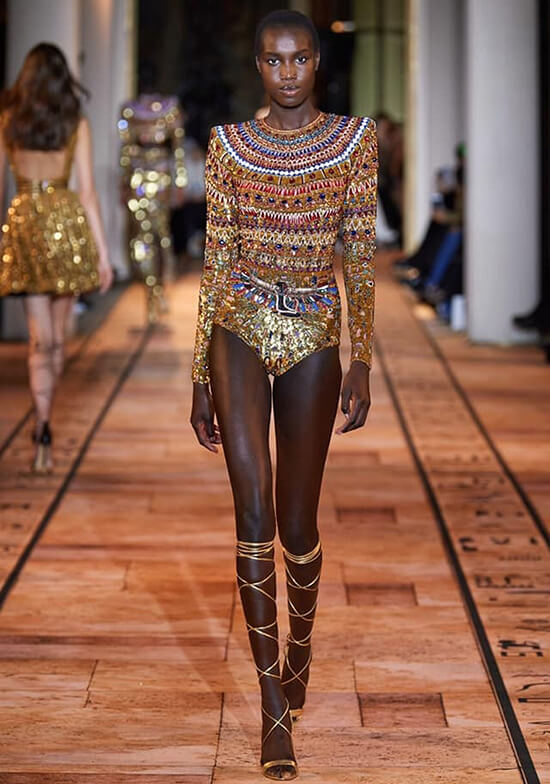
With so much myth and fantasy surrounding her, the Institut de Monde Arabe in Paris decided to mount an exhibit, “La Mystere de Cléopâtre,” to shed light on who she really was, through archeological artifacts, books, music, paintings, theater, cinema, costumes, advertisements, and contemporary art.
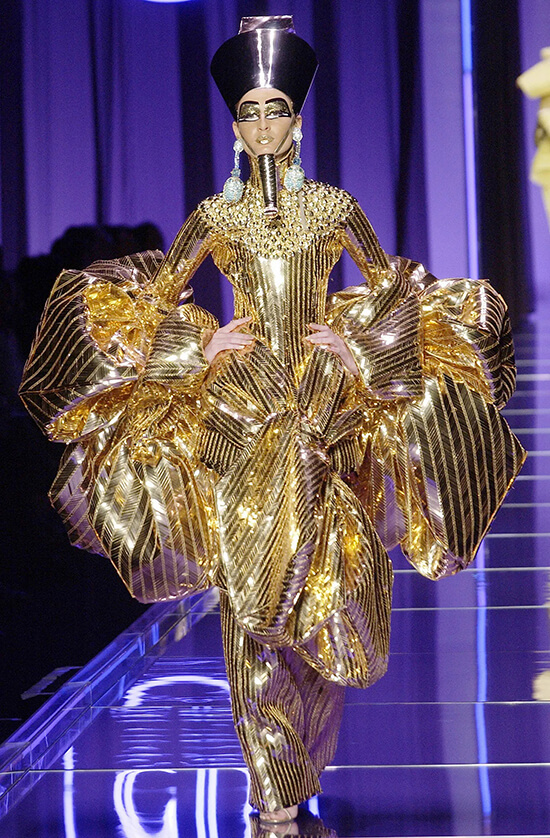
Cleopatra no doubt had a lot of “rizz,” which neither Caesar nor Antony could resist since “none could be compared with her or see her without being struck by the attraction of her person, the charm of her conversation, and the character that attended all she said or did which was bewitching... it was a pleasure just to hear the sound of her voice with which she could pass from one language to another,” wrote the biographer Plutarch.

But she was also a slay queen: a shrewd politician, a patron of arts and sciences, and a fierce defender of her kingdom, qualities which the exhibit brings to light, instead of the usual portrayals that emphasize her physical appearance and romantic relationships.
“In our approach to promote women of power, it seemed natural for us to highlight Cleopatra’s role as a woman, queen and head of state who for long had been shadowed by men of power,” says exhibit co-curator Iman Moinzadeh.

Cleopatra’s sophistication could be traced to her roots: Born in Alexandria in 69 BC, she was both Greek and Egyptian—a descendant of the Ptolemaic dynasty that ruled Egypt since 305 BC. Alexandria was cosmopolitan, a tolerant regime where multiple religions coexisted and ethnic groups governed themselves through their own courts.
Even the political structure was modern enough to have men and women ruling together, exemplified by Cleopatra and her brother, united in a symbolic sibling marriage, until she displaced him with Caesar’s support. When Caesar was assassinated, she allied herself with Antony, continuing the co-sovereign tradition but within the Roman political framework.
When Octavian tried to consolidate Rome under his rule, however, the co-rulers resisted and eventually committed suicide when they were defeated by Octavian’s army. An enduring image is Cleopatra’s ending her life with a poisonous snake instead of submitting to Octavian, making her a symbol of freedom and defiance.
Her death was also “the end of a tolerant, mixed way of governing, replaced by a paternalistic male government which would spread throughout Europe all the way to General Charles De Gaulle,” explains exhibit co-curator Claude Mollard.
A key part of the show features texts from Roman and Arabic books that illustrate how Cleopatra’s image has been shaped through time. Roman poets including Horace, Virgil, and Propertius celebrated her defeat, calling her a “whore queen” who usurped masculine authority. Arabic thinkers like historian Ibn Abd al-Hakam, on the other hand, described her as “a builder queen concerned with ensuring the safety and well-being of her people.”

Coins, signed papyri, ritual objects, and fragments of ancient narrative restore Cleopatra’s image as an astute strategist who instituted complex monetary reforms, restructured the bureaucracy, and reclaimed territories lost under her weak father’s rule. The coins that she minted were tools of political communication, circulating her face, her sovereignty, “her version of state media curated to assert control over her image and to reach every social stratum,” says Moinzadeh.
This alternative Cleopatra found renewed relevance in early 20th century Egypt with the Pharaonist nationalist movement that reclaimed ancient heritage from colonial narratives. When Howard Carter discovered the Tutankhamun tomb in 1922, Egyptians started asking whose history this was and who had the right to represent it, bringing Cleopatra into the movement as theater, poetry and music flourished around her. Even the romantic links with Caesar and Antony were reinterpreted as strategic alliances made in order to protect her people.
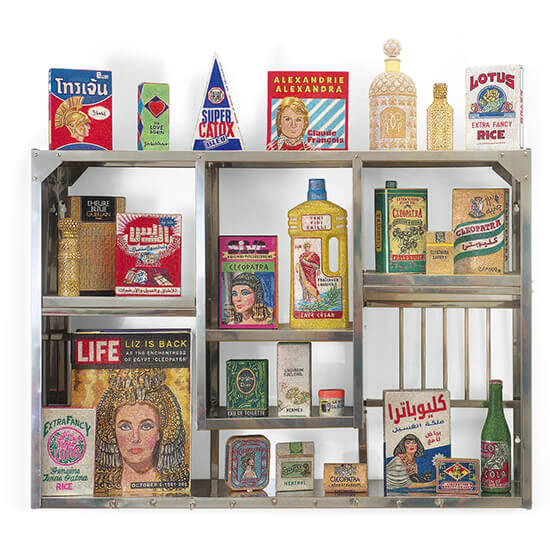
Cleopatra’s image still circulates in coins, stamps, and monuments but as a distinctly Egyptian one instead of being filtered through a Western lens. Monzadeh concludes that “she is no longer the exotic queen of foreign fantasy. She belongs again to a national, postcolonial narrative.”
The exhibit ends with Cleopatra’s Chair—a bronze mosaic throne—a most apt piece from 1994 by American-French artist Barbara Chase-Riboud. Leaving it empty without the queen’s likeness, the artist seems to be giving us space, after all the myths and appropriations, to project who and what Cleopatra is for us today.