

REVIEW: ‘The Drama’ is repulsively half-funny Freudian dramedy
Warning: This review contains spoilers.
Something is definitely off between the central, soon-to-wed couple in Norwegian writer-director Kristoffer Borgli’s absurdist Freudian dramedy The Drama, if the movie’s opening “meet-cute” is any indication.
In a bright, spacious café, Emma (Zendaya) reads a fictional novel titled The Damage with one earbud in her left ear. When she momentarily leaves her spot by the window, Charlie (Robert Pattinson), who’s been scanning her from across the room, stalkingly rushes to take a photo of the book lying face down on the table and looks up the title online. Taking a page out of the performative male’s playbook, he makes his move from behind her, trying to strike up a conversation by pretending to have read and loved the novel. All that yapping for nothing since Emma’s deaf in the other ear, but she lets it pass and politely asks him to start over, blissfully unaware of the faux sweet gesture.
This insistence on a neat do-over becomes a default for two successful people, a literary editor and an art curator, who can’t communicate with each other and perhaps only ever connect in superficial terms. It also becomes a safe device for a filmmaker who proves remarkably incurious about illuminating the personhood of his protagonists, much less approaching them on a psychological level, given the Ari Aster-produced film’s Freudian sensibility. By this measure, Borgli is a pseudointellectual and provocateur who lacks the proper toolset to take on the film’s charged subject matter.
Charlie, it turns out, is reciting the sketchy moment from memory as he comes up with his wedding speech alongside his best man, Mike (Mamoudou Athie). He recalls this among other firsts: first kiss, first date, first sex. He’s trying to paint a picture of the woman he’s about to marry and spend the rest of his life with in less than a week. But as their big day approaches and as the film unravels its sparse narrative, one can’t seem to find real substance in the lives of these characters past the obvious and perfunctory.

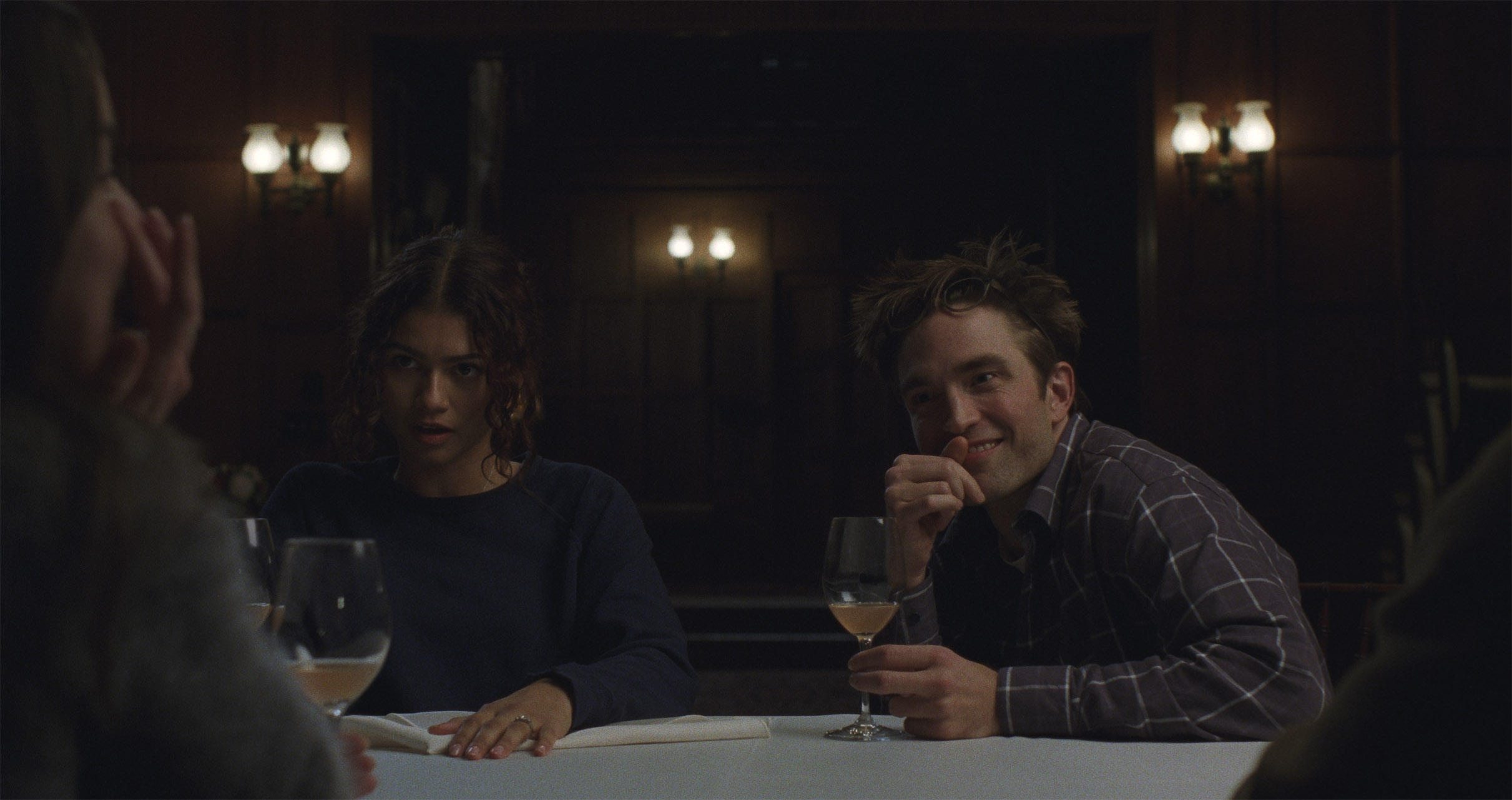
If anything, Borgli delivers his half-funny, hardly useful insight through the emotional whiplash that follows on account of a shocking last-minute revelation: At a wine tasting, in what seems like a millennial version of the “We Listen And We Don’t Judge” trend that’s gone awfully awry, Charlie and Emma and fellow couple Mike and Rachel (Alana Haim) each take turns sharing the worst thing they’ve ever done, picking up from a conversation about a DJ the engaged couple hired for their wedding but later caught using heroin on the streets. Leaving a boy locked in a closet and cyberbullying a fellow teenager are some of the cruel contenders but perhaps not as horrible as planning a high school mass shooting at age 15, just as Emma had done so. Disgusted and in utter disbelief, the people at the table did not listen and did judge her for something she didn’t actually commit.
Rachel, in particular, readily lambasts Emma, citing a cousin left paralyzed by a traumatic incident of gun violence. (Haim is perfectly cast as the hypocritical woke friend with an iPhone face.) Charlie, for his part, soon begins to self-destruct, wondering about the notion of radical acceptance in the context of his love for Emma. Is she really a woman of empathy as his speech thoughtfully claims? Is it truly possible to unlearn such violent thinking and tendency?
As pulpy as its premise appears to be, The Drama is less interested in examining the larger political implications of Charlie’s anxiety and that of Rachel than it is in servicing the ridiculousness of the wedding-day errands, from dealing with a strict dance instructor to catering to the whims of a prying photographer, to generate more punchlines that are repulsively effective but rather short-lived.
Historically, over 50% of mass shooters are White and about 95% are male, according to recent data from the Rockefeller Institute of Government. By projecting these themes onto a Black female protagonist without addressing the historical or social implications of that image, the film leaves significant questions about race and public perception largely unexamined.
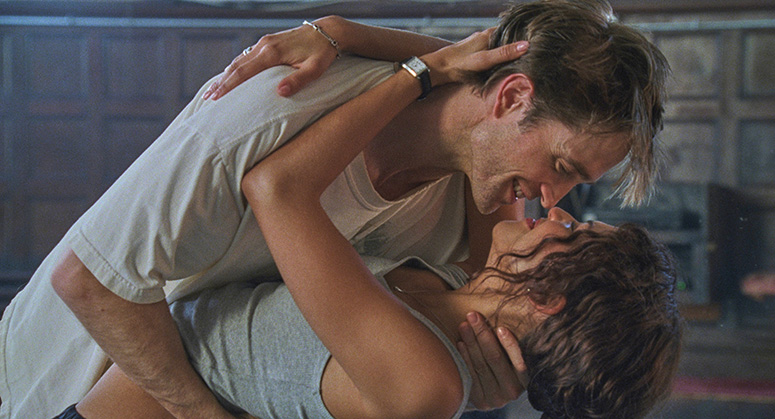
Instead, what the director offers the audience is a backstory of the young, bullied, and depressed Emma (played by Jordyn Curet), a backstory that is implausibly explored at a distance and only as a device to ennoble the film’s hijinks. Daniel Pemberton’s eerily layered score sounds the alarm from the outset, while Borgli and Joshua Raymond Lee’s edit at times evokes a home video aesthetic but oftentimes oscillates between timelines, between the real and the imagined, including a rather creepy moment in which adult Charlie and teenage Emma are seen in an affectionate embrace.
Considering the controversial “May-December romance” the filmmaker had in his late 20s with a 16-year-old high school student—which he defended and detailed, even referencing Woody Allen, in a Norwegian magazine 14 years ago—one might ask, “Is this Borgli hallucinating his predatory fetish?” A real-life drama that will surely factor into how the onscreen drama will be read. Something old that decidedly turns into something new following the film’s release.
The trouble with The Drama is that its observations about relationships, dark secrets, and gun violence are simultaneously fell and facile. Zendaya and Pattinson are some of the most exciting working actors we have today, two undeniable talents that can pretty much carry any movie regardless of the material’s actual quality or the depth ascribed to their roles. And yet here, they end up primarily schematic, as hollow as the film's own ambitions.

WATCH: Can you still trust someone who betrayed you? (Generations Ep. 22)
September 23, 2026
WATCH: Do you still believe in marriage? (Generations Ep. 17)
August 19, 2026