

What’s the proper way to care for a Barong Tagalog?
From weddings to state events, the Barong Tagalog remains a staple of Filipino formal wear. Yet beyond its embroidered details lies a garment that requires special care.
Discussions on how it should be properly cleaned arose when American dry cleaning business Yale Cleaners posted a video showing how they restored an 80-year-old Barong. In the clip, the formalwear could be seen having a yellowish tint and had visible stains that had built up over time.
To clean it, Yale Cleaners soaked the Barong Tagalog in a sodium perborate bath for an hour before doing an aflon bath. Afterwards, the shirt is hand-rinsed and hung to dry.
However, they noted that the shirt's texture became "wrong," so they decided to rehydrate and dry clean it in a washer, but they stressed that it did not go through the full cycle. They only let it fully saturate before taking it out and placing it in a mesh bag and drying it again.
The process was then completed with careful pressing to restore its final shape.

Since the video noted that the business owner has never worked on the piña fabric before, many social media users criticized the restoration process, pointing out that traditional Barong Tagalogs made from piña are not typically meant to undergo intensive cleaning methods.
"It was supposed to have that lightly yellowish tint. It's supposed to be lightly stiff from cornstarching it before letting it dry. The fabric should have a very, very delicate sheen," one user said.
Another commented, "The amount of bleach and the industrial pummeling that barong Tagalog was subjected to just took 80 years out of the life of that garmen. If you had only looked up what this fabric is supposed to look like, you would have seen that it’s retained its natural color beautifully over time."
What are Barong Tagalogs made of?
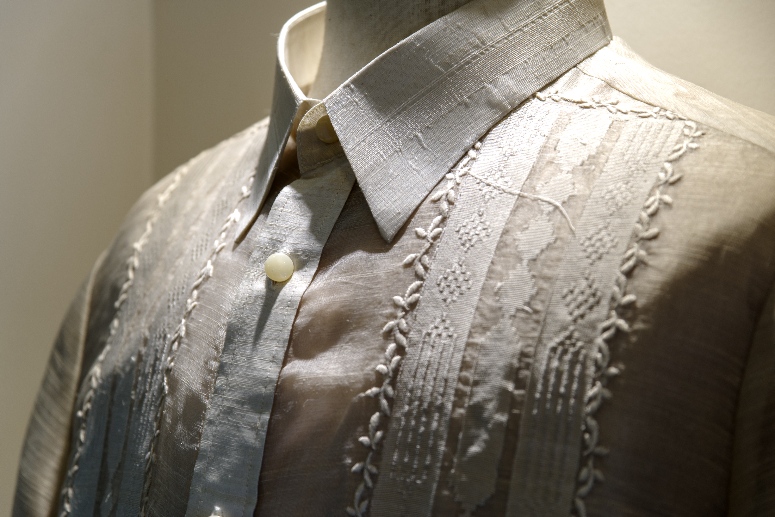
Before we get into the nitty-gritty of how it should be cleaned or preserved, it’s important to understand what gives the Barong Tagalog its unique character in the first place.
According to Heritage Barong, a Laguna-based clothing brand that specializes in making Barong Tagalogs, the formal shirt can be made in a variety of fabrics. The most common one is the piña, which is crafted from the fibers of red Spanish pineapple leaves.
The brand noted that it shows a "yellowish or light champagne-gold hue" and is a "treasured fabric" due to its scarcity and limited availability.
Piña is not to be confused with piña-silk, however, which is handwoven from pineapple and silk fibers. While it also has a yellowish tinge, it is lighter than piña fabric and is widely available in most barong shops throughout the Philippines.
Another handwoven fabric used is abaca-cotton, which is extracted from cotton strands and abaca fibers. Heritage Barong noted that it is "thicker and less transparent than piña fabric."
Cocoon silk can also be used, but it doesn't have the sheen of the piña, and its natural color is off-white. Lastly, some Barong Tagalogs are made using jusi, which is a woven fabric from silk that is less transparent.
Fashion designer Kelvin Morales told PhilSTAR L!fe that upon checking the Yale Cleaners' video, he observed that the material of Barong Tagalog cleaned "actually looks more like silk rather than piña because of its very fine texture."
"Barongs can come in different colors, they don’t necessarily have to be bright white or heavily bleached. Traditional piña barongs usually have a natural ivory or slightly yellow tone, while some modern barongs are dyed or treated depending on the desired finish," he said.
How should Barong Tagalogs be cared for?
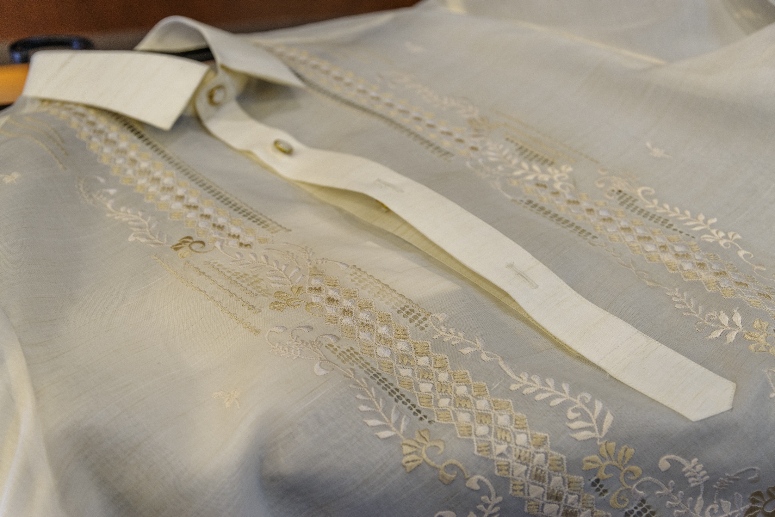
Morales highlighted that the cleaning process depends on the fabric used.
"For natural fibers like piña and silk, I highly recommend delicate handwashing or professional dry cleaning," he said.
"Modern barongs made with polyester sheer materials are generally more durable and can sometimes handle whitening agents if the goal is to achieve a brighter white or off-white color," he added.
RJ Santos of Randolf Clothing, meanwhile, recommended handwashing barongs with mild soap "without wringing the fabric."
"Just soak it in water with soap, then in clean water to rinse," he told L!fe.
While chemicals can be used, Morales emphasized that they should only be in "controlled amounts" as "harsh or excessive chemicals may damage the embroidery or make natural fibers like piña brittle over time." Instead, opt for gentler cleaning methods using mild soap, vinegar, or delicate textile solutions.
"Based on the video, the fabric appears to be silk rather than piña, so making it smoother, softer, or less structured is generally safer for the material," he said.
After washing the barong, Santos recommends air-drying the garment and ironing it.
"Make sure the barong is completely dry before storing it," he said.
To know how to properly care for your Barong Tagalog, it's important to identify the fabric first and consult a textile expert when possible.
"In general, Barongs made from natural fibers don’t need frequent washing, especially if they’re not heavily soiled, since many natural fibers have breathable and naturally antibacterial properties. It’s best to handwash gently with delicate soap, air dry properly, and avoid machine washing if you’re not aware of the textile blends," he advised.

WATCH: Is Gen Z too soft? (Generations Ep. 23)
September 30, 2026
WATCH: LGBTQIA+ people with unlikely professions
June 28, 2026