

All eyes on the peacock in this Singapore exhibit
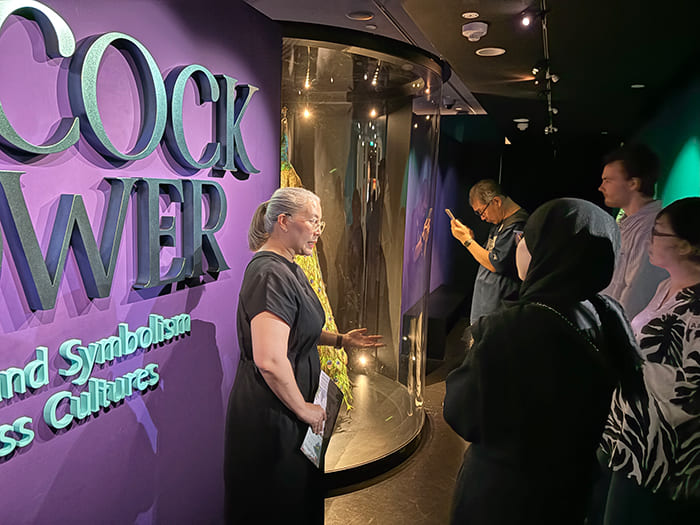
Consider the peacock. In art, peacocks serve as both sacred emblem and decorative flourish. At Singapore’s Peranakan Museum until Aug. 30, Peacock Power: Beauty and Symbolism Across Cultures shows how the bird arises in regional iconography through art, design, and as an emblem of religious deities. It’s a deep dive into the persistent power of the dazzling feathers, recreated in dance festivals, embroidered into regional kebayas, royal wedding tablecloths, furnishings, and even beaded footwear by Puma.
So why the peacock?
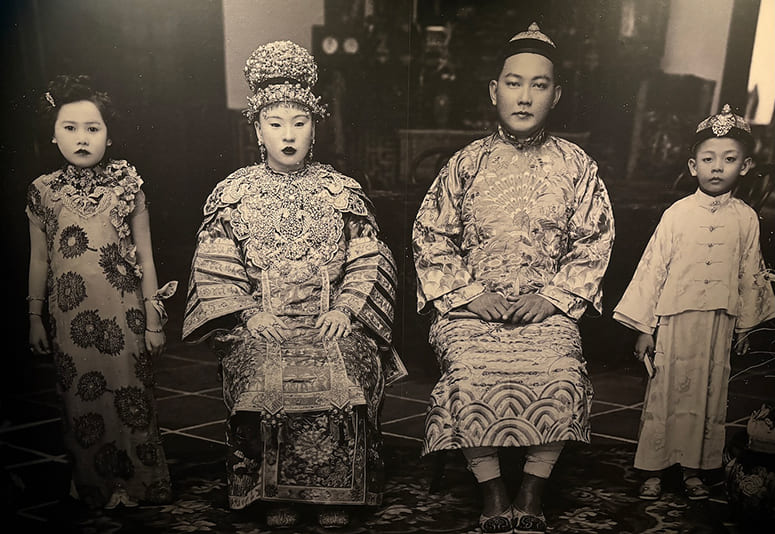
According to Diane Chee, Peranakan Museum curator, “You only have to look at it to kind of understand, purely from an aesthetic perspective. It’s such a majestic bird, and its tailfeathers are so iconic that they have inspired craftsmen, makers, devotees across generations and across cultures.” “Peacock Power” looks at the bird as a symbol of beauty, of rank, power, and status, and finally as a connection to the divine.
And it also plays well at weddings.
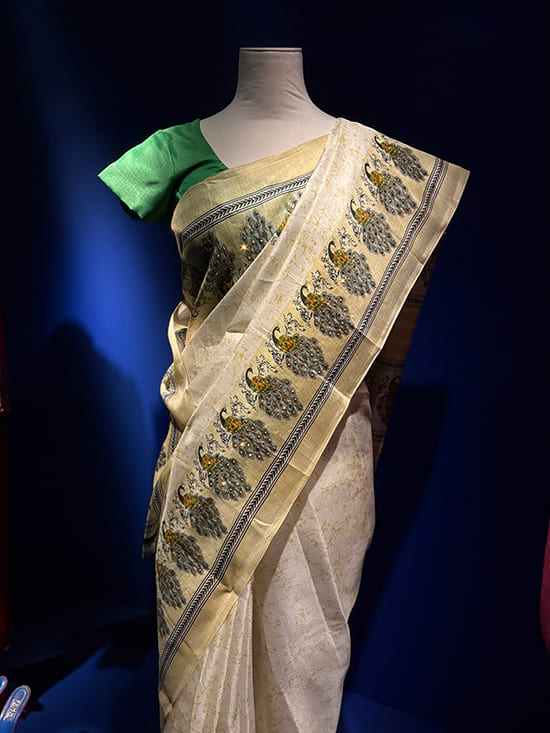
In a feat of art imitating nature’s splendor, we stop before a glass case: inside, a 1920 table cover from Penang, called a choon tok, which would have been used in the wedding chamber of a Peranakan bride and groom. With intricate needlepoint designs including pheasants, insects, and flowers against a turquoise background, its stitching includes a million European glass beads.
CONTINUE READING BELOW

That number is mind-blowing. And it’s typical of the hand-designed wonders on display. And it’s evocative of the peacock’s dazzling visual power worldwide, particularly in Asian cultures.
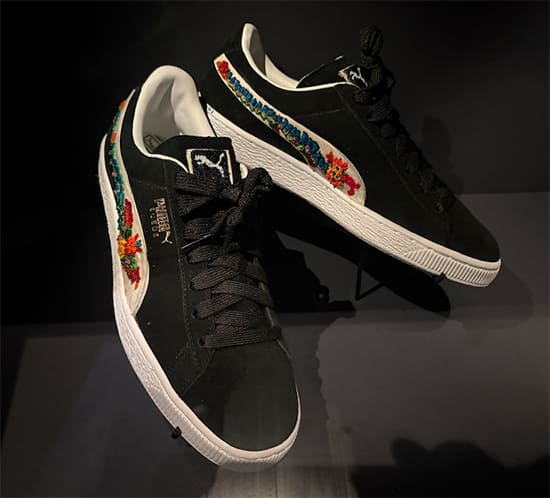
“The peacock appears mostly in relation to weddings,” says Chee, because of the Chinese influence here. But there’s also European influence, as with a diamond-encrusted, golden peacock belt on display with almost 75 carats set, including a five-carat diamond in the center bird with his fine tail open.
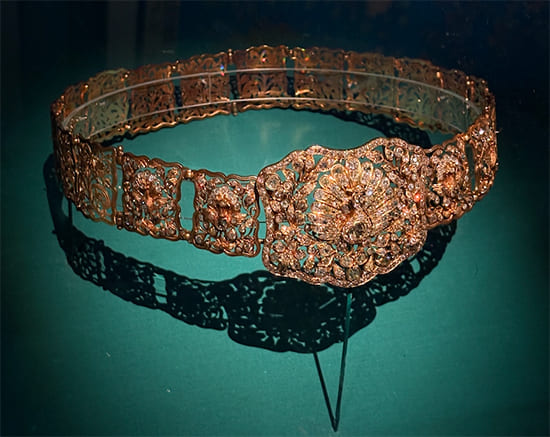
Extravagant jewelry for the brand-new bride was a big tradition as part of her trousseau. “It would have been a form of portable wealth for her as she went into her new married life, but also interestingly, it would have been a very private pleasure for her to wear it, because if you imagine, she puts on her sarong, she puts the belt on, and then she immediately puts her blouse over it—no one would have seen it, it really would have been just for her.”
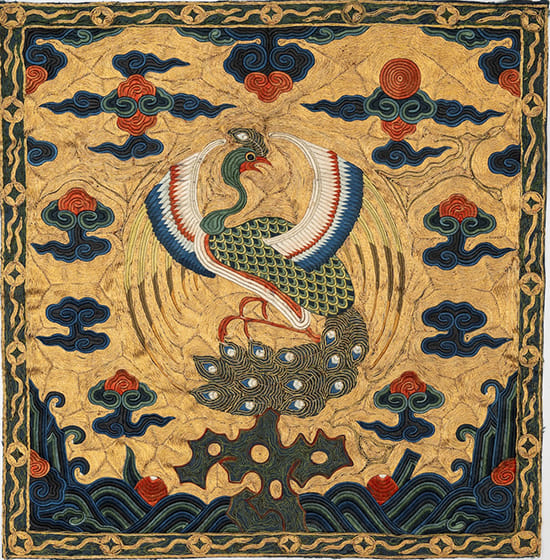
A private extravagance for some, but the peacock also had majestic, almost magical properties: “The peacock feathers and their eyes were symbolic of the rulers’ protection of his people, and the eyes in peacock feathers really symbolized the repelling of evil forces and the attracting of love,” notes Chee.
“The more ‘eyes’ you had on your peacock tails, the higher you were in terms of the emperor’s favor.”
Attraction was the name of the game. To gather the feathers made into courtly and wedding items, attendees would have to wait for the birds to finish their annual mating cycle. The male would pop out its tail feathers as a tool to attract the female peahens, and as soon as the deed was done, his feathers molted. So every year he’d lose the entire train, and the feathers could be gathered up.
Chee leads us through sections on other Asian cultures, such as the Reog rituals of the Dadak Merak in East Java, where participants wear massive peafowl and peacock costumes and stage intricate dances. Good luck, fertility, prosperity, the peacock brought it all.
“We have examples of similar items from Christianity, where the peacock was a symbol of immortality; from Buddhism, where the peacock also appeared on the throne, settled next to deities such as the Buddha; and in Hinduism the peacock is associated with a range of different Hindu deities, and for this exhibition, we focus on one, Kartikeya, son of Shiva and Parvati, and the brother of Lord Ganesha,” says Chee.
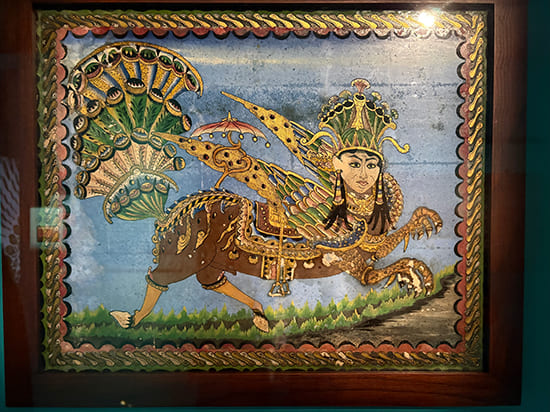
Peacocks emerge in more fanciful designs as chimeric forms in Chinese phoenixes (fenghuang); the simurgh of Persian myth, typically a dog with long tail feathers; the wish-fulfilling cow Kamadhenu of Hindu culture bearing a peacock tail; and even the Buraq of Islamic tradition that carried Muhammad from Mecca to Jerusalem is sometimes depicted as a hybrid of steed and long-tailed bird.
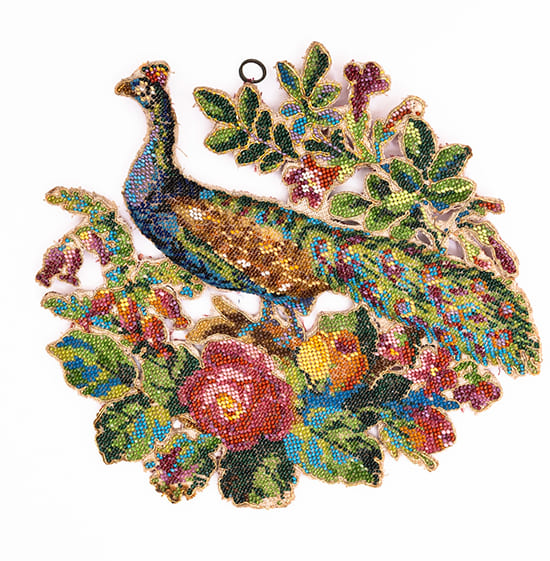
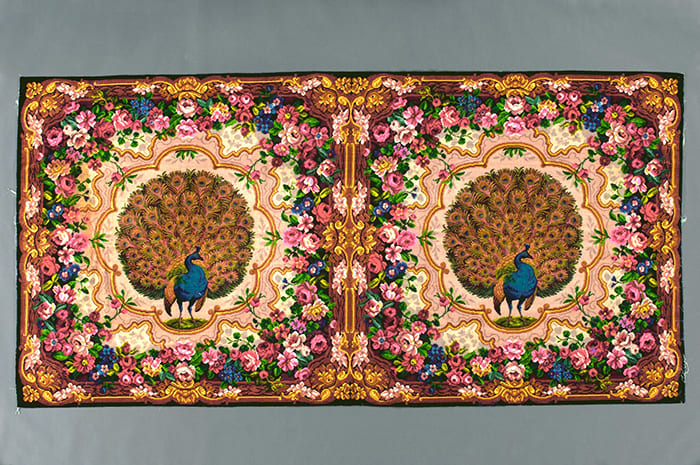
From worship to fashion, we move into a room showing the peacock’s presence across Asian garments. A red resist-dyed cotton baju panjang long jacket from 18th-century India showed the spread of patterned textiles; slippers from Malacca from the 19th century embroidered with velvet, purl, and sequins feature the majestic bird; scarves, sarongs and kebayas from the 20th century highlight the place that peacock style held in Peranakan culture. By that time, England and Scotland’s textile mills were introducing mass-produced carpets and peacock patterns into Peranakan households.
We finish the exhibit with an eye-popping holographic display of peacocks performing a mating ritual (great spot for selfies).
“Peacock Power,” just part of the overall splendor of the Peranakan Museum, is an informative look at the power of a living creature to shape culture, myth, and aesthetic tastes over centuries.

WATCH: How to experience Bangkok and Kanchanaburi in one trip
October 21, 2026