

‘Am I not here?’ Our Lady of Guadalupe comes to us
Ever since Our Lady appeared to Juan Diego in Mexico in 1531, devotion to her has spanned the globe—with a remarkably strong and enduring presence in the Philippines.
I had the opportunity to visit Mexico, where I heard Mass at the new Basilica—a modern, circular, tent-like structure that offers an unobstructed view of the tilma.
A moving walkway was designed to efficiently manage the massive crowds of pilgrims—some 18 to 20 million each year. Once you step on it, it moves slowly, allowing you to view the tilma for a few precious seconds before you step off again. Wanting a closer look, I went around several times. Mexico was celebrating its national day, and a huge flag was draped across the tilma. Even so, it was a gripping moment for me, knowing I had seen the tilma, even if we were not allowed to touch it.
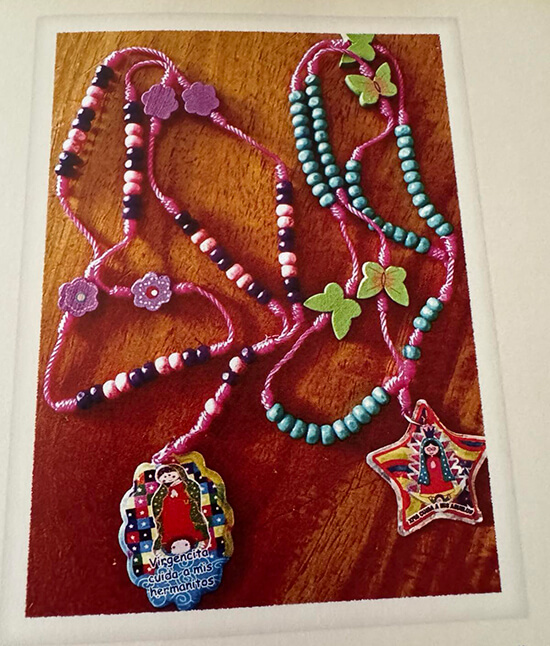
At the tienda de recuerdos, the Basilica’s souvenir shop, I found rosaries made from jazmín chico, the buds of sweet-smelling jasmine flowers. There were also bright, fiesta-colored rosaries for children, with the prayer: “Virgencita, cuida a mis hermanitos” (Little Virgin, take care of my little brothers and sisters).
Our family has prayed to Our Lady of Guadalupe through many trials and transitions—most recently when we laid my sister, Estie, to rest at the age of 95. My niece placed a blessed replica of the tilma inside the casket, bringing comfort and calm to us and to all who came to offer condolences. To me, the tilma is a tangible “relic” one can carry, a source of reassurance in the nearness and presence of Our Lady. Her image leaves a lasting enrichment of faith.
Here is some good news: the image of Our Lady of Guadalupe is coming to the Philippines. It will visit some 54 cathedrals and major shrines across Mindanao, the Visayas, and Luzon before being permanently installed at the Manila Cathedral in Intramuros.
CONTINUE READING BELOW

Why is the image coming to the Philippines?
The visit forms part of a global pilgrimage leading up to the 500th anniversary of the Marian apparitions at Tepeyac, Mexico, in 1531.
It is also included in the Novena Intercontinental Guadalupana (2025–2031), a devotional journey uniting churches across continents in preparation for this historic celebration. The image is set to arrive on June 13, with the pilgrimage officially beginning on June 20 in Zamboanga. From there, it will travel across Mindanao, followed by the Visayas and Luzon, continuing until Dec. 10. In each diocese or shrine, the image will stay for three days and two nights.
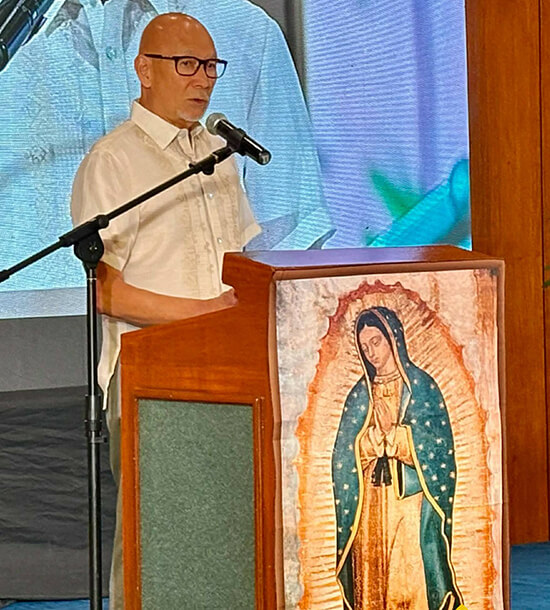
The traveling image itself is a replica of the tilma worn by San Juan Diego, upon which the image of Our Lady was miraculously imprinted. This particular replica is regarded as a second-class relic, having been touched to the original tilma displayed in the Basilica in Mexico. Alongside it are other devotional elements blessed by Monsignor Efrain Hernandez Diaz, rector of the Basilica.
These include two digital reproductions of the original tilma of Our Lady of Guadalupe, an image of San Juan Diego, and a hyper-realistic, life-size sculpture of the Virgin Mary created by Mexican artist Jorge Ismael Rodriguez. These displays will be accompanied by original music and reflections.

The pilgrimage is made possible through the efforts of several key facilitators: Ernest L. Escaler, chair of the Guadalupe Pilgrimage Committee, has led initiatives to make the pilgrimage accessible to Catholics across the Philippines. Rev. Jose Colin M. Bagaforo, D.D., Bishop of Kidapawan and spiritual director of the pilgrimage, has emphasized the significance of Our Lady’s presence at a time when many Filipinos are facing economic, political, and social challenges at home, as well as turmoil abroad.
Joel Layog of Gourmet Farms, who heads logistics, has outlined the journey across various cathedrals and shrines, including a visit during the 132nd CBCP Plenary Assembly in Ozamiz City. Meanwhile, Justin Pontino, station coordinator of Radyo Katipunan 87.9 FM, has shared plans for a multi-phase digital campaign that will run on social media under @guadalupeph2026 to sustain public interest and devotion.
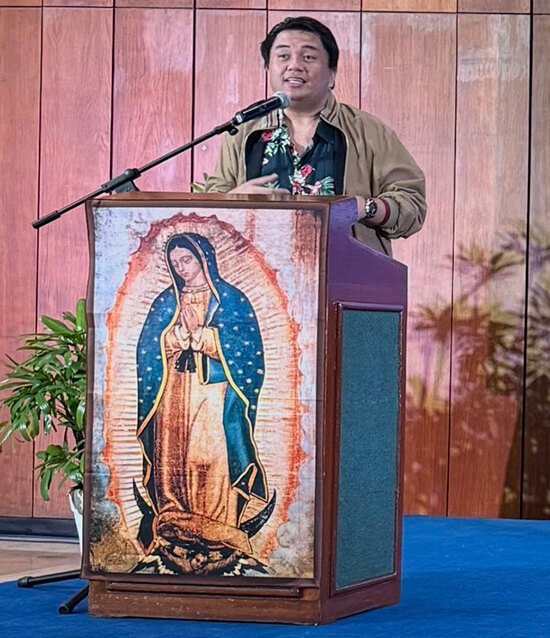
The faithful are invited to break from their daily routines and seek a deeper union with God through Our Lady’s visit to their hometowns. It is an opportunity to experience grace together—through prayer, song, and celebration.
Tilma trivia: Meaning and significance
What does “Guadalupe” mean? The one who crushes the serpent.
What is La Guadalupana? A Spanish title for the Virgin of Guadalupe.
What does the black bow signify? That the Lady is with Child.
Titles of Our Lady of Guadalupe: Our Lady of Guadalupe is honored under several titles that reflect her spiritual significance across different cultures and causes. She is known as the Patroness of Mexico and the Empress of the Americas, underscoring her deep connection to the faithful throughout the continent. She is also venerated as the Heavenly Patroness of the Philippine Islands, highlighting her enduring devotion among Filipino Catholics. In addition, she is recognized as the Patroness of the Unborn and the Patroness of Life, affirming her role as a powerful symbol of the dignity and protection of human life.
Her most famous words: “Am I not here who am your Mother? Are you not under my shadow and protection?”
How is her feast day on December 12 celebrated? With mariachi music to “wake” the Virgin, followed by special Masses, processions, and the singing of Las Mañanitas.

WATCH: Why is it so hard to make friends? (Generations Ep. 26)
October 21, 2026