

Pigeon impossible
I’ve confessed to being a “raket man,” moonlighting in various ways to augment my income at different stages of my life. I never thought of trading pigeons, though, or racing them for that matter.
Sure, as a boy, I tried to raise chickens from chicks I bought from church vendors who peddled them in brightly colored hues. I thought they were naturally yellow, pink, or blue. Such was the height of my naiveté that it’s no surprise they never had the chance to grow up to become prized fighting cocks (which is why I bought them in the first place, to enter them in tupadas or illegal cockfights).
My childhood friend did try to get me into pigeons, but I lost interest the moment five of his birds literally flew the coop, never to return with a fine feathered friend or two, as he had hoped. That was the last time I invested in any of his moneymaking schemes.
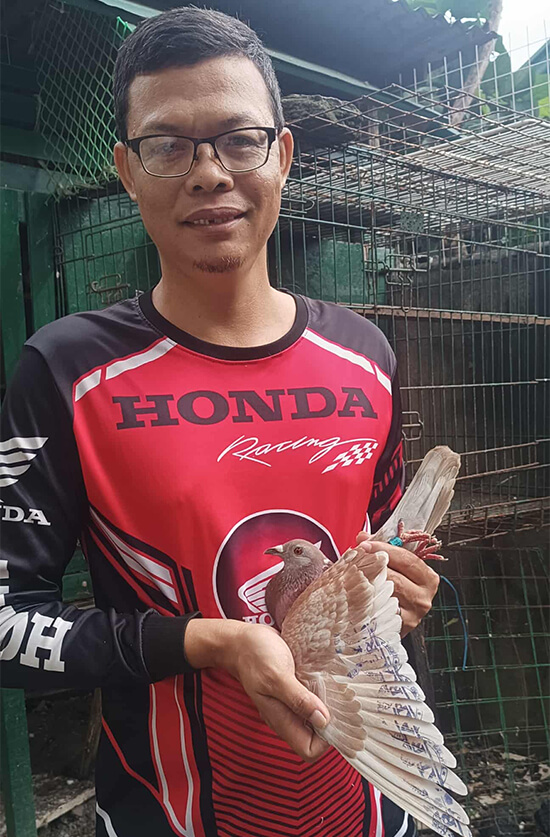
But Emerson Manabat—baker, father of two, and a devoted husband—seems to know what he’s doing. Emerson, who had pigeons for pets when he was growing up, has been breeding them for racing since 2021. Blame it on the pandemic.
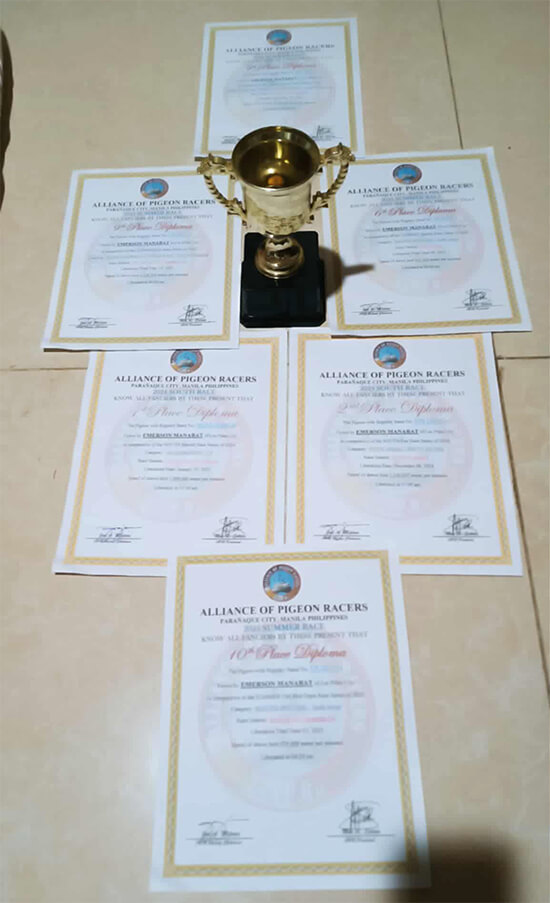
His latest win came just last November at the North Derby Race, a grueling test of speed from Las Piñas City to Santa Ana, Cagayan, a distance of over 650 kilometers. His champion, Miss Red 14, took second place for a prize of P50,000, plus a trophy and certificate.
But before that, let’s get some facts straight.
CONTINUE READING BELOW

Pigeons and doves belong to the same feathery Columbidae clan. Doves are smaller, often rural birds whose very name evokes grace and poetry—symbols of peace and wedded bliss. On the other hand, their city-dwelling cousins, often in drab gray or brown plumage, are streetwise and more likely to hang out in Luneta to gang up on promenaders as they mooch for pandesal or Sky Flakes crumbs than pose for the cameras at weddings.
There is no clear scientific distinction between pigeons and doves. In fact, carrier or homing pigeons are merely a domesticated variety of the “rock dove” species. What sets rock doves apart is their strong, innate homing instinct owing to their uncanny ability to navigate using the Earth’s magnetic fields, the sun, and even familiar landmarks.
Only pigeons are raised for racing—not hawks, not eagles, not ducks, geese or swans. Certainly not turkeys or chickens, which rightfully belong on dinner tables. And those ravens in Game of Thrones? They’re poor and misleading substitutes for pigeons, simply because they lack both the talent and the temperament for something as delicate as delivering coded messages.
Every white dove released at weddings is actually a homing pigeon; otherwise, the pair would never find their way home, which, I suppose wouldn’t bode well for the marriage. Most aficionados would rather see their pigeons racing than rented out as wedding props. After all, flying free is in every bird’s DNA. The sport itself has a long history in the Philippines, dating back to the American colonial period. According to Animal Scene’s Jaime Lim in “Athletes of the Sky,” pigeon racing in the Philippines took off (pun intended) in the mid-1930s, when American G.I.s stationed here brought homing pigeons from the US Signal Corps.
By 1958, serious local breeders had formed the Philippine Homing Pigeon Association. Fast forward to today, and Emerson finds himself affiliated with the Alliance of Pigeon Racers, whose organized contests mean serious winnings. Lately, the APR has been dangling P1 million purses to racers. Right now, Emerson’s birds are preparing for the South Race, a.k.a. the MacArthur Race, which will require the pigeons to fly all the way to the Municipality of MacArthur in Leyte. If this were human athletics, it would be a marathon, not a sprint. The time of the fastest bird is tracked through an RFID sticker.
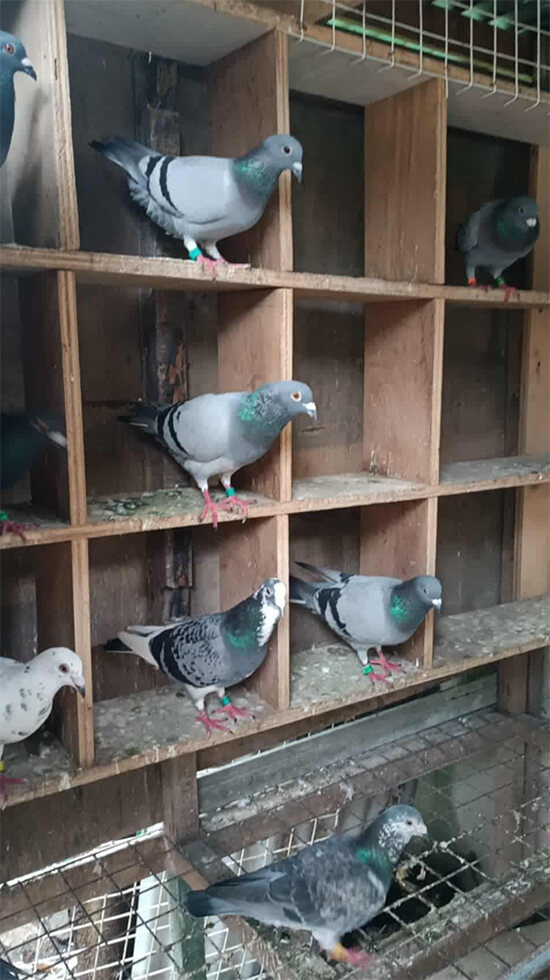
In this race, the birds face extreme heat, headwinds, sea crossings, natural predators, and the occasional “birdnapping” (yes, there are pigeons that are literally plucked from the sky, never to return, like Gen. MacArthur himself). Out of a thousand racers, only a handful make it back. Think The Hunger Games, but airborne and with real pigeons (not fictional mockingjays) instead of crossbows. For the finishers, every entry in the “superset” shares in the P1 million pot, with P100,000 going to the fastest flyer.
A lost bird means more than losing the contest; it’s a loss of investment. Common breeders with respectable pedigree and track record run for P5,000-P10,000 each. Feeding them isn’t cheap either. Emerson uses BBC Endurance Flyer Mix or Supreme Breeder Mix, with a 25-kilo sack costing P1,300—enough to feed 30 birds for about three weeks.
Of course, every enthusiast has a secret. Emerson’s is his own probiotic cocktail of lemongrass, ginger, turmeric, onion, banana, carrots, moringa, oregano, Yakult, honey, and molasses that he also sells under the label ENM Probiotics and ENM Natural All in One.
It’s said to be a natural antibiotic, antibacterial, antioxidant, and anti-inflammatory; helps cleanse and flush out toxins; boosts immunity, metabolism, and digestion; promotes gut health; prevents the growth of harmful bacteria; strengthens the stomach lining; and is beneficial not only for birds but for other animals as well. His birds are winning, so he must be onto something here.
And, perhaps, like Emerson’s well-trained racers, we all have a bit of that homing instinct, an inner compass that leads us back to where we love, no matter how far we stray, As Elton John sang, “Turn me loose from your hands, let me fly to distant lands.” Here’s hoping every Skyline Pigeon finds its way home to the loft, fast.
