

How the past and present converse in ‘Cinemartyrs’
Since at least 2005, experimental filmmaker Sari Dalena has conceived Cinemartyrs like a mother would a child. After countless rejections and revisions, 2025 is just about the perfect time for its delivery.
“The 20 years of waiting is a healing process,” Sari says to Young STAR over video call. “But at the same time, marami palang elements na kailangang mag-align.”
And the stars did align as Sari’s grit bore her the Best Director award in this year’s Cinemalaya Film Festival, two decades after she first pitched her initial concept for the festival’s inaugural year. Cinemartyrs also won the Special Jury Award for Full-Length Film.
Young STAR uncovers the process of making Cinemartyrs with Sari and leading star Nour Hooshmand.
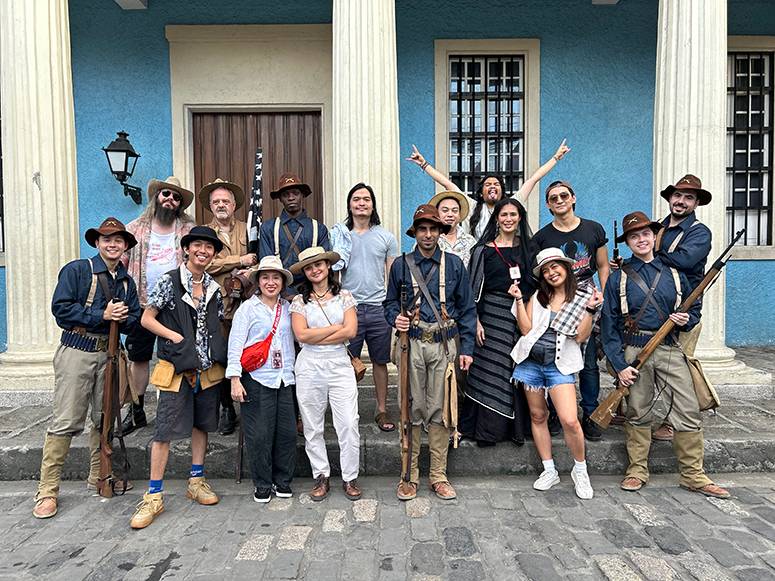
The director, Sari Dalena
Sari based Cinemartyrs on her experience making her first full-length experimental documentary, Memories of a Forgotten War (2001), about the forgotten massacres of the Philippine-American War. But to look at the film as a mere reconstruction of her ordeals is selling it short.
CONTINUE READING BELOW

The decades since, Memories of a Forgotten War provided Dalena with a wealth of reflection. She emphasized the responsibility of the filmmaker in recreating war traumas, since she experienced its consequences and how it can harm the subjects she was supposed to serve. This guilt is foregrounded in Cinemartyrs.
“Reckoning is a heavy word,” Sari muses.
She reaffirms, however, her resolve in conversing with history through film. “‘Yung paglabas ng pelikula ngayon, may kinalaman din siya sa nangyayari sa Gaza,” Sari says. “The genocide is mirroring. I wanna amplify that the horrors of war are happening again and again and again.”
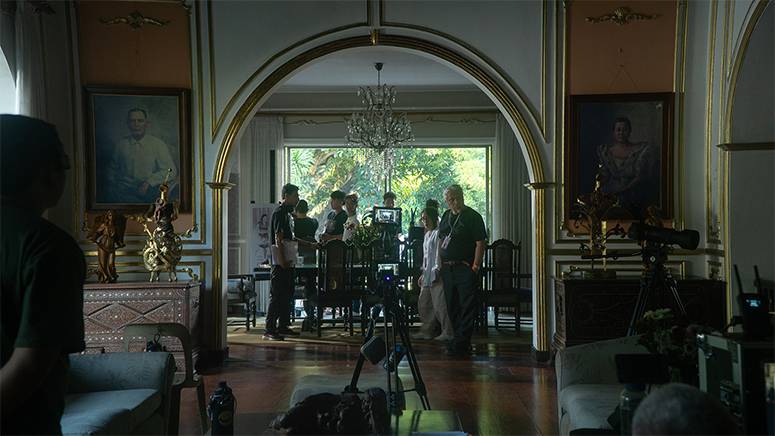
Ricky Lee’s scriptwriting workshop back in 2017 helped her shape the film. But a major breakthrough happened during the COVID-19 pandemic when film curator and archivist Teddy Co gave Sari a cassette tape for Christmas, containing an interview with pioneering Filipina filmmaker Carmen Concha. Co asked her to reintroduce Concha to the current generation; hence, Cinemartyrs gained another dimension.
Not only would Cinemartyrs contain footage from her documentary, but also archived footage from films made by Filipina stalwarts like Concha, Consuelo Osorio, and Susana de Guzman. It would not only be about the search for forgotten massacres, but also the search for forgotten women. Not only about the horrors of war, but also “the horrors of being a woman filmmaker.”
In the film, Sari shows the misogyny she faced trying to be a filmmaker in Manila and Mindanao. The character of Shirin Dalisay is her conduit. The actress who plays her is another breakthrough for the filmmaker: theater actress and one of Tony Mabesa’s last leading stars, Nour Hooshmand.
The star, Nour Hooshmand
Nour was content being a light director for theater until Tony Mabesa urged her to pursue acting during her college years. After starring onstage, Nour eventually ventured onscreen. She had supporting roles in short films and features, but it was Sari who gave Nour her first feature-length lead role.
Nour felt like a student again as she and Sari did one-on-one sessions, getting to know each other for the film. As a sign of dedication, Nour carried a Super 8 camera around while in a lock-in shoot for another project in a mountain in Zambales. There, she made her own documentary.
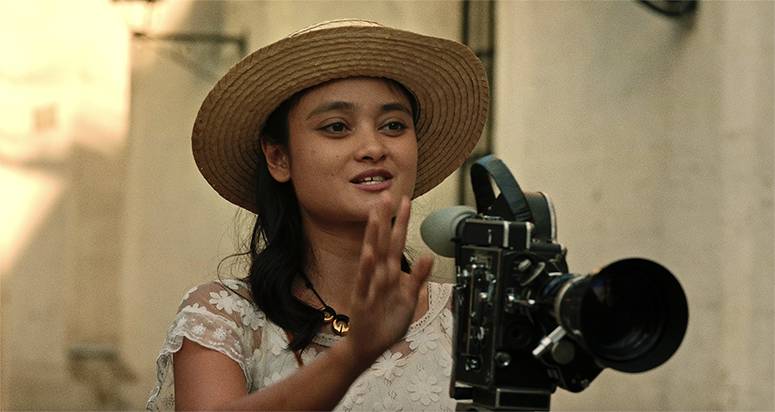
“Natulungan ako n’on na makuha ang sensibilities ng pagiging filmmaker ng analog era,” Nour shares. “Process-oriented kasi dati; ngayon, parang instant na siya.”
Nour knew the character wasn’t just about Sari: “It’s an amalgamation of women filmmakers, so in a sense, ako rin ‘yun.” Considering how Cinemartyrs has layers of textual meaning, Nour stresses the importance of showing her own truth.
“I acknowledge this is completely different from everything else I’ve done kasi nga may heightened responsibility,” Nour adds. “Grinound ko ‘yung sarili ko talaga na ‘wag magpa-carry away sa pressure. Instead, bumalik lang ako sa core values na natutunan ko sa theater na trust the process, trust your collaborators.”
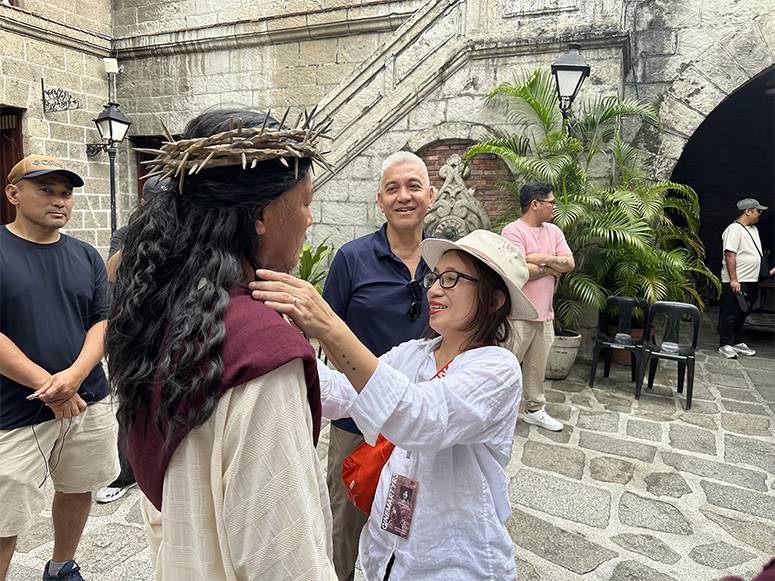
Nour did have a who’s who of collaborators on Cinemartyrs. Award-winning actor Cedrick Juan, who portrays her love interest, also came from the theater. In the film-within-a-film, she was able to “direct” Angel Aquino, who is “the reason for her queerness,” and Lav Diaz, who portrays a Jesus-like figure in a reenactment of a scene from Memories of a Forgotten War. (Diaz told Sari he had a near-death experience filming a project shortly before Cinemartyrs—Sari thought Diaz was joking. It turned out to be true, as Diaz was reported to have vomited blood while filming Magellan due to tuberculosis.)
Nour also had an impromptu discussion with Kidlat Tahimik as the cameras were rolling. This scene acted more like a cinema lesson for her. Nour could only describe the experience as "surreal."
The women filmmakers, Sari and Nour
To Sari, Diaz and Kidlat’s inclusions were more significant than mere cameos. To her generation of independent filmmakers, they are nothing short of heroes. “(Kidlat Tahimik’s quote) ‘Pakinggan mo ang sarili mong duwende’ was sort of our mantra,” says Sari.
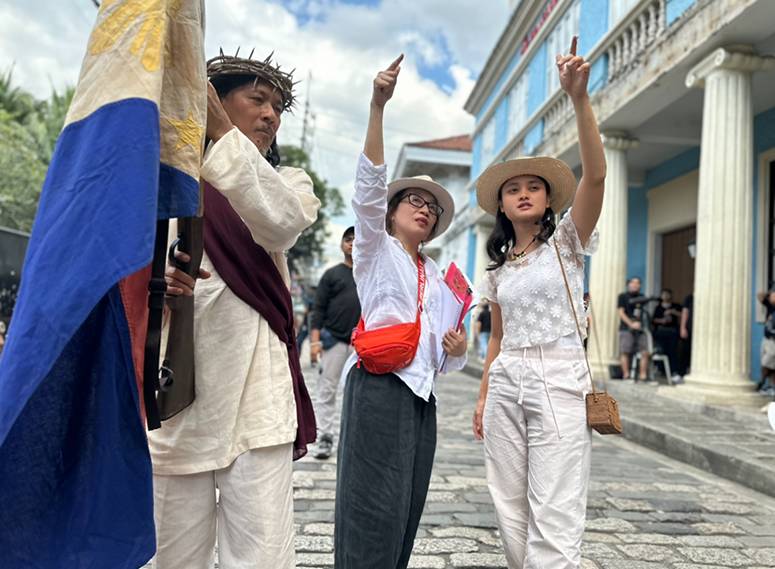
Watching Cinemartyrs now, one gets the sense of watching something unconventional. But this type of filmic experimentation was the norm during the late ‘90s.
There is a scene where Shirin’s mother (played by Racquel Villavicencio) is interviewing the three female stalwarts of pre-war Philippine cinema (all played also by Villevicencio). This scene seems out of place at first, in contrast to the exploration of the Bud Dajo massacre, but Cinemartyrs’ end sequence ties together everything the film wants to tackle: feminism, history, and erasure.
Throughout their interviews, Sari and Nour described the process of making Cinemartyrs as “pagbubuntis” and “pagluluwal.” Nothing encompasses this more than the ending. Simply put, it is a sequence no one could forget.
As Nour, playing Shirin, says, and probably Sari herself in real life as well: “I can make babies, I can make movies, too.”

WATCH: Pixar Summer Fest adventure at Hong Kong Disneyland
August 10, 2026
WATCH: Do you still believe in marriage? (Generations Ep. 17)
August 19, 2026