

What’s your retro?
Venezuelan President Nicolás Maduro knew he would make the news when he and his wife, Cilia Flores, were apprehended by US forces on Jan. 3 to face drug trafficking charges. What he didn’t expect was to become an accidental Nike endorser. After the release of a photo showing him blindfolded and wearing a gray Nike Tech Fleece tracksuit, the product—with the jacket and joggers priced at roughly $260 (P15,431)—quickly sold out in the US and parts of Europe.
The trend is unlikely to subside soon, as it capitalizes on athleisure, a homage to a time when comfort took precedence over fashion. For Gen Z and Gen Alpha, tracksuits have made a huge comeback as outerwear, along with balletcore (flats, tulle skirts, soft pink tones, and wrap cardigans), and futuristic “techwear” or “cybercore” preferred by gamers. They call this style “retro.”

But what’s retro to Jose may not be to James, Gabriel, or Josh. Trends come and go, and all generations have their own versions, often triggered by childhood memories. To put things in perspective, and without necessarily boxing anyone in, anything between 1922 and1982 is already deemed vintage in 2026, while items older than a century are classified as antiques. Retro would fall somewhere between 1982 and 2002.
Boomers, for example, wax nostalgic about mid-century modern furniture, reel-to-reel tapes, vinyl records, colorful appliances, black-and-white TVs, comic books, muscle cars, diners, the boogie, and traditional “grandmacore” accessories like veils, corsets, and bow ties.
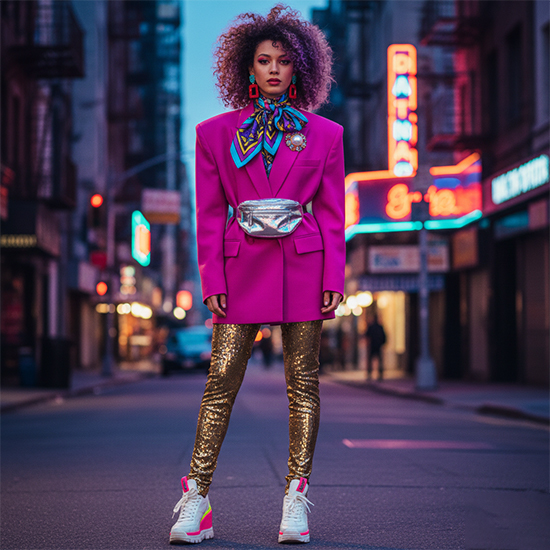
Members of my generation—who transitioned from hippie to disco to new wave, 8-track or Stereo 8 cassettes to CDs, B&W TVs to Betamax and VHS players, and manual typewriters to disc-operated computers—naturally gravitate toward ‘80s maximalism (think shoulder pads, sci-fi outfits, and big hair), guilt-free indulgences, and clubbing with mobiles.
CONTINUE READING BELOW

We grew up with mega-celebrities like Michael Jackson and Prince, Madonna and Cyndi Lauper, Olivia Newton-John and Jane Fonda, U2 and Guns N’ Roses; TV shows celebrating yuppie culture like L.A. Law, Ally McBeal, Moonlighting, thirtysomething; and geek-inspiring films like Back to the Future, Star Wars, E.T. the Extra-Terrestrial, Raiders of the Lost Ark, and Dead Poets Society.
For many of us who courageously experimented with ankle-zipper jeans, Sperry’s topsiders or espadrilles, and long-back tees, disco and afros, bell-bottoms or ultra-miniskirts paired with midriff tops hovered between retro and vintage.
And somewhere along our journey from youth to parenthood, video games entered the picture. In retrospect, we long for the classic arcade games like Pac-Man, Galaga, Donkey Kong, Space Invaders, Frogger, and Centipede. Nintendo’s Family Computer and Game & Watch provided as much addictive entertainment as phone apps today, but probably less than the next-gen consoles that have since defined geekdom.

Geeks and nerds may have started their world domination during our time, but their creativity and innovation certainly benefited our kids. While PSP-nostalgic millennials might feel slighted when their subordinates consider Britney Spears and Animal Crossing retro, they were nurtured in the glorious age of tech, where the digital camera became the essential tool for the first selfies, along with the inception of the internet and social media, iPhones and iPods, and Tamagotchis and Furbies. Students happily traded their encyclopedias for Google, Walkmans for Discmans, floppy disks for USBs, and VHS tapes for VCDs, DVDs, and The Pirate Bay.
Speaking of digital cameras, apparently, kids today are fascinated by these bulky gadgets we thought had become obsolete with the rise of top-of-the-line mobile phone cameras (just like some millennials consider SLR cameras using films hip). Later iterations are not as unwieldy, though. Think GoPro or Charmera.
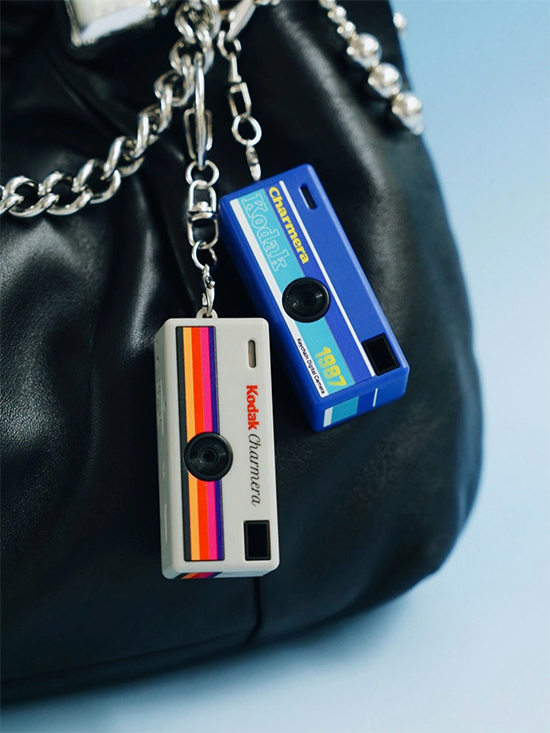
Smaller than a standard AirPods Pro case, weighing less than a pack of gum, and roughly the length of a USB flash drive, a Kodak Charmera keychain digital camera is an absolute charmer. At P2,450-3,500 per blind box set, it’s not exactly cheap anik-anik and may even be considered an attractive nuisance (or theft bait) when dangling from a bag. Still, it’s much cheaper than an entry-level GoPro, which goes for around P14,000, and earns points for sheer novelty.
According to Teen Vogue, 2026 will be dominated by polka dots, checkered prints, layering, chocolate browns, scarves, embellished tops, sustainable and gender- fluid fashion, bold earrings, and brooches — all screaming ‘80s maximalism.
Obviously, the “retro” concept of Gen Z and Gen Alpha differs from those of their elders, generally referring to styles or technologies that were prominent during their respective childhoods or early young adulthoods, or as a reimagining of periods they never lived through.
Gen Zers were practically born with mobile phones in loco parentis. These are the kids whose only connection with the past seems to be dance Reels featuring September, Billie Jean, Heart of Glass, Rasputin, Milkshake, and the mashup of Toxic x Pony. Movies or films like Stranger Things (a tribute to Stand By Me), Grease, American Graffiti, Fight Club, Amélie, and Eternal Sunshine of the Spotless Mind appeal perfectly to their Y2K aesthetics.
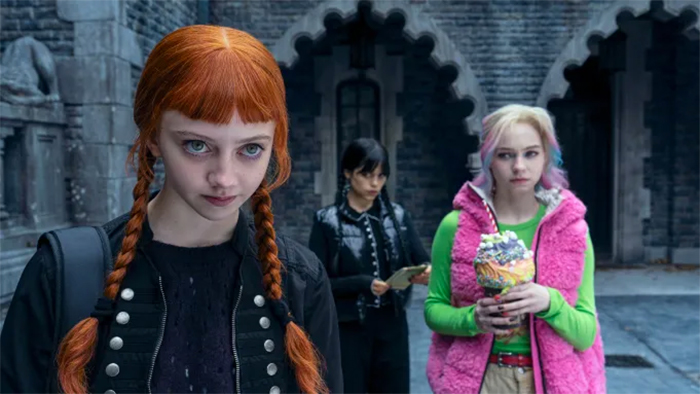
You know what else they find retro-chic? Vamp Romantic (goth-lite fascination with beauty bordering on the haunting, or Wednesday-meets-Enid), “cottagecore” (which romanticizes rural life—think flowers, lace, and earth tones), analog habits like handwriting letters and scrapbooking, and “early” tech like flip phones and, yes, digicams.
This somehow overlaps with or spills over to fashion-forward Alphas, whose sense of nostalgia is setting the trend for the second quarter of this millennium.
According to Teen Vogue, 2026 will be dominated by polka dots, checkered prints, layering, chocolate browns, scarves, embellished tops, sustainable and gender-fluid fashion, bold earrings, and brooches—all screaming ‘80s maximalism. Art de Vivre’s Ricky Toledo and Chito Vijandre wrote, “a brooch isn’t just a brooch, and jewels aren’t just stones and metal, since they carry so much history and convey so much meaning.” So, yes, brooches are in again.
Wedge sneakers are popular among girls not only for the added height but also for comfort and versatility. Nepo babies in the US are often caught wearing Isabel Marant, Puma, and Vaquera x Converse, together with low-rise baggy pants from Mango, Reiss, GAP and Levi’s.
Before Maduro’s arrest, tracksuits were the realm of Adidas (even in Korean dramas, Adidas apparel often made an appearance, e.g., Squid Game, The Uncanny Counter, When the Camellia Blooms, The King: Eternal Monarch, and Weightlifting Fairy Kim Bok-joo. This falls within the sphere of athleisure, combining the comfort of athletic clothes with stylish elements that are ideal for both in and out of the gym or studio. Leggings, cycling shorts or the shorter bun huggers, sports bras, oversized sweatshirts, and sneakers—a combination that would make some titas make the sign of the cross or titos yearn for their long-lost youth.
Whether it’s fashion, music, film, technology, or outlook, retro simply indicates a circularity: trends often change over time but how or why we use them remains the same.

WATCH: Is OPM still as good as it used to be? (Generations Ep. 20)
September 9, 2026