

Piolo Pascual is the solid ground in a youthquake
Time has become unfashionable.
Legendary Vogue editor Diana Vreeland coined the word “youthquake” in 1965. I must have been in my early teens when I first encountered it. The word lodged itself in my head in a way I did not expect. In the magazines I devoured through the late 1970s and the 1980s, youth rarely stood on its own. Unless someone was a model presenting the season’s clothes or a prodigy with an unusual gift, age was assumed. People like Babe Paley, the Duchess of Windsor, Gianni Agnelli, and Cecil Beaton appeared on those pages because they had lived enough to matter. Time functioned as a form of credential.
That early reading trained my eye. Longevity felt aspirational long before it became unfashionable. Which is why Piolo Pascual’s return to iconic lifestyle brand Bench lands with force in a moment ruled by the new and the next.
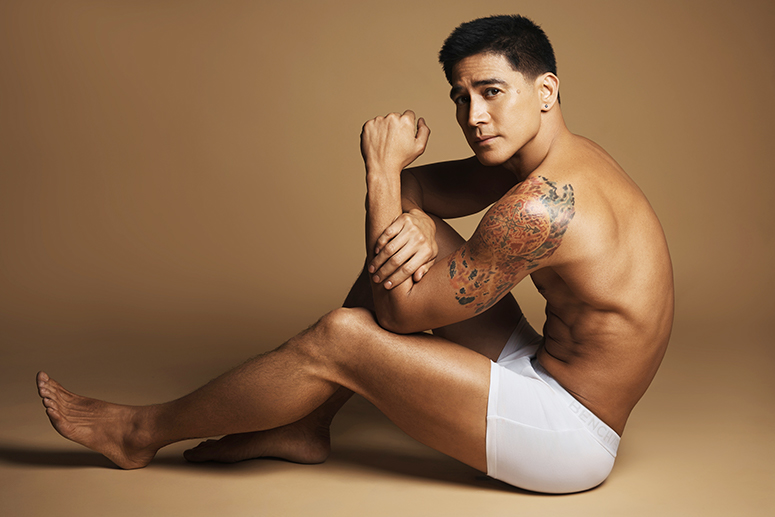
Piolo belongs to the generation that grew alongside Bench itself. When the brand was shaping a national sense of confidence through denim, skin, and presence, he was there, learning how visibility worked and how quickly it could turn. That alignment gave him entry, not insulation. His career expanded through film, television, music, and performance, guided by steadiness rather than constant repositioning. He stayed visible because the work accumulated, and the public stayed with him. As Bench founder and pop culture shaper Ben Chan puts it, “Piolo has always been on top of his game as an actor and as a person.”
This return invites recognition of who Piolo has become through time. Nearly three decades of shared history sit behind the images, yet the campaign remains anchored in the present. The face is familiar, but the story is told through the body. What comes through is control developed through repetition and judgment sharpened through experience. “As he reached another milestone in his life this year, Piolo proves that age is really just a number,” Ben says.
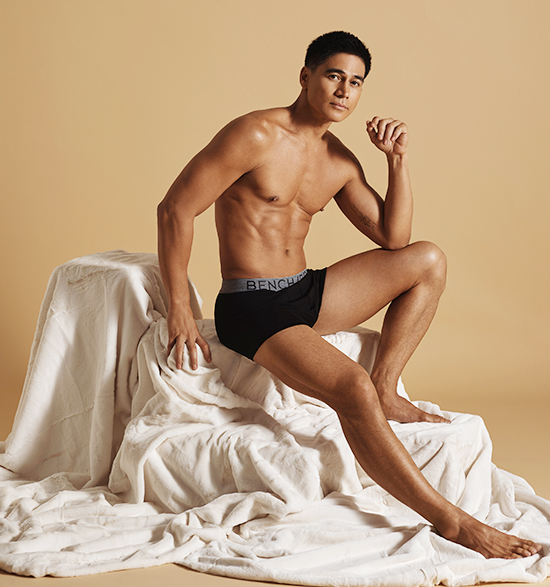

At the center of the campaign is the body, a subject often flattened into surface. Here, the body is cumulative. Discipline appears through routine. Care registers as habit. Training looks like something practiced long after attention has shifted elsewhere. The physique reflects years of choosing consistency over urgency, without dramatizing the choice. Ben notes that Piolo’s years in film have shaped him into a producer and creative collaborator, just as his commitment to health has kept him in peak form.
Age is commonly framed as something to manage. Piolo’s presence suggests another relationship with time. Longevity becomes authorship. Staying power connects to responsibility, to knowing what must be maintained and what can be released. The body becomes something inhabited fully, shaped by years of work rather than moments of display. “His homecoming to Bench is a celebration of growth and transformation, of age as power, of a life well lived as an achievement,” says Ben.
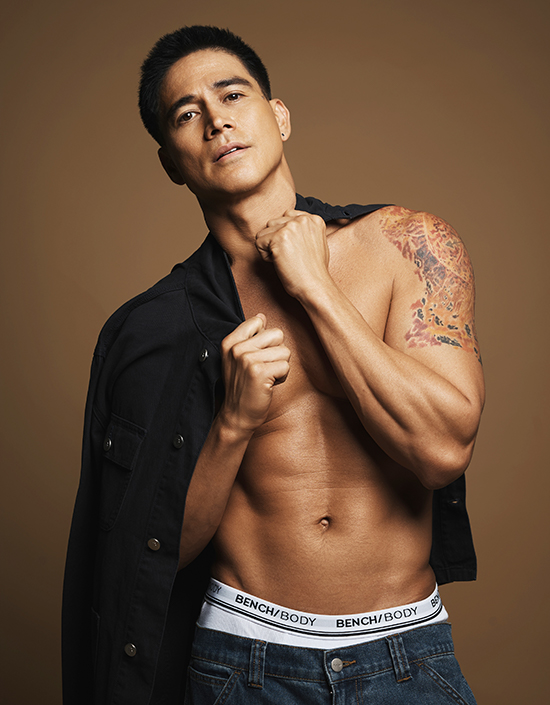
Chun Youngsan, the South Korean photographer behind the images of the most elite Hallyu stars and global luxury icons, reinforces this direction through an approach that favors structure, proportion, and control. The references to classical antiquity feel embedded rather than ornamental. The body enters a longer visual lineage that values balance and endurance. Piolo occupies the frame with assurance shaped by familiarity with both the process and himself.
This marks Piolo’s first Bench Body underwear campaign, giving the images added charge. Underwear campaigns often function as declarations of arrival. Here, arrival feels irrelevant. The emphasis rests on duration. It is the difference between a trend and a landmark.
The obvious question follows. Why Piolo now?
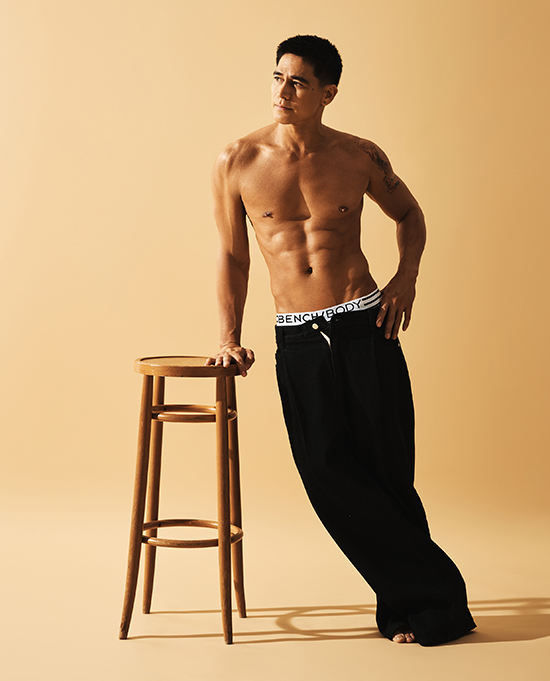
Part of the answer lies in fatigue. Audiences recognize faces that appear suddenly and disappear just as quickly. They also recognize figures who move through shifts without constant recalibration. Influence that lasts settles through trust built over time.
Bench has long understood this instinct. Its strongest cultural moments came from reading shifts rather than chasing them. Bringing Piolo back reflects confidence in continuity. It suggests that relevance does not expire on a schedule and that history, when carried with care, remains active.
In a youth-driven era, Piolo is the rare constant. His return frames a life lived as the ultimate stylistic achievement. It recalls the lesson I learned early, poring over magazines and imagining a future where time mattered. Staying, it turns out, has always been the point.
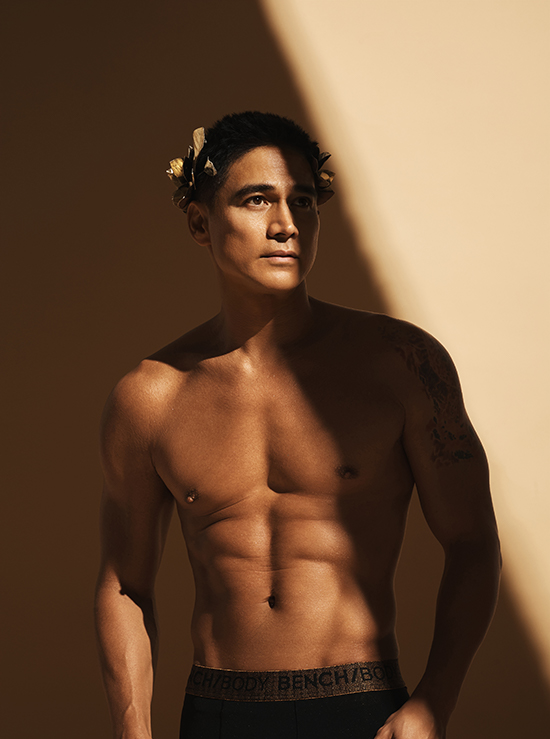
Piolo Pascual’s return reminds us that youthquake is not the only way to move culture. Vreeland’s word captured disruption, sudden change, and the thrill of newness. It still does. But staying power has its own force. In an era that applauds novelty above all, longevity carries a singular gravity. It asks patience, consistency and courage. Piolo shows that influence does not expire with age, that relevance is built through choices repeated over years, and that in a world chasing the next, remaining matters just as much as, if not more than arriving.
The youthquake was a thrill, but it was the women of age who defined my eye. Decades later, Piolo Pascual proves that real power isn’t in the arrival, it is in the staying.

WATCH: Can we talk about death and grief? (Generations Ep. 25)
October 14, 2026
WATCH: LGBTQIA+ people with unlikely professions
June 28, 2026