

Schiaparelli, the designer who loved to shock
“The Italian artist who made clothes,” was Coco Chanel’s catty remark about her rival, Elsa Schiaparelli. They were on two opposite poles, you see, with the former pioneering modern, minimalist elegance aimed at comfort and practicality, while the latter embraced surrealism, bold artistic expression, and theatricality.
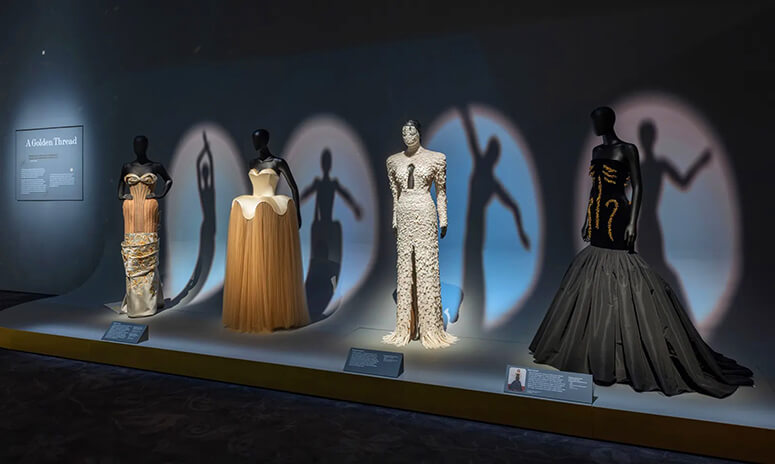
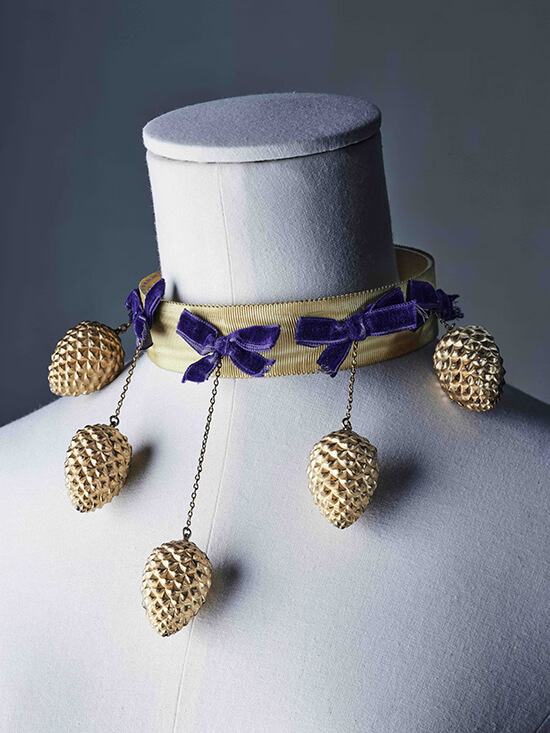
“Schiaparelli: Fashion Becomes Art,” which opened recently at the Victoria & Albert in London, flips the Chanel insult into the most glowing compliment through a landmark show of over 400 objects, including 100 ensembles, 50 artworks (by the likes of Salvador Dalí and Pablo Picasso), as well as accessories, jewelry and photographs, all showcasing the designer’s fantastical artistry spanning the 1920s to the present.
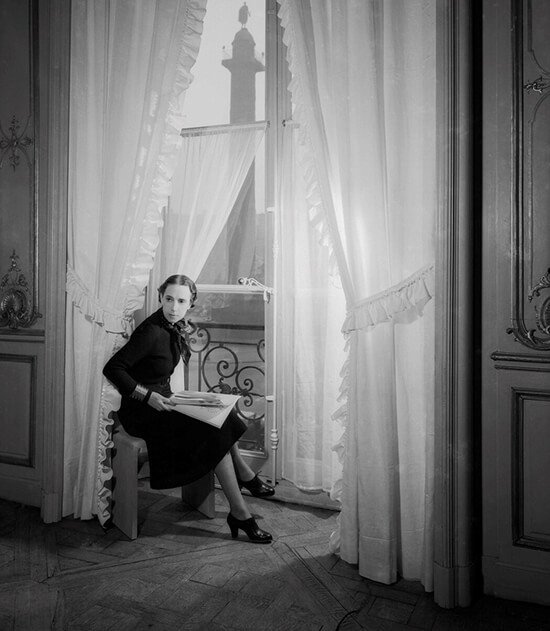
Schiaparelli’s ability to shock started at a young age in Palazzo Corsini in Rome, where she was born in 1890 to an intellectual aristocratic family that traced its ancestry to the Medicis. Envious of her sister’s beauty, she took seeds from pretty flowers and planted them in her mouth, nose, and ears while asleep, hoping they would bloom “like a heavenly garden.” The image in her mind was prescient, indicative of how surrealism was already her destiny.
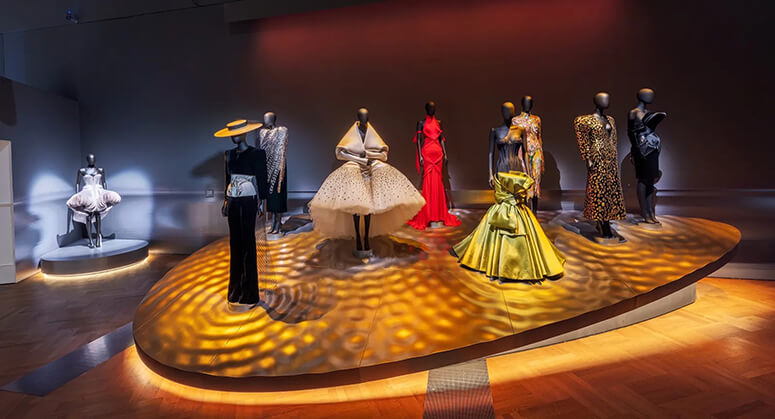
She was later exposed to modern art, attending lessons given by Italian futurists before moving to bohemian circles in New York City during her short-lived marriage. Friendship with Gaby and Francis Picabia introduced her to the key players in the nascent surrealist movement, which would shape the direction of her work. Moving to Paris, she launched a 1927 collection of surrealist trompe-l’oeil knitwear that was featured in Vogue and became a hit, followed by suits, dresses and evening wear, which she sold at the Schiaparelli Shop on Place Vendome.
CONTINUE READING BELOW

Her signature color was shocking pink, which was also the color of a taxidermied polar bear on display in her shop window, and upon her death in 1973, 19 years after retiring, the same color accompanied her to her grave.
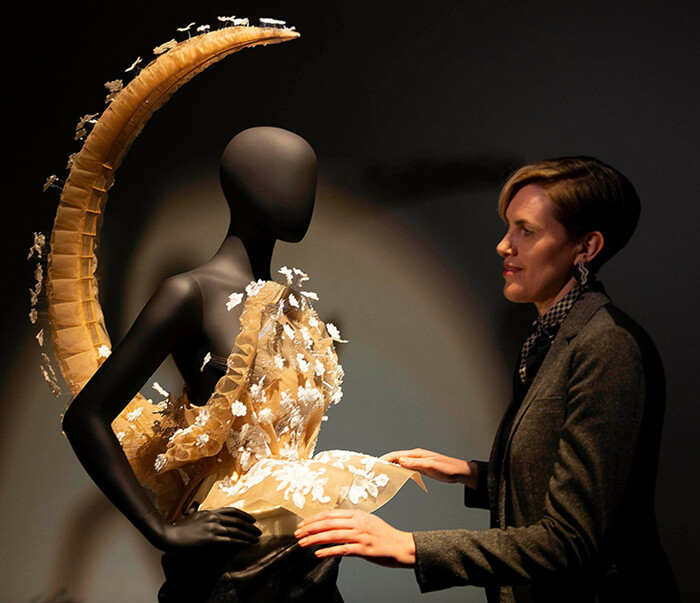
The predilection for shocking with unconventional and innovative designs carries on with the present house under the creative direction of Daniel Roseberry, whose pieces are on display side by side with the archival pieces, showing how he has brought her spirit to the 21st century.
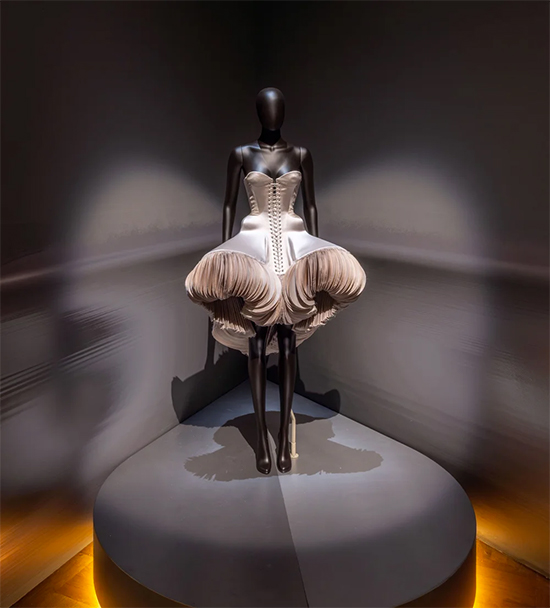
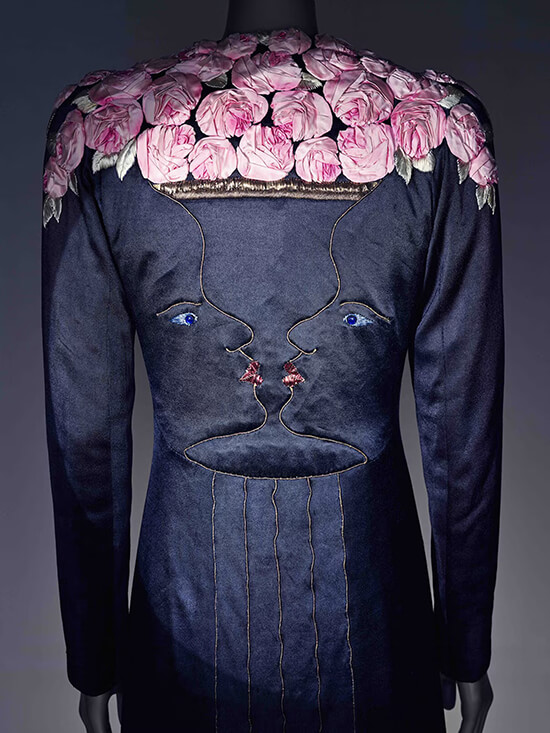
Roseberry marvels at Schiaparelli’s pieces, which place her firmly in the world of surrealist artists: a silk dress from the 1938 Circus collection is printed to look like fabric being torn, inspired by Dalí’s “Necrophiliac Spring”; an evening coat, a collab with Jean Cocteau, features two faces and a vase of blooming roses; a jacket is cut to simulate chests of drawers. A black silk dress with a skeleton emerging from its surface is displayed with Roseberry’s anatomical dress accessorized by a gilded lungs necklace, famously worn by Bella Hadid.
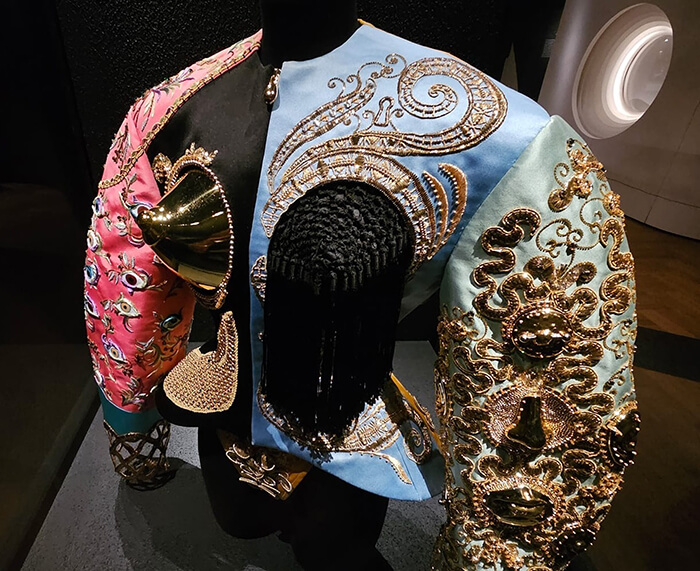
She doesn’t just use artists’ images to stick onto dresses, however. Her exchanges with artists ran deep. “She was someone who was embedded in the creative process, and there was a true collaborative exchange with these artists and creatives,” according to V&A senior curator Sonnet Stanfill.
“It was about how the expression of the surreal can create a more intimate connection between art, pop culture, and fashion, and between the designer and client,” says Roseberry.
People ask the designer, “Do you think Elsa would have loved you if you sat together at dinner?” to which he replies, “No, she would have eaten me for breakfast!” In the final room, dresses from his seven-year stint at the house are juxtaposed with Schiaparelli oddities: a papal gold coat, a virulent green feather cape, and a coat with pockets embroidered with Sevrès porcelain ewers; jewelry that blows up Schiaparelli’s famous buttons; and traces of Americana, which the original designer would have loved since she spent a great deal of her 20s in New York.
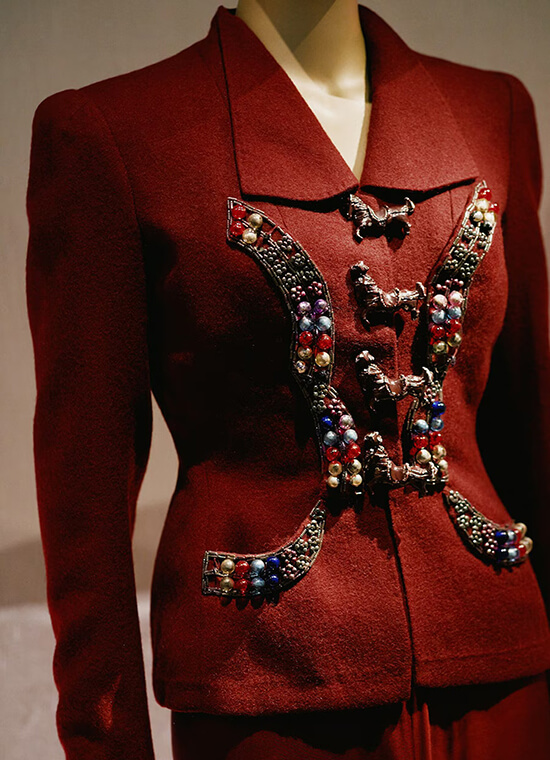
Roseberry’s take, however, is much bolder during this age of social media and alternate realities, when there is a lack of connection that we have with each other, observes Roseberry. “The language that Elsa used to address her political reality, we’re using to address our digital reality. My mission now is to pierce that digital veil and create moments of lasting connection. Fashion is ancient, it’s pre-biblical, and people will always want to decorate, adorn and express, but we’ve never lived in a more performative era. Designing a link between expression and genuine connection is something that feels urgent.”
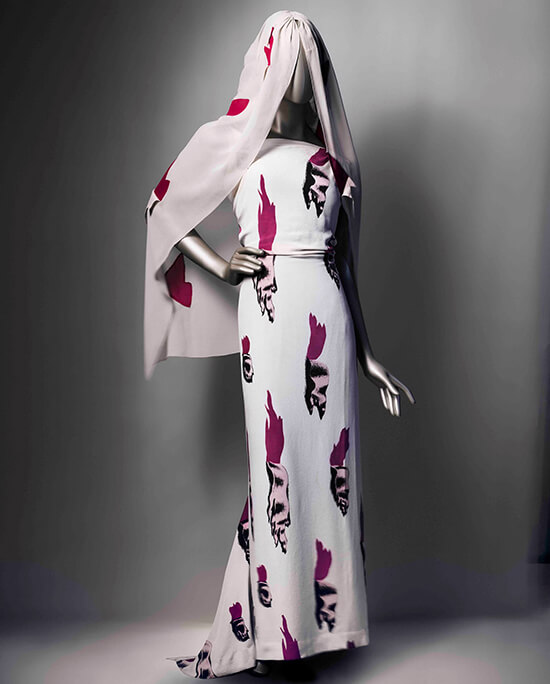
The parallel between Schiaparelli and Roseberry could be summed up in what she said in her 1954 autobiography, Shocking Life: “In difficult times, fashion is outrageous.” Just as fashion was a form of resistance then, in 2026 it reflects the current zeitgeist.
“There is truly a before and after Schiaparelli,” says Roseberry. “In many ways, the beauty of the house was that it was frozen in time after it closed in 1954. It was preserved like a jewel—it was never diluted or ruined in time. But the cost of that dormancy is that many people don’t know that she is one of the five great couturiers who truly changed fashion.”

WATCH: Discovering Vietnam in three days
June 9, 2026
WATCH: Is OPM still as good as it used to be? (Generations Ep. 20)
September 9, 2026
WATCH: Save for retirement or enjoy life now? (Generations Ep. 21)
September 16, 2026