

Demna if you do, demna if you don’t
MILAN—Fashion loves a debut. But what unfolded this season at Gucci felt less like spectacle and more like recalibration—a quiet but deliberate pivot in the life of one of luxury’s most recognizable houses.
Demna’s first full runway presentation for Gucci arrived under the weight of immense expectation. When a designer who has reshaped contemporary fashion steps into a brand defined by heritage, sensuality, and commercial might, the industry does not merely applaud. It studies. It measures. It waits.
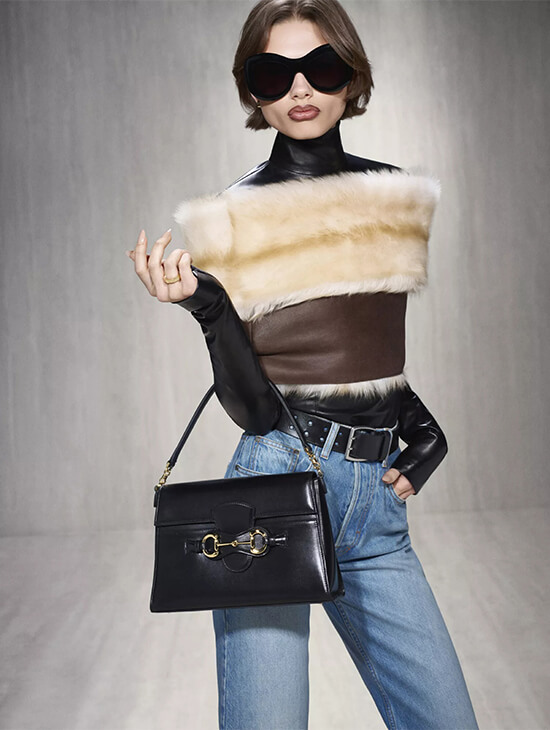
“Today is the birthday of my vision for Gucci,” Demna wrote in his show notes. “A house that has lived many lives… Not by accident, not by myth, but by force of character.”
Then came the line that may define this era:
“Everything you could say about a human being you can say about Gucci.”
Drama. Passion. Excess. Restraint. Contradiction. Love and hate. Triumph and collapse. Pride and vulnerability.
CONTINUE READING BELOW

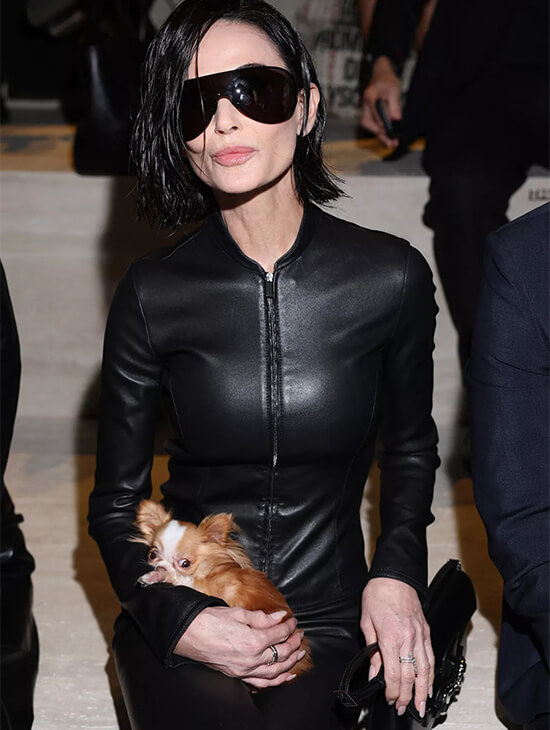
In that single sentence, Demna positioned Gucci not as a logo, but as a personality—flawed, emotional, evolving. A house that behaves like a living being, much like the matriarch Demi Moore played in La Famiglia and the characters that surrounded her.
From ‘La Famiglia’ to ‘Primavera’
Demna’s Gucci did not begin on the runway. It began with La Famiglia, a portrait-driven visual narrative introducing archetypes of “Gucciness.” Familiar codes—bamboo, Horsebit, monograms—were not erased but refracted.
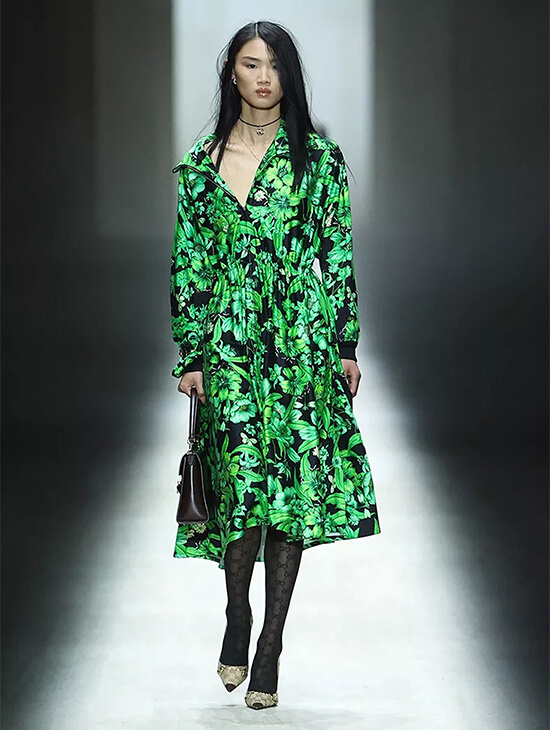
The runway, titled “Gucci Primavera,” became the proposition.
“Gucci is a superbrand that is as much about pragmatic product as it is about emotion,” Demna wrote.
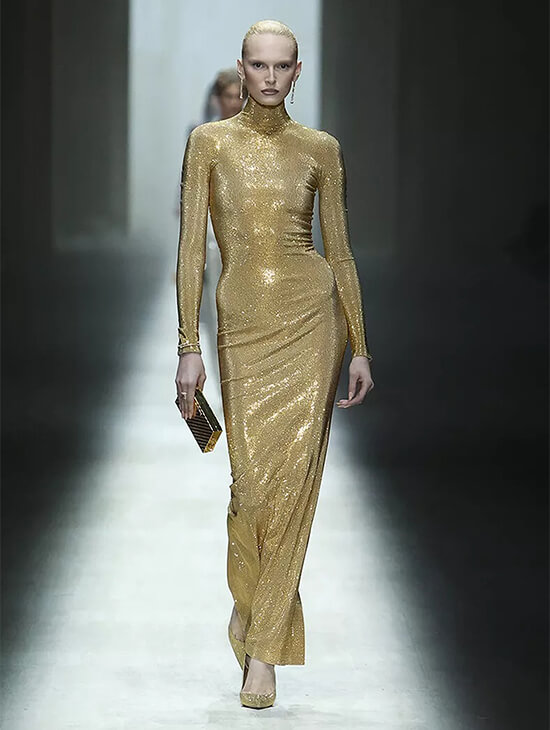
Presented in a monumental, museum-like space surrounded by marble statuary, Primavera nodded to Renaissance proportion and Italian cultural memory. Demna immersed himself in Florence, visiting the archives and standing before Botticelli’s “Birth of Venus.”
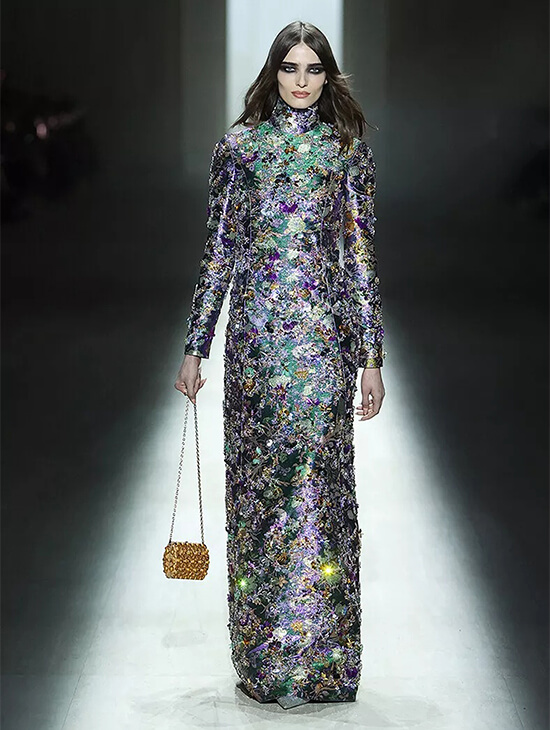
“The beauty in it was unconditional, it was absolute,” he wrote. “It made me realize how deeply the Italian Renaissance shaped everything I understand about art, about proportion, about desire, and about beauty.”
That influence surfaced in chiseled tailoring, Grecian draping, and body-aware silhouettes that felt sculpted rather than adorned.
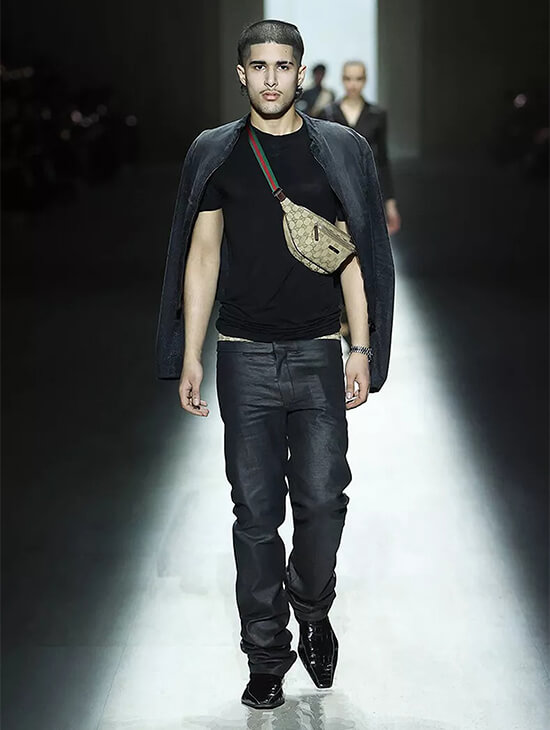
Not whispered but declared
Almost immediately, the comparisons surfaced: echoes of Tom Ford’s Gucci. The sleek sensuality. The controlled polish. The emphasis on the body.
But this was not subtle nostalgia.
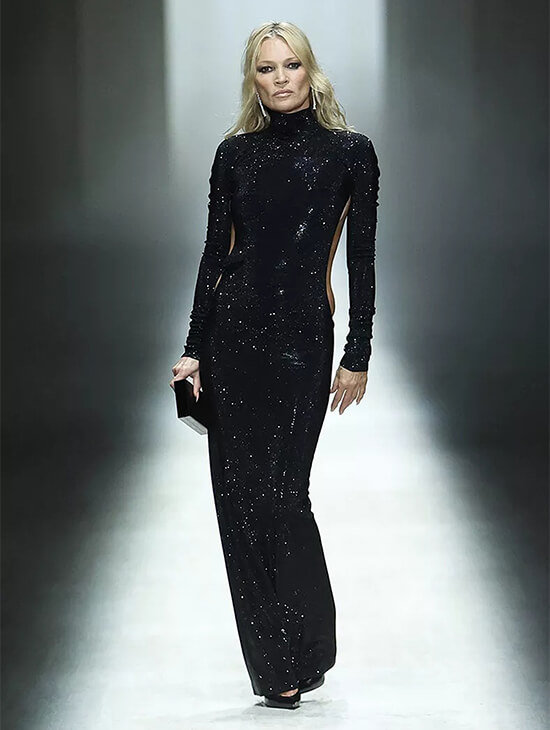
When Kate Moss emerged in the finale dress—a figure synonymous with the decade that redefined Gucci’s modern sex appeal—the reference moved from subtext to statement.
It was not a wink. It was punctuation.
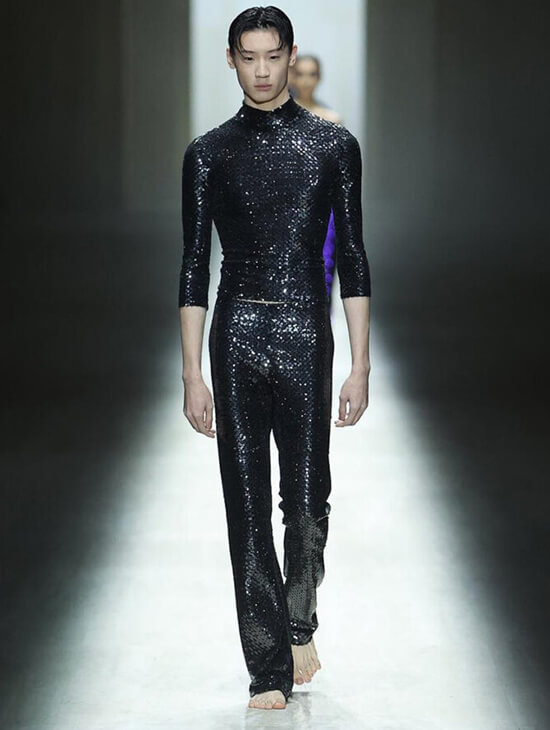
The ’90s are not simply trending again; they are being canonized anew. In a cultural moment seeking clarity after cycles of excess, the minimal sensuality of that era feels relevant once more.
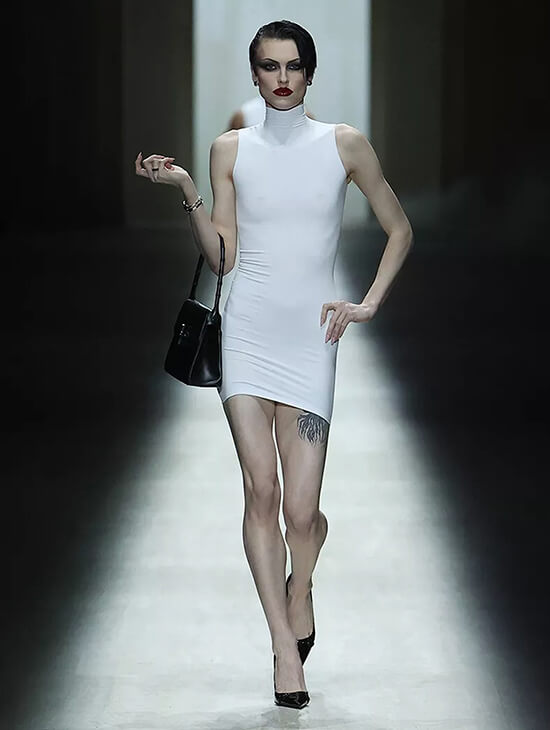
Demna did not replicate Tom Ford. He recalibrated that tension, filtering it through precision and product discipline. The show opened with a seamless white hosiery minidress, a deliberate palate cleanser. Tailoring softened into liquid fabrics. Jackets were cut low; trousers subtly adjusted posture. Invisible heat-sealed edges and engineered curved hems brought garments closer to the body.
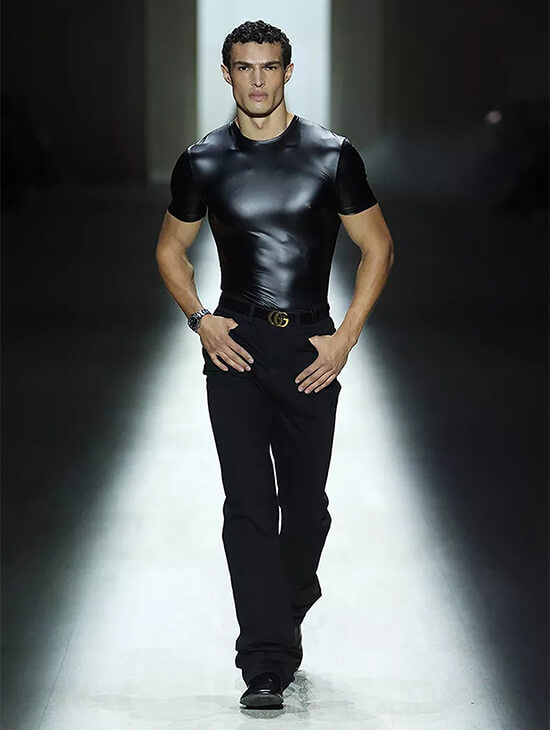
“I intend for Gucci to become lighter, softer, more refined, more emotional,” Demna wrote. “I don’t want it to be intellectual, but I want Gucci to be a feeling.”
This was not maximal Gucci.
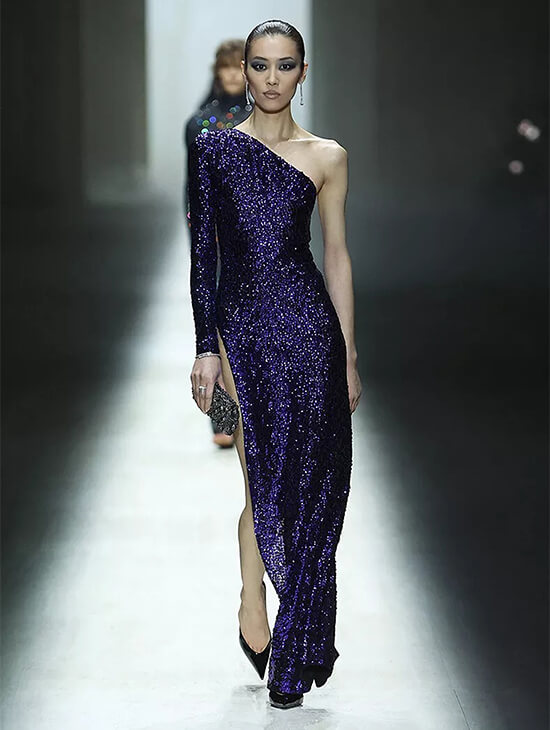
It was disciplined Gucci.
And Moss’ presence in the finale underscored that discipline. If the Renaissance references anchored Gucci to culture, Kate Moss anchored it to fashion mythology.
Heritage and fashion as lovers
“My vision of Gucci is about the coexistence of heritage and fashion. Here, they are not opposites; they are lovers.”
That line may define this chapter.
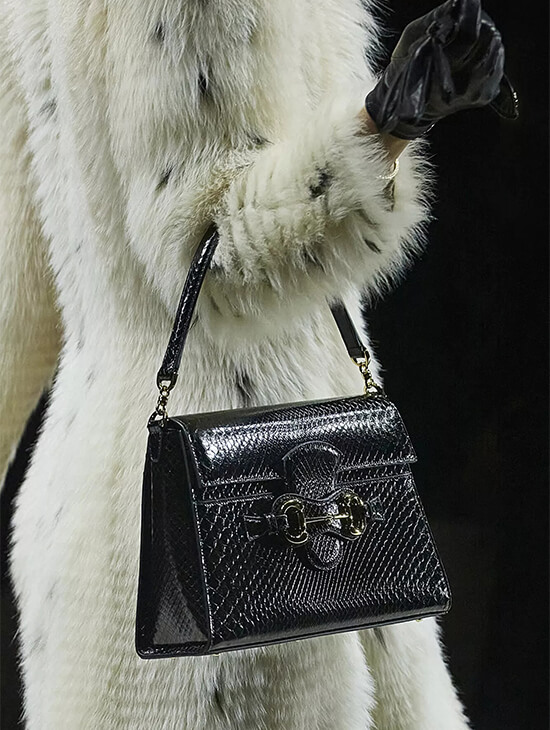
Tracksuits morphed into track dresses. Leggings fused with trousers. Jackets and tops merged into singular sculpted garments. The Bamboo 1947 returned in a sleeker form. Sneakers were streamlined. New versions of former classics and shearling coats framed the face.
There was pragmatism here—a focus on pieces designed to live beyond spectacle.
In Milan, the room did not erupt. It assessed.
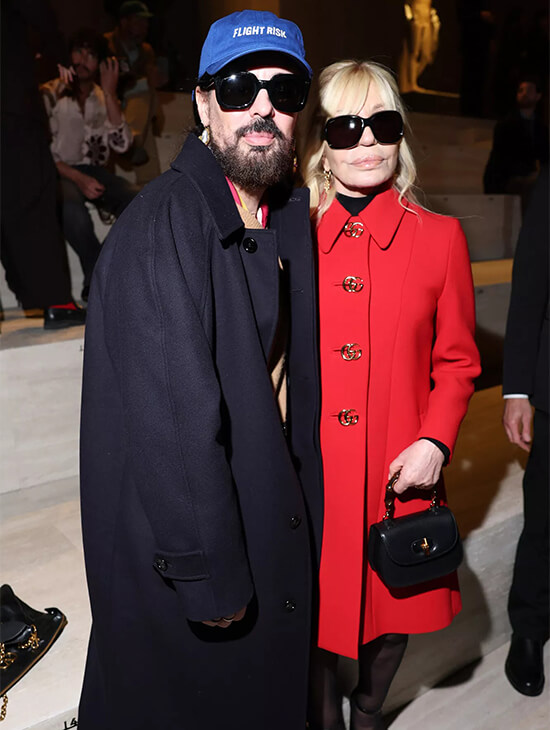
This was not shock and awe. It was strategy.
“It is a beginning,” Demna wrote, “but it is intentional and fully formed.”
And perhaps that is the most accurate description of what we witnessed: not an explosion, but a foundation being laid.
Gucci has spoken.
The conversation—and the comparison—now begin.

WATCH: How to experience Bangkok and Kanchanaburi in one trip
October 21, 2026
WATCH: LGBTQIA+ people with unlikely professions
June 28, 2026
WATCH: Is OPM still as good as it used to be? (Generations Ep. 20)
September 9, 2026