Beauty: Now injectable?
Beauty hacks used to come in jars of vitamin gummy bears promising healthier skin and shinier hair—or a 10-minute ab workout on YouTube that, let’s be honest, you’ve probably done in your room during quarantine. Now, they come in refrigerated vials.
It can feel almost impossible to scroll through social media without seeing people post another dramatic weight transformation. Celebrities are thinner, influencers are documenting their rapid weight loss, and suddenly everyone seems to be losing weight. And lots of it, too.
The ozempicdemic
Every dramatic celebrity weight loss transformation is met with the same question: Are they on Ozempic? Originally developed to help treat type 2 diabetes and other weight-related conditions, the drug has become synonymous with rapid weight loss and the pursuit of society’s ever-changing beauty standards. And we’ve only gone deeper from there.
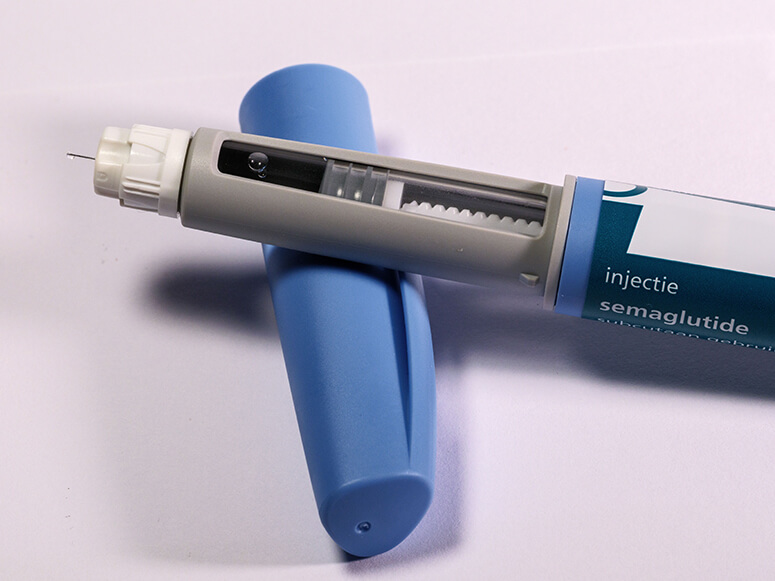
Now, peptide-based injectables—products designed to mimic or influence signals naturally produced in the body—are being promoted for nearly every cosmetic concern: weight loss, hair growth, glowing skin, faster recovery, and so on.
One of the most talked-about is retatrutide. Clinical trials have reported substantial weight loss among participants over relatively short periods of time. It sounds incredible! Well, that’s until you find out that it isn’t approved for public use.
Retatrutide remains an investigational drug undergoing clinical trials for obesity and other metabolic diseases. Yet, if you spend enough time online, you’ll find people claiming to sell it, recommending it, and documenting their “transformations” as if it were just another wellness product or supplement, which, honestly, should concern us.
CONTINUE READING BELOW

Retatrutide isn’t the only one either. There are online conversations among young adults discussing alleged peptide “stacks”: BPC-157 for recovery, CJC-1295 for muscle growth, GHK-Cu for better skin, and countless other compounds promising some version of a better body.
There now appears to be an easy fix for almost every insecurity. But as we decide whether to “hop on” the next big thing, we should stop and ask ourselves: If achieving today’s beauty standard has become intertwined with investigational drugs or unapproved peptides, was the standard ever realistic in the first place? And more importantly, why do healthy people feel that they need them?
The cost of instant gratification
You see, many peptide-based medicines have transformed the lives of people living with serious and chronic health conditions. The problem is not the medicine itself, nor the people who genuinely need it. The real issue is the growing number of otherwise medically well people buying them online for cosmetic purposes, often without knowing exactly what they are putting into their bodies.

Part of the answer may lie in social media. We constantly consume content showing people at their best: their achievements, transformations, holidays, and carefully curated appearances. Social media becomes a mosaic of everyone’s best highlights, and when that is all we see, it can feel as though we are falling behind.
When we’re surrounded by before-and-after photos and overnight success stories, slow progress begins to feel like failure. We stop appreciating gradual improvement and start searching for whatever promises the fastest result. The internet has only accelerated that mindset, training us to expect almost everything instantly. We can order something online in seconds, receive entertainment through short-form videos, and move on the moment something no longer holds our attention.
Technology has made life more convenient, but it has also made waiting feel increasingly unbearable. That mindset does not disappear when it comes to our bodies.
Rather than caring for our bodies through movement and proper nourishment, we have begun to view them as projects to be optimized. Any flaw exposed by societal trends and beauty standards is seen as a defect needing correction, while any delay in progress feels like failure. We forget our bodies are not apps, online orders, or videos we can skip through.
The stronger glow-up
In our collective obsession with shrinking our bodies, we’ve forgotten to ask what they’re actually capable of. Society, too, often confuses becoming smaller with becoming healthier. Muscle isn’t just something you see in the mirror. It helps regulate blood sugar, supports healthy aging, protects our bones and joints, and allows us to move through life with greater confidence. While shedding pounds might alter your silhouette, building muscle goes further by redefining what your body can do.

Experts have always advocated for resistance training and adequate protein intake even when utilizing GLP-1 therapies because maintaining lean mass and physical function matters. It is not merely a matter of aesthetics; it is an investment in your long-term health and independence. In other words, even when medication is appropriate, strength still matters. So, before you purchase an unapproved vial through an online seller, consider that the most profound transformation isn’t found in reaching a number on a scale.
Perhaps the real “glow-up” lies in cultivating a body that empowers you—one that handles a steep trail with greater endurance, manages daily chores with ease, lifts heavier than you could six months ago, or grows older without fearing the loss of your independence.
Those changes certainly do not happen overnight, nor can they be shipped in a box or purchased through a link. They are meticulously earned through the discipline of one training session, one consistent habit, and one incremental victory at a time. In a world where you can buy your way toward the “skinny” ideal, choose strength.