

Boundaries and burnout: The plight of the eldest daughter
A friend of mine once told me that he had a gut feeling I was a witch. This is because whenever he felt sad or needed a pick-me-up, I somehow miraculously knew it—and I was always ready and armed with ideas and invitations to make him feel even a little bit better. If this is the benchmark for witchcraft, then I believe that all eldest daughters are undoubtedly made of magic.
Being so attuned to how other people are feeling comes from an innate desire to take care of and protect them. But while this sounds normal to most people, some eldest daughters like me take this a step further to the point where we feel almost wholly responsible for the moods of others.
It’s fulfilling—until it’s exhausting.
This is a common symptom of the phenomenon known as Eldest Daughter Syndrome. It isn’t an official diagnosis, but a viral TikTok posted by licensed family therapist Kati Morton described it as the “unique pressures and responsibilities placed upon oldest daughters in the family.”
@katimorton The 8 signs you have eldest daughter syndrome… #eldestdaughter #siblings #siblingcheck ♬ original sound - Kati Morton, LMFT
I hadn’t heard of EDS until it became a trend online. From Tumblr text posts that hit a little too close to home to Spotify playlists with Matilda by Harry Styles or way too many Phoebe Bridgers songs, I had found a corner of the Internet that seemed to understand me almost completely.
“When you are the firstborn child, regardless of sex, your experience is very different from your siblings. Your parents didn’t know what to do, and as a result, they are often overly controlled, very strict, [and] careful—because they’re afraid,” Professor Enrico Uy Baula from the UP Manila College of Arts and Sciences' Department of Behavioral Sciences explains to PhilSTAR L!fe. “Thus, they also create a child that’s very controlled and disciplined.”
CONTINUE READING BELOW

Adding gender norms to the conversation complicates things even further. “Asian societies are very reliant on gender roles, lalo na 'pag dinagdag mo ‘yung ‘eldest’ aspect. In Asian cultures, concepts of power and authority are important,” Baula continues. “When you combine the two—the preconceived notion of women as family-oriented caregivers, and the importance of age—there are definitely higher expectations of eldest daughters in society.”
In her book, Filipino Children Under Stress: Family Dynamics and Therapy, Dr. Ma. Lourdes Carandang talks about the "tagasalo," a role Filipino families often delegate to one member who absorbs issues arising within the household. She points out that in many cases, eldest daughters are the ones regulating the emotions of every other person around them, except their own. This, she adds, can lead to their having difficulty opening up and asking for help in the later stages of their lives.
Truly, an understanding of EDS would reveal that the weight carried by eldest daughters often comes in psychological or emotional forms. When Encanto’s Luisa sings “Give it to your sister, your sister's older / Give her all the heavy things we can't shoulder / Who am I if I can't run with the ball?”, or when Hayley Williams sings “Eldest daughters never miss their chances / To learn the hardest lessons again and again,” it feels like a universal nerve has been struck.
There’s a 13-year age gap between me and my younger sister. Forget being the eldest daughter—for a long time, I had been content with the idea of being the only daughter. But it felt like something had switched inside me when my little sister was born, especially since she had come into our lives during a very formative part of mine. As she grew up, I felt the subconscious need to look after her because I could relate to her in a way my parents couldn’t: being their daughter, too. While I was never told that I would have to provide for her financially or help put her through school when I started working (which happens often in Filipino media and other households), I understood that as the eldest—by a long shot, at that—there were bigger loads I would have to bear, even if they were sometimes invisible.
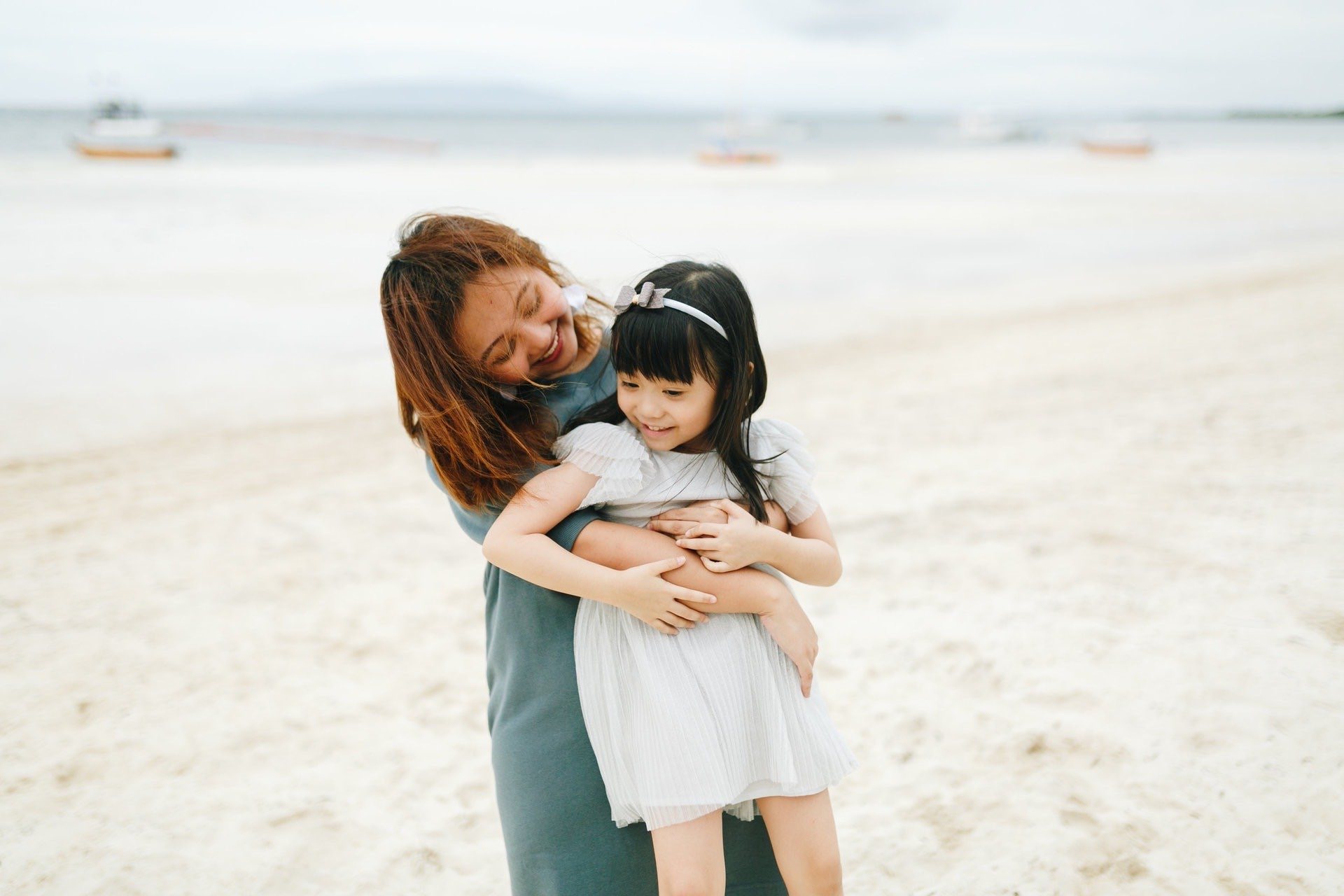
Lola, an eldest daughter in her 20s, says that her sister who is a year younger than her, would often view her as a “translator” to their parents. “She needed me to help her word her requests from our parents, and I also helped her anticipate and understand whatever my parents say in response.”
Being an eldest daughter doesn’t only impact relationships within the family; it can affect relationships we have with friends, colleagues, partners, and even ourselves. “I think I have a tendency to step up and take the lead when I feel there’s a lack in authority or leadership,” Lola tells L!fe, “[But] I’m also more than happy to “turn my brain off” when someone else is more capable to take on that role.”
But perfectionism and the expectations placed upon eldest daughters can sometimes make it difficult for them to extend the same courtesy they offer their loved ones to themselves. “I have very high standards that I only use for myself, and I can be pretty tough [on myself] too,” Lola acknowledges. “I’m not the best at asking for help [or] setting boundaries, and I’m aware that it’s a problem. But I also think that it’s my problem to deal with and no one else’s, so it doesn’t have to hurt anyone else.”
“As an eldest daughter who saw my own parents 'grow up' in a way that my siblings did not, I think in order to survive my confusion about how my parents raised me, I willed myself to develop empathy,” said Michelle, who is in her early 50s. Her younger sister and brother are four and five years younger than her, respectively. “I feel quite grateful that I developed an awareness of the need to know a person’s full story—to place their actions and words in context in order to not judge them so quickly, but to respect how their story unfolds.”
“One of my core lessons from my youth is that if I am confused, dissatisfied, or burdened for any reason, I shouldn’t make other people bear the brunt of that. I have tried to be disciplined—if I am not well, I shouldn’t take it out on other people.”
Being an eldest daughter is something that stays with you forever, and so do the pressures, sometimes externally and often self-imposed. Once I entered my 20s, however, a lot of the discontent and tension I felt gave way to being kinder to myself. Having been raised in an environment where communication was not only tolerated but appreciated and encouraged, I learned what it was to grow beyond the shadow of what I felt my parents wanted me to be, and have become prouder of who I am—sans any of my work or accomplishments.
“Parents’ presence, emotional regulation capabilities, and their attitudes towards children are important factors in how to regulate or lessen EDS. The same goes for the presence of a supportive community from immediate relatives, neighbors, and other individuals who can model ideal behavior,” clinical psychologist Lordy Santos, who also goes by Tito Mong Psychologist on Facebook, tells L!fe. ”It really takes a community in order to raise healthy children.”
Setting boundaries and learning not to cave in to the innate need to bend over backwards for people are behaviors that can definitely take some time to learn. But while the Internet is abundant with remedies to “cure” EDS, I’ve found that sometimes, all that is necessary is to surround ourselves with people willing to help us carry that weight—to remind us, eldest daughters, that this doesn’t have to be all that we are.


WATCH: Is Gen Z too soft? (Generations Ep. 23)
September 30, 2026
WATCH: Discovering Vietnam in three days
June 9, 2026