

Four young creatives redefining the rules of the creative industry
Truth be told, in the creative industry, connections have long been considered the pillar of success and the unwritten rule for entry. But the story is now changing, and these young creatives are proof.
What drives them is a strong sense of purpose, a deep commitment to their community, and the brave choice to use their voices to challenge the old ways.
Ron Roxas, fashion designer
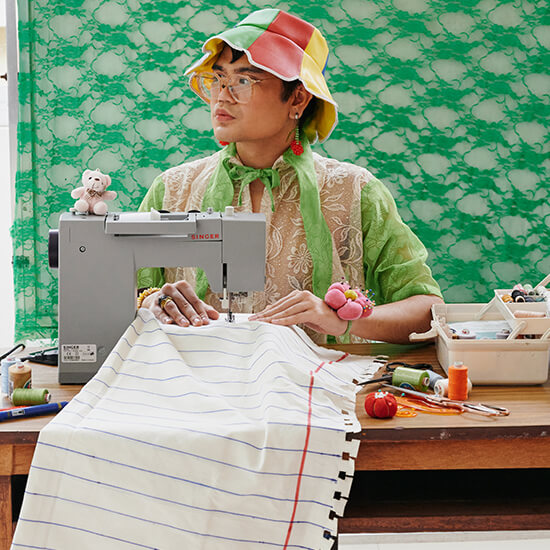
Fashion designer Ron Roxas shows that big ideas always begin in one’s imagination. “I was a child draping blankets and curtains around my body, pretending they were pageant long gowns," he recalled, adding that this became a way to express his femininity. Through his sketches, he finds solace and a safe space for expression; he pursued design because fashion is an internal dialogue with himself. “It’s an art form you live with. It’s both a witness and an agent of transformation.”
Despite this calling, Ron admits the industry is very exclusive. For someone "who’s self-made with limited resources," it’s difficult to compete with those who are richer. He initially felt defeated but found strength by leaning on his community.
His creative process starts with asking: “How can I approach (this in a way that) will mirror my own experiences or even my community’s?” The best ideas, he believes, are not in archives, but in the honesty of daily life, like "plastic bags in Divisoria or the micromatic umbrellas of fishball vendors."
CONTINUE READING BELOW

He continued, “We create because we exist among the community that fuels our understanding of the world and how we can perceive and change it.”
What keeps him anchored is his love for self-expression. “What I’m doing will always be a love letter to that dreamy-eyed kid, catwalking in his draped blanket gown. I continue to create because I want to relive the childhood filled with uninhibited pure queer joy I experienced as I played with my dolls and dressed up in household items.”
And as a young creative living through the tides in this industry, Ron knows that kindness should always come first: “One of the most important things taught to me by my mentor is to always value kindness and respect the people you work with.”
Em Enriquez, editor

Words have always been Em Enriquez’s main tool to express himself and tell stories that matter. Though he was a dedicated campus journalist, his start was tough. “My freshman rejection from the university publication was pretty devastating,” Em said. But this setback didn't stop him, as he eventually landed an internship at a major fashion magazine. It’s where he found his true calling. "While I didn’t initially plan on taking this path,” he explained, “what made me stay is the thrill of storytelling.”
As a queer editor, he makes it "a matter of survival to tell stories that uplift the LGBTQIA+ community."
He views his work as a means of manifesting change, adding, "I’ve realized that my purpose as a writer is to acknowledge these queer fantasies and to somehow manifest them into realities." He sums up this mission simply: “Masaya ‘pag may bakla. Dapat may bakla.”
When the fast-paced industry threatened to burn him out, he found balance by setting boundaries and reminding himself that while the work is important, "it is not vital." He beat self-doubt by committing fully: “I’m already here anyway, might as well give it my best shot, ‘di ba?" Because of his community—the photographers, designers, stylists, makeup artists, and co-editors—that help bring his visions to life, he rejects the toxic "dog-eat-dog mindset," arguing that "it’s rather unproductive to obsess over who’s doing better."
To new creatives, Em advised: "The industry is not oversaturated. Be brave and be vocal. Speak up and declare what you want because closed mouths don’t get fed.”
Margo Inciong, beauty writer
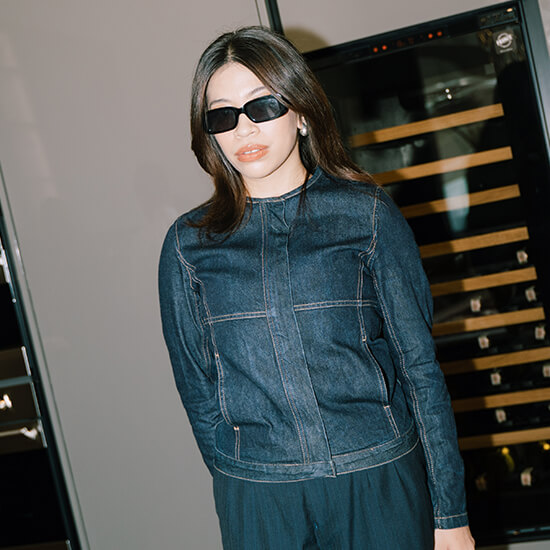
Margo Inciong’s love for beauty journalism started early, when she was introduced to her mom’s massive magazine collection. But she struggled at first, feeling like an outsider in the industry. “I had no connections. I had no exposure. I had no one telling me what I could do to make this dream happen. It was definitely a different time then,” she said.
She felt "lost and unhappy" in other jobs, until she made the brave decision to quit and go back to simply "writing sweet nothings." “It didn’t take me long to realize that this has been the answer to what I have been looking for. I see it as a form of alignment of who I am and who I want to be,” Margo said. This unlocked her clear purpose: to use beauty journalism to "lead with heart, push for a positive change, and ensure everyone feels included, represented, and celebrated." Still, she struggled with deep self-doubt, asking, “Do I deserve to be here?” But she used those difficult feelings as proof of passion, realizing, "I am crying about it because writing matters to me."
This emotional conviction drives her curiosity. “Beauty will always be more than what it seems,” she said, “and this feeds my fascination with it." She views beauty as an "ever-existing aspect of our human lives" that helps us define identity, which is why representation is the absolute anchor of her work. Her biggest reward isn't seeing her name in print, but the feeling of helping someone: giving them "opportunity, representation, or even writing their story with honor and honesty—this is the true gift of beauty journalism."
Margo’s key to success in a tough industry is simple: “Attach yourself to your mission and your purpose as a creative.” She advises the next generation to "feed your hunger to learn and not your ego," concluding with a powerful call to embrace the whole process: "Let yourself experience. Embrace the wins and make peace with your losses."
Lynus, stylist
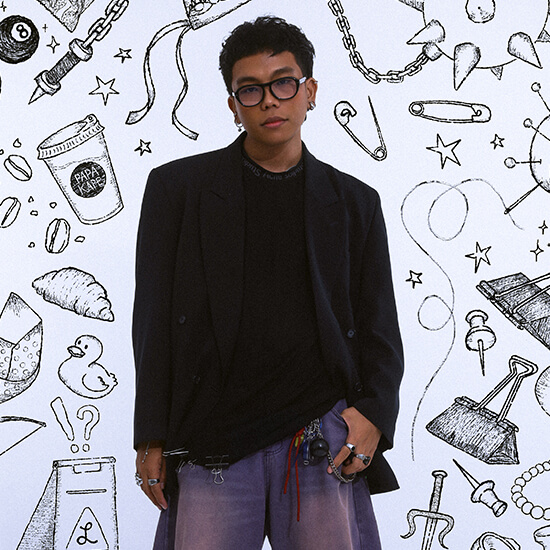
Success happened quickly for Lynus. Within two months of starting, he was working on major campaigns and a magazine cover. “I was able to reach these milestones early on by taking risks and trusting my potential, skills, and instincts (while being) supported by a strong network of people who believed in me and encouraged me to keep going,” he said. The job demands speed and toughness: “Building a name from scratch meant constantly proving myself and learning how to adapt fast.” He has since built a team that "gets the vision, the ngarag, and (has) the perseverance to be here."
What keeps him going is the exciting rush of constant change and growth, since he loves wearing different hats. “One week I’m a beauty mogul styling for a cosmetic brand, the next, I’m a rapper’s brother working with hip-hop labels, or someone’s bestie helping them look their best for a birthday shoot.”
"You can’t wait for the industry to notice you; you have to show up and make noise,” Lynus said. “Be loud about your ideas, be bold about your style. Fashion rewards people who aren’t afraid to take up space. So go out there and let your audacity do the talking.”

WATCH: LGBTQIA+ people with unlikely professions
June 28, 2026
WATCH: Do you still believe in marriage? (Generations Ep. 17)
August 19, 2026
WATCH: Can we talk about death and grief? (Generations Ep. 25)
October 14, 2026
WATCH: Discovering Vietnam in three days
June 9, 2026